Loading...
Louis VI the Fat vs Napoleon Bonaparte
Napoleon Bonaparte leads by 22.1 pts · 2 figures compared
…
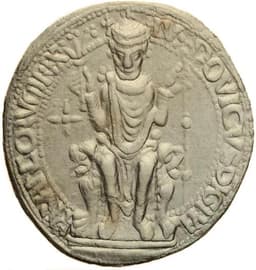
Louis VI the Fat
Emperor · Medieval
48.8Total

Napoleon Bonaparte
General · Modern
70.9Total
Basic Information
Born
1081
1769
Died
1137
1821
Era
Medieval
Modern
Nationality
France
France
Occupation
Emperor
General
Civilization
Western
Western
Score Comparison
Military (10%)
45.0
94.0
Political (20%)
61.3
72.0
Influence (20%)
53.3
40.0
Legacy (20%)
47.5
80.0
Leadership (15%)
40.0
78.0
Strategy (15%)
38.6
90.0
TOTAL
48.8
70.9
Louis VI the Fat — Complete Timeline
1108 AD
Consolidation of Royal Power in the Ile-de-FrancePolitical Action◆ Major
Louis VI succeeded his father Philip I as King of the Franks. He focused on consolidating royal authority in the Ile-de-France, subduing rebellious nobles and securing the region as the core of the Capetian domain.
KingshipConsolidationIle-de-France
Impact: regionalconstructive
1119 AD
Battle of BrémuleWar◆ Major
Louis VI was defeated by Henry I of England at the Battle of Br
BattleNormandyDefeat
Impact: regionaltragic
1122 AD
Alliance with the Church and SugerPolitical Action
Louis VI formed a close alliance with the Church, particularly with Abbot Suger of Saint-Denis. Suger became a key advisor and chronicler, helping to legitimize Capetian rule and promote royal authority.
AllianceChurchSuger
Impact: nationalconstructive
1128 AD
War with the County of BloisWar
Louis VI fought a war against the County of Blois, which had allied with England. The conflict ended with a truce, but it demonstrated Louis's determination to expand royal influence beyond the Ile-de-France.
WarBloisExpansion
Impact: regional
Napoleon Bonaparte — Complete Timeline
1799 AD
Coup of 18 BrumaireOther◆ Major
Napoleon Bonaparte, with support from his brother Lucien and key political figures, overthrew the Directory in a bloodless coup. He established the Consulate with himself as First Consul, effectively becoming the ruler of France. This event ended the French Revolution's most unstable period.
French RevolutionCoupRise to Power
Impact: regional
1804 AD
Promulgation of the Napoleonic CodeOther◆ Major
Napoleon enacted the Civil Code of the French, known as the Napoleonic Code, a comprehensive set of laws that replaced the fragmented feudal legal systems. The code established legal equality, protected property rights, and secularized law. It became the basis for legal systems in many European and world countries.
Legal ReformNapoleonic CodeCivil Law
Impact: globalconstructive
1805 AD
Battle of AusterlitzWar◆ Major
Napoleon's Grande Arm
Napoleonic WarsBattleDecisive Victory
Impact: global
1812 AD
Invasion of RussiaWar◆ Major
Napoleon led the Grande Arm
Napoleonic WarsInvasionDisaster
Impact: globaldestructive
1815 AD
Battle of WaterlooWar◆ Major
Napoleon's French army was defeated by the combined forces of the Duke of Wellington's Anglo-Allied army and Gebhard Leberecht von Bl
Napoleonic WarsBattleFinal Defeat
Impact: globaldestructive
Expert Analysis
louis-vi-the-fat-vs-napoleon-bonaparte
# The Fat and the Fury: Two French Kings Who Forged a Nation
In the winter of 1124, a corpulent king of France, so heavy he could barely mount a horse, rode out from Paris to face an invasion by the Holy Roman Emperor. Louis VI, known to history as “the Fat,” was no warrior in the mold of Charlemagne. Yet when he raised the royal banner, the great lords of France—men who had spent years defying his authority—flocked to his side. The emperor, seeing the size of the French host, turned back without a fight. It was a triumph won not by the sword, but by the slow, patient accumulation of power that would, seven centuries later, allow another Frenchman to conquer Europe with terrifying speed.
Napoleon Bonaparte and Louis VI the Fat seem, at first glance, to inhabit different universes. One was a Corsican artilleryman who crowned himself emperor and redrew the map of Europe; the other was a plodding medieval king who never ventured far from Paris. Yet both men faced the same fundamental challenge: how to transform a weak, fragmented France into a unified state. Their different answers reveal the strange alchemy of character, circumstance, and historical moment.
Origins
Louis VI was born in 1081 into a monarchy that was, by any measure, a joke. The King of the Franks ruled little more than the Île-de-France, a patch of territory around Paris smaller than many noble estates. His father, Philip I, had been excommunicated for adultery and spent his final years in a fog of scandal. Young Louis grew up watching royal authority dissolve into a chaos of petty warlords who built castles on royal roads and robbed pilgrims with impunity. He learned early that power was not inherited—it had to be seized, stone by stone.
Napoleon, born in 1769 on the island of Corsica, came from the opposite end of the social order. His family were minor nobles in a provincial backwater, and he spoke French with an Italian accent that made him the butt of jokes at military school. Where Louis inherited a throne, Napoleon inherited a revolution. The old order had been swept away, and in its place was a vacuum that any ambitious man could fill. The difference was profound: Louis had to rebuild a crumbling house; Napoleon had to build from scratch on a cleared lot.
Rise to Power
Louis VI became king in 1108 at the age of twenty-seven, and his first decade on the throne was a grinding, inglorious slog. He did not conquer kingdoms or win epic battles. Instead, he besieged one castle after another—Montlhéry, Le Puiset, Gournay—each held by a robber baron who had made the roads around Paris unsafe. His military score of 28.7 reflects no great tactical genius, but his leadership score of 80.2 reveals something else: the stubborn, relentless will to impose order. He was, in the words of his chronicler Abbot Suger, “a hammer against the proud.”
Napoleon’s rise was an explosion. By age twenty-six, he had driven the British out of Toulon, crushed a royalist uprising in Paris, and conquered Italy. His military score of 94.0 and strategy score of 93.0 place him among the greatest commanders in history. Where Louis fought dozens of small, anonymous sieges, Napoleon won a series of dazzling victories—Austerlitz, Jena, Friedland—that made him the master of Europe. The difference was not just talent but opportunity: the revolutionary wars created a ladder that Napoleon climbed with breathtaking speed.
Leadership & Governance
Here the two men diverge most sharply. Louis VI’s greatest achievement was not military but political. With his score of 72.0 in political acumen, he understood that the monarchy’s power depended on alliances, not conquest. He cultivated the Church, especially Abbot Suger of Saint-Denis, who became his chief minister and the architect of a new royal ideology. He married his son to Eleanor of Aquitaine, bringing the richest province in France under royal influence. He did not try to rule all of France; he made sure that when the king spoke, others listened.
Napoleon, with a political score of 75.0, was more ambitious and more ruthless. He centralized the state, created the Napoleonic Code, and built a modern bureaucracy. But his governance was built on a paradox: he brought order to France but exported chaos to Europe. His reforms were brilliant—the Code still shapes French law today—but they were imposed by the sword. Where Louis built consensus among nobles and clergy, Napoleon demanded obedience from conquered peoples. The difference was temperamental: Louis was a negotiator who happened to fight; Napoleon was a warrior who happened to govern.
Triumph & Tragedy
Louis VI’s greatest triumph came in 1119 at the Battle of Brémule, though it was a defeat. He was routed by Henry I of England, and his chroniclers admitted he fled the field. Yet this failure taught him a crucial lesson: he could not win by force alone. So he changed tactics, using marriage, diplomacy, and the Church to isolate his enemies. His tragedy was that he never saw the full fruit of his labor—he died in 1137, just as the Capetian monarchy was beginning its long ascent.
Napoleon’s triumph was the sunlit peak of 1805–1807, when he seemed invincible. His tragedy was the retreat from Moscow in 1812, the loss of 500,000 men, and the final, humiliating defeat at Waterloo in 1815. Where Louis learned from failure, Napoleon could not. His personality—brilliant, arrogant, insatiable—drove him to overreach. He once said, “Power is my mistress,” and like many lovers of power, he could not let go.
Character & Destiny
Louis VI was fat, slow, and unglamorous. He did not inspire devotion or terror; he inspired respect. His very limitations made him effective. He could not conquer, so he learned to persuade. He could not dazzle, so he learned to endure. His destiny was to be a builder, not a hero.
Napoleon was lean, restless, and magnetic. He inspired fanatical loyalty and bitter hatred. His genius made him believe he could do anything, and for a time, he could. But the same qualities that lifted him to glory also doomed him: he could not stop, could not compromise, could not share power. His destiny was to rise higher than any man of his age, and to fall harder.
Legacy
Louis VI left behind something unglamorous but essential: a stable monarchy. His score of 62.9 in legacy understates his importance. Without his patient consolidation, there would have been no Louis IX, no Philip the Fair, no French nation as we know it. He is remembered, if at all, as “the Fat”—a nickname that conceals the subtle genius of a king who understood that power is not seized but built.
Napoleon’s legacy is a matter of global memory. With an influence score of 82.0 and a legacy score of 78.0, he reshaped law, warfare, and politics across Europe. His name is synonymous with ambition and ruin. He is remembered as a titan, a monster, a genius—never as a bore. But perhaps the final irony is this: the France that Napoleon remade in his own image was the France that Louis VI had made possible. Without the foundations laid by the fat, slow king, the Corsican conqueror would have had nothing to conquer.
Conclusion
Standing side by side, these two Frenchmen seem to belong to different species. One was a plodding medieval lord, the other a modern military genius. One built slowly, the other burned brightly. Yet both answered the same question: How do you make France strong? Louis VI answered: by making it stable. Napoleon answered: by making it great. The first answer endured for centuries; the second, for a decade. Perhaps that is the deepest lesson of all. In the long arc of history, the builders often outlast the conquerors—even when the conquerors are remembered, and the builders are forgotten.
Rankings
🥇
Napoleon BonaparteLeader
Mil: 94.0Pol: 72.0Inf: 40.0
70.9
🥈
Louis VI the Fat
Mil: 45.0Pol: 61.3Inf: 53.3
48.8
+22.1 behind
How This Comparison Works
Algorithm
Each figure is scored on 6 dimensions (0—100 scale) based on structured historical data: Military (10%), Political (20%), Influence (20%), Legacy (20%), Leadership (15%), Strategy (15%). The weighted total produces the final ranking.
Data Sources
Scores are computed from structured sub-indicators in the database. Scale factors adjust for era (Ancient ×0.85, Modern ×1.0) and civilization size (Eastern ×1.05, Other ×0.80) to account for differences in population and military scale.
Maximum 3 Figures
Comparisons are limited to 2—3 figures to ensure readability and statistical meaningfulness.
Error Margins
±5 points per dimension — Sub-scores are derived from historical records with inherent uncertainty. Two figures within 5 points on a dimension should be considered roughly equivalent in that area.
Total Score Accuracy
±3 points overall — The weighted combination of 6 dimensions produces a total score with approximately ±3 points of uncertainty. Differences of less than 3 points are not statistically significant— the figures are effectively tied.
Known Limitations
- Historical records are incomplete and uneven across civilizations
- Figures from oral-tradition societies may be underrepresented
- Occupation labels can misclassify multi-role figures
- Scores measure capability and impact, not moral character
- Quantitative scoring is a comparison tool, not absolute truth
Capability Radar
Military (10%) — Battles & Warfare
Battles
25
95
Win Rate
30
90
Expansion
30
95
Political (20%) — Governance & Reform
Reform
55
95
Diplomacy
50
80
Economy
40
85
Influence (20%) — Cultural & Global Reach
Cultural
30
85
Global
20
90
Legacy (20%) — Historical Impact
Historical
45
95
Longevity
40
90
Leadership (15%) — Power & Stability
Tenure
60
85
Stability
55
70
Strategy (15%) — Tactics & Innovation
Strategy
25
95
Tactics
20
98
Reform
15
92
Similar Comparisons
Comments & Discussion
SirFatAndTheFury6/17/2026
The real difference isn't style—it's substance. Napoleon conquered Europe with 600,000 men; Louis VI couldn't even ride a horse properly. But ask yourself: who left France stronger? Napoleon’s empire collapsed in a decade, bleeding France dry. Louis’s patient consolidation created the Capetian dynasty that ruled for 800 years. The Fat King understood that real power isn't about dramatic battles—it's about showing up, being consistent, and outlasting your enemies. Napoleon was a brilliant meteor;
胖龙与雄鹰6/17/2026
你们都被拿破仑那套“军事天才”的叙事骗了。仔细看看,路易六世才是真正的政治大师。1124年,神圣罗马帝国皇帝亨利五世率军压境,这位胖到骑不动马的国王只是举起王旗,整个法兰西的贵族就自动集结到他麾下。这是什么?是百年经营积累的权威!拿破仑呢?他的权威全靠胜仗维持,莫斯科一败,将军们立刻背叛他。没有实在的政治根基,再辉煌的胜利也只是空中楼阁。
CorpseCounter6/17/2026
From a purely military perspective, this comparison is nonsense. Napoleon fought over 60 battles; Louis VI fought patrolling skirmishes. The Fat King’s “greatest victory” was the emperor backing down without a fight—which means it wasn't a battle at all. Napoleon at Austerlitz crushed a combined Russian-Austrian army of 85,000 with brilliant maneuver. Louis couldn't even sit a horse properly. We're comparing a tiger to a very large housecat. Napoleon changed warfare forever; Louis just avoided g
史册淘金者6/17/2026
有趣但被忽略的细节:路易六世在位期间把王室领地从巴黎周边扩展到整个法兰西岛,增加了近五倍。他做这一切时几乎没打什么大仗,而是通过联姻、购买和司法裁决一点点蚕食。拿破仑呢?他用十年把法国疆域扩张到从汉堡到罗马,却只花了三年就全部失去。路易的扩张成本低到令人发指,收益却持续了七个世纪。这哪里是胖子和英雄的对比?分明是慢性投资和疯狂投机的经典案例。
Iconoclast_996/17/2026
Let's call this what it is: romanticizing mediocrity. Louis VI was a lucky fatso who happened to rule when the Holy Roman Empire was too distracted to press its advantage. Meanwhile, Napoleon—despised as a Corsican outsider—dragged France from revolution to world domination. The Fat King’s “method” was sitting around eating while others did the work. Napoleon actually fought, bled, and legislated. Give me the man who wrote the Napoleonic Code over the one who couldn't tie his own boots any day.