Loading...
Alfonso II of Asturias vs Krishnadevaraya
Krishnadevaraya leads by 11.9 pts · 2 figures compared
…
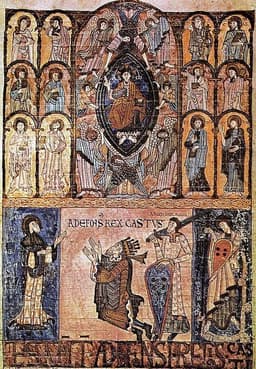
Alfonso II of Asturias
Emperor · Medieval
54.6Total

Krishnadevaraya
Emperor · Medieval
66.5Total
Basic Information
Born
760
1471
Died
842
1529
Era
Medieval
Medieval
Nationality
Asturias
India
Occupation
Emperor
Emperor
Civilization
Western
Indian
Score Comparison
Military (10%)
50.0
72.0
Political (20%)
39.4
75.0
Influence (20%)
61.0
65.0
Legacy (20%)
52.0
55.0
Leadership (15%)
74.0
75.0
Strategy (15%)
43.7
68.1
TOTAL
54.6
66.5
Alfonso II of Asturias — Complete Timeline
791 AD
Established the capital of Asturias at OviedoPolitical Action◆ Major
Alfonso II moved the Asturian capital from Pravia to Oviedo, which he fortified and developed. He built churches, palaces, and defensive walls, making Oviedo the political and cultural center of the kingdom.
Capital CityUrban DevelopmentAsturias
Impact: nationalconstructive
794 AD
Defeated Umayyad forces at the Battle of LutosWar◆ Major
Alfonso II's army defeated an Umayyad raiding force at the Battle of Lutos in the Cantabrian mountains. The victory prevented a major Muslim incursion into Asturias and demonstrated the kingdom's growing military capability.
BattleAsturiasUmayyad
Impact: regionalconstructive
798 AD
Initiated diplomatic relations with the Carolingian EmpirePolitical Action
Alfonso II sent envoys to the court of Charlemagne, establishing diplomatic ties between Asturias and the Carolingian Empire. This alliance provided mutual support against the Umayyads and linked Asturias to broader European Christian networks.
DiplomacyCarolingianAsturias
Impact: regionalconstructive
813 AD
Discovered the tomb of Saint James the GreatCultural
According to tradition, a hermit named Pelagius discovered a tomb in the forest of Libred
Religious DiscoveryPilgrimageSantiago de Compostela
Impact: globalconstructive
Krishnadevaraya — Complete Timeline
1509 AD
Conquest of the Bahmani SultanateWar◆ Major
Krishnadevaraya led a campaign against the Bahmani Sultanate, capturing the fortress of Gulbarga and expanding Vijayanagara territory. This victory established his military reputation and secured the empire's northern frontier.
Military CampaignExpansion
Impact: regional
1510 AD
Patronage of Telugu LiteratureCultural◆ Major
Krishnadevaraya patronized Telugu poets and scholars, including Allasani Peddana, who composed the epic 'Manucharitram'. His court became a center of Telugu literature, earning him the title 'Andhra Bhoja'.
Cultural PatronageLiterature
Impact: regionalconstructive
1513 AD
Expedition to KalingaWar
Krishnadevaraya led a military expedition to the Kalinga region (modern Odisha), defeating the Gajapati king. This campaign extended Vijayanagara influence eastward and secured tribute from the conquered territories.
Military CampaignExpansion
Impact: regional
1515 AD
Construction of the Vijayanagara CityCultural◆ Major
Krishnadevaraya expanded and beautified the Vijayanagara capital, constructing temples, irrigation works, and public buildings. The city became one of the largest and most prosperous in India at the time.
Urban DevelopmentArchitecture
Impact: regionalconstructive
1520 AD
Battle of RaichurWar◆ Major
Krishnadevaraya defeated the combined forces of the Bijapur and Golconda sultanates at Raichur. This victory secured the Raichur Doab region for Vijayanagara and demonstrated his military prowess.
BattleTerritorial Gain
Impact: regional
Expert Analysis
Origins
Alfonso II of Asturias (c. 760-842) was born into the Asturian royal family, son of King Fruela I. After a period of exile and political turmoil, he ascended the throne in 791. His early life was shaped by the ongoing Reconquista against the Umayyad Caliphate. He was known for his piety and chastity, earning the epithet "the Chaste." His reign focused on consolidating Asturian power and establishing a distinct Christian identity.
Krishnadevaraya (1471-1529) was born into the Tuluva dynasty of the Vijayanagara Empire. He became emperor in 1509 after a succession struggle. His early years were marked by training in military and administration under his predecessor, Vira Narasimha. He rose from a relatively obscure background to become the most celebrated ruler of the empire, known for his military conquests and patronage of arts.
Rise to Power
Alfonso II's rise was neither smooth nor immediate. He was forced into exile after his father's assassination and later reclaimed the throne with the support of nobles. His turning point came in 791 when he became king and moved the capital to Oviedo. By fortifying Oviedo and establishing diplomatic ties with Charlemagne's Carolingian Empire (initiated around 795), he strengthened his position. The discovery of the tomb of Saint James (c. 814) at Compostela was a pivotal event, enhancing his religious legitimacy and rallying Christian support.
Krishnadevaraya's rise was marked by military prowess. He ascended the throne in 1509 and immediately launched campaigns to expand Vijayanagara's territory. His major turning point was the Battle of Raichur in 1520, where he defeated the combined forces of Bijapur and Golconda. This victory secured the fertile Raichur Doab and established him as the dominant power in the Deccan. He also conquered the Bahmani Sultanate's fortress of Gulbarga and led an expedition to Kalinga (modern Odisha) around 1513, defeating the Gajapati king.
Leadership & Governance
Alfonso II's leadership was characterized by religious devotion and administrative consolidation. He established Oviedo as the capital, building churches, palaces, and defensive walls. His governance focused on centralizing authority and promoting Christianity as a unifying force. He initiated diplomatic relations with Charlemagne, seeking alliance against the Umayyads. However, his military score of 50.0 reflects limited offensive capability; his victories, like the Battle of Lutos (c. 794), were defensive. His political score of 39.4 indicates a reign more focused on religious legacy than administrative expansion.
Krishnadevaraya's leadership was dynamic and multifaceted. He scored 75.0 in political and 72.0 in military, reflecting his ability to both conquer and govern. He implemented efficient administration, building irrigation systems and public works. His patronage of Telugu literature, including poets like Allasani Peddana, fostered a cultural renaissance. He expanded the capital city, constructing temples and public buildings. His governance was inclusive, appointing capable ministers regardless of caste. His strategy score of 68.1 shows a balanced approach between warfare and state-building.
Triumph & Tragedy
Alfonso II's greatest triumph was the discovery of the tomb of Saint James, which became the foundation of Santiago de Compostela, a major pilgrimage site. This event, scoring 61.0 in influence, elevated Asturias's prestige and helped rally Christian kingdoms. His victory at Lutos prevented a major Umayyad incursion. However, his reign saw limited territorial expansion; his military scored only 50.0. His failure to significantly push back Muslim rule meant Asturias remained a small kingdom. His legacy score of 52.0 is modest, overshadowed by later Reconquista figures.
Krishnadevaraya's triumphs were numerous: the conquest of Raichur, expansion into Kalinga, and patronage of arts. His influence score of 65.0 reflects his cultural impact. However, his reign also saw challenges. The Vijayanagara Empire faced internal succession issues after his death, and his military campaigns strained resources. His legacy score of 55.0 indicates that while he was a great ruler, the empire declined within decades. The Battle of Talikota (1565) saw Vijayanagara's defeat, partly due to the policies of his successors.
Character & Destiny
Alfonso II was known for his piety and chastity, earning the epithet "the Chaste." His character was shaped by religious devotion, which influenced his decisions, such as promoting the cult of Saint James. This focus on spiritual legacy limited his military ambitions. His leadership score of 74.0 reflects his ability to inspire loyalty, but his strategy score of 43.7 shows a cautious approach. Historical assessments view him as a consolidator rather than an expander.
Krishnadevaraya was a charismatic and ambitious ruler, known for his strategic acumen and cultural patronage. His leadership score of 75.0 and strategy score of 68.1 indicate a balanced and effective ruler. He was also known for his justice and administrative reforms. His character combined military boldness with cultural sophistication. However, his focus on expansion may have overextended the empire. Historians praise him as the greatest Vijayanagara emperor, but note that his achievements were not sustained by successors.
Legacy
Alfonso II's legacy is tied to the founding of Santiago de Compostela, which became a symbol of Christian Spain. His establishment of Oviedo as the capital laid the groundwork for the Kingdom of Asturias. The discovery of Saint James's tomb had enduring religious and political impact, fueling the Reconquista. However, his military and political achievements were modest. His influence score of 61.0 reflects this religious legacy, but his overall impact is limited compared to later figures.
Krishnadevaraya's legacy is immense in South Indian history. He expanded Vijayanagara to its greatest extent, fostered a golden age of Telugu literature, and built architectural marvels. His patronage of arts and literature influenced subsequent generations. However, the empire declined after his death, and his military conquests were not permanent. His legacy score of 55.0 reflects his high impact but also the ephemeral nature of his empire.
Conclusion
Krishnadevaraya had greater impact than Alfonso II, as reflected in his higher total score of 66.5 versus 54.6. His military (72.0 vs 50.0), political (75.0 vs 39.4), and strategy (68.1 vs 43.7) scores all significantly exceed Alfonso's. While Alfonso's religious legacy is notable, Krishnadevaraya's achievements in state-building, military expansion, and cultural patronage were more substantial and far-reaching. The Vijayanagara Empire under him was a major power, while Asturias remained a small kingdom. Therefore, Krishnadevaraya stands as the more impactful ruler.
Rankings
🥇
KrishnadevarayaLeader
Mil: 72.0Pol: 75.0Inf: 65.0
66.5
🥈
Alfonso II of Asturias
Mil: 50.0Pol: 39.4Inf: 61.0
54.6
+11.9 behind
How This Comparison Works
Algorithm
Each figure is scored on 6 dimensions (0—100 scale) based on structured historical data: Military (10%), Political (20%), Influence (20%), Legacy (20%), Leadership (15%), Strategy (15%). The weighted total produces the final ranking.
Data Sources
Scores are computed from structured sub-indicators in the database. Scale factors adjust for era (Ancient ×0.85, Modern ×1.0) and civilization size (Eastern ×1.05, Other ×0.80) to account for differences in population and military scale.
Maximum 3 Figures
Comparisons are limited to 2—3 figures to ensure readability and statistical meaningfulness.
Error Margins
±5 points per dimension — Sub-scores are derived from historical records with inherent uncertainty. Two figures within 5 points on a dimension should be considered roughly equivalent in that area.
Total Score Accuracy
±3 points overall — The weighted combination of 6 dimensions produces a total score with approximately ±3 points of uncertainty. Differences of less than 3 points are not statistically significant— the figures are effectively tied.
Known Limitations
- Historical records are incomplete and uneven across civilizations
- Figures from oral-tradition societies may be underrepresented
- Occupation labels can misclassify multi-role figures
- Scores measure capability and impact, not moral character
- Quantitative scoring is a comparison tool, not absolute truth
Capability Radar
Military (10%) — Battles & Warfare
Battles
15
85
Win Rate
20
90
Expansion
15
85
Political (20%) — Governance & Reform
Reform
30
80
Diplomacy
40
85
Economy
35
90
Influence (20%) — Cultural & Global Reach
Cultural
55
85
Global
50
65
Legacy (20%) — Historical Impact
Historical
70
80
Longevity
65
70
Leadership (15%) — Power & Stability
Tenure
60
85
Stability
50
80
Strategy (15%) — Tactics & Innovation
Strategy
20
85
Tactics
25
80
Reform
10
75
Similar Comparisons
Comments & Discussion
No comments yet. Be the first to share your thoughts!