Loading...
Alexios I Komnenos vs Pedro I of Brazil
Alexios I Komnenos leads by 23.8 pts · 2 figures compared
…
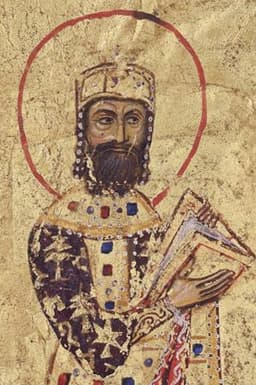
Alexios I Komnenos
Emperor · Medieval
78.4Total
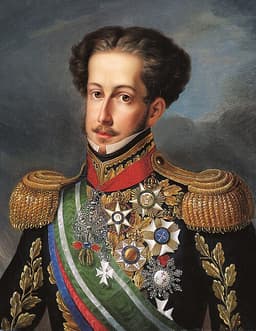
Pedro I of Brazil
Emperor · Modern
54.6Total
Basic Information
Born
1048
1798
Died
1118
1834
Era
Medieval
Modern
Nationality
Byzantine Empire
Brazil
Occupation
Emperor
Emperor
Civilization
Western
Western
Score Comparison
Military (10%)
61.7
55.0
Political (20%)
78.0
62.7
Influence (20%)
88.0
59.0
Legacy (20%)
80.0
50.0
Leadership (15%)
78.0
53.2
Strategy (15%)
68.0
45.0
TOTAL
78.4
54.6
Alexios I Komnenos — Complete Timeline
1081 AD
Battle of DyrrhachiumWar◆ Major
Alexios I Komnenos was defeated by the Norman army under Robert Guiscard at Dyrrhachium. The Byzantine forces were routed, and Alexios barely escaped. This loss allowed the Normans to occupy much of the western Balkans, though Alexios later recovered some territory.
Norman InvasionDefeatBalkans
Impact: regionaltragic
1090 AD
Reforms of the Byzantine Military and EconomyReform◆ Major
Alexios I implemented a series of reforms to restore Byzantine power. He reorganized the army by relying more on foreign mercenaries, reformed the currency (the hyperpyron), and granted tax exemptions to the Church. These measures stabilized the empire after decades of decline.
Military ReformEconomic ReformKomnenian Restoration
Impact: nationalconstructive
1095 AD
Appeal to the West: Council of PiacenzaPolitical Action
Alexios I sent envoys to Pope Urban II at the Council of Piacenza, requesting military aid against the Seljuk Turks. This appeal contributed to Urban's call for the First Crusade at the Council of Clermont later that year, initiating the Crusader movement.
First CrusadePope Urban IISeljuk Turks
Impact: global
1097 AD
First Crusade: Siege of NicaeaWar◆ Major
Alexios I cooperated with the Crusader army to besiege and capture Nicaea from the Seljuk Turks. The city was surrendered to Byzantine control, and Alexios used the Crusaders to recover key territories in Anatolia, though tensions later arose over land claims.
First CrusadeNicaeaByzantine-Crusader Relations
Impact: regionalconstructive
Pedro I of Brazil — Complete Timeline
1822 AD
Declaration of Independence of BrazilPolitical Action
Pedro I declared Brazil's independence from Portugal on September 7, 1822, at the Ipiranga River in S
Impact: globalprogressive
Coronation as Emperor of BrazilPolitical Action◆ Major
Pedro I was crowned Emperor of Brazil on December 1, 1822, in Rio de Janeiro. The coronation formalized the new imperial government, with Pedro I as constitutional monarch, though he retained significant executive powers.
Impact: nationalconstructive
1823 AD
War of Independence of BrazilWar◆ Major
Pedro I led Brazilian forces against Portuguese loyalists in the War of Independence. Key battles occurred in Bahia, Maranh
Impact: national
Dissolution of the Constituent AssemblyPolitical Action◆ Major
Pedro I dissolved the Constituent Assembly after conflicts over the constitution's limits on imperial power. He then imposed the 1824 Constitution, which granted the emperor extensive powers, including the Moderating Power, centralizing authority.
Impact: nationaldestructive
1831 AD
Abdication of the Brazilian ThronePolitical Action
Pedro I abdicated the Brazilian throne in favor of his five-year-old son Pedro II on April 7, 1831. He returned to Portugal to claim the Portuguese throne, leaving Brazil under a regency until his son came of age.
Impact: national
Expert Analysis
Alexios I Komnenos vs Pedro I of Brazil
### The Emperor and the Liberator: Alexios I Komnenos and Pedro I of Brazil
In a cramped, torch-lit chamber of the Great Palace of Constantinople, a middle-aged emperor in a purple cloak watched his world collapse. It was October 1081, and Alexios I Komnenos had just seen his finest army shattered by Norman knights on the Albanian coast. Less than a thousand years later, on a sun-drenched riverbank in São Paulo, a young prince in a blue and white uniform raised his sword and shouted, “Independence or Death!” The contrast is stark: one man fighting to save an ancient empire, the other fighting to create a new nation. Yet both were emperors, both were founders of dynasties, and both were men whose personal drives shaped the destiny of millions. What made one a master of survival and the other a tragic figure of abdication?
### Origins
Alexios Komnenos was born into the Byzantine military aristocracy in 1048, a world of court intrigue and frontier warfare. His family, the Komnenoi, were seasoned generals who had already produced one emperor. The Byzantine Empire he inherited in 1081 was a shadow of its former self: the Normans were invading from the west, the Seljuk Turks had swallowed Anatolia in the east, and the treasury was empty. Alexios grew up in the saddle, learning that survival meant cunning, patience, and the willingness to play a long game.
Pedro of Braganza, born in 1798, was the son of the King of Portugal, but his world was one of exile. When Napoleon invaded Portugal in 1807, the entire royal court fled to Brazil—a colony that suddenly became the seat of empire. Pedro grew up in Rio de Janeiro, a prince in a tropical court, surrounded by the tensions between Portuguese tradition and Brazilian ambition. He was impulsive, passionate, and deeply aware that his destiny lay not in Europe but in the New World.
### Rise to Power
Alexios did not seize the throne through a grand revolution. In 1081, he was a successful general who had crushed a rebellion for the previous emperor, only to see that emperor’s incompetence drive the empire to the brink. When his own troops proclaimed him emperor, he played the role of reluctant savior, accepting the crown only after it was forced upon him. He was thirty-three years old, and he knew that the throne of Constantinople was the most dangerous seat in Christendom.
Pedro’s rise was far more theatrical. When his father, King João VI, returned to Portugal in 1821, he left Pedro as regent of Brazil. The Portuguese parliament then attempted to reduce Brazil to colonial status, stripping Pedro of his power. The Brazilian elite, fearing a return to subservience, rallied around the prince. On September 7, 1822, at the Ipiranga River, Pedro made his choice: he declared Brazil independent, with himself as its emperor. He was twenty-four years old, and he had just created a nation.
### Leadership & Governance
Alexios ruled for thirty-seven years, and his leadership was a masterclass in pragmatism. Militarily, he was a cautious commander. His defeat at Dyrrhachium in 1081 taught him never to trust a pitched battle against Western knights. Instead, he reformed the Byzantine army, relying on a mix of native troops and foreign mercenaries, and he used diplomacy as his sharpest weapon. His political genius shone in his handling of the First Crusade. When he appealed to Pope Urban II at the Council of Piacenza in 1095, he was desperate for mercenaries to fight the Turks. What he got was a massive, unruly army of Frankish knights. Alexios managed this explosion of Western power with remarkable skill: he extracted oaths of loyalty, guided the crusaders to retake Nicaea in 1097, and ensured the city returned to Byzantine control. He never fully trusted the crusaders, but he used them to recover lost territory.
Pedro’s rule was shorter and more turbulent. As a military leader, he led Brazilian forces in the War of Independence against Portuguese loyalists in 1823, showing personal bravery in the battles of Bahia and Maranhão. But his political instincts were poor. He imposed a constitution that concentrated power in his hands, and when the Constituent Assembly resisted, he dissolved it by force in November 1823, then imposed his own charter. This authoritarian streak alienated the very elites who had made him emperor. He was a romantic nationalist, but he lacked the patience for the compromises of governance.
### Triumph & Tragedy
Alexios’s greatest triumph was not a single battle but the survival of his empire. By the time of his death in 1118, the Byzantine Empire had recovered its footing: the Normans were contained, the Turks were pushed back, and the Komnenian dynasty was secure. His tragedy was that he had set in motion forces he could not control. The Crusader states he helped create became a permanent Western presence in the East, and the Latin knights he summoned would one day turn on Constantinople itself.
Pedro’s triumph was the independence of Brazil—a vast, united nation that remains the largest country in Latin America. His tragedy was his own character. He was a man of grand gestures but poor judgment. His affair with the Marchioness of Santos scandalized the court, his conflicts with the legislature paralyzed his government, and his authoritarian streak made him unpopular. In 1831, after a series of political crises, he abdicated in favor of his five-year-old son, Pedro II, and sailed back to Portugal. He was thirty-two years old, and his Brazilian dream was over.
### Character & Destiny
Alexios was a survivor. He was cunning, patient, and deeply religious, but his piety was tempered by a ruthless realism. He knew when to fight and when to negotiate, and he understood that power was a game of inches. His personality was shaped by the Byzantine tradition of imperial survival: he was a master of the long war, the slow recovery, the strategic retreat.
Pedro was a romantic. He was brave, charismatic, and impulsive, but he lacked the discipline to govern. His personality was shaped by the Enlightenment ideals of liberty and the Portuguese tradition of absolutism—a contradiction that tore him apart. He wanted to be a liberator, but he could not accept the limits that liberty imposed on his own power.
### Legacy
Alexios is remembered as the founder of the Komnenian restoration, the man who saved Byzantium from collapse and launched the age of the Crusades. His legacy is complex: he strengthened his empire but also opened it to Western influence that would ultimately prove fatal. He is a figure of admiration for students of Byzantine history, a quiet hero of survival.
Pedro is remembered as the Liberator of Brazil, the man who declared independence and kept the country united. But his legacy is overshadowed by his abdication and by the long, stable reign of his son. He is a figure of pathos—a man who achieved greatness but could not sustain it.
### Conclusion
Both Alexios and Pedro were emperors who founded dynasties, but their fates were determined by the difference between patience and passion. Alexios endured for decades, maneuvering through the chaos of the medieval world; Pedro burned bright and fast, then vanished. Their stories remind us that leadership is not merely about seizing power but about holding it—and that the greatest victories are often the ones that never make a grand speech. In the end, one emperor saved an empire, and the other created a nation. Both changed the world. But only one knew how to stay.
Rankings
🥇
Alexios I KomnenosLeader
Mil: 61.7Pol: 78.0Inf: 88.0
78.4
🥈
Pedro I of Brazil
Mil: 55.0Pol: 62.7Inf: 59.0
54.6
+23.8 behind
How This Comparison Works
Algorithm
Each figure is scored on 6 dimensions (0—100 scale) based on structured historical data: Military (10%), Political (20%), Influence (20%), Legacy (20%), Leadership (15%), Strategy (15%). The weighted total produces the final ranking.
Data Sources
Scores are computed from structured sub-indicators in the database. Scale factors adjust for era (Ancient ×0.85, Modern ×1.0) and civilization size (Eastern ×1.05, Other ×0.80) to account for differences in population and military scale.
Maximum 3 Figures
Comparisons are limited to 2—3 figures to ensure readability and statistical meaningfulness.
Error Margins
±5 points per dimension — Sub-scores are derived from historical records with inherent uncertainty. Two figures within 5 points on a dimension should be considered roughly equivalent in that area.
Total Score Accuracy
±3 points overall — The weighted combination of 6 dimensions produces a total score with approximately ±3 points of uncertainty. Differences of less than 3 points are not statistically significant— the figures are effectively tied.
Known Limitations
- Historical records are incomplete and uneven across civilizations
- Figures from oral-tradition societies may be underrepresented
- Occupation labels can misclassify multi-role figures
- Scores measure capability and impact, not moral character
- Quantitative scoring is a comparison tool, not absolute truth
Capability Radar
Military (10%) — Battles & Warfare
Battles
75
35
Win Rate
70
40
Expansion
60
30
Political (20%) — Governance & Reform
Reform
85
45
Diplomacy
90
50
Economy
70
30
Influence (20%) — Cultural & Global Reach
Cultural
70
40
Global
75
45
Legacy (20%) — Historical Impact
Historical
85
55
Longevity
80
50
Leadership (15%) — Power & Stability
Tenure
80
55
Stability
75
25
Strategy (15%) — Tactics & Innovation
Strategy
85
35
Tactics
80
30
Reform
75
20
Similar Comparisons
Comments & Discussion
BalkanButcher6/16/2026
Alexios was a master of playing the long game while Pedro was all flash and no substance. Dyrrhachium was a disaster in 1081, sure, but Alexios learned from it and spent decades patiently rebuilding Byzantium through diplomacy with the Venetians and outright bribery of the Crusaders. Pedro? He declared independence dramatically, then abandoned Brazil to fight for his daughter’s claim in Portugal. One man rebuilt an empire; the other ran away from the one he created.
紫袍王爷6/16/2026
阿莱克修斯就是个精算师皇帝,自己国内都快破产还拿丝绸和特权贿赂十字军,玩得一手好外交。1081年杜拉佐惨败后他死皮赖脸求威尼斯帮忙,结果人家连战船都省了——直接给钱。而佩德罗一世呢?1822年喊一句独立万岁就以为完事了,结果国内内战打得稀烂,自己撂挑子回欧洲争王位去了。这是个人才,但不是个治国的人才。
DebtCollectorPedro6/16/2026
Let’s be real—Pedro I fought actual wars for independence while Alexios bribed his way through crises. Pedro led troops at the Battle of Itororó in 1827, got shot in the hand, and kept fighting. Alexios hid in Constantinople while the First Crusade did his dirty work. Sure, the Crusaders were a problem, but only because he couldn’t control them. Pedro’s "Independence or Death" was a real moment of risk. Alexios’s survival was just luck and gold.
斗蛐蛐大师6/16/2026
别吹阿莱克修斯了,他根本没亲自指挥大胜仗。1081年杜拉佐战役前,他连诺曼人长矛阵都没见过就被打残了。后来的胜利全靠雇佣兵和十字军帮他擦屁股。反观佩德罗,1831年为了女儿权力回国打仗,虽然结局悲催,但好歹是真刀真枪干。阿莱克修斯就是个靠裙带关系和小金库苟活的皇帝,佩德罗至少敢押上自己的命。
RevisionistRiot6/16/2026
Both were pawns of their systems, stop romanticizing. Alexios I didn’t “save” Byzantium—he mortgaged it to Venice and the Crusaders, trading long-term autonomy for short-term survival. The Komnenian restoration collapsed within a century because his deals drained the empire. Pedro I was worse: he imposed a constitutional monarchy on Brazil that favored elites, then left the country deep in debt from the Cisplatine War. Neither was a hero; they were just better at spinning their failures.