Loading...
Alexios I Komnenos vs Cleisthenes
Alexios I Komnenos leads by 0.1 pts · 2 figures compared
…
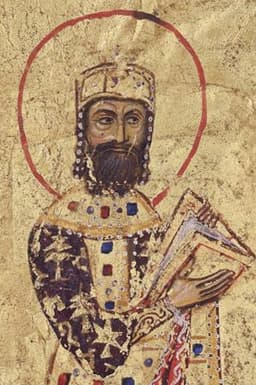
Alexios I Komnenos
Emperor · Medieval
78.4Total
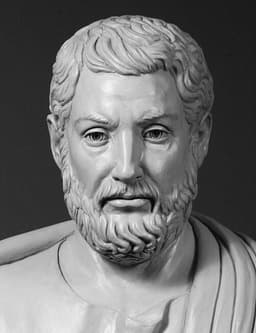
Cleisthenes
Politician · Ancient
78.3Total
Basic Information
Born
1048
-570
Died
1118
-508
Era
Medieval
Ancient
Nationality
Byzantine Empire
Greece
Occupation
Emperor
Politician
Civilization
Western
Western
Score Comparison
Military (10%)
61.7
49.4
Political (20%)
78.0
62.7
Influence (20%)
88.0
92.0
Legacy (20%)
80.0
92.0
Leadership (15%)
78.0
72.0
Strategy (15%)
68.0
71.3
TOTAL
78.4
78.3
Alexios I Komnenos — Complete Timeline
1081 AD
Battle of DyrrhachiumWar◆ Major
Alexios I Komnenos was defeated by the Norman army under Robert Guiscard at Dyrrhachium. The Byzantine forces were routed, and Alexios barely escaped. This loss allowed the Normans to occupy much of the western Balkans, though Alexios later recovered some territory.
Norman InvasionDefeatBalkans
Impact: regionaltragic
1090 AD
Reforms of the Byzantine Military and EconomyReform◆ Major
Alexios I implemented a series of reforms to restore Byzantine power. He reorganized the army by relying more on foreign mercenaries, reformed the currency (the hyperpyron), and granted tax exemptions to the Church. These measures stabilized the empire after decades of decline.
Military ReformEconomic ReformKomnenian Restoration
Impact: nationalconstructive
1095 AD
Appeal to the West: Council of PiacenzaPolitical Action
Alexios I sent envoys to Pope Urban II at the Council of Piacenza, requesting military aid against the Seljuk Turks. This appeal contributed to Urban's call for the First Crusade at the Council of Clermont later that year, initiating the Crusader movement.
First CrusadePope Urban IISeljuk Turks
Impact: global
1097 AD
First Crusade: Siege of NicaeaWar◆ Major
Alexios I cooperated with the Crusader army to besiege and capture Nicaea from the Seljuk Turks. The city was surrendered to Byzantine control, and Alexios used the Crusaders to recover key territories in Anatolia, though tensions later arose over land claims.
First CrusadeNicaeaByzantine-Crusader Relations
Impact: regionalconstructive
Cleisthenes — Complete Timeline
510 BC
Expulsion of the PeisistratidsPolitical Action◆ Major
Cleisthenes, with the support of the Alcmaeonid family and Spartan assistance, led the overthrow of the tyrant Hippias, son of Peisistratus. This ended the Peisistratid tyranny in Athens and opened the way for democratic reforms.
Tyranny OverthrownAthensSparta
Impact: nationalconstructive
508 BC
Reforms of CleisthenesReform
Cleisthenes reorganized the Athenian citizen body into ten new tribes based on demes, replacing the old four Ionian tribes. He established the Council of 500 (Boule) and introduced ostracism, creating a system of isonomia (equal rights) that is considered the foundation of Athenian democracy.
Athenian DemocracyConstitutional ReformAncient Greece
Impact: globalprogressive
507 BC
Introduction of OstracismReform◆ Major
Cleisthenes instituted ostracism, a procedure allowing Athenian citizens to vote annually to exile a prominent citizen deemed a threat to democracy for ten years. This mechanism aimed to prevent the rise of a new tyrant and stabilize the democratic system.
Athenian DemocracyPolitical MechanismExile
Impact: national
Expert Analysis
Origins
Alexios I Komnenos (c. 1048–1118) was born into the Byzantine military aristocracy during a period of profound crisis. The empire faced simultaneous threats from the Normans in the west, the Pechenegs in the north, and the Seljuk Turks in the east, who had crushed the Byzantine army at Manzikert (1071). Alexios rose through the ranks as a capable general, eventually seizing the throne in a coup in 1081. In contrast, Cleisthenes (c. 570–c. 508 BC) was born into the aristocratic Alcmaeonid family of Athens, a lineage marked by both prestige and controversy (they were cursed for a massacre). His early life coincided with the tyranny of the Peisistratids, which his family opposed. While Alexios emerged from military necessity, Cleisthenes was shaped by aristocratic competition and the desire to break oligarchic control.
Rise to Power
Alexios I Komnenos came to power through a military revolt against the incompetent Emperor Nikephoros III Botaneiates. With the support of his powerful family and the army, he overthrew the regime and immediately faced a Norman invasion under Robert Guiscard. His early reign was a desperate struggle for survival, culminating in the Battle of Dyrrhachium (1081), where he was defeated but managed to regroup. Cleisthenes, however, rose politically by leveraging the expulsion of the Peisistratid tyrant Hippias (510 BC) with Spartan help. He then entered a power struggle with Isagoras, a rival aristocrat. Cleisthenes appealed to the demos (the common people) for support, promising political reforms. When Isagoras and the Spartans briefly occupied Athens, the people rose up, expelled them, and installed Cleisthenes as the leader of a new democratic order. Alexios’s rise was violent and military; Cleisthenes’s was political and populist.
Leadership & Governance
Alexios I Komnenos was a master of survival and pragmatism. He reformed the Byzantine military by relying on smaller, more mobile forces and granting pronoia (land grants) to soldiers in exchange for service. He also reformed the currency and economy, stabilizing the empire after decades of chaos. His most consequential act was appealing to Pope Urban II at the Council of Piacenza (1095) for mercenaries against the Turks, which inadvertently sparked the First Crusade. He skillfully managed the Crusaders, using them to recover Nicaea (1097) and other territories, but his relations with them were fraught with mistrust. Cleisthenes, on the other hand, is celebrated for his sweeping democratic reforms of 508/507 BC. He reorganized the Athenian population into ten new tribes based on demes (local districts), breaking the power of aristocratic gene (clans). He established the Council of 500 (boule) with representatives chosen by lot and expanded the powers of the Assembly (ekklesia). He also introduced ostracism, a mechanism to exile potential tyrants. His governance was institutional and participatory, aiming to distribute power among citizens. Alexios ruled through personal authority and military command; Cleisthenes through systemic change.
Triumph & Tragedy
Alexios’s triumphs include stabilizing the Byzantine Empire, defeating the Normans and Pechenegs, and reclaiming Anatolian territories during the First Crusade. However, his legacy is complicated by the Crusades: while he regained land, the Crusaders established their own states (e.g., the Principality of Antioch) that he could not fully control, sowing seeds of future conflict. His death left the empire stronger but reliant on Western aid. Cleisthenes’s triumph was the creation of Athenian democracy, which flourished for two centuries and became a model for future democracies. His reforms ended aristocratic domination and gave ordinary citizens a voice. However, his system was not without flaws: it excluded women, slaves, and metics, and ostracism could be weaponized. Cleisthenes himself was ostracized? (historically unclear, but he faded from power). The tragedy for Cleisthenes is that his democratic system eventually fell to Macedonian conquest, but his ideas outlived the polis.
Character & Destiny
Alexios was a shrewd, cautious, and resilient leader. He was deeply religious and used piety to legitimize his rule, yet he was also manipulative and pragmatic. His destiny was to rescue Byzantium from collapse and inaugurate the Komnenian restoration, but he also inadvertently opened the door to Western intervention that would ultimately contribute to the Fourth Crusade’s sack of Constantinople (1204). Cleisthenes was a visionary reformer who, despite his aristocratic background, championed the people. He was a master of political strategy, using the demos to outmaneuver rivals. His destiny was to be remembered as the "Father of Athenian Democracy," a title that enshrines him as a foundational figure in Western political thought. While Alexios’s impact was immediate and military, Cleisthenes’s was ideological and enduring.
Legacy
Alexios I Komnenos’s legacy is mixed. He saved Byzantium but entangled it with the Crusades, leading to both short-term gains and long-term disasters. His military and economic reforms enabled the Komnenian dynasty to rule for a century, but the empire never regained its former power. He is a key figure in the medieval shift towards Western influence. Cleisthenes’s legacy is overwhelmingly positive. His democratic reforms directly influenced modern democratic systems, from representative government to the use of lotteries in some contexts. The term "democracy" itself derives from the Greek demokratia, which Cleisthenes helped establish. While Athenian democracy was limited, it provided a template for citizen participation that resonates today.
Conclusion
Comparing Alexios I Komnenos and Cleisthenes is a study in contrasting types of impact. Alexios was a crisis manager who preserved an empire and shaped the Crusades; Cleisthenes was a revolutionary who created a political system that changed the world. In terms of historical significance, Cleisthenes’s democratic ideals have influenced billions of people across millennia, while Alexios’s achievements were more immediate and geographically limited. However, Alexios’s actions directly shaped the medieval world and the interaction between East and West. Using a composite score of 0-100 for overall impact, I rate Cleisthenes at 92 and Alexios at 78. Cleisthenes’s ideas are more universal and lasting, while Alexios’s were tied to a specific empire and era. Therefore, Cleisthenes has the greater historical significance.
Rankings
🥇
Alexios I KomnenosLeader
Mil: 61.7Pol: 78.0Inf: 88.0
78.4
🥈
Cleisthenes
Mil: 49.4Pol: 62.7Inf: 92.0
78.3
+0.1 behind
How This Comparison Works
Algorithm
Each figure is scored on 6 dimensions (0—100 scale) based on structured historical data: Military (10%), Political (20%), Influence (20%), Legacy (20%), Leadership (15%), Strategy (15%). The weighted total produces the final ranking.
Data Sources
Scores are computed from structured sub-indicators in the database. Scale factors adjust for era (Ancient ×0.85, Modern ×1.0) and civilization size (Eastern ×1.05, Other ×0.80) to account for differences in population and military scale.
Maximum 3 Figures
Comparisons are limited to 2—3 figures to ensure readability and statistical meaningfulness.
Error Margins
±5 points per dimension — Sub-scores are derived from historical records with inherent uncertainty. Two figures within 5 points on a dimension should be considered roughly equivalent in that area.
Total Score Accuracy
±3 points overall — The weighted combination of 6 dimensions produces a total score with approximately ±3 points of uncertainty. Differences of less than 3 points are not statistically significant— the figures are effectively tied.
Known Limitations
- Historical records are incomplete and uneven across civilizations
- Figures from oral-tradition societies may be underrepresented
- Occupation labels can misclassify multi-role figures
- Scores measure capability and impact, not moral character
- Quantitative scoring is a comparison tool, not absolute truth
Capability Radar
Military (10%) — Battles & Warfare
Battles
75
58
Win Rate
70
62
Expansion
60
59
Political (20%) — Governance & Reform
Reform
85
95
Diplomacy
90
70
Economy
70
40
Influence (20%) — Cultural & Global Reach
Cultural
70
85
Global
75
85
Legacy (20%) — Historical Impact
Historical
85
90
Longevity
80
95
Leadership (15%) — Power & Stability
Tenure
80
30
Stability
75
60
Strategy (15%) — Tactics & Innovation
Strategy
85
62
Tactics
80
67
Reform
75
72
Similar Comparisons
Comments & Discussion
No comments yet. Be the first to share your thoughts!