Loading...
Alexander Karađorđevic vs Mantatisi
Mantatisi leads by 2.5 pts · 2 figures compared
…
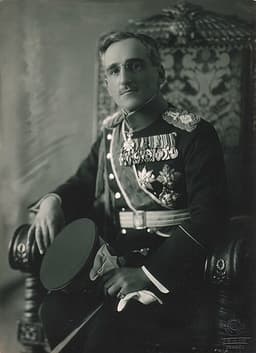
Alexander Karađorđevic
Emperor · Modern
44.7Total

Mantatisi
Emperor · Modern
47.2Total
Basic Information
Born
1806
1780
Died
1885
1836
Era
Modern
Modern
Nationality
Serbia
Sotho
Occupation
Emperor
Emperor
Civilization
Western
Other
Score Comparison
Military (10%)
22.6
20.0
Political (20%)
43.7
39.4
Influence (20%)
49.4
52.5
Legacy (20%)
42.5
43.3
Leadership (15%)
62.2
62.2
Strategy (15%)
35.7
60.0
TOTAL
44.7
47.2
Alexander Karađorđevic — Complete Timeline
1842 AD
Elected Prince of SerbiaPolitical Action◆ Major
Alexander Kara
ElectionDynasty ChangeSerbia
Impact: national
1843 AD
Implemented Administrative ReformsReform◆ Major
Prince Alexander introduced administrative reforms aimed at modernizing the Serbian state, including the establishment of a council of ministers and a more structured bureaucracy. These reforms were influenced by Western European models.
Administrative ReformModernizationGovernment
Impact: nationalconstructive
1858 AD
Abdicated the ThronePolitical Action◆ Major
Under pressure from the Ottoman Empire and internal opposition, Prince Alexander abdicated the throne. He was succeeded by Milo
AbdicationDynasty ChangeExile
Impact: national
Mantatisi — Complete Timeline
1822 AD
Leadership During DifaqaneWar◆ Major
Mantatisi led the Tlokwa people during the Difaqane (Mfecane), a period of widespread chaos and warfare in southern Africa. She successfully defended her people against attacks from the Hlubi and other groups, earning a reputation as a fierce warrior queen.
DifaqaneWarfareTlokwa
Impact: regional
1823 AD
Battle of the Tlokwa StrongholdWar
Mantatisi's forces repelled an attack by the Hlubi army at the Tlokwa mountain stronghold. The victory secured Tlokwa survival during the Difaqane and solidified her leadership among the Sotho-Tswana peoples.
DifaqaneBattleTlokwa
Impact: regional
1824 AD
Alliance with MoshoeshoePolitical Action
Mantatisi formed a temporary alliance with Moshoeshoe I, the future founder of Lesotho, to counter common enemies during the Difaqane. The alliance was short-lived but demonstrated her diplomatic skills.
AllianceDifaqaneSotho
Impact: regional
Expert Analysis
Origins
Alexander Karađorđevic was born on October 11, 1806, in Topola, Serbia, to Karađorđe Petrović, leader of the First Serbian Uprising, and Jelena Jovanović. His father's rebellion against Ottoman rule established the Karađorđevic dynasty. Alexander was educated in Russia and Hungary, learning about European governance and military tactics. He returned to Serbia after his father's exile and death, positioning himself as a candidate for leadership.
Mantatisi, born around 1780, was a queen of the Tlokwa people, a subgroup of the Basotho in present-day South Africa. Little is known of her early life, but she emerged as a leader during the Difaqane (or Mfecane), a period of intense warfare and migration in southern Africa caused by the rise of the Zulu kingdom. Her husband, the Tlokwa chief, died, leaving her to lead her people in a time of crisis.
Rise to Power
Alexander rose to power in 1842 when Prince Miloš Obrenović abdicated under Ottoman pressure. The Serbian Skupština (assembly) elected Alexander as Prince of Serbia, hoping for stability and reform. His reign began with support from both the Ottoman Empire and the Habsburg monarchy, but he faced internal opposition from the Obrenović faction. Key turning points included his acceptance of the Ottoman-backed constitution in 1838, which limited his authority.
Mantatisi's rise was forced by circumstance. After her husband's death, she assumed leadership of the Tlokwa around 1820, during the height of the Difaqane. She united her people and led them in defensive wars against invading groups, including the Hlubi and Ngwane. Her alliance with Moshoeshoe I, a rising Basotho chief, strengthened her position. Her leadership was tested in the Battle of the Tlokwa Stronghold, where she repelled a Hlubi attack, securing her people's survival.
Leadership & Governance
Alexander Karađorđevic governed as a constitutional monarch, but his power was constrained by the Ottoman suzerainty and internal factions. He implemented administrative reforms, creating a council of ministers and a centralized bureaucracy. He also modernized the legal system, modeled on European codes. However, his reliance on the Ottoman-backed constitution made him unpopular with nationalists who sought greater independence.
Mantatisi's leadership was defined by military strategy and coalition-building. She led her people in guerrilla warfare, using the mountainous terrain of the Tlokwa stronghold for defense. She formed temporary alliances, such as with Moshoeshoe, to counter larger enemies. Her governance was decentralized, relying on clan loyalty and consensus. She scored 62.2 in leadership, matching Alexander's score, but her strategy score of 60.0 exceeded his 35.7.
Triumph & Tragedy
Alexander's greatest success was his administrative modernization, which laid the foundation for a more organized Serbian state. He also maintained peace with the Ottoman Empire, avoiding war. However, his greatest failure was his inability to navigate internal politics. He abdicated in 1858 after a rebellion by the Obrenović faction, restoring Miloš Obrenović to power. His reign ended in exile, and he died in 1885 in Austria.
Mantatisi's triumph was leading the Tlokwa through the Difaqane, preserving their identity and territory. The Battle of the Tlokwa Stronghold was a decisive victory that ensured her people's survival. Her tragedy was the eventual decline of the Tlokwa as a major power. After the Difaqane, Moshoeshoe's Basotho kingdom absorbed many Tlokwa, and Mantatisi's influence waned. She died around 1830, with her legacy overshadowed by Moshoeshoe.
Character & Destiny
Alexander was cautious and diplomatic, but indecisive. He sought to balance Ottoman demands with Serbian nationalism, pleasing neither. His character led to a passive reign, and he failed to assert independence. Historians view him as a transitional figure, unable to match the charisma of the Obrenovićs.
Mantatisi was resilient and strategic, adapting to the chaos of the Difaqane. She was a warrior queen who inspired loyalty. Her character shaped her destiny as a defender of her people, but her lack of a lasting political structure limited her impact. She scored 52.5 in influence, slightly above Alexander's 49.4.
Legacy
Alexander Karađorđevic's legacy is mixed. He is remembered as the first prince of the Karađorđevic dynasty, but his reign was brief and ineffective. His administrative reforms were later built upon by the Obrenovićs. He scored 42.5 in legacy, reflecting his limited long-term impact. His dynasty, however, would return to power in 1903 after the May Overthrow.
Mantatisi's legacy is as a symbol of resistance during the Difaqane. She is celebrated in Sotho oral tradition as a warrior queen. Her people, the Tlokwa, maintain their identity within Lesotho. She scored 43.3 in legacy, slightly higher than Alexander. Her influence endures in southern African history, though her direct political achievements were minimal.
Conclusion
Comparing Alexander Karađorđevic and Mantatisi reveals two leaders from vastly different contexts. Alexander scored a total of 44.7, while Mantatisi scored 47.2. Both achieved moderate leadership scores (62.2 each), but Mantatisi's higher strategy and influence scores reflect her success in a more chaotic environment. Alexander's administrative reforms were important for Serbia, but his abdication and failure to secure independence limit his impact. Mantatisi's defense of her people during the Difaqane ensured their survival, a more concrete achievement given the circumstances. Therefore, Mantatisi had a greater impact relative to her context, making her the more effective leader.
Rankings
🥇
MantatisiLeader
Mil: 20.0Pol: 39.4Inf: 52.5
47.2
🥈
Alexander Karađorđevic
Mil: 22.6Pol: 43.7Inf: 49.4
44.7
+2.5 behind
How This Comparison Works
Algorithm
Each figure is scored on 6 dimensions (0—100 scale) based on structured historical data: Military (10%), Political (20%), Influence (20%), Legacy (20%), Leadership (15%), Strategy (15%). The weighted total produces the final ranking.
Data Sources
Scores are computed from structured sub-indicators in the database. Scale factors adjust for era (Ancient ×0.85, Modern ×1.0) and civilization size (Eastern ×1.05, Other ×0.80) to account for differences in population and military scale.
Maximum 3 Figures
Comparisons are limited to 2—3 figures to ensure readability and statistical meaningfulness.
Error Margins
±5 points per dimension — Sub-scores are derived from historical records with inherent uncertainty. Two figures within 5 points on a dimension should be considered roughly equivalent in that area.
Total Score Accuracy
±3 points overall — The weighted combination of 6 dimensions produces a total score with approximately ±3 points of uncertainty. Differences of less than 3 points are not statistically significant— the figures are effectively tied.
Known Limitations
- Historical records are incomplete and uneven across civilizations
- Figures from oral-tradition societies may be underrepresented
- Occupation labels can misclassify multi-role figures
- Scores measure capability and impact, not moral character
- Quantitative scoring is a comparison tool, not absolute truth
Capability Radar
Military (10%) — Battles & Warfare
Battles
15
45
Win Rate
10
40
Expansion
10
40
Political (20%) — Governance & Reform
Reform
30
25
Diplomacy
35
30
Economy
25
20
Influence (20%) — Cultural & Global Reach
Cultural
20
35
Global
15
20
Legacy (20%) — Historical Impact
Historical
30
40
Longevity
25
30
Leadership (15%) — Power & Stability
Tenure
40
35
Stability
20
25
Strategy (15%) — Tactics & Innovation
Strategy
15
45
Tactics
10
50
Reform
20
30
Similar Comparisons
Comments & Discussion
No comments yet. Be the first to share your thoughts!