Loading...
Alcide De Gasperi vs Mao Zedong
Mao Zedong leads by 23.9 pts · 2 figures compared
…
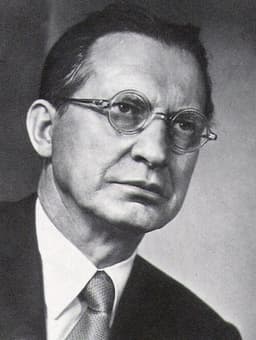
Alcide De Gasperi
Politician · Modern
55.5Total
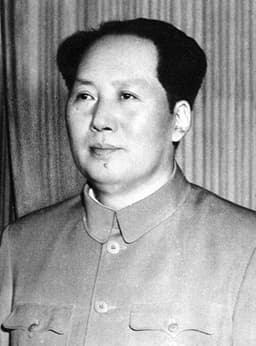
Mao Zedong
Politician · Modern
79.4Total
Basic Information
Born
1881
1893
Died
1954
1976
Era
Modern
Modern
Nationality
Italy
China
Occupation
Politician
Politician
Civilization
Western
Eastern
Score Comparison
Military (10%)
12.4
75.0
Political (20%)
85.0
88.0
Influence (20%)
65.0
85.0
Legacy (20%)
40.0
70.0
Leadership (15%)
80.7
85.0
Strategy (15%)
31.5
72.0
TOTAL
55.5
79.4
Alcide De Gasperi — Complete Timeline
1946 AD
First Prime Minister of the Italian RepublicPolitical Action
De Gasperi became the first prime minister of the newly proclaimed Italian Republic in December 1945. He led a coalition government that included Christian Democrats, Socialists, and Communists. His government oversaw the transition from monarchy to republic.
RepublicGovernmentTransition
Impact: nationalconstructive
1947 AD
Peace Treaty of ParisPolitical Action◆ Major
De Gasperi signed the Treaty of Paris, which formally ended World War II for Italy. Italy lost its colonies, ceded territory to Yugoslavia and France, and paid reparations. The treaty was unpopular but allowed Italy to regain sovereignty and join the Western alliance.
TreatyWorld War IIDiplomacy
Impact: global
Expulsion of Communists from GovernmentPolitical Action
De Gasperi expelled the Italian Communist Party and Socialist Party from his coalition government in May 1947. This move aligned Italy with the United States and the Marshall Plan, deepening the Cold War divide. It solidified Christian Democratic dominance for decades.
Cold WarMarshall PlanCoalition
Impact: global
1949 AD
Italian Membership in NATOPolitical Action◆ Major
De Gasperi led Italy into the North Atlantic Treaty Organization (NATO) as a founding member. This decision anchored Italy in the Western bloc during the Cold War and secured U.S. military and economic support. It was opposed by the Communist Party.
NATOCold WarAlliance
Impact: globalconstructive
Mao Zedong — Complete Timeline
1934 AD
Long MarchWar
Mao Zedong led the Chinese Red Army on a strategic retreat from Nationalist forces, covering approximately 6,000 miles over 370 days. The march solidified Mao's leadership within the Chinese Communist Party and became a foundational myth of the Communist revolution.
Chinese Civil WarCommunist RevolutionRetreat
Impact: national
1949 AD
Proclamation of the People's Republic of ChinaPolitical Action
Mao Zedong declared the founding of the People's Republic of China from Tiananmen Gate in Beijing. This ended the Chinese Civil War and established Communist rule over mainland China, with Mao as Chairman of the Central People's Government.
Founding of PRCCommunist VictoryRevolution
Impact: global
1958 AD
Great Leap ForwardReform◆ Major
Mao launched a campaign to rapidly industrialize China and collectivize agriculture. The policy led to widespread mismanagement, resulting in a famine that caused an estimated 15-45 million deaths between 1959 and 1961.
FamineIndustrializationCollectivization
Impact: nationaldestructive
1960 AD
Sino-Soviet SplitPolitical Action◆ Major
Mao's ideological differences with Soviet leader Nikita Khrushchev led to a breakdown in relations between China and the Soviet Union. The split ended the Sino-Soviet alliance and reshaped global Cold War dynamics, with China pursuing an independent path.
Cold WarIdeological ConflictAlliance Breakdown
Impact: global
1966 AD
Cultural RevolutionPolitical Action
Mao initiated a sociopolitical movement to purge capitalist and traditional elements from Chinese society. The Red Guard youth groups attacked intellectuals and officials, leading to widespread violence, destruction of cultural artifacts, and an estimated 1-2 million deaths.
Political PurgeSocial UpheavalRed Guard
Impact: nationaldestructive
1971 AD
Ping-Pong DiplomacyCultural◆ Major
Mao approved an invitation for the U.S. table tennis team to visit China, initiating a thaw in Sino-American relations. This cultural exchange paved the way for President Nixon's visit to China in 1972 and the eventual normalization of diplomatic ties.
DiplomacyU.S.-China RelationsCultural Exchange
Impact: globalconstructive
Expert Analysis
Mao Zedong vs Alcide De Gasperi
# The Architect and the Emperor
On a spring morning in May 1947, Alcide De Gasperi sat in his Rome office and made a decision that would reshape Italy’s destiny. He expelled the Communist Party from his coalition government. Across the world, in a cave dwelling in Yan’an, Mao Zedong was preparing a very different kind of revolution—one that would not compromise, not negotiate, but destroy. Both men were building new nations from the ashes of war. One believed in the art of the possible; the other in the necessity of the impossible. Why did they take such different paths, and what drove their utterly divergent outcomes?
Origins
Alcide De Gasperi was born in 1881 in the Tyrolean village of Pieve Tesino, then part of the Austro-Hungarian Empire. He grew up speaking Italian and German, a child of borders and blended identities. His father was a modest tax official. Young Alcide studied philosophy and literature, absorbing the Catholic social teachings that would anchor his worldview. The Hapsburg Empire taught him coalition politics before he ever entered a parliament—he learned that survival meant accommodation.
Mao Zedong, born twelve years later in 1893 in the Hunan village of Shaoshan, came from a different soil. His father was a prosperous peasant who beat him. Mao fled the countryside for the city, devouring radical pamphlets in Changsha’s libraries. Where De Gasperi learned compromise in the multi-ethnic halls of Vienna, Mao learned resentment in the rice paddies of a China humiliated by foreign powers. The Boxer Rebellion was raging when Mao was seven; by the time he was eighteen, the Qing Dynasty had fallen. His world was one of collapse, not continuity.
Rise to Power
De Gasperi’s path was parliamentary, slow, and nearly fatal. He served in the Austrian Reichsrat, then in Mussolini’s first government as a minister. But when fascism tightened its grip, he was arrested in 1927 and sentenced to four years in prison. He spent the next decade and a half in the Vatican library, working as a cataloguer, biding his time. His rise after 1943 was not a seizure of power but an inheritance of responsibility—the Allies needed a credible anti-fascist leader, and De Gasperi was the only one standing.
Mao’s rise was forged in blood and mud. In 1934, he led the Red Army on the Long March, a 6,000-mile retreat through some of the most brutal terrain on earth. Only one in ten who started survived. Mao emerged not just alive but unchallenged—the march had purged his rivals as surely as it had purged the weak. By 1949, when he proclaimed the People’s Republic from Tiananmen Gate, he had already spent two decades fighting a civil war. His power was absolute because it had been earned through survival.
Leadership & Governance
De Gasperi governed through coalition. His Christian Democracy party never held an absolute majority, so he forged alliances with Socialists, Republicans, and Liberals. When he expelled the Communists in 1947, it was a surgical strike—he removed the threat without destroying the system. He signed the Treaty of Paris in 1947, accepting Italy’s loss of colonies and territories because he understood that peace was more valuable than pride. He led Italy into NATO in 1949, anchoring his fragile republic in the Atlantic alliance. His strategy was one of containment: contain the Communists, contain the economy, contain the nation’s ambitions within realistic bounds.
Mao governed through mobilization. He did not seek consensus; he sought transformation. The Great Leap Forward of 1958 was an attempt to industrialize China overnight, to leap over centuries of poverty in a single bound. It failed catastrophically, leading to a famine that killed tens of millions. Mao’s response was not to retreat but to double down. The Cultural Revolution, launched in 1966, was a war against his own government—he encouraged teenagers to humiliate and kill their teachers, their parents, their party officials. Where De Gasperi saw governance as a balancing act, Mao saw it as permanent revolution.
Triumph & Tragedy
De Gasperi’s triumph was the Italian Republic itself. He presided over the 1946 referendum that abolished the monarchy, wrote the new constitution, and rebuilt a shattered economy. His tragedy was that he died in 1954 before seeing his creation flourish. He left behind a stable democracy, but also a divided country—the Communists he expelled remained the largest opposition party for decades, a permanent shadow over his achievement.
Mao’s triumph was the unification of China. He ended a century of foreign domination, restored national pride, and laid the foundations for industrialization. His tragedy was the cost. The Great Leap Forward and Cultural Revolution together killed more people than both world wars combined. Yet Mao also opened the door to the West through Ping-Pong Diplomacy in 1971, a gesture as deft as any De Gasperi ever made. He could be subtle when he chose.
Character & Destiny
De Gasperi was a man of measured words and quiet faith. His Catholic upbringing gave him a sense of human fallibility—he did not believe in perfect systems, only in better ones. He once said, “Politics is the art of the possible,” and he lived that creed. His personality made him a builder, not a destroyer.
Mao was a poet of destruction. He wrote verses about mountains and revolution, believing that chaos was a creative force. “A revolution is not a dinner party,” he declared. His personality demanded total control and total transformation. He could not tolerate the slow, incremental world that De Gasperi inhabited. Their different fates were written in their different souls.
Legacy
De Gasperi is remembered as the father of Italian democracy, a figure of quiet competence. His legacy is the European Union, which he helped envision, and the stable republic that still stands today. But his name is not widely known outside Italy.
Mao is remembered as both god and monster. His portrait still hangs over Tiananmen Square. The People’s Republic he founded is now a global superpower, but the scars of his policies remain unhealed. His legacy is a paradox: the man who unified China also nearly destroyed it.
Conclusion
Standing at the edge of history, these two men faced the same challenge—how to build a nation after catastrophe. De Gasperi chose the path of patience, stitching together a democracy from fragments. Mao chose the path of fire, burning away the old world to forge a new one. One gave his people freedom; the other gave them power. Perhaps the deepest question they leave us is not which was right, but which is more human: the architect who builds slowly, or the emperor who burns everything to begin again.
Rankings
🥇
Mao ZedongLeader
Mil: 75.0Pol: 88.0Inf: 85.0
79.4
🥈
Alcide De Gasperi
Mil: 12.4Pol: 85.0Inf: 65.0
55.5
+23.9 behind
How This Comparison Works
Algorithm
Each figure is scored on 6 dimensions (0—100 scale) based on structured historical data: Military (10%), Political (20%), Influence (20%), Legacy (20%), Leadership (15%), Strategy (15%). The weighted total produces the final ranking.
Data Sources
Scores are computed from structured sub-indicators in the database. Scale factors adjust for era (Ancient ×0.85, Modern ×1.0) and civilization size (Eastern ×1.05, Other ×0.80) to account for differences in population and military scale.
Maximum 3 Figures
Comparisons are limited to 2—3 figures to ensure readability and statistical meaningfulness.
Error Margins
±5 points per dimension — Sub-scores are derived from historical records with inherent uncertainty. Two figures within 5 points on a dimension should be considered roughly equivalent in that area.
Total Score Accuracy
±3 points overall — The weighted combination of 6 dimensions produces a total score with approximately ±3 points of uncertainty. Differences of less than 3 points are not statistically significant— the figures are effectively tied.
Known Limitations
- Historical records are incomplete and uneven across civilizations
- Figures from oral-tradition societies may be underrepresented
- Occupation labels can misclassify multi-role figures
- Scores measure capability and impact, not moral character
- Quantitative scoring is a comparison tool, not absolute truth
Capability Radar
Military (10%) — Battles & Warfare
Battles
11
85
Win Rate
15
80
Expansion
17
85
Political (20%) — Governance & Reform
Reform
85
95
Diplomacy
80
80
Economy
70
70
Influence (20%) — Cultural & Global Reach
Cultural
60
90
Global
65
90
Legacy (20%) — Historical Impact
Historical
70
95
Longevity
65
85
Leadership (15%) — Power & Stability
Tenure
75
95
Stability
75
60
Strategy (15%) — Tactics & Innovation
Strategy
21
85
Tactics
23
75
Reform
27
90
Similar Comparisons
Comments & Discussion
MaoPundit6/16/2026
De Gasperi was a master of the possible; Mao was an artist of the impossible. One built a stable liberal democracy by kicking communists out of his cabinet in 1947; the other torched an entire feudal system. But let's be real—Italy's post-war miracle came from American aid, not De Gasperi's Catholic prudishness. Mao unleashed a peasant revolution that broke 2,000 years of oppression, even if it cost millions. De Gasperi's "art of compromise" just meant kissing up to the Vatican and Washington. W
数据屠夫6/16/2026
你们吹什么"两种道路不同"?数据说话:1949年中国人均GDP才44美元,意大利同期450美元,差10倍的基础还比发展模式?更搞笑的是,1950-1960意大利GDP增速5.7%,中国同期只有3.5%,毛的土改喂饱了谁?De Gasperi搞的"Plan for the South"砸了15年才把意大利南北差距缩小15%,而毛1958年的大跃进直接饿死几千万人。别扯"不可复制的历史条件",数字在此,谁高谁低一眼明。
TiberiusRedux6/16/2026
Mao and De Gasperi were both provincial outsiders who remade their nations—but one understood limits. De Gasperi came from the Tyrolean borderland, speaking two languages, learning in Vienna's parliament how fragile coalitions are. He knew Italy's Catholic core and industrial weakness, so he bet on NATO and the Marshall Plan, winning $1.4 billion in aid by 1952. Mao came from Hunan rice paddies, read Zeng Guofan, and thought sheer will could bend reality. De Gasperi knew power was about holding
红移批评家6/16/2026
经典西方中心叙事:De Gasperi是实用主义圣人,毛是暴君疯子。但谁敢说De Gasperi的清白?他1946年搞的"特赦令"赦免了上千法西斯官僚,连墨索里尼的警察局长都放了!而毛把地主批斗得片甲不留。毛要的是根除旧社会供养的寄生虫,De Gasperi只是想换个招牌。结果呢?2020年意大利南部失业率还18%,中国2000年就消除了绝对贫困(按当时标准)。"可能性的艺术"只是对旧制度的妥协,毛的"不可能"至少重建了等级。
Yan'anScribe6/16/2026
I've stood in that Yan'an cave—it's tiny, damp, reeking of coal smoke. Mao wrote "On Practice" there in 1937, convinced that truth comes from action, not talk like De Gasperi's endless parliamentary debates. De Gasperi expelled communists from his cabinet