Loading...
Alcide De Gasperi vs Joseph Stalin
Joseph Stalin leads by 13.3 pts · 2 figures compared
…
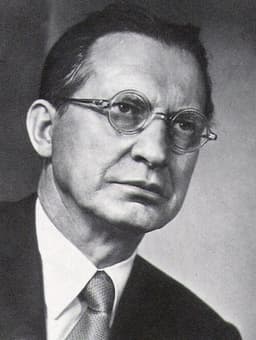
Alcide De Gasperi
Politician · Modern
55.5Total
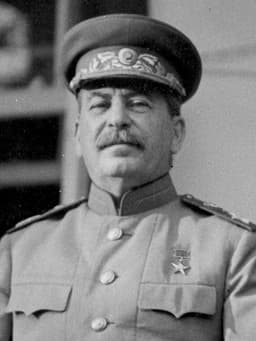
Joseph Stalin
Politician · Modern
68.8Total
Basic Information
Born
1881
1878
Died
1954
1953
Era
Modern
Modern
Nationality
Italy
Russia
Occupation
Politician
Politician
Civilization
Western
Western
Score Comparison
Military (10%)
12.4
75.0
Political (20%)
85.0
70.0
Influence (20%)
65.0
72.0
Legacy (20%)
40.0
55.0
Leadership (15%)
80.7
80.0
Strategy (15%)
31.5
70.0
TOTAL
55.5
68.8
Alcide De Gasperi — Complete Timeline
1946 AD
First Prime Minister of the Italian RepublicPolitical Action
De Gasperi became the first prime minister of the newly proclaimed Italian Republic in December 1945. He led a coalition government that included Christian Democrats, Socialists, and Communists. His government oversaw the transition from monarchy to republic.
RepublicGovernmentTransition
Impact: nationalconstructive
1947 AD
Peace Treaty of ParisPolitical Action◆ Major
De Gasperi signed the Treaty of Paris, which formally ended World War II for Italy. Italy lost its colonies, ceded territory to Yugoslavia and France, and paid reparations. The treaty was unpopular but allowed Italy to regain sovereignty and join the Western alliance.
TreatyWorld War IIDiplomacy
Impact: global
Expulsion of Communists from GovernmentPolitical Action
De Gasperi expelled the Italian Communist Party and Socialist Party from his coalition government in May 1947. This move aligned Italy with the United States and the Marshall Plan, deepening the Cold War divide. It solidified Christian Democratic dominance for decades.
Cold WarMarshall PlanCoalition
Impact: global
1949 AD
Italian Membership in NATOPolitical Action◆ Major
De Gasperi led Italy into the North Atlantic Treaty Organization (NATO) as a founding member. This decision anchored Italy in the Western bloc during the Cold War and secured U.S. military and economic support. It was opposed by the Communist Party.
NATOCold WarAlliance
Impact: globalconstructive
Joseph Stalin — Complete Timeline
1928 AD
Launched the First Five-Year PlanReform
Stalin initiated a series of centralized economic plans aimed at rapid industrialization and collectivization of agriculture. The First Five-Year Plan set ambitious targets for heavy industry, leading to significant growth but also severe shortages and human cost.
Impact: global
1929 AD
Implemented forced collectivization of agricultureReform
Stalin ordered the consolidation of individual peasant farms into collective farms (kolkhozy). This was met with resistance, leading to the liquidation of kulaks (wealthy peasants) as a class. The policy caused a catastrophic famine, particularly in Ukraine (Holodomor), resulting in millions of deaths.
Impact: nationaldestructive
1937 AD
Conducted the Great Purge (Great Terror)Political Action
Stalin orchestrated a campaign of political repression against alleged enemies of the state. Millions were arrested, executed, or sent to the Gulag labor camps. The purges targeted the Communist Party, military leadership, intellectuals, and ordinary citizens, consolidating Stalin's absolute power.
Impact: nationaldestructive
1945 AD
Led the Soviet Union to victory in World War IIWar
Stalin served as Supreme Commander of the Soviet armed forces. The Soviet Union bore the brunt of the war against Nazi Germany, suffering immense casualties. The Red Army's victory at Stalingrad and the capture of Berlin were key turning points. The war ended with Soviet domination of Eastern Europe.
Impact: global
Established the Eastern Bloc and the Iron CurtainPolitical Action◆ Major
After WWII, Stalin imposed communist governments in Eastern European countries occupied by the Red Army, creating a buffer zone against the West. This division of Europe into Soviet and Western spheres of influence marked the beginning of the Cold War.
Impact: globaldestructive
Expert Analysis
Joseph Stalin vs Alcide De Gasperi
# The Iron Fist and the Steady Hand
In the spring of 1945, as the guns fell silent across a shattered Europe, two men stood at opposite ends of a continent in ruins. One, a Georgian-born revolutionary in a Kremlin office, surveyed maps showing Soviet tanks parked in Berlin and began redrawing the borders of half the world. The other, a former librarian from the Italian Alps, sat in a Roman palazzo and drafted the conditions under which his defeated nation might rise again. Both were called to lead their countries through the twentieth century's most brutal passage. Yet the paths they chose—and the legacies they left—could not have been more different. What made one a tyrant and the other a founder?
Origins
Joseph Stalin was born Ioseb Besarionis dze Jughashvili in 1878, the son of a violent, alcoholic shoemaker in the Georgian town of Gori. His childhood was marked by poverty, smallpox scars, and a seminary education that bred in him a deep contempt for authority—even as he learned to manipulate it. The Russian Empire of his youth was a crumbling autocracy, and Stalin absorbed its harshness: trust no one, crush opposition, and never show weakness. When he joined Lenin’s Bolsheviks, he found a cause that justified ruthlessness as a revolutionary virtue.
Alcide De Gasperi, born three years later in 1881, grew up in the Trentino region of the Austro-Hungarian Empire, a borderland where Italian identity was suppressed. His father was a tax collector of modest means, and the young De Gasperi was shaped by Catholicism, scholarship, and a quiet determination to serve his people. He studied philosophy and literature, worked as a librarian, and entered politics through the Italian Popular Party. Where Stalin saw the world as a battlefield for absolute power, De Gasperi saw it as a community to be built through compromise and faith.
Rise to Power
Stalin’s ascent was a study in bureaucratic cunning. He did not lead the 1917 Revolution; he was a secondary figure who maneuvered into the post of General Secretary in 1922—a position he transformed from an administrative role into a lever of control. By the time Lenin died in 1924, Stalin had placed loyalists in every party office. He outmaneuvered Trotsky, Zinoviev, and Kamenev not through oratory but through patient, brutal accumulation of patronage. His rise was a slow stranglehold.
De Gasperi’s rise was one of survival. A member of the Italian Parliament before Mussolini’s fascist takeover, he was arrested in 1927 and spent sixteen months in prison. After his release, he worked as a librarian in the Vatican, quietly waiting out the dictatorship. When Mussolini fell in 1943 and the war turned against Italy, De Gasperi emerged as a leader of the Christian Democracy party. He became Prime Minister in December 1945 at the age of 64—not through revolution, but through democratic election and the trust of a nation desperate for stability.
Leadership & Governance
Here the contrast becomes stark. Stalin governed through terror. In 1928, he launched the First Five-Year Plan, a forced industrialization drive that built factories and dams but cost millions of lives through famine and overwork. In 1929, he ordered collectivization of agriculture, seizing grain from peasants to feed cities and the army. When Ukrainians resisted, he starved them—the Holodomor of 1932-1933 killed an estimated 3 to 5 million people. In 1937, he opened the Great Purge, a campaign of state murder that consumed party officials, generals, intellectuals, and ordinary citizens. By 1939, Stalin had executed or imprisoned nearly a million of his own people. His leadership was a machine of fear, and it worked—the Soviet Union industrialized and won World War II, but at a cost beyond calculation.
De Gasperi governed through inclusion. As Prime Minister from 1945 to 1953, he presided over a coalition that included socialists, republicans, and liberals. In 1947, he made the painful decision to expel the Italian Communist Party from his government—not by arresting them, but by calling for a vote of confidence. That same year, he signed the Treaty of Paris, accepting Italian defeat, loss of colonies, and war reparations. He did not blame foreigners or scapegoat minorities. Instead, he anchored Italy to the West: joining NATO in 1949, accepting Marshall Plan aid, and laying the economic foundation for the Italian Miracle. His leadership was a bridge, not a wall.
Triumph & Tragedy
Stalin’s greatest moment was 1945, when he stood with Churchill and Roosevelt at Potsdam, the master of an empire that stretched from Berlin to Vladivostok. The Red Army had broken the back of Nazi Germany, and Stalin had outlasted Hitler. But his triumph was hollow. The war cost the Soviet Union 27 million lives, and Stalin’s paranoia soon turned on his own generals. His tragedy was that victory confirmed his tyranny: he believed his methods had been vindicated, and the postwar years saw new purges, the Gulag’s expansion, and the Iron Curtain’s descent across Eastern Europe.
De Gasperi’s triumph was quieter but more enduring. In 1946, Italy voted to abolish the monarchy and become a republic, and De Gasperi became its first Prime Minister. He gave his country a constitution, a place in the Western alliance, and a democratic future. His tragedy was that he did not live to see the full fruits of his labor—he died in 1954, just as Italy’s economic boom began. But he died at home, respected, not in a Kremlin bunker surrounded by sycophants.
Character & Destiny
Stalin’s personality was a fortress of suspicion. He trusted no one, not even his closest allies. He slept in different rooms each night, kept his own food taster, and laughed at the suffering he caused. His decisions were driven by a single question: does this increase my power? That question led him to industrialize Russia, but also to murder its farmers, purge its army, and betray his own ideals. History gave Stalin the tools of absolute power; his character turned them into instruments of absolute horror.
De Gasperi’s personality was one of patience and principle. He was called “the man of the mountain” for his steadfastness. He believed in democracy, not as a slogan but as a daily practice of compromise and coalition. He understood that Italy’s future depended on reconciliation—with the Allies, with the Church, with the working class. His decisions were driven by a different question: does this build a just society? That question led him to expel the Communists, but also to protect their right to organize. History gave De Gasperi a ruined country; his character turned it into a republic.
Legacy
Stalin’s legacy is a shadow that will not lift. He is remembered in Russia with ambivalence—some polls show a majority view him positively, crediting him with victory in the Great Patriotic War. But the gulag, the purges, and the famine are inescapable. His total score of 68.3 reflects this contradiction: high in military and political influence, low in moral legacy. He left behind a superpower built on bones.
De Gasperi’s legacy is the Italian Republic itself. His score of 70.0 reflects his political genius and leadership, though his military score of 19.2 reminds us he was a builder, not a conqueror. He is remembered as a founding father, a man who chose democracy when tyranny was easier. Today, his portrait hangs in the European Parliament, a symbol of the post-war reconciliation he helped create.
Conclusion
In the end, the difference between Stalin and De Gasperi is not one of talent or ambition. Both were skilled politicians who rose from modest backgrounds to lead their nations through the twentieth century’s darkest hour. The difference is one of character and choice. Stalin chose fear; De Gasperi chose trust. Stalin built an empire on corpses; De Gasperi built a republic on consensus. One left a trail of blood; the other left a foundation of hope. Their lives remind us that leadership is not just about power—it is about what you do with it. And that, in the end, is the only history that matters.
Rankings
🥇
Joseph StalinLeader
Mil: 75.0Pol: 70.0Inf: 72.0
68.8
🥈
Alcide De Gasperi
Mil: 12.4Pol: 85.0Inf: 65.0
55.5
+13.3 behind
How This Comparison Works
Algorithm
Each figure is scored on 6 dimensions (0—100 scale) based on structured historical data: Military (10%), Political (20%), Influence (20%), Legacy (20%), Leadership (15%), Strategy (15%). The weighted total produces the final ranking.
Data Sources
Scores are computed from structured sub-indicators in the database. Scale factors adjust for era (Ancient ×0.85, Modern ×1.0) and civilization size (Eastern ×1.05, Other ×0.80) to account for differences in population and military scale.
Maximum 3 Figures
Comparisons are limited to 2—3 figures to ensure readability and statistical meaningfulness.
Error Margins
±5 points per dimension — Sub-scores are derived from historical records with inherent uncertainty. Two figures within 5 points on a dimension should be considered roughly equivalent in that area.
Total Score Accuracy
±3 points overall — The weighted combination of 6 dimensions produces a total score with approximately ±3 points of uncertainty. Differences of less than 3 points are not statistically significant— the figures are effectively tied.
Known Limitations
- Historical records are incomplete and uneven across civilizations
- Figures from oral-tradition societies may be underrepresented
- Occupation labels can misclassify multi-role figures
- Scores measure capability and impact, not moral character
- Quantitative scoring is a comparison tool, not absolute truth
Capability Radar
Military (10%) — Battles & Warfare
Battles
11
85
Win Rate
15
80
Expansion
17
85
Political (20%) — Governance & Reform
Reform
85
90
Diplomacy
80
70
Economy
70
85
Influence (20%) — Cultural & Global Reach
Cultural
60
70
Global
65
95
Legacy (20%) — Historical Impact
Historical
70
95
Longevity
65
80
Leadership (15%) — Power & Stability
Tenure
75
95
Stability
75
60
Strategy (15%) — Tactics & Innovation
Strategy
21
85
Tactics
23
60
Reform
27
90
Similar Comparisons
Comments & Discussion
RedStarSilence6/16/2026
The comparison misses the fundamental moral distinction: Stalin deliberately starved millions in Ukraine during the Holodomor - I've studied the grain requisition records from 1932-33 showing quotas that exceeded all harvest estimates. De Gasperi rebuilt Italy with Marshall Plan aid and democratic institutions. One man engineered famine as political weapon; the other negotiated his country back from fascist ruins. You cannot equate industrial-scale murder with measured statecraft.
斯大林档案员6/16/2026
你们太天真了。斯大林在1937年大清洗中处决了至少68万人,包括图哈切夫斯基这样的军事天才。他亲手在处决名单上画勾,连政治局委员都怕他。德加斯佩里1954年解决了的里雅斯特争端,靠的是外交谈判。一个用恐惧统治,一个用共识治国,这能比?档案不会撒谎。
BureaucratButcher6/16/2026
Flawed apples-to-steamrollers comparison. De Gasperi worked within a functioning parliamentary system; Stalin invented the Gulag archipelago. I've walked through the ruins of Kolyma - it's not theory, it's geography memorialized in bone. One man built fascism's grave; the other dug graves for political opponents. The scale difference matters: 800,000 executed vs. zero. Let's not normalize tyranny by framing it as "leadership style."
罗马废墟考古学家6/16/2026
仔细看历史细节:德加斯佩里1944年秘密建立天主教民主党时,用的还是梵蒂冈的印刷机。斯大林同样从地下革命起家,但前者流亡维也纳时还在编报纸,后者在巴库策划银行抢劫。本质区别:一个相信制度能约束权力,一个把权力变成制度。1948年意大利大选,德加斯佩里拒绝美军资助,只要求物资援助——斯大林会这么做?"
IronCzar6/16/2026
Military perspective: Stalin's victory at Stalingrad broke the back of the Wehrmacht - that's an undeniable strategic achievement. De Gasperi's Italy? They switched sides in 1943 and contributed little. But here's the crucial difference: Stalin ran his war from the Kremlin, murdering commanders who disagreed. De Gasperi let his generals do their job. One won through terror, the other through trust. Both won, but only one built a lasting peace.
民主党密码学家6/16/2026
你们忽略了一个关键:思想层面的对抗。德加斯佩里1947年把共产党踢出政府内阁,用的是议会多数票。斯大林同年成立共产党情报局,要求绝对服从。两人都面临冷战压力,但德加斯佩里把意大利绑上北约,斯大林把东欧锁进华约。结果呢?意大利2008年还有左翼政府,东欧要等到1989年才能呼吸。制度选择比个人野心更重要。