Loading...
Albert III of Austria vs Yuwen Yong
Yuwen Yong leads by 13.8 pts · 2 figures compared
…
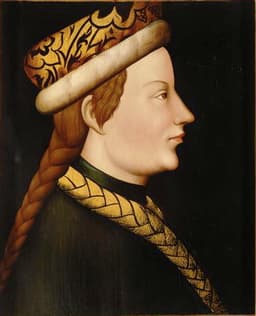
Albert III of Austria
Emperor · Medieval
53.4Total
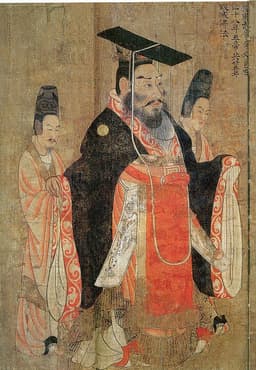
Yuwen Yong
Emperor · Medieval
67.2Total
Basic Information
Born
1349
543
Died
1395
578
Era
Medieval
Medieval
Nationality
Austria
China
Occupation
Emperor
Emperor
Civilization
Western
Eastern
Score Comparison
Military (10%)
50.0
78.0
Political (20%)
54.7
78.0
Influence (20%)
53.3
58.0
Legacy (20%)
44.2
54.0
Leadership (15%)
80.0
85.0
Strategy (15%)
38.6
69.1
TOTAL
53.4
67.2
Albert III of Austria — Complete Timeline
1379 AD
Founded the Albertinian Line of the HabsburgsPolitical Action◆ Major
Albert III, along with his brother Leopold III, divided the Habsburg territories in the Treaty of Neuberg. Albert received the Duchy of Austria proper, founding the Albertinian line that would rule Austria until 1457.
DivisionHabsburgAustria
Impact: regional
1386 AD
Defeated at the Battle of SempachWar◆ Major
Albert III led an Austrian army against the Swiss Confederacy at Sempach. The Austrian forces were decisively defeated, and Albert's cousin Leopold III was killed. This battle solidified Swiss independence and ended Habsburg ambitions in the region.
BattleSwiss ConfederacyDefeat
Impact: regionaltragic
Yuwen Yong — Complete Timeline
574 AD
Suppression of Buddhism in Northern ZhouReform◆ Major
Emperor Wu of Northern Zhou (Yuwen Yong) ordered the suppression of Buddhism, confiscating monastic lands, forcing monks and nuns to return to lay life, and destroying temples. He aimed to increase state revenue and military manpower, strengthening the state.
Northern ZhouBuddhist PersecutionReform
Impact: nationaldestructive
577 AD
Conquest of Northern QiWar
Emperor Wu led a successful campaign against the rival Northern Qi dynasty, conquering its territory and unifying northern China under Northern Zhou. This victory ended the division of the north and set the stage for the Sui dynasty's unification of all China.
Northern ZhouUnificationNorthern Qi
Impact: regionalconstructive
578 AD
Death during campaign against the TurksWar◆ Major
Emperor Wu died of illness while leading a campaign against the G
Northern ZhouMilitary CampaignDeath
Impact: regionaltragic
Expert Analysis
Albert III of Austria vs Yuwen Yong
### The Duke and the Dragon-Slayer
On a dusty Swiss hillside near Sempach in 1386, a duke of Austria watched his knights, weighed down by plate armor, stumble and fall before the halberds of peasant pikemen. Less than two hundred years earlier and five thousand miles to the east, another ruler, an emperor of Northern Zhou, lay dying on the steppe, his body ravaged by illness, his dream of a unified China cut short at the peak of his power. Both men were medieval monarchs, both sought to consolidate and expand their realms, yet their fates—and the marks they left on history—could not be more different. Why did one become a tragic footnote, the other a transformative, if controversial, founder? The answer lies not just in their circumstances, but in the very different worlds they sought to rule.
### Origins
Albert III of Austria was born in 1349 into a sprawling, ambitious Habsburg family that had mastered the art of marriage and inheritance. His world was one of fragmented duchies, feudal obligations, and the slow, grinding politics of the Holy Roman Empire. He was a prince of a house that, for all its wealth, was still one among many, its power checked by rival nobles, independent cities, and the rising Swiss Confederacy. Yuwen Yong, born in 543, emerged from a very different crucible: the violent, chaotic era of the Northern and Southern Dynasties in China. His family were military aristocrats of the Xianbei-led Western Wei, a state built on war and a fusion of steppe cavalry tactics and Chinese bureaucracy. Where Albert inherited a complex web of treaties and dynastic claims, Yuwen Yong inherited a world where legitimacy was forged on the battlefield.
### Rise to Power
Albert III’s path to power was a matter of inheritance and negotiation. He became co-ruler with his brother Leopold III in 1365, and their relationship was defined not by conquest but by a contract: the Treaty of Neuberg in 1379. This was a political action of the highest order, a formal division of the Habsburg lands that created the Albertinian line. Albert’s rise was a story of paperwork, compromise, and the careful management of a family enterprise. Yuwen Yong’s rise, by contrast, was a story of survival. He became Emperor Wu of Northern Zhou in 560 after a coup, but his real power began when he eliminated his regent, the powerful general Yuwen Hu, in a dramatic palace assassination in 572. His ascent was not a negotiated settlement but a surgical strike, a brutal clearing of the stage.
### Leadership & Governance
These two men governed from opposite poles. Albert III was a consolidator, a manager of a medieval state. His political score of 57.6 reflects a ruler focused on stability, not revolution. He was a patron of the arts and the University of Vienna, a builder of castles and a keeper of the peace. His military score of 41.5, however, is a testament to his limitations. The Battle of Sempach in 1386 was a disaster: his heavy cavalry, the pride of Austrian chivalry, was butchered by Swiss infantry fighting in a disciplined formation. Albert’s world was one where the rules of war were supposed to be clear, and he lost because he failed to adapt.
Yuwen Yong was a warrior-emperor. His military score of 74.6 and strategy score of 81.8 are not just numbers; they are a description of his life. He personally led his armies, and his conquest of the rival Northern Qi dynasty in 577 was a masterpiece of logistics, maneuver, and decisive battle. But his most famous act was a radical reform: the suppression of Buddhism in 574. He saw the vast, tax-exempt monastic estates as a threat to state power and military conscription. He ordered monks to return to lay life, confiscated temple lands, and funneled the resources into his army. This was not persecution for faith’s sake; it was a brutal, state-building policy. Albert managed a duchy; Yuwen Yong tried to forge an empire.
### Triumph & Tragedy
Albert’s greatest moment was the Treaty of Neuberg, a political success that ensured his line’s survival. His tragedy was Sempach, a defeat that shattered the myth of Habsburg invincibility and emboldened the Swiss. He died in 1395, a duke who had held his ground but lost his army. Yuwen Yong’s triumph was the conquest of Northern Qi, unifying northern China under a single, powerful state. His tragedy was his own death in 578, at the age of 35, while on campaign against the Göktürks. He had the vision and the army to potentially conquer the entire country, but his body failed him. “If I had ten more years,” he is said to have lamented, “I could give the world a single order.” He was given none.
### Character & Destiny
Albert III was a cautious, legal-minded prince. His personality was suited to a world of treaties and inheritances, not to the brutal innovation of the battlefield. His destiny was to be a steward, not a conqueror. Yuwen Yong was a man of iron will and clear vision. He saw a fractured world and decided to weld it together with fire and blood. His personality was forged in the palace intrigues and endless wars of the Sixteen Kingdoms era. He was ruthless enough to suppress a religion and capable enough to lead an army. His destiny was to be a unifier, cut down just as his work began.
### Legacy
Albert III’s legacy is his line—the Albertinian Habsburgs, who would produce rulers like Albert II, King of the Romans, and continue the family’s slow climb to European dominance. He is remembered, if at all, as a footnote, a founder of a branch. Yuwen Yong’s legacy is more profound and more ambiguous. His Northern Zhou dynasty was short-lived, usurped by his father-in-law Yang Jian, who founded the Sui dynasty and unified all of China. But the Sui, and later the Tang, built upon Yuwen Yong’s foundations: a centralized state, a powerful military, and a subordinated Buddhist church. He is remembered as a harsh but effective ruler, a “dragon-slayer” of entrenched interests.
### Conclusion
Standing at the grave of Albert III, one sees a careful administrator, a man who played the game of thrones as it was given to him. At the deathbed of Yuwen Yong, one sees a revolutionary, a man who tried to change the game itself. One was a good duke; the other was a great emperor in embryo. The difference between them is the difference between managing a kingdom and trying to build an empire. Albert’s story is a cautionary tale of the limits of tradition. Yuwen Yong’s is a tragedy of potential, a reminder that in history, as in life, the most decisive victories and the most crushing defeats are often separated by nothing more than a single, fragile breath.
Rankings
🥇
Yuwen YongLeader
Mil: 78.0Pol: 78.0Inf: 58.0
67.2
🥈
Albert III of Austria
Mil: 50.0Pol: 54.7Inf: 53.3
53.4
+13.8 behind
How This Comparison Works
Algorithm
Each figure is scored on 6 dimensions (0—100 scale) based on structured historical data: Military (10%), Political (20%), Influence (20%), Legacy (20%), Leadership (15%), Strategy (15%). The weighted total produces the final ranking.
Data Sources
Scores are computed from structured sub-indicators in the database. Scale factors adjust for era (Ancient ×0.85, Modern ×1.0) and civilization size (Eastern ×1.05, Other ×0.80) to account for differences in population and military scale.
Maximum 3 Figures
Comparisons are limited to 2—3 figures to ensure readability and statistical meaningfulness.
Error Margins
±5 points per dimension — Sub-scores are derived from historical records with inherent uncertainty. Two figures within 5 points on a dimension should be considered roughly equivalent in that area.
Total Score Accuracy
±3 points overall — The weighted combination of 6 dimensions produces a total score with approximately ±3 points of uncertainty. Differences of less than 3 points are not statistically significant— the figures are effectively tied.
Known Limitations
- Historical records are incomplete and uneven across civilizations
- Figures from oral-tradition societies may be underrepresented
- Occupation labels can misclassify multi-role figures
- Scores measure capability and impact, not moral character
- Quantitative scoring is a comparison tool, not absolute truth
Capability Radar
Military (10%) — Battles & Warfare
Battles
20
75
Win Rate
25
80
Expansion
20
80
Political (20%) — Governance & Reform
Reform
40
85
Diplomacy
45
70
Economy
40
75
Influence (20%) — Cultural & Global Reach
Cultural
30
40
Global
20
40
Legacy (20%) — Historical Impact
Historical
35
65
Longevity
30
50
Leadership (15%) — Power & Stability
Tenure
60
60
Stability
35
70
Strategy (15%) — Tactics & Innovation
Strategy
25
75
Tactics
20
70
Reform
15
85
Similar Comparisons
Comments & Discussion
IronDuke6/16/2026
Sempach wasn't just a defeat, it was a death sentence for medieval chivalry. Albert III watched his armored knights get slaughtered by Swiss peasants with halberds, and for good reason — heavy cavalry was obsolete against disciplined infantry on rough terrain. Yuwen Yong, meanwhile, crushed the Northern Qi with combined-arms tactics and reforms. One man learned from his era's military revolution; the other got trampled by it.
弑君史笔6/16/2026
宇文邕打着“灭佛”的旗号没收寺院田产,充实国库,这根本不是宗教狂热,而是赤裸裸的经济掠夺。他的北周靠吸佛教的血养肥军队,可阿尔布雷希特三世呢?他连维也纳的城墙都没修完,就跑去跟瑞士人野战送死。一个精于算计,一个蠢得可以。别拿“统一梦”洗白宇文邕的暴政——他不过是个披着龙袍的马匪头子罢了。
BalanceBreaker6/16/2026
You’re ignoring how drastically different their geopolitical constraints were. Albert III had to juggle the Habsburg patrimony, rebellious nobles, and the Swiss cantons — a decentralized mess where every move required consensus. Yuwen Yong inherited a militarized steppe-bureaucratic hybrid state that could mobilize armies in weeks. Call Albert a failure all you want, but he wasn't playing Civilization on easy mode; his “Swiss debacle” was a calculated risk that backfired against a superior tacti
半壶春秋6/16/2026
宇文邕在位十二年,灭了北齐,却死在北伐突厥的路上,享年三十六岁。阿尔布雷希特三世统治二十一年,丢了个小瑞士,但稳固了哈布斯堡在奥地利的根基。后人只记得“英雄早逝”和“庸主苟安”,可你让宇文邕多活二十年试试?他恐怕连隋朝都撑不过去——杨坚的篡位可不是凭空来的,宇文家自己把宗室杀光了。
AuldCipher6/16/2026
I don't buy the “tragic footnote” narrative for Albert III. The man literally expanded Vienna, founded the university, and restructured Habsburg finances to fund future expansion. He lost one battle at Sempach — sure — but Yuwen Yong burned through his treasury on endless campaigns and left a power vacuum his own family couldn't fill. Dead at 36 with a toddler heir? That's not transformative, that's a five-year plan with no exit strategy.