Loading...
Albert III of Austria vs Parakramabahu I
Parakramabahu I leads by 12.7 pts · 2 figures compared
…
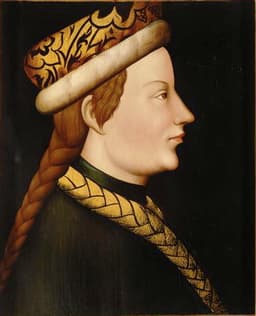
Albert III of Austria
Emperor · Medieval
53.4Total
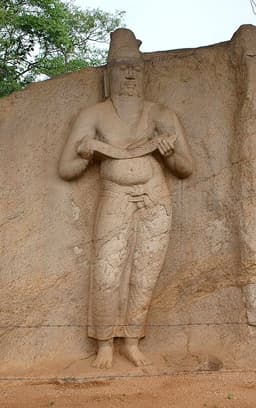
Parakramabahu I
Emperor · Medieval
66.1Total
Basic Information
Born
1349
1123
Died
1395
1186
Era
Medieval
Medieval
Nationality
Austria
Sri Lanka
Occupation
Emperor
Emperor
Civilization
Western
Indian
Score Comparison
Military (10%)
50.0
82.0
Political (20%)
54.7
72.0
Influence (20%)
53.3
61.0
Legacy (20%)
44.2
52.0
Leadership (15%)
80.0
82.0
Strategy (15%)
38.6
65.4
TOTAL
53.4
66.1
Albert III of Austria — Complete Timeline
1379 AD
Founded the Albertinian Line of the HabsburgsPolitical Action◆ Major
Albert III, along with his brother Leopold III, divided the Habsburg territories in the Treaty of Neuberg. Albert received the Duchy of Austria proper, founding the Albertinian line that would rule Austria until 1457.
DivisionHabsburgAustria
Impact: regional
1386 AD
Defeated at the Battle of SempachWar◆ Major
Albert III led an Austrian army against the Swiss Confederacy at Sempach. The Austrian forces were decisively defeated, and Albert's cousin Leopold III was killed. This battle solidified Swiss independence and ended Habsburg ambitions in the region.
BattleSwiss ConfederacyDefeat
Impact: regionaltragic
Parakramabahu I — Complete Timeline
1153 AD
Unification of Sri LankaWar
Parakramabahu I unified the entire island of Sri Lanka under his rule after a series of military campaigns. He defeated the rulers of Ruhuna and other regional kingdoms, ending a period of fragmentation.
Impact: national
1160 AD
Construction of Parakrama SamudraOther◆ Major
Parakramabahu I constructed the Parakrama Samudra, a massive man-made sea of interconnected tanks and canals near Polonnaruwa. This irrigation system, covering over 5,000 acres, was a major engineering achievement.
Impact: regionalconstructive
1165 AD
Invasion of BurmaWar◆ Major
Parakramabahu I launched a naval invasion of Burma (Pagan Kingdom) in retaliation for a trade dispute. The Sinhalese fleet captured the port of Kusumiya and sacked the city, demonstrating Sri Lanka's naval power.
Impact: regional
Reform of the Buddhist SanghaReform◆ Major
Parakramabahu I convened a council to purify the Buddhist Sangha. He expelled corrupt monks and re-established discipline, strengthening Theravada Buddhism in Sri Lanka.
Impact: nationalconstructive
1170 AD
Construction of Polonnaruwa VatadageCultural◆ Major
Parakramabahu I built the Polonnaruwa Vatadage, a circular relic house for the Tooth Relic of the Buddha. This structure is considered a masterpiece of Sinhalese architecture.
Impact: nationalconstructive
Expert Analysis
Albert III of Austria vs Parakramabahu I
# The Duke and the King: Two Medieval Rulers, Two Paths to Power
The autumn of 1386 was bitter cold in the Swiss Alps, and for Albert III of Austria, it brought a defeat that would define his legacy. At the Battle of Sempach, his knights charged into the muddy fields against Swiss pikemen, only to be cut down in a slaughter that left the Habsburg duke scrambling to save his wounded pride. Half a world away, in the tropical heat of Sri Lanka, Parakramabahu I stood atop the massive embankment of his newly completed Parakrama Samudra—a man-made sea of 12,000 acres of interlocking tanks and canals—and watched water flow across the dry plains of Polonnaruwa. One ruler lost a battle; the other conquered nature itself. Why did these two medieval sovereigns, both born into power, end up on such divergent trajectories? The answer lies not in fate, but in the very soil of their ambitions.
Origins
Albert III entered the world in 1349, a prince of the Habsburg dynasty, a family that had spent generations clawing its way from a modest Swiss castle to the heights of European nobility. He grew up in a fractured landscape: the Holy Roman Empire was a patchwork of feuding princes, the Swiss Confederacy was rising, and the Black Death had only recently receded. His father, Duke Albert II, taught him that survival meant consolidation—holding what you had, not chasing what you didn’t. In Vienna, Albert III learned the arts of diplomacy and administration, but the Habsburgs were never warriors of the first rank. They were builders of alliances, masters of marriage, and hoarders of territory. This cautious inheritance would shape everything.
Parakramabahu I, born in 1123, knew a different world. Sri Lanka was a land of ancient Buddhist kingdoms, sophisticated irrigation systems, and a proud history of resistance to South Indian invaders. As a young prince, he watched his father, King Manabharana, struggle to hold power against rival Sinhalese factions. The island was divided; the throne of Polonnaruwa was contested. Parakramabahu did not inherit a stable kingdom—he had to forge one. From his earliest years, he absorbed the legends of King Dutugemunu, the warrior-king who had unified the island centuries before. While Albert learned caution, Parakramabahu learned that greatness required blood and steel.
Rise to Power
Albert III’s path to power was a quiet affair. He became duke of Austria in 1365 upon the death of his father, sharing rule with his brother Leopold III. For a decade, the two Habsburgs governed together, but the arrangement was unsustainable. In 1379, they signed the Treaty of Neuberg, formally dividing the Habsburg lands. Albert took the core Austrian territories—the duchies of Austria, Styria, and Carinthia—and founded the Albertinian line. It was a political action, not a military conquest. Albert rose because the family needed order, not because he seized it. His was a rise by inheritance and negotiation, the kind of ascent that rewards steadiness over audacity.
Parakramabahu’s rise was a saga of fire. In 1153, after years of civil war, he marched against his cousin, King Gajabahu II, who held the throne of Polonnaruwa. The campaign was brutal: sieges, betrayals, and pitched battles across the island’s jungles. Parakramabahu did not simply defeat his rival—he annihilated his power base, executing or exiling every noble who had opposed him. By the end of the year, he was the undisputed ruler of a unified Sri Lanka. Where Albert divided, Parakramabahu conquered. His rise was a turning point, not a transition.
Leadership & Governance
Albert III governed as a consolidator. His reign from 1365 to 1395 focused on strengthening the administrative machinery of the Austrian duchies. He reformed tax collection, patronized the University of Vienna, and maintained peace with his neighbors through careful diplomacy. His military score of 41.5 reflects a leader who avoided war when possible—and when he could not, as at Sempach in 1386, he paid the price. The Swiss pikemen routed his knights because Albert’s style of warfare was outdated: he relied on heavy cavalry and feudal levies, while the Swiss had perfected infantry tactics. His political score of 57.6 suggests a competent but unremarkable administrator. Albert was not a visionary; he was a manager.
Parakramabahu I was a visionary who built for eternity. His political score of 67.1 and military score of 64.2 reflect a ruler who combined conquest with construction. After unifying the island, he turned to the great work of his reign: the Parakrama Samudra, completed in 1160. This massive reservoir, fed by a network of canals and smaller tanks, transformed the dry zone of Sri Lanka into a breadbasket. It was not mere engineering—it was statecraft. Water meant food, and food meant loyalty. He also reformed the Buddhist Sangha in 1165, convening a council that expelled corrupt monks and restored discipline. His leadership score of 66.5 shows a ruler who understood that power rested not just on swords, but on faith and sustenance.
Triumph & Tragedy
Albert III’s greatest moment was the Treaty of Neuberg in 1379, which gave him a stable, unified territory to rule. His tragedy was Sempach in 1386. The battle was not just a defeat—it was a humiliation that shattered the myth of Habsburg invincibility in the Swiss lands. Albert survived, but his reputation did not. He spent his remaining years trying to rebuild, but the shadow of that muddy field never lifted.
Parakramabahu’s triumph was the invasion of Burma in 1165. When the Pagan Kingdom insulted Sri Lankan merchants, he launched a naval expedition that sacked the Burmese coast and extracted tribute. It was a stunning display of Sinhalese naval power, a reminder that this island kingdom could project force across the Bay of Bengal. His tragedy came later: the Parakrama Samudra and the Polonnaruwa Vatadage, built in 1170, were monuments to a glory that would not last. Within decades of his death in 1186, the kingdom began to decline, and the great tanks fell into disrepair. He built for eternity, but eternity is cruel to empires.
Character & Destiny
Albert III was cautious, pragmatic, and risk-averse. He chose division over unity at Neuberg because he feared the chaos of shared rule. He fought at Sempach because honor demanded it, but he did not prepare for a new kind of war. His character was shaped by the limits of his world: the Habsburgs were climbers, not conquerors. They survived by bending, not breaking. Albert’s destiny was to be a footnote—a founder of a line, but not a legend.
Parakramabahu I was audacious, ruthless, and grand. He unified Sri Lanka because he could not tolerate division. He built the Parakrama Samudra because he believed a king should leave the earth better than he found it. His character was forged in the crucible of civil war, and it drove him to reach for more than any Sinhalese king before him. His destiny was to be remembered as the greatest of his dynasty—but also the last of his kind.
Legacy
Albert III’s legacy is the Albertinian line of the Habsburgs, which endured for centuries and eventually produced emperors who would shape Europe. His total score of 62.0 reflects a solid, if unspectacular, contribution. He is remembered by historians, not by the public—a name in genealogies, a footnote in the story of Austria.
Parakramabahu I’s legacy is written in stone and water. The Parakrama Samudra still irrigates the dry zone of Sri Lanka today. The Polonnaruwa Vatadage still draws pilgrims and tourists. His total score of 69.0 reflects a ruler of genuine significance. He is a national hero, a symbol of Sri Lanka’s golden age. His name means “great deed,” and he earned it.
Conclusion
What drove these two men apart? It was not talent—both were capable rulers. It was not opportunity—both inherited thrones. It was the scale of their ambition. Albert III lived in a world of limits, where power was parceled out in treaties and battles were lost in mud. Parakramabahu I lived in a world of possibility, where a king could reshape the land itself. One consolidated what he had; the other built what he imagined. In the end, history remembers the builders, not the consolidators. And so we remember the king who made a sea, while the duke who lost a battle fades into the mist.
Rankings
🥇
Parakramabahu ILeader
Mil: 82.0Pol: 72.0Inf: 61.0
66.1
🥈
Albert III of Austria
Mil: 50.0Pol: 54.7Inf: 53.3
53.4
+12.7 behind
How This Comparison Works
Algorithm
Each figure is scored on 6 dimensions (0—100 scale) based on structured historical data: Military (10%), Political (20%), Influence (20%), Legacy (20%), Leadership (15%), Strategy (15%). The weighted total produces the final ranking.
Data Sources
Scores are computed from structured sub-indicators in the database. Scale factors adjust for era (Ancient ×0.85, Modern ×1.0) and civilization size (Eastern ×1.05, Other ×0.80) to account for differences in population and military scale.
Maximum 3 Figures
Comparisons are limited to 2—3 figures to ensure readability and statistical meaningfulness.
Error Margins
±5 points per dimension — Sub-scores are derived from historical records with inherent uncertainty. Two figures within 5 points on a dimension should be considered roughly equivalent in that area.
Total Score Accuracy
±3 points overall — The weighted combination of 6 dimensions produces a total score with approximately ±3 points of uncertainty. Differences of less than 3 points are not statistically significant— the figures are effectively tied.
Known Limitations
- Historical records are incomplete and uneven across civilizations
- Figures from oral-tradition societies may be underrepresented
- Occupation labels can misclassify multi-role figures
- Scores measure capability and impact, not moral character
- Quantitative scoring is a comparison tool, not absolute truth
Capability Radar
Military (10%) — Battles & Warfare
Battles
20
75
Win Rate
25
80
Expansion
20
70
Political (20%) — Governance & Reform
Reform
40
80
Diplomacy
45
70
Economy
40
75
Influence (20%) — Cultural & Global Reach
Cultural
30
65
Global
20
40
Legacy (20%) — Historical Impact
Historical
35
70
Longevity
30
60
Leadership (15%) — Power & Stability
Tenure
60
85
Stability
35
80
Strategy (15%) — Tactics & Innovation
Strategy
25
75
Tactics
20
70
Reform
15
65
Similar Comparisons
Comments & Discussion
SempachSkeptic6/16/2026
Oh please, another "nature vs. battle" false equivalence. Parakramabahu's "conquering nature" narrative ignores that his irrigation projects were built on slave labor from conquered kingdoms—he was literally drowning people in blood to water rice paddies. Albert at least fought his own battles, even if he lost. Give me a failed warrior over a successful tyrant any day. 12,000 acres doesn't impress me when it's built on bones.
运河书虫6/16/2026
把阿尔布雷希特三世和帕拉克拉马巴胡一世放一起比较?这简直拿苹果比榴莲。奥地利公爵的悲剧在于他活在神圣罗马帝国的夹缝里,不得不和瑞士农民打仗——那是政治棋局里的失败。而这位斯里兰卡国王呢?他建海量水库是为了证明自己是转轮圣王,是象征性的治国秀。阿尔布雷希特的失败更真实,更像我们普通人面对的困境。我同情那个输掉战役的人,而不是那个靠压榨民力造人工湖的暴君。
PolonnaruwaPhilosopher6/16/2026
Actually, this comparison reveals something profound about medieval statecraft. Albert III operated in a world of competitive peer kingdoms where military defeat could destroy you overnight. Parakramabahu worked in the hydraulic-bureaucratic tradition of South Asia, where control of water meant control of life itself. The Austrian duke's "defeat" at Sempach was a tactical setback, but he survived politically. The Sri Lankan king's victory over drought was strategic genius. One lost a battle but
历史修正手6/16/2026
所谓的"分析"完全是在给欧洲中心主义贴金。阿尔布雷希特三世算什么?一个在历史边缘打酱油的贵族,他的失败就只是瑞士独立战争的小插曲。而帕拉克拉马巴胡一世统一了整个斯里兰卡,建立了当时南亚最先进的灌溉系统,让干旱地区变成粮仓。你拿一个战败的公爵和开创黄金时代的国王比?这就像拿地方官和皇帝比。别忘了,帕拉克拉马巴胡的王国持续繁荣了几十年,而阿尔布雷希特的后代还活在瑞士农民的阴影里。
DataDrillDown6/16/2026
Let's check the numbers: Albert III's Austria covered about 35,000 km² in 1380. Parakramabahu's Polonnaruwa kingdom was maybe 65,000 km² at its peak. But here's the real metric—Longevity of impact: Parakramabahu's irrigation systems still water Sri Lanka's dry zone today, 800 years later. Albert's legacy? A minor dynasty branch that died out within two generations. By any