Loading...
Albert III of Austria vs Oduduwa
Oduduwa leads by 6.3 pts · 2 figures compared
…
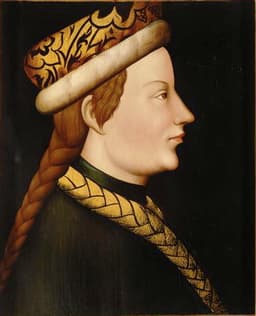
Albert III of Austria
Emperor · Medieval
53.4Total

Oduduwa
Emperor · Medieval
59.7Total
Basic Information
Born
1349
950
Died
1395
1020
Era
Medieval
Medieval
Nationality
Austria
Ife
Occupation
Emperor
Emperor
Civilization
Western
Other
Score Comparison
Military (10%)
50.0
50.0
Political (20%)
54.7
46.6
Influence (20%)
53.3
68.0
Legacy (20%)
44.2
68.0
Leadership (15%)
80.0
67.0
Strategy (15%)
38.6
36.8
TOTAL
53.4
59.7
Albert III of Austria — Complete Timeline
1379 AD
Founded the Albertinian Line of the HabsburgsPolitical Action◆ Major
Albert III, along with his brother Leopold III, divided the Habsburg territories in the Treaty of Neuberg. Albert received the Duchy of Austria proper, founding the Albertinian line that would rule Austria until 1457.
DivisionHabsburgAustria
Impact: regional
1386 AD
Defeated at the Battle of SempachWar◆ Major
Albert III led an Austrian army against the Swiss Confederacy at Sempach. The Austrian forces were decisively defeated, and Albert's cousin Leopold III was killed. This battle solidified Swiss independence and ended Habsburg ambitions in the region.
BattleSwiss ConfederacyDefeat
Impact: regionaltragic
Oduduwa — Complete Timeline
1000 AD
Foundation of the Yoruba civilization at Ile-IfeCultural
According to Yoruba oral tradition, Oduduwa descended from heaven at Ile-Ife and founded the Yoruba civilization. He is credited with establishing the first Yoruba kingdom and the sacred city of Ile-Ife, which became the spiritual and cultural heartland of the Yoruba people.
Impact: regionalconstructive
1010 AD
Establishment of the Yoruba royal dynastiesPolitical Action◆ Major
Oduduwa is said to have sent his sons and grandsons to found the various Yoruba kingdoms, including Oyo, Benin, and Ketu. This act established the royal lineages that ruled these states for centuries, creating a network of related kingdoms under the spiritual authority of the Ooni of Ife.
Impact: regionalconstructive
Expert Analysis
Albert III of Austria vs Oduduwa
# The Sky-King and the Land-Prince: Two Paths to Power in a Medieval World
On a summer morning in 1386, Duke Albert III of Austria watched his knights charge into the muddy fields outside Sempach, their lances leveled against a rabble of Swiss peasants. It was a scene that had played out a thousand times across Europe—noble cavalry crushing foot soldiers. But this time, the rabble held. The Swiss halberds hooked riders from their saddles, and within hours, Albert’s army was shattered, the dream of Habsburg supremacy in Switzerland drowned in blood and mud. Half a continent away and four centuries earlier, a very different ruler had faced no such battlefield. According to Yoruba tradition, Oduduwa descended from the sky at Ile-Ife, carrying a calabash of earth and a five-toed chicken that scratched the dust into hills and valleys, creating the world itself. One man fought for his kingdom and lost; the other was said to have created an entire civilization from nothing. What separates a failed duke from a founding father? The answer lies not in their deeds alone, but in the worlds they inhabited.
Origins
Albert III was born in 1349 into the House of Habsburg, a family already ancient in its ambitions. His father, Duke Albert II, had ruled Austria with a steady hand, and young Albert grew up in the stone halls of Vienna, learning the arts of diplomacy and war that defined medieval European nobility. His world was one of parchment treaties, contested borders, and the endless jostling of princely houses. He was a product of a civilization that measured power in land, coin, and bloodlines—concrete things that could be counted, traded, and lost.
Oduduwa, by contrast, emerged from the mists of oral tradition around 950 CE, in a West Africa where history and myth were woven together like the strands of a kente cloth. The Yoruba peoples had long inhabited the forests and savannas between the Niger River and the Atlantic, but they lacked a unifying political order. Oduduwa’s origins are divine: he was sent by Olodumare, the supreme god, to create dry land from the primordial waters. In this telling, he was not born of woman but descended from heaven, carrying the tools of creation itself. His story belongs to a world where kingship was not a political office but a cosmic mandate, where the ruler’s legitimacy came from the gods, not from treaties or armies.
Rise to Power
Albert’s path to power was paved with documents. In 1365, upon his father’s death, he inherited the Duchy of Austria alongside his brother Leopold III. For fourteen years, the brothers ruled jointly, but the arrangement frayed. In 1379, they signed the Treaty of Neuberg, a legal partition that carved the Habsburg lands into two lines: Albert’s Albertinian line, which held Austria proper, and Leopold’s Leopoldinian line, which took Styria, Carinthia, and Tyrol. It was a pragmatic, lawyerly solution to a family quarrel—the kind of compromise that defined medieval European politics. Albert became sole ruler of a smaller but more coherent territory, and he set about consolidating his power through careful administration, land grants, and alliances.
Oduduwa’s rise required no treaties. According to tradition, he arrived at Ile-Ife, a settlement already inhabited by the indigenous Igbo people, and either negotiated or fought for supremacy. The details are murky, but the outcome is clear: he established himself as the first Ooni (king) of Ife, and from that sacred city, he dispatched his sixteen sons and grandsons to found the great Yoruba kingdoms—Oyo, Benin, Ketu, and others. Each son carried a beaded crown, the symbol of divine authority, and each founded a dynasty that traced its legitimacy back to Oduduwa himself. His rise was not a political maneuver but a cosmic event, a dispersion of sacred power across a landscape that had no borders, only spiritual territories.
Leadership & Governance
Albert III governed as a medieval European prince: he issued charters, collected taxes, patronized monasteries, and waged wars. His military score of 41.5 reflects the reality of his reign—he was no great commander. The Battle of Sempach in 1386 was his defining military act, and it was a catastrophe. The Swiss Confederacy, a loose alliance of rural cantons, had rebelled against Habsburg authority, and Albert led a feudal army to crush them. But the Swiss fought with disciplined infantry, using the halberd to devastating effect against mounted knights. Albert’s defeat was not just a tactical failure; it exposed the limits of traditional medieval warfare against a new kind of enemy. His political score of 57.6 suggests a competent but unremarkable administrator—a duke who kept his lands intact but expanded them little.
Oduduwa’s leadership was of a different order entirely. His military score of 11.4 is almost irrelevant, because his power was not built on conquest. Instead, he governed through spiritual authority and cultural diffusion. He established the political and religious institutions of Ife—the Ogboni council of elders, the cult of the Ooni as a living god, the rituals that bound the Yoruba city-states together. His sons did not conquer the kingdoms they founded; they married into local elites, introduced the divine kingship model, and created a network of mutual recognition that spanned hundreds of miles. Oduduwa’s strategy score of 30.0 reflects a leader who thought not in terms of battles but of lineages, not of borders but of bloodlines.
Triumph & Tragedy
Albert’s greatest moment was also his worst. The Battle of Sempach, which should have been his triumph over rebellious peasants, became his tragedy. He survived the battle but lost his reputation and his claim to Swiss territory. The defeat echoed through Habsburg history, a reminder that even the mightiest feudal lord could be humbled by determined commoners. Albert died in 1395, his Albertinian line intact but diminished, his dreams of a unified Austrian domain passed to his son.
Oduduwa’s triumph was the foundation of the Yoruba civilization around 1000 CE, a cultural turning point that shaped the history of millions. His tragedy, if it can be called that, is that we know him only through legend. No contemporary records exist; his life is a story told and retold, embellished with each generation. He is less a historical figure than a cultural archetype, a symbol of unity and divine right.
Character & Destiny
Albert was a pragmatist in a world of pragmatists. He partitioned his inheritance, fought a losing war, and died a minor figure in the long Habsburg saga. His personality—cautious, legalistic, traditional—was perfectly suited to the politics of 14th-century Austria, where survival meant compromise. But that same caution made him incapable of adapting to the Swiss challenge. He saw the world as it had always been, and that blindness cost him everything.
Oduduwa was a myth-maker in a world that needed myths. His character, as far as we can discern it, was audacious: he claimed descent from heaven, sent his sons across an unknown continent, and created a civilization not through force but through faith. His destiny was to become the ancestor of kings, a figure so central to Yoruba identity that every Ooni of Ife still claims direct descent from him. Where Albert’s destiny was to be forgotten by all but historians, Oduduwa’s was to be remembered by millions.
Legacy
Albert III left behind a legal document—the Treaty of Neuberg—and a line of descendants that eventually produced Frederick III, Holy Roman Emperor, and, centuries later, the ill-fated Archduke Franz Ferdinand. His legacy is a footnote in the Habsburg story, a necessary but unremarkable link in a chain of power.
Oduduwa left behind an entire civilization. Every Yoruba king who wears a beaded crown, every priest who performs the rituals of Ife, every artist who carves the images of the Ooni, traces his authority to the sky-king who descended at Ile-Ife. His legacy score of 69.9 understates his impact, because it measures only what history can document, not what culture feels.
Conclusion
The difference between Albert III and Oduduwa is not a matter of talent or ambition. It is a matter of worldviews. Albert lived in a world where power was land, where kings fought with steel and ink, and where defeat meant irrelevance. Oduduwa lived in a world where power was spirit, where kings ruled through ritual and lineage, and where myth was more real than any battle. One man lost a war and faded into the archives; the other created a people and ascended into legend. Both were rulers of their age, but only one understood that the greatest conquests are not of territory, but of imagination.
Rankings
🥇
OduduwaLeader
Mil: 50.0Pol: 46.6Inf: 68.0
59.7
🥈
Albert III of Austria
Mil: 50.0Pol: 54.7Inf: 53.3
53.4
+6.3 behind
How This Comparison Works
Algorithm
Each figure is scored on 6 dimensions (0—100 scale) based on structured historical data: Military (10%), Political (20%), Influence (20%), Legacy (20%), Leadership (15%), Strategy (15%). The weighted total produces the final ranking.
Data Sources
Scores are computed from structured sub-indicators in the database. Scale factors adjust for era (Ancient ×0.85, Modern ×1.0) and civilization size (Eastern ×1.05, Other ×0.80) to account for differences in population and military scale.
Maximum 3 Figures
Comparisons are limited to 2—3 figures to ensure readability and statistical meaningfulness.
Error Margins
±5 points per dimension — Sub-scores are derived from historical records with inherent uncertainty. Two figures within 5 points on a dimension should be considered roughly equivalent in that area.
Total Score Accuracy
±3 points overall — The weighted combination of 6 dimensions produces a total score with approximately ±3 points of uncertainty. Differences of less than 3 points are not statistically significant— the figures are effectively tied.
Known Limitations
- Historical records are incomplete and uneven across civilizations
- Figures from oral-tradition societies may be underrepresented
- Occupation labels can misclassify multi-role figures
- Scores measure capability and impact, not moral character
- Quantitative scoring is a comparison tool, not absolute truth
Capability Radar
Military (10%) — Battles & Warfare
Battles
20
10
Win Rate
25
10
Expansion
20
30
Political (20%) — Governance & Reform
Reform
40
50
Diplomacy
45
40
Economy
40
40
Influence (20%) — Cultural & Global Reach
Cultural
30
80
Global
20
70
Legacy (20%) — Historical Impact
Historical
35
80
Longevity
30
80
Leadership (15%) — Power & Stability
Tenure
60
40
Stability
35
50
Strategy (15%) — Tactics & Innovation
Strategy
25
10
Tactics
20
10
Reform
15
10
Similar Comparisons
Comments & Discussion
Countershock976/16/2026
The Sempach comparison is lazy military history. Albert III didn't lose because of some inherent weakness—he lost because Swiss halberd formations were the tactical revolution of the 14th century. Calling him a "failed duke" ignores that he successfully strengthened Habsburg control over Austria proper after the disaster. Oduduwa gets to be a mythic founder because his historical record is literally unverifiable folklore. Let's compare actual rulers with actual failures next time.