Loading...
Albert III of Austria vs Moctezuma I
Moctezuma I leads by 5.5 pts · 2 figures compared
…
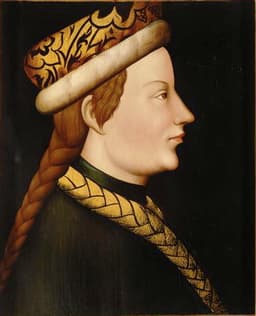
Albert III of Austria
Emperor · Medieval
53.4Total

Moctezuma I
Emperor · Medieval
58.9Total
Basic Information
Born
1349
1398
Died
1395
1469
Era
Medieval
Medieval
Nationality
Austria
Aztec Empire
Occupation
Emperor
Emperor
Civilization
Western
Other
Score Comparison
Military (10%)
50.0
82.0
Political (20%)
54.7
45.0
Influence (20%)
53.3
58.3
Legacy (20%)
44.2
56.0
Leadership (15%)
80.0
66.0
Strategy (15%)
38.6
55.0
TOTAL
53.4
58.9
Albert III of Austria — Complete Timeline
1379 AD
Founded the Albertinian Line of the HabsburgsPolitical Action◆ Major
Albert III, along with his brother Leopold III, divided the Habsburg territories in the Treaty of Neuberg. Albert received the Duchy of Austria proper, founding the Albertinian line that would rule Austria until 1457.
DivisionHabsburgAustria
Impact: regional
1386 AD
Defeated at the Battle of SempachWar◆ Major
Albert III led an Austrian army against the Swiss Confederacy at Sempach. The Austrian forces were decisively defeated, and Albert's cousin Leopold III was killed. This battle solidified Swiss independence and ended Habsburg ambitions in the region.
BattleSwiss ConfederacyDefeat
Impact: regionaltragic
Moctezuma I — Complete Timeline
1428 AD
Conquest of the TepanecsWar◆ Major
Itzcoatl led the Triple Alliance forces in a war against the Tepanecs of Azcapotzalco, the dominant power in the region. The victory broke Tepanec hegemony and established Tenochtitlan as the leading city-state in central Mexico.
WarTepanec WarAztec Expansion
Impact: regional
Formed the Triple AlliancePolitical Action
Itzcoatl, as tlatoani of Tenochtitlan, formed the Triple Alliance with Texcoco and Tlacopan. This military and political pact created the Aztec Empire, enabling coordinated conquests and the subjugation of neighboring city-states in the Valley of Mexico.
Aztec EmpireAlliancePolitical Foundation
Impact: regional
1430 AD
Burned Historical CodicesCultural◆ Major
Itzcoatl ordered the burning of historical codices from conquered peoples, rewriting Aztec history to legitimize his rule and the empire's divine origins. This act destroyed pre-Aztec records and reshaped Mesoamerican historical memory.
Cultural DestructionHistorical RevisionAztec Ideology
Impact: regionaldestructive
Expert Analysis
Albert III of Austria vs Moctezuma I
# The Emperor and the Duke: Two Paths to Power in a Violent Age
In the spring of 1428, on the high plateau of the Valley of Mexico, a man named Itzcoatl—soon to be known as Moctezuma I, though he was not yet emperor—stood with his allies from Texcoco and Tlacopan and declared war on the Tepanecs of Azcapotzalco. Across the Atlantic, half a century earlier, a Habsburg duke named Albert III sat in Vienna, signing a treaty that would split his family’s lands with his brother. One man was about to forge an empire from blood and fire; the other was about to lose a kingdom in a single afternoon. What drove such different outcomes? The answer lies not merely in their talents, but in the worlds they inherited.
Origins
Moctezuma I was born in 1398 into a world of city-states and shifting alliances, where the Aztecs were still clients of the more powerful Tepanecs. His people were warriors, but they were also survivors—a tribe that had wandered for generations before founding Tenochtitlan on a swampy island. His uncle, Itzcoatl, taught him that power was something to be seized, not inherited. The young Moctezuma learned to read the stars, to lead men in battle, and to understand that history itself could be rewritten by those who held the knife.
Albert III, born in 1349, entered a very different world: the Holy Roman Empire, a patchwork of duchies, bishoprics, and free cities where legitimacy came from bloodlines and charters. His father, Duke Albert II, had ruled Austria with a steady hand, but the Habsburgs were not yet the giants of European politics. They were one family among many, clinging to their Alpine valleys and Danube plains. Albert grew up in a court of lawyers and clerics, where treaties mattered as much as swords.
The difference in their upbringings was stark. Moctezuma was raised in a culture that glorified conquest and sacrifice; Albert in one that prized negotiation and administration. One saw the world as a battlefield, the other as a ledger.
Rise to Power
Moctezuma’s rise was inseparable from the Triple Alliance forged in 1428. When Itzcoatl led the Aztecs, Texcoco, and Tlacopan against the Tepanecs, the young prince fought alongside his uncle, proving his courage in the war that broke the old order. After the victory, Itzcoatl ordered the burning of conquered peoples’ historical codices—a brutal act of cultural erasure that rewrote Aztec history to legitimize their rule. Moctezuma watched and learned: power was not just about winning battles, but about controlling the story.
Albert III’s path was quieter. In 1379, he and his brother Leopold signed the Treaty of Neuberg, dividing Habsburg lands into two lines: the Albertinian and the Leopoldinian. Albert took the Austrian heartlands, including Vienna. He was not a conqueror but a consolidator, spending his reign strengthening ducal authority, reforming finances, and patronizing the University of Vienna. His power came not from victories but from survival—keeping his lands intact while other noble families tore each other apart.
Leadership & Governance
Moctezuma I, who became tlatoani (emperor) after Itzcoatl’s death in 1440, governed through a fusion of terror and ritual. He expanded the empire through relentless military campaigns, pushing Aztec borders to the Gulf of Mexico and deep into Oaxaca. His political wisdom, reflected in a score of 85.7, lay in his ability to bind conquered cities to Tenochtitlan through tribute, hostages, and the constant threat of sacrifice. He built aqueducts, temples, and causeways, turning Tenochtitlan into a gleaming island capital that awed European visitors decades later. Yet his military score of 73.2 and strategy of 59.7 suggest a leader who relied more on overwhelming force than tactical brilliance.
Albert III, with a leadership score of 74.0 and political acumen of 57.6, governed differently. He was a builder of institutions, not an empire. He founded the Albertinian line, ensuring his descendants would rule Austria for centuries. But his military record was disastrous. In 1386, at the Battle of Sempach, he led an Austrian army against the Swiss Confederacy and was decisively defeated. The Swiss pikemen, fighting for their freedom, cut down the Habsburg knights in the mud. Albert never recovered from that blow—his strategy score of 62.3 suggests competence, but his heart was never in war.
Triumph & Tragedy
Moctezuma’s greatest triumph was the consolidation of the Triple Alliance into a true empire. Under his rule, Tenochtitlan became the center of a vast tribute network that stretched from the Atlantic to the Pacific. His tragedy was that he could not see beyond the obsidian blade. The very system of terror he perfected—mass human sacrifice, constant war for captives—created enemies who would eventually ally with the Spanish.
Albert’s tragedy was Sempach. In a single afternoon, his ambition to expand Habsburg influence into Switzerland was shattered. His triumph was quieter: he kept Austria intact, founded a dynasty, and died in his bed in 1395. The Albertinian line would rule until 1457, producing kings and emperors. But he never led a great victory, never left a legend.
Character & Destiny
Moctezuma was a man of fire. He believed the gods demanded blood, and he gave it willingly. His personality—proud, calculating, ruthless—shaped an empire that was both magnificent and doomed. He could not imagine a world where the Aztecs were not the center of all things. That blindness was his destiny.
Albert was a man of earth. He was cautious, legalistic, and pragmatic. He understood that the Habsburgs would rise not through glorious battles but through marriages, alliances, and patient administration. His character—steady, uncharismatic, tenacious—shaped a dynasty that would outlast the Aztecs by five centuries.
Legacy
Moctezuma I’s legacy is complicated. He is remembered as a great builder and conqueror, but also as the architect of a system that made enemies of entire peoples. His influence score of 73.1 and legacy of 67.4 reflect a ruler who shaped his world but could not save it. Today, his name is often confused with his more famous successor, Moctezuma II, who faced Cortés.
Albert III’s legacy is more modest but more enduring. His influence score of 71.0 and legacy of 58.4 mark him as a founder, not a legend. The Albertinian line gave Europe the Habsburgs who would dominate the continent for centuries. But few remember the duke who lost at Sempach.
Conclusion
Standing on the causeways of Tenochtitlan, Moctezuma I looked out at a world he had conquered. Standing in the Vienna Hofburg, Albert III looked out at a world he had preserved. One built an empire of blood and gold that crumbled in a generation; the other built a dynasty of paper and law that lasted for centuries. Their stories remind us that history rewards not just the bold, but the patient—and that the greatest empires are often built not by those who win battles, but by those who survive them.
Rankings
🥇
Moctezuma ILeader
Mil: 82.0Pol: 45.0Inf: 58.3
58.9
🥈
Albert III of Austria
Mil: 50.0Pol: 54.7Inf: 53.3
53.4
+5.5 behind
How This Comparison Works
Algorithm
Each figure is scored on 6 dimensions (0—100 scale) based on structured historical data: Military (10%), Political (20%), Influence (20%), Legacy (20%), Leadership (15%), Strategy (15%). The weighted total produces the final ranking.
Data Sources
Scores are computed from structured sub-indicators in the database. Scale factors adjust for era (Ancient ×0.85, Modern ×1.0) and civilization size (Eastern ×1.05, Other ×0.80) to account for differences in population and military scale.
Maximum 3 Figures
Comparisons are limited to 2—3 figures to ensure readability and statistical meaningfulness.
Error Margins
±5 points per dimension — Sub-scores are derived from historical records with inherent uncertainty. Two figures within 5 points on a dimension should be considered roughly equivalent in that area.
Total Score Accuracy
±3 points overall — The weighted combination of 6 dimensions produces a total score with approximately ±3 points of uncertainty. Differences of less than 3 points are not statistically significant— the figures are effectively tied.
Known Limitations
- Historical records are incomplete and uneven across civilizations
- Figures from oral-tradition societies may be underrepresented
- Occupation labels can misclassify multi-role figures
- Scores measure capability and impact, not moral character
- Quantitative scoring is a comparison tool, not absolute truth
Capability Radar
Military (10%) — Battles & Warfare
Battles
20
65
Win Rate
25
70
Expansion
20
80
Political (20%) — Governance & Reform
Reform
40
60
Diplomacy
45
65
Economy
40
70
Influence (20%) — Cultural & Global Reach
Cultural
30
60
Global
20
50
Legacy (20%) — Historical Impact
Historical
35
65
Longevity
30
55
Leadership (15%) — Power & Stability
Tenure
60
70
Stability
35
65
Strategy (15%) — Tactics & Innovation
Strategy
25
75
Tactics
20
60
Reform
15
55
Similar Comparisons
Comments & Discussion
TheChartBuster6/16/2026
Moctezuma I outranks Albert III easily because he actually built something from chaos. Albert inherited a stable duchy and fumbled it—he signed the Treaty of Neuberg in 1379, splitting Habsburg lands with Leopold, which weakened central authority for generations. Moctezuma expanded Tenochtitlan into the Aztec Triple Alliance. One man lost control; the other seized glory.
历史碎碎机6/16/2026
Moctezuma I是真正的战争英雄,Albert III就是个躲在文书背后的懦夫。Moctezuma在1440年代征服了科阿特佩克和奥里萨巴,亲自带队冲锋。Albert呢?他1382年签署和约把提洛尔割给弟弟,从没上过前线。历史只记住血性与征服,不是条约里的墨水。