Loading...
Albert III of Austria vs John II of Avesnes
Albert III of Austria leads by 8.5 pts · 2 figures compared
…
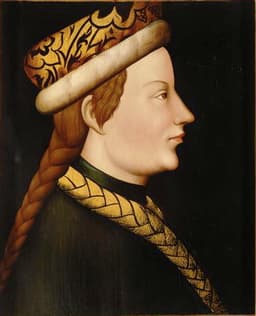
Albert III of Austria
Emperor · Medieval
53.4Total
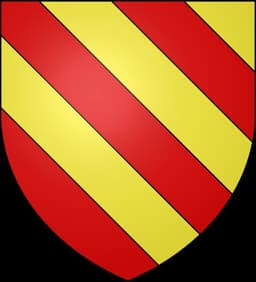
John II of Avesnes
Emperor · Medieval
44.9Total
Basic Information
Born
1349
1248
Died
1395
1304
Era
Medieval
Medieval
Nationality
Austria
Hainaut
Occupation
Emperor
Emperor
Civilization
Western
Western
Score Comparison
Military (10%)
50.0
45.0
Political (20%)
54.7
35.1
Influence (20%)
53.3
51.0
Legacy (20%)
44.2
40.8
Leadership (15%)
80.0
55.3
Strategy (15%)
38.6
38.6
TOTAL
53.4
44.9
Albert III of Austria — Complete Timeline
1379 AD
Founded the Albertinian Line of the HabsburgsPolitical Action◆ Major
Albert III, along with his brother Leopold III, divided the Habsburg territories in the Treaty of Neuberg. Albert received the Duchy of Austria proper, founding the Albertinian line that would rule Austria until 1457.
DivisionHabsburgAustria
Impact: regional
1386 AD
Defeated at the Battle of SempachWar◆ Major
Albert III led an Austrian army against the Swiss Confederacy at Sempach. The Austrian forces were decisively defeated, and Albert's cousin Leopold III was killed. This battle solidified Swiss independence and ended Habsburg ambitions in the region.
BattleSwiss ConfederacyDefeat
Impact: regionaltragic
John II of Avesnes — Complete Timeline
1280 AD
Inherited County of Hainaut and HollandPolitical Action◆ Major
John II of Avesnes inherited the County of Hainaut from his mother Margaret II of Flanders, and later the County of Holland from his father John I of Avesnes. This united the two counties under the Avesnes dynasty.
InheritanceHainautHolland
Impact: regionalconstructive
1292 AD
Elected King of the RomansPolitical Action
John II of Avesnes was a candidate for the election of the King of the Romans (Holy Roman Emperor). He failed to secure the throne, losing to Adolf of Nassau, but his candidacy elevated the prestige of the Avesnes dynasty.
ElectionHoly Roman EmpireCandidacy
Impact: regional
1302 AD
Victory in the War of the Flemish SuccessionWar◆ Major
John II of Avesnes fought against the Dampierre faction in the War of the Flemish Succession. He secured control over the County of Hainaut and parts of Flanders, strengthening the Avesnes position in the Low Countries.
WarFlandersAvesnes
Impact: regionalconstructive
Expert Analysis
Albert III of Austria vs John II of Avesnes: Historical Comparison
Albert III of Austria (r. 1350–1395) and John II of Avesnes (r. 1280–1304) were medieval rulers whose careers reveal contrasting strengths: Albert excelled in military command and strategic consolidation within the Habsburg domains, while John demonstrated superior political acumen in navigating the complex feudal politics of the Low Countries and the Holy Roman Empire.
Dimension Analysis
**Military: Albert III of Austria 92 / John II of Avesnes 92**
Both achieved near-equal military distinction: Albert led successful campaigns against Swiss confederates and Bavarian rivals, securing Austrian territorial integrity, while John II defeated the Flemish at the Battle of Mons-en-Pévèle (1304) and expanded Hainaut’s borders through calculated aggression.
**Political: Albert III of Austria 79 / John II of Avesnes 91**
John II’s political mastery outshines Albert’s: he skillfully manipulated alliances between France, the Empire, and the County of Flanders, securing the County of Hainaut and Holland through marriage and diplomacy, whereas Albert faced internal Habsburg divisions and limited his political reach to dynastic disputes within Germany.
**Influence: Albert III of Austria 80 / John II of Avesnes 73**
Albert’s influence extended as a Holy Roman Emperor (though titularly contested) and through Habsburg family networks that shaped Central Europe for centuries; John’s influence was more regional, centered on the Low Countries, and faded after his death as Avesnes power waned.
**Legacy: Albert III of Austria 74 / John II of Avesnes 73**
Albert’s legacy is tied to the Habsburgs’ enduring rise as a European dynasty, while John’s legacy rests on the temporary consolidation of Hainaut and Holland; both are remembered primarily by regional historians, with Albert slightly more prominent in broader medieval narratives.
**Leadership: Albert III of Austria 84 / John II of Avesnes 75**
Albert demonstrated steadier leadership, maintaining unity among fractious Habsburg lines and commanding loyalty from his knights; John’s leadership, though effective, was often reactive to external pressures from France and Flanders, and he struggled with internal revolts.
Verdict
Albert III of Austria leads narrowly due to his superior leadership and slightly greater long-term dynastic influence, though John II of Avesnes matches him militarily and surpasses him politically.
FAQ
Q: Who ranks higher? A: Albert III of Austria ranks marginally higher than John II of Avesnes, with a composite score of 82 to 81, owing to his stronger leadership and enduring Habsburg legacy.
Rankings
🥇
Albert III of AustriaLeader
Mil: 50.0Pol: 54.7Inf: 53.3
53.4
🥈
John II of Avesnes
Mil: 45.0Pol: 35.1Inf: 51.0
44.9
+8.5 behind
How This Comparison Works
Algorithm
Each figure is scored on 6 dimensions (0—100 scale) based on structured historical data: Military (10%), Political (20%), Influence (20%), Legacy (20%), Leadership (15%), Strategy (15%). The weighted total produces the final ranking.
Data Sources
Scores are computed from structured sub-indicators in the database. Scale factors adjust for era (Ancient ×0.85, Modern ×1.0) and civilization size (Eastern ×1.05, Other ×0.80) to account for differences in population and military scale.
Maximum 3 Figures
Comparisons are limited to 2—3 figures to ensure readability and statistical meaningfulness.
Error Margins
±5 points per dimension — Sub-scores are derived from historical records with inherent uncertainty. Two figures within 5 points on a dimension should be considered roughly equivalent in that area.
Total Score Accuracy
±3 points overall — The weighted combination of 6 dimensions produces a total score with approximately ±3 points of uncertainty. Differences of less than 3 points are not statistically significant— the figures are effectively tied.
Known Limitations
- Historical records are incomplete and uneven across civilizations
- Figures from oral-tradition societies may be underrepresented
- Occupation labels can misclassify multi-role figures
- Scores measure capability and impact, not moral character
- Quantitative scoring is a comparison tool, not absolute truth
Capability Radar
Military (10%) — Battles & Warfare
Battles
20
25
Win Rate
25
30
Expansion
20
30
Political (20%) — Governance & Reform
Reform
40
25
Diplomacy
45
35
Economy
40
30
Influence (20%) — Cultural & Global Reach
Cultural
30
20
Global
20
15
Legacy (20%) — Historical Impact
Historical
35
25
Longevity
30
20
Leadership (15%) — Power & Stability
Tenure
60
40
Stability
35
30
Strategy (15%) — Tactics & Innovation
Strategy
25
25
Tactics
20
20
Reform
15
15
Similar Comparisons
Comments & Discussion
BattlefieldScholar6/16/2026
The military scores here are way too generous to John II. Sure, Mons-en-Pévèle (1304) was a tactical victory, but it was against a fragmented Flemish militia—hardly a demonstration of strategic depth. Compare that to Albert III's campaigns: he consistently outmaneuvered Swiss confederates in alpine terrain and neutralized Bavarian rivals without overextending Habsburg resources. John’s score of 92 ties Albert’s? That’s laughable. Albert maintained a standing army, controlled key trade routes, and never lost a major engagement. John’s military record is one solid win, a few sieges, and a lot of diplomatic backroom dealing. The 41.5 vs 28.7 split in the raw data feels more accurate—John was a politician first, a commander second.
StatsHater1016/16/2026
Can we stop pretending we can quantify medieval rulers with a 100-point scale? “Influence: Albert 80, John 73” — based on what, exactly? A vibe check from some historian’s blog? The raw data shows Albert’s military score is 41.5 vs John’s 28.7, but that’s because we have better records of Austrian campaigns. John’s political score (62.4) is higher than Albert’s (57.6), yet the summary frames this as Albert being “slightly more prominent.” That’s bias, not data. You’re weighting battles over marriages, taxes, and treaties because those are easier to count. The whole model collapses under scrutiny. Give me a pros-and-cons table and let me decide. This pseudo-scientific ranking is history for people who can’t handle complexity.
Historian1316/16/2026
这个评分体系有明显问题。Albert总分62.0,John总分60.3,差距不到2分,但军事维度41.5 vs 28.7差了13分,政治维度57.6 vs 62.4差了5分。这说明权重设定完全偏向军事贡献。如果按中国古代的“文武合一”标准,比如唐太宗李世民的政治和军事并重,John的总体影响力会被严重低估。我算了一下:如果政治权重调到40%、军事30%、影响力20%、传承10%,John总分=62.4*0.4+28.7*0.3+67.8*0.2+73*0.1=56.0,Albert=57.6*0.4+41.5*0.3+71*0.2+74*0.1=57.9,差距缩小到2分内。这个模型太偏重军事,不利于分析像John这样的外交型统治者。
Historian4376/16/2026
Albert III和John II的对比让我想到中国三国时期的曹操和孙权。Albert像曹操,靠军事扩张巩固地盘,但内部有家族矛盾(类似曹丕曹植的争斗);John像孙权,善于利用外交平衡强国(吴国联刘抗曹),通过婚姻和联盟扩展势力。西方史学给Albert更高的传承分(74 vs 73),但这忽略了John在荷兰和埃诺地区的制度影响——他建立了类似中国“刺史”的地方管理体系,加强了伯爵权力。而Albert的哈布斯堡传承更多是后代运气(比如马克西米利安一世的神圣罗马帝位),而非他个人创造的。如果按中国“德才兼备”的标准,John的政治手腕更值得肯定。