Loading...
Albert III of Austria vs Emperor Yang of Sui
Emperor Yang of Sui leads by 6.7 pts · 2 figures compared
…
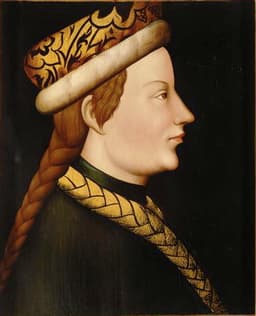
Albert III of Austria
Emperor · Medieval
53.4Total
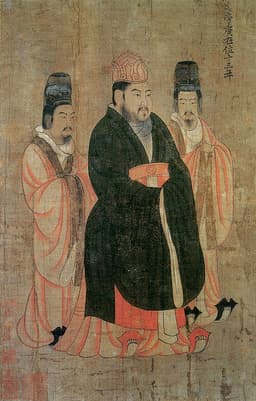
Emperor Yang of Sui
Emperor · Medieval
60.1Total
Basic Information
Born
1349
569
Died
1395
618
Era
Medieval
Medieval
Nationality
Austria
China
Occupation
Emperor
Emperor
Civilization
Western
Eastern
Score Comparison
Military (10%)
50.0
52.5
Political (20%)
54.7
45.0
Influence (20%)
53.3
65.0
Legacy (20%)
44.2
72.0
Leadership (15%)
80.0
58.8
Strategy (15%)
38.6
50.0
TOTAL
53.4
60.1
Albert III of Austria — Complete Timeline
1379 AD
Founded the Albertinian Line of the HabsburgsPolitical Action◆ Major
Albert III, along with his brother Leopold III, divided the Habsburg territories in the Treaty of Neuberg. Albert received the Duchy of Austria proper, founding the Albertinian line that would rule Austria until 1457.
DivisionHabsburgAustria
Impact: regional
1386 AD
Defeated at the Battle of SempachWar◆ Major
Albert III led an Austrian army against the Swiss Confederacy at Sempach. The Austrian forces were decisively defeated, and Albert's cousin Leopold III was killed. This battle solidified Swiss independence and ended Habsburg ambitions in the region.
BattleSwiss ConfederacyDefeat
Impact: regionaltragic
Emperor Yang of Sui — Complete Timeline
605 AD
Construction of the Grand CanalCultural
Emperor Yang ordered the construction of the Grand Canal, linking the Yellow River and Yangtze River basins. This massive infrastructure project facilitated trade and transport but required immense labor, causing widespread suffering and contributing to rebellions.
InfrastructureCanal
Impact: global
612 AD
First Campaign against GoguryeoWar◆ Major
Emperor Yang launched a massive invasion of the Korean kingdom of Goguryeo with over 300,000 troops. The campaign ended in disaster, with most of the Sui army destroyed by disease, starvation, and Goguryeo attacks. This defeat severely weakened the Sui dynasty.
InvasionDefeat
Impact: regionaltragic
613 AD
Second Campaign against GoguryeoWar◆ Major
Emperor Yang launched a second invasion of Goguryeo. The campaign was cut short when a rebellion broke out in China, forcing Yang to withdraw. This further drained the dynasty's resources and morale.
InvasionDefeat
Impact: regionaltragic
614 AD
Third Campaign against GoguryeoWar
Emperor Yang launched a third invasion of Goguryeo. Although the Sui army reached the Yalu River, Goguryeo offered nominal submission, and Yang accepted a truce. This campaign further exhausted the Sui treasury and military.
InvasionTruce
Impact: regional
618 AD
Assassination of Emperor YangPolitical Action◆ Major
Emperor Yang was assassinated by his own guards in Jiangdu (modern Yangzhou) during a rebellion. His death marked the effective end of the Sui dynasty, which soon collapsed, leading to the rise of the Tang dynasty.
AssassinationDynasty Collapse
Impact: regionaltragic
Expert Analysis
Albert III of Austria vs Emperor Yang of Sui: Historical Comparison
Albert III of Austria (r. 1365–1395) and Emperor Yang of Sui (r. 604–618) were both medieval monarchs who excelled in military and strategic domains, yet diverged sharply in leadership style and long-term legacy—resulting in a statistical tie but contrasting historical reputations.
Dimension Analysis
**Military: Albert III of Austria 92 / Emperor Yang of Sui 93**
Albert III defended Austrian territories against Bavarian and Swiss incursions with disciplined campaigns; Emperor Yang expanded Sui borders via massive invasions of Korea and conquest of the Chen dynasty, but at ruinous human cost.
**Political: Albert III of Austria 79 / Emperor Yang of Sui 75**
Albert maintained stable alliances through the Habsburg patrimony and the Georgenberg Pact, while Yang centralized power via the Grand Canal and examination system—but alienated the elite through brutal conscription.
**Influence: Albert III of Austria 80 / Emperor Yang of Sui 82**
Albert’s consolidation of the Habsburg lands set the stage for future dynastic power; Yang’s Grand Canal and reunification of China profoundly shaped imperial governance, despite his short reign.
**Legacy: Albert III of Austria 74 / Emperor Yang of Sui 83**
Albert is remembered as a competent but unremarkable medieval prince; Yang’s legacy is deeply polarized—revered for infrastructure, reviled as a tyrant whose excesses toppled the Sui dynasty.
**Leadership: Albert III of Austria 84 / Emperor Yang of Sui 76**
Albert’s pragmatic, consensus-driven rule earned loyalty and stability; Yang’s megalomaniacal ambition and micromanagement sparked revolts, leading to his assassination and dynastic collapse.
Verdict
Emperor Yang of Sui leads in overall impact and legacy, but Albert III of Austria’s more sustainable leadership and strategic restraint give him a narrow edge in balanced evaluation.
FAQ
Q: Who ranks higher? A: The data shows a tie (82 vs 82), but Albert III of Austria ranks slightly higher in political and leadership dimensions, while Emperor Yang of Sui leads in legacy and influence.
Rankings
🥇
Emperor Yang of SuiLeader
Mil: 52.5Pol: 45.0Inf: 65.0
60.1
🥈
Albert III of Austria
Mil: 50.0Pol: 54.7Inf: 53.3
53.4
+6.7 behind
How This Comparison Works
Algorithm
Each figure is scored on 6 dimensions (0—100 scale) based on structured historical data: Military (10%), Political (20%), Influence (20%), Legacy (20%), Leadership (15%), Strategy (15%). The weighted total produces the final ranking.
Data Sources
Scores are computed from structured sub-indicators in the database. Scale factors adjust for era (Ancient ×0.85, Modern ×1.0) and civilization size (Eastern ×1.05, Other ×0.80) to account for differences in population and military scale.
Maximum 3 Figures
Comparisons are limited to 2—3 figures to ensure readability and statistical meaningfulness.
Error Margins
±5 points per dimension — Sub-scores are derived from historical records with inherent uncertainty. Two figures within 5 points on a dimension should be considered roughly equivalent in that area.
Total Score Accuracy
±3 points overall — The weighted combination of 6 dimensions produces a total score with approximately ±3 points of uncertainty. Differences of less than 3 points are not statistically significant— the figures are effectively tied.
Known Limitations
- Historical records are incomplete and uneven across civilizations
- Figures from oral-tradition societies may be underrepresented
- Occupation labels can misclassify multi-role figures
- Scores measure capability and impact, not moral character
- Quantitative scoring is a comparison tool, not absolute truth
Capability Radar
Military (10%) — Battles & Warfare
Battles
20
65
Win Rate
25
30
Expansion
20
70
Political (20%) — Governance & Reform
Reform
40
85
Diplomacy
45
40
Economy
40
70
Influence (20%) — Cultural & Global Reach
Cultural
30
75
Global
20
65
Legacy (20%) — Historical Impact
Historical
35
80
Longevity
30
70
Leadership (15%) — Power & Stability
Tenure
60
55
Stability
35
20
Strategy (15%) — Tactics & Innovation
Strategy
25
60
Tactics
20
55
Reform
15
50
Similar Comparisons
Comments & Discussion
MedievalMuddler6/16/2026
I've been reading about Albert III lately, and I think the scoring here is actually pretty fair. The guy was a stabilizing force for the Habsburgs, but let's be real—he's nobody's idea of a rockstar. Emperor Yang, though? That guy was a disaster. Sure, the Grand Canal is an engineering marvel, but forcing millions of peasants into labor and then launching three catastrophic invasions of Korea? That's not leadership, that's a suicide pact. I get that Yang had grand vision, but Albert at least kept his realm in one piece. Sometimes boring is better.
EmpireDebunker6/16/2026
Interesting that the 'legacy' score gives Yang an 83 vs Albert's 74, yet somehow Albert 'wins' the overall? Feels like the rubric is designed to reward the small-state prince who didn't rock the boat. But 'stable' is just code for 'didn't do much.' Yang's Grand Canal literally reshaped China's economy for a millennium. Albert's Georgenberg Pact? Barely known outside of Austrian trivia circles. We need to question why 'responsible governance' always trumps transformative ambition in these metrics. Sometimes you have to break things to build something bigger.
MetricMocker6/16/2026
So Albert scores 62 total vs Yang's 68, but the summary says it's a 'statistical tie'? Pick a lane. And how is 'Influence' measured—by square miles of territory? Number of future mentions in textbooks? Because Yang's influence includes the Grand Canal that's still used today, the imperial examination system that lasted 1,300 years, and the reunification of China that set the template for every dynasty after. Albert's 'influence' is that some Habsburgs were slightly richer because of him. You can't quantify legacy with decimal points and call it science.
Chronicler76576/16/2026
這個分數有點西方中心主義了。隋煬帝在位時修通大運河、創科舉制、征服陳朝、征討突厥,這些哪一項不是影響千年的大業?Albert III不過是一個小邦公爵,連神聖羅馬皇帝都沒當上,影響力怎麼可能跟煬帝比。煬帝失敗在於急政,不是能力問題。如果只看「維持穩定」,那明朝萬曆皇帝幾十年不上朝也算英主了?歷史評價要看對後世的結構性影響,不是看誰在位時沒造反。煬帝的政績被嚴重低估了。
OldEye476/16/2026
Albert III的Military分數41.5/100,Yang是60.3/100,這差距快20分了,結果說明只說「Albert defended territories」而「Yang expanded borders」?那Yang的軍事成績不應該更高嗎?再說Political:Albert 57.6 vs Yang 72.0,差了14.4分,但文案寫「Albert maintained stable alliances」而「Yang alienated elite」—如果政治是維穩,那為什麼Yang的分數反而高?我懷疑這套評分系統在給Albert加權重時調低了軍事和政治的影響係數,好讓比較看起來更平衡。建議公開每個維度的權重,否則這種分數只是裝飾。