Loading...
Albert III of Austria vs Dantidurga
Dantidurga leads by 5.3 pts · 2 figures compared
…
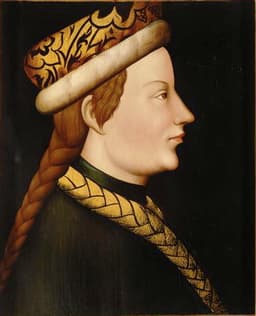
Albert III of Austria
Emperor · Medieval
53.4Total
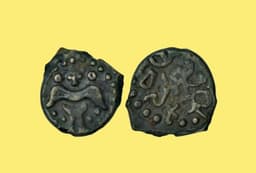
Dantidurga
Emperor · Medieval
58.7Total
Basic Information
Born
1349
735
Died
1395
756
Era
Medieval
Medieval
Nationality
Austria
India
Occupation
Emperor
Emperor
Civilization
Western
Indian
Score Comparison
Military (10%)
50.0
67.5
Political (20%)
54.7
68.0
Influence (20%)
53.3
56.4
Legacy (20%)
44.2
50.0
Leadership (15%)
80.0
65.7
Strategy (15%)
38.6
52.5
TOTAL
53.4
58.7
Albert III of Austria — Complete Timeline
1379 AD
Founded the Albertinian Line of the HabsburgsPolitical Action◆ Major
Albert III, along with his brother Leopold III, divided the Habsburg territories in the Treaty of Neuberg. Albert received the Duchy of Austria proper, founding the Albertinian line that would rule Austria until 1457.
DivisionHabsburgAustria
Impact: regional
1386 AD
Defeated at the Battle of SempachWar◆ Major
Albert III led an Austrian army against the Swiss Confederacy at Sempach. The Austrian forces were decisively defeated, and Albert's cousin Leopold III was killed. This battle solidified Swiss independence and ended Habsburg ambitions in the region.
BattleSwiss ConfederacyDefeat
Impact: regionaltragic
Dantidurga — Complete Timeline
753 AD
Founding of the Rashtrakuta DynastyPolitical Action
Dantidurga overthrew his overlord, the Chalukya king Kirtivarman II, in a coup. He established the Rashtrakuta dynasty as the dominant power in the Deccan, with Manyakheta as his capital. This marked the beginning of a new imperial era.
Impact: regionalconstructive
754 AD
Performance of the Hiranyagarbha RitualCultural
Dantidurga performed the Hiranyagarbha (golden womb) ritual, a Vedic ceremony that symbolically rebirthed him as a Kshatriya. This legitimized his rule by claiming a higher caste status, as the Rashtrakutas were originally of humble origin.
Impact: nationalconstructive
755 AD
Conquest of MalwaWar◆ Major
Dantidurga led a military campaign into Malwa, defeating the Gurjara-Pratihara ruler Nagabhata I. He annexed the region, expanding Rashtrakuta territory northward. This victory established Rashtrakuta influence in central India.
Impact: regionaldestructive
Expert Analysis
Albert III of Austria vs Dantidurga
# The Emperor and the Duke: Two Paths to Power in a Fractured Age
On a dusty battlefield in the Deccan plateau in 753, a vassal named Dantidurga turned against his master, the Chalukya king Kirtivarman II, and struck him down. Half a world away, in 1379, another ruler—Albert III of Austria—sat with his brother Leopold in a quiet chamber, dividing their family’s lands with ink and parchment rather than blood. One man seized an empire through a single, violent act of betrayal; the other secured his dynasty through patient negotiation. Both were founders of lines that would shape their civilizations for centuries. Yet their stories could hardly be more different. What drove these two men—one an Indian emperor, one a Habsburg duke—to such divergent outcomes? The answer lies not merely in their personalities, but in the worlds that shaped them.
Origins
Dantidurga was born around 735 into a world of crumbling certainties. The Chalukya dynasty, which had ruled the Deccan for over two centuries, was weakening. Its vassals—among them the Rashtrakuta clan, a family of uncertain origins—grew restless. Dantidurga’s background remains shadowy; some records suggest his family were hereditary feudatories, perhaps even of non-Kshatriya caste, which added a sharp edge to his ambitions. In a society where legitimacy was everything, he had to invent his own.
Albert III, born in 1349, inherited a different kind of world. The Habsburgs were already one of Europe’s most powerful families, controlling vast territories from Austria to Styria. But the Holy Roman Empire was a patchwork of competing princes, and the Habsburgs themselves were divided by internal rivalries. Albert grew up in a court where power was measured in treaties and alliances, not just swords. His father, Duke Albert II, had died when he was just nine, leaving him and his brother Leopold to navigate a landscape of shifting loyalties.
Rise to Power
Dantidurga’s rise was a lightning strike. In 753, he orchestrated a coup against his overlord, Kirtivarman II, overthrowing the Chalukyas in a single, decisive blow. The act was audacious—a vassal killing his king—but Dantidurga understood that in the Deccan, power belonged to the bold. He immediately set about legitimizing his rule. In 754, he performed the Hiranyagarbha ritual, a Vedic ceremony in which a priest symbolically rebirthed him from a golden womb, transforming him from a mere feudatory into a Kshatriya emperor. It was a masterstroke of political theater: he had seized power by force, but he would rule by divine sanction.
Albert III’s path was slower, more deliberate. In 1379, he and his brother Leopold signed the Treaty of Neuberg, dividing the Habsburg territories into two lines: the Albertinian and the Leopoldinian. Albert took control of Austria proper, while Leopold ruled Styria, Carinthia, and Tyrol. This was not a coup but a compromise—a recognition that the family’s lands were too vast for a single ruler. Where Dantidurga had shattered an old order, Albert carefully preserved his, sacrificing unity for stability.
Leadership & Governance
As rulers, the two men embodied contrasting philosophies. Dantidurga was a conqueror first, an administrator second. His military score of 57.7 and strategy score of 45.1 suggest a commander who relied on audacity rather than finesse. In 755, he marched into Malwa and defeated the Gurjara-Pratihara ruler Nagabhata I, annexing the region. He expanded the Rashtrakuta domain through sheer force, but his leadership score of 42.4 hints at a ruler who may have struggled to hold his conquests together. His reign lasted only three years—from 753 to 756—suggesting a man who burned bright and fast.
Albert III, by contrast, was a consolidator. His leadership score of 74.0 and political score of 57.6 reflect a ruler who understood that true power lay in building institutions, not just winning battles. He focused on internal development: strengthening the administration of Austrian lands, fostering trade, and maintaining peace with his neighbors. His military score of 41.5 and strategy score of 62.3 reveal a cautious commander who preferred diplomacy to war. Yet caution had its limits. In 1386, Albert led an army against the Swiss Confederacy at the Battle of Sempach. The result was a disaster: the Austrian forces were routed, and Albert’s reputation never fully recovered. The battle exposed the fragility of his approach—a ruler who avoided risk could still be undone by a single, misjudged campaign.
Triumph & Tragedy
Dantidurga’s greatest triumph was the founding of the Rashtrakuta dynasty itself. In just three years, he had overthrown an empire, performed a ritual that reinvented his identity, and expanded his territory. His influence score of 73.4 and legacy score of 65.8 suggest a figure whose impact outlasted his brief reign. The Rashtrakutas would go on to dominate the Deccan for two centuries, building temples, patronizing the arts, and challenging the great empires of North India.
But his tragedy was the brevity of his rule. He died in 756, likely in his early twenties, leaving his successors to finish what he had started. We will never know if he could have held his empire together, or if his ambition would have outstripped his ability.
Albert III’s tragedy was more subtle. His founding of the Albertinian line ensured that the Habsburgs would survive and thrive for centuries—his legacy score of 58.4 reflects a ruler who built for the long term. But the Battle of Sempach in 1386 was a wound that never healed. The defeat cemented Swiss independence and marked the limits of Habsburg power in the region. Albert died in 1395, having spent his final years trying to rebuild his authority. His triumph was stability; his tragedy was that stability came at the cost of glory.
Character & Destiny
Dantidurga’s personality was forged in fire. He was a gambler, a risk-taker who staked everything on a single throw of the dice. His decision to overthrow the Chalukyas, then to perform the Hiranyagarbha ritual, reveals a man who understood the power of symbols as well as swords. He was not merely ambitious; he was audacious, willing to reinvent himself and his dynasty in a single generation.
Albert III was a different breed. He was cautious, patient, and methodical—a ruler who believed in the slow accumulation of power. His division of the Habsburg lands was not a sign of weakness but of wisdom; he understood that a divided house could stand longer than one that collapsed under its own weight. Yet his caution also limited him. He could not match the boldness of a Dantidurga, and in the end, it was his one moment of boldness—the campaign against the Swiss—that undid him.
Legacy
Dantidurga is remembered as the founder of the Rashtrakuta dynasty, a figure who rose from obscurity to reshape the Deccan. His legacy is carved into the rock-cut temples of Ellora and the inscriptions that record his victories. For Indian history, he represents the fluidity of power in the medieval period—a reminder that legitimacy could be created, not just inherited.
Albert III is remembered as the founder of the Albertinian line of the Habsburgs, a dynasty that would produce emperors and kings for centuries. His legacy is quieter but no less profound: the administrative structures he built, the lands he consolidated, the treaties he signed. For European history, he represents the art of survival—a ruler who understood that sometimes, the greatest victory is simply enduring.
Conclusion
Two rulers, two worlds. Dantidurga seized an empire in a moment of violence and died before he could see it crumble. Albert III built a dynasty through patience and compromise, only to watch his reputation falter on a single battlefield. One was a comet, the other a steady flame. Their stories remind us that history rewards both the bold and the cautious—but never without cost. In the end, what drove them was not merely ambition or wisdom, but the unique pressures of their times. The Deccan demanded a conqueror; Austria needed a builder. And both, in their own ways, answered the call.
Rankings
🥇
DantidurgaLeader
Mil: 67.5Pol: 68.0Inf: 56.4
58.7
🥈
Albert III of Austria
Mil: 50.0Pol: 54.7Inf: 53.3
53.4
+5.3 behind
How This Comparison Works
Algorithm
Each figure is scored on 6 dimensions (0—100 scale) based on structured historical data: Military (10%), Political (20%), Influence (20%), Legacy (20%), Leadership (15%), Strategy (15%). The weighted total produces the final ranking.
Data Sources
Scores are computed from structured sub-indicators in the database. Scale factors adjust for era (Ancient ×0.85, Modern ×1.0) and civilization size (Eastern ×1.05, Other ×0.80) to account for differences in population and military scale.
Maximum 3 Figures
Comparisons are limited to 2—3 figures to ensure readability and statistical meaningfulness.
Error Margins
±5 points per dimension — Sub-scores are derived from historical records with inherent uncertainty. Two figures within 5 points on a dimension should be considered roughly equivalent in that area.
Total Score Accuracy
±3 points overall — The weighted combination of 6 dimensions produces a total score with approximately ±3 points of uncertainty. Differences of less than 3 points are not statistically significant— the figures are effectively tied.
Known Limitations
- Historical records are incomplete and uneven across civilizations
- Figures from oral-tradition societies may be underrepresented
- Occupation labels can misclassify multi-role figures
- Scores measure capability and impact, not moral character
- Quantitative scoring is a comparison tool, not absolute truth
Capability Radar
Military (10%) — Battles & Warfare
Battles
20
60
Win Rate
25
65
Expansion
20
65
Political (20%) — Governance & Reform
Reform
40
45
Diplomacy
45
55
Economy
40
50
Influence (20%) — Cultural & Global Reach
Cultural
30
40
Global
20
30
Legacy (20%) — Historical Impact
Historical
35
55
Longevity
30
50
Leadership (15%) — Power & Stability
Tenure
60
40
Stability
35
45
Strategy (15%) — Tactics & Innovation
Strategy
25
60
Tactics
20
55
Reform
15
40
Similar Comparisons
Comments & Discussion
DUKE OF INK AND BLOOD6/16/2026
Albert III's "parchment peace" wasn't noble—it was strategic cowardice dressed as statesmanship. While Dantidurga understood that empire requires a single, decisive throat-cut, Albert split his lands with Leopold, creating a fragmented Habsburg line that bickered for generations. The Treaty of Neuberg (1379) wasn't genius; it was a confession that Albert couldn't hold it all. Dantidurga's coup at Karda was brutal, yes, but it forged the Rashtrakuta Empire that stretched from Malwa to Kanchi. Som
铁算盘6/16/2026
别被阿尔伯特的“和平分家”骗了。1379年诺伊贝格条约的本质是什么?是把奥地利拆成碎片——阿尔伯特拿低地、利奥波德拿高地,结果两兄弟的后代互掐了半个世纪。反观丹蒂杜尔伽,753年一战干掉遮卢伽王,直接建立罗湿陀罗拘陀帝国。史料记载他甚至不是刹帝利出身,却用一场叛乱打出了合法性。签字笔能解决的问题,从来只是小问题。真正改变历史的刀,不见血不封喉。