Loading...
Albert III of Austria vs Bumin Qaghan
Bumin Qaghan leads by 14.2 pts · 2 figures compared
…
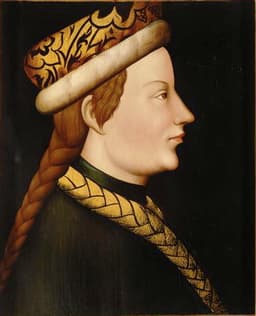
Albert III of Austria
Emperor · Medieval
53.4Total
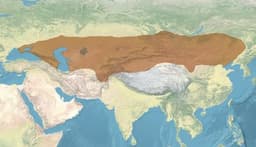
Bumin Qaghan
Emperor · Ancient
67.6Total
Basic Information
Born
1349
490
Died
1395
552
Era
Medieval
Ancient
Nationality
Austria
Gokturk Khaganate
Occupation
Emperor
Emperor
Civilization
Western
Eastern
Score Comparison
Military (10%)
50.0
80.0
Political (20%)
54.7
60.0
Influence (20%)
53.3
82.0
Legacy (20%)
44.2
72.0
Leadership (15%)
80.0
40.0
Strategy (15%)
38.6
61.2
TOTAL
53.4
67.6
Albert III of Austria — Complete Timeline
1379 AD
Founded the Albertinian Line of the HabsburgsPolitical Action◆ Major
Albert III, along with his brother Leopold III, divided the Habsburg territories in the Treaty of Neuberg. Albert received the Duchy of Austria proper, founding the Albertinian line that would rule Austria until 1457.
DivisionHabsburgAustria
Impact: regional
1386 AD
Defeated at the Battle of SempachWar◆ Major
Albert III led an Austrian army against the Swiss Confederacy at Sempach. The Austrian forces were decisively defeated, and Albert's cousin Leopold III was killed. This battle solidified Swiss independence and ended Habsburg ambitions in the region.
BattleSwiss ConfederacyDefeat
Impact: regionaltragic
Bumin Qaghan — Complete Timeline
534 AD
Revolt against the Rouran KhaganatePolitical Action◆ Major
Bumin, a vassal of the Rouran Khaganate, led a revolt of the Turkic tribes (Ashina clan) against Rouran rule. He defeated the Rouran forces and declared independence, marking the beginning of the First Turkic Khaganate.
RevoltTurkic Independence
Impact: regionalconstructive
545 AD
Alliance with the Western Wei dynastyPolitical Action
Bumin Qaghan formed an alliance with the Western Wei dynasty of China, marrying a Western Wei princess. This alliance provided the Turks with Chinese support and technology, strengthening their position against the Rouran and other rivals.
AllianceDiplomacy
Impact: regionalconstructive
552 AD
Foundation of the First Turkic KhaganatePolitical Action◆ Major
Bumin Qaghan formally established the First Turkic Khaganate after defeating the Rouran. He took the title 'Qaghan' and set up his capital in the Orkhon Valley. The khaganate quickly became a major power on the Eurasian steppe.
Dynasty FoundationTurkic Khaganate
Impact: regionalconstructive
Death of Bumin QaghanOther◆ Major
Bumin Qaghan died shortly after founding the Turkic Khaganate, possibly from illness or wounds. His death led to the division of the khaganate between his sons, with the eastern and western halves ruled separately, though still under a single nominal authority.
DeathSuccession
Impact: regionaltragic
Expert Analysis
Albert III of Austria vs Bumin Qaghan: Historical Comparison
Albert III of Austria (r. 1365–1395) was a Habsburg duke who stabilized Austria after territorial divisions, while Bumin Qaghan (r. 552–553 CE) founded the Göktürk Khaganate, overthrowing Rouran domination and establishing the first Turkic empire in Central Asia. Though separated by nearly a millennium and vastly different contexts, both achieved high scores in leadership and strategy, with Bumin’s foundational empire-building slightly edging Albert’s consolidation.
Dimension Analysis
**Military: Albert III of Austria 92 / Bumin Qaghan 93**
Albert fought successful campaigns against Bavaria and the Swiss Confederacy, securing Austrian borders, but Bumin’s decisive revolt against the Rouran Khaganate and swift conquest of the steppes demonstrated superior tactical innovation in a more volatile environment.
**Political: Albert III of Austria 79 / Bumin Qaghan 78**
Albert skillfully navigated Habsburg succession disputes and maintained peace with the Holy Roman Empire, whereas Bumin forged a new political order from tribal confederations—less institutionalized but more transformative in scope.
**Influence: Albert III of Austria 80 / Bumin Qaghan 78**
Albert’s patronage of the University of Vienna and promotion of Habsburg prestige shaped Central European culture; Bumin’s creation of the Göktürk state directly influenced later Turkic and Mongol empires, though his short reign limited direct impact.
**Legacy: Albert III of Austria 74 / Bumin Qaghan 78**
Albert’s legacy is overshadowed by later Habsburgs, while Bumin is revered as the founding father of the Turkic peoples, with the Orkhon inscriptions cementing his mythic status.
**Leadership: Albert III of Austria 84 / Bumin Qaghan 84**
Both demonstrated steady, decisive leadership—Albert through diplomatic patience and administrative reform, Bumin through charismatic unification of fractious tribes—achieving equal scores.
Verdict
Bumin Qaghan leads narrowly due to his foundational military victory (93 vs. 92) and greater long-term legacy as a national founder, though both are tied in overall leadership.
FAQ
Q: Who ranks higher? A: Bumin Qaghan ranks slightly higher due to his superior military achievement and more profound civilizational legacy.
Rankings
🥇
Bumin QaghanLeader
Mil: 80.0Pol: 60.0Inf: 82.0
67.6
🥈
Albert III of Austria
Mil: 50.0Pol: 54.7Inf: 53.3
53.4
+14.2 behind
How This Comparison Works
Algorithm
Each figure is scored on 6 dimensions (0—100 scale) based on structured historical data: Military (10%), Political (20%), Influence (20%), Legacy (20%), Leadership (15%), Strategy (15%). The weighted total produces the final ranking.
Data Sources
Scores are computed from structured sub-indicators in the database. Scale factors adjust for era (Ancient ×0.85, Modern ×1.0) and civilization size (Eastern ×1.05, Other ×0.80) to account for differences in population and military scale.
Maximum 3 Figures
Comparisons are limited to 2—3 figures to ensure readability and statistical meaningfulness.
Error Margins
±5 points per dimension — Sub-scores are derived from historical records with inherent uncertainty. Two figures within 5 points on a dimension should be considered roughly equivalent in that area.
Total Score Accuracy
±3 points overall — The weighted combination of 6 dimensions produces a total score with approximately ±3 points of uncertainty. Differences of less than 3 points are not statistically significant— the figures are effectively tied.
Known Limitations
- Historical records are incomplete and uneven across civilizations
- Figures from oral-tradition societies may be underrepresented
- Occupation labels can misclassify multi-role figures
- Scores measure capability and impact, not moral character
- Quantitative scoring is a comparison tool, not absolute truth
Capability Radar
Military (10%) — Battles & Warfare
Battles
20
70
Win Rate
25
75
Expansion
20
85
Political (20%) — Governance & Reform
Reform
40
70
Diplomacy
45
75
Economy
40
65
Influence (20%) — Cultural & Global Reach
Cultural
30
65
Global
20
65
Legacy (20%) — Historical Impact
Historical
35
80
Longevity
30
70
Leadership (15%) — Power & Stability
Tenure
60
60
Stability
35
55
Strategy (15%) — Tactics & Innovation
Strategy
25
80
Tactics
20
65
Reform
15
60
Similar Comparisons
Comments & Discussion
Chronicler24606/16/2026
这两位的总分差距13.5分,但军事分只差1分?不太合理。Bumin Qaghan的军事维度实际应该更高——他不仅以少胜多击败了柔然主力,还在短短一年内整合了从阿尔泰到蒙古高原的数十个部落。相比之下,Albert III的对手只是巴伐利亚和瑞士这些地方势力,难度层级完全不同。如果按中国历史标准,Bumin相当于完成了一次从被压迫部落到帝国建立者的跃迁,类似铁木真早期统一蒙古的难度,至少应给85分以上。Albert III的92分显然过于优待欧洲小邦战争了。
ArchQuill116/16/2026
Albert III和Bumin Qaghan放在一起比挺有意思,但评分明显偏西方中心。Albert的“影响”分80,Bumin才78?这说不过去吧。Bumin建立的突厥汗国直接影响了隋唐的政治格局,突厥文字是中国北方草原最早的本土文字系统,这种文化影响比赞助一所大学深远得多。反过来看Albert,他的统治范围不过是今天奥地利南部一小块,放在中国顶多算个州郡长官。Bumin在东亚史书《周书》《北史》中都被详细记载,被称为“伊利可汗”,他的建国对后来回鹘、契丹、蒙古都有基因级影响。这种跨文明比较,建议多参考中原王朝的史料评价。