Loading...
Albert III of Austria vs Baybars
Baybars leads by 10.4 pts · 2 figures compared
…
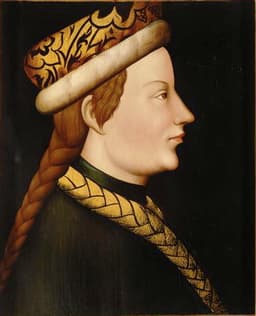
Albert III of Austria
Emperor · Medieval
53.4Total
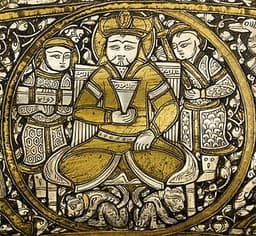
Baybars
Emperor · Medieval
63.8Total
Basic Information
Born
1349
1223
Died
1395
1277
Era
Medieval
Medieval
Nationality
Austria
Egypt
Occupation
Emperor
Emperor
Civilization
Western
Middle Eastern
Score Comparison
Military (10%)
50.0
85.0
Political (20%)
54.7
70.0
Influence (20%)
53.3
55.0
Legacy (20%)
44.2
52.0
Leadership (15%)
80.0
72.0
Strategy (15%)
38.6
72.0
TOTAL
53.4
63.8
Albert III of Austria — Complete Timeline
1379 AD
Founded the Albertinian Line of the HabsburgsPolitical Action◆ Major
Albert III, along with his brother Leopold III, divided the Habsburg territories in the Treaty of Neuberg. Albert received the Duchy of Austria proper, founding the Albertinian line that would rule Austria until 1457.
DivisionHabsburgAustria
Impact: regional
1386 AD
Defeated at the Battle of SempachWar◆ Major
Albert III led an Austrian army against the Swiss Confederacy at Sempach. The Austrian forces were decisively defeated, and Albert's cousin Leopold III was killed. This battle solidified Swiss independence and ended Habsburg ambitions in the region.
BattleSwiss ConfederacyDefeat
Impact: regionaltragic
Baybars — Complete Timeline
1260 AD
Battle of Ain Jalut (1260)War◆ Major
Baybars served as a key commander under Qutuz at the Battle of Ain Jalut. He led the vanguard and played a crucial role in the Mamluk victory over the Mongols. This battle established his reputation as a military leader.
Mongol InvasionBattleMamluk Victory
Impact: globalconstructive
Accession as Sultan (1260)Political Action◆ Major
After assassinating Qutuz, Baybars proclaimed himself Sultan of Egypt. He was accepted by the Mamluk commanders and the Abbasid Caliph. His reign began a period of Mamluk dominance in the Middle East, lasting for decades.
SuccessionMamluk SultanateAssassination
Impact: regional
1265 AD
Campaigns against the Crusader States (1260s-1270s)War◆ Major
Baybars launched a series of campaigns against the remaining Crusader states in the Levant. He captured key fortresses including Arsuf (1265), Safed (1266), Jaffa (1268), and Antioch (1268). These victories reduced Crusader territory to a few coastal enclaves.
Crusader WarsConquestMamluk Expansion
Impact: regionaldestructive
1277 AD
Defeat of the Mongols at Elbistan (1277)War◆ Major
Baybars defeated a Mongol army at the Battle of Elbistan in Anatolia. He invaded the Seljuk Sultanate of Rum, which was under Mongol suzerainty. Although a tactical victory, Baybars could not hold Anatolia and returned to Syria.
Mongol WarsBattleAnatolia
Impact: regionalconstructive
Death of Baybars (1277)Other◆ Major
Baybars died in Damascus, possibly from poisoning or illness. His death was kept secret for a time to prevent unrest. He was succeeded by his son Al-Said Barakah. Baybars' reign is considered the peak of the early Mamluk Sultanate.
DeathSuccessionMamluk Sultanate
Impact: regionaltragic
Expert Analysis
Albert III of Austria vs Baybars
### The Duke and the Sultan: Two Paths to Power in a Violent Age
On a dusty battlefield in Switzerland, in the summer of 1386, Duke Albert III of Austria watched his knights fall before the halberds of Swiss peasants. It was a humiliation that would define his reign. Half a continent away, in the shadow of the Syrian fortress of Elbistan, Sultan Baybars of Egypt had, just over a century earlier, watched his Mamluk cavalry shatter a Mongol army, a victory that would echo through the ages. Both men were rulers, both fought for survival, yet their stories could not be more different. One was a careful consolidator of inherited lands; the other, a slave who seized an empire. What drove these two men to such divergent fates?
### Origins
Albert III was born into the gilded cage of the Habsburg dynasty in 1349. His world was one of inherited titles, legal documents, and the slow, grinding politics of the Holy Roman Empire. He was a prince by birth, his path to power paved by the blood of his ancestors. His education was in courtly protocol and the management of estates, not the desperate calculus of a battlefield. The Austria he inherited was a patchwork of duchies, a realm that required a steady hand more than a brilliant sword.
Baybars, born around 1223, came from nothing. The steppes of the Kipchak Turks, where he was likely a child of nomadic warriors, gave way to a world of slave markets and iron discipline. Captured and sold into slavery, he was purchased by the Ayyubid sultan of Egypt and trained in the rigorous military caste of the Mamluks—warriors who were, paradoxically, both slaves and the elite of the realm. His rise was not a matter of lineage but of survival. Every day was a test of strength, cunning, and loyalty. The world had given him nothing, so he learned to take everything.
### Rise to Power
Albert’s ascent was a matter of inheritance and negotiation. When his father died in 1365, he became co-ruler with his brother, Leopold III. For fourteen years, they shared a throne, a fragile arrangement that finally fractured. In 1379, they signed the Treaty of Neuberg, dividing the Habsburg lands. Albert took the core Austrian territories, founding the Albertinian line. It was a political action, not a conquest—a careful partition of a family estate. He had entered the stage not with a bang, but with a signature.
Baybars’s rise was a coup d’état soaked in blood. In 1260, the Mamluk sultan Qutuz had just won the greatest victory of the age at Ain Jalut, smashing the seemingly invincible Mongol army. Baybars, who had led the vanguard in that battle, was a hero. But he was not a patient man. Later that year, on a hunting trip, he murdered Qutuz with his own hands. He then proclaimed himself sultan, and the Mamluk commanders, perhaps fearing his sword or respecting his skill, accepted him. He did not inherit power; he seized it from a corpse.
### Leadership & Governance
Albert III was a ruler of consolidation. His military score of 41.5 reflects a man who was not a great general. His one major campaign, against the Swiss Confederacy, ended in the catastrophic defeat at Sempach in 1386, where he lost many of his knights and his own brother, Leopold III. He was a better politician (57.6), focusing on peace, law, and the economic development of his lands. He patronized the University of Vienna and sought to stabilize his duchy after the division. He was a manager, not a warrior.
Baybars was the opposite. With a leadership score of 80.2 and military score of 67.8, he was a sultan who led from the front. After Ain Jalut, he spent the 1260s and 1270s systematically dismantling the Crusader states, capturing fortresses like Caesarea, Arsuf, and the mighty Krak des Chevaliers. He was a master of siegecraft and psychological warfare. In 1277, he invaded the Seljuk Sultanate of Rum and defeated another Mongol army at Elbistan, proving that the Mongol tide could be turned back again and again. He was a hammer, not an anvil.
### Triumph & Tragedy
Albert’s greatest moment was also his greatest failure. The Battle of Sempach was meant to assert Habsburg dominance over the growing Swiss Confederacy. Instead, it was a slaughter. The Swiss infantry, fighting in a dense phalanx with long pikes and halberds, cut down the Austrian cavalry. Albert survived, but his reputation did not. He spent his remaining years repairing the damage, a quiet tragedy of ambition undone by reality.
Baybars’s triumph was his entire life. He never lost a major battle. His campaigns against the Crusaders were methodical and devastating, reducing the Kingdom of Jerusalem to a coastal rump. His defeat of the Mongols at Elbistan was a masterstroke of timing and mobility. But his tragedy was the loneliness of the usurper. He trusted no one, and his death in 1277—possibly from a poisoned drink, possibly from illness—was kept secret for weeks to prevent chaos. He died as he lived: in a state of war, surrounded by enemies.
### Character & Destiny
Albert III was a cautious man in a dangerous age. His strategy score of 62.3 suggests a competent planner, but his defeat at Sempach reveals a fatal flaw: he underestimated his enemy. He saw the Swiss as peasants, not as a revolutionary military force. His character was that of a medieval duke—proud, legalistic, and slow to adapt. Destiny gave him a stable inheritance, but he could not defend it.
Baybars was a predator. His strategy score of 71.6 and political score of 75.7 show a man who combined ferocity with cunning. He was ruthless, patient, and endlessly adaptable. He forged alliances with the Mongols’ enemies, played Crusader factions against each other, and built a spy network that stretched across the Mediterranean. His character was forged in the crucible of slavery: he trusted only his own sword and his own mind. Destiny gave him nothing, so he made everything.
### Legacy
Albert III is remembered today as a footnote in Habsburg history. The Albertinian line he founded would eventually merge back into the main Habsburg dynasty. His name is known mostly to historians of medieval Austria. His legacy score of 58.4 reflects a ruler who held the line but did not advance it.
Baybars is a legend. He is the archetypal Mamluk sultan—the slave who became king, the man who broke the Mongol myth of invincibility, the scourge of the Crusaders. His name is carved into the walls of Cairo’s citadel and whispered in the chronicles of the Middle East. His legacy score of 69.3 is a testament to a life that reshaped the world.
### Conclusion
One man was born to rule and failed at war. The other was born a slave and conquered an empire. Albert III of Austria and Baybars of Egypt lived in the same violent century, but they inhabited different worlds. Albert’s story is a cautionary tale about the limits of inherited power; Baybars’s is a testament to the raw force of will. In the end, the duke’s tragedy was that he had everything to lose, while the sultan’s triumph was that he had nothing to fear. History, as always, remembers the one who dared to take.
Rankings
🥇
BaybarsLeader
Mil: 85.0Pol: 70.0Inf: 55.0
63.8
🥈
Albert III of Austria
Mil: 50.0Pol: 54.7Inf: 53.3
53.4
+10.4 behind
How This Comparison Works
Algorithm
Each figure is scored on 6 dimensions (0—100 scale) based on structured historical data: Military (10%), Political (20%), Influence (20%), Legacy (20%), Leadership (15%), Strategy (15%). The weighted total produces the final ranking.
Data Sources
Scores are computed from structured sub-indicators in the database. Scale factors adjust for era (Ancient ×0.85, Modern ×1.0) and civilization size (Eastern ×1.05, Other ×0.80) to account for differences in population and military scale.
Maximum 3 Figures
Comparisons are limited to 2—3 figures to ensure readability and statistical meaningfulness.
Error Margins
±5 points per dimension — Sub-scores are derived from historical records with inherent uncertainty. Two figures within 5 points on a dimension should be considered roughly equivalent in that area.
Total Score Accuracy
±3 points overall — The weighted combination of 6 dimensions produces a total score with approximately ±3 points of uncertainty. Differences of less than 3 points are not statistically significant— the figures are effectively tied.
Known Limitations
- Historical records are incomplete and uneven across civilizations
- Figures from oral-tradition societies may be underrepresented
- Occupation labels can misclassify multi-role figures
- Scores measure capability and impact, not moral character
- Quantitative scoring is a comparison tool, not absolute truth
Capability Radar
Military (10%) — Battles & Warfare
Battles
20
85
Win Rate
25
90
Expansion
20
80
Political (20%) — Governance & Reform
Reform
40
80
Diplomacy
45
78
Economy
40
72
Influence (20%) — Cultural & Global Reach
Cultural
30
65
Global
20
65
Legacy (20%) — Historical Impact
Historical
35
75
Longevity
30
60
Leadership (15%) — Power & Stability
Tenure
60
75
Stability
35
70
Strategy (15%) — Tactics & Innovation
Strategy
25
85
Tactics
20
88
Reform
15
82
Similar Comparisons
Comments & Discussion
Mace-and-Halberd6/16/2026
Albert III was a glorified estate manager, not a warrior. His famous defeat at Sempach happened because he tried to fight Swiss peasants in their own terrain with outdated feudal knights. Baybars was a military genius who crushed both Crusaders and Mongols—two very different enemies. You can’t seriously compare a guy who lost to farmers with a man who took Antioch in three days. Habsburgs love their paper trails, but paper doesn’t win battles.
暗影马穆鲁克6/16/2026
说实话,阿尔伯特三世就是个典型的世袭废物。他打不过瑞士农民,而贝巴尔斯从奴隶变成苏丹,靠的是真本事。贝巴尔斯在阿音扎鲁特战役中用诈败战术歼灭蒙古军,这招阿尔伯特三世想都想不出来。贵族血统给他的是安全感,不是战场上的敏锐。历史记得胜利者,不是那些丢盔弃甲的公爵。
Numismatist-Nerd6/16/2026
You're all fixated on battles, but I'm looking at coinage. Baybars minted gold dinars across Syria and Egypt, standardizing currency in a way that stabilized his empire for decades. Albert III? His most famous monetary act was debasing the Vienna pfennig to fund his failed wars. Economic policy tells you who really understood power. Baybars built a financial engine; Albert just burned through his inheritance. That’s the real comparison.
棱镜史官6/16/2026
你们都在吹贝巴尔斯,但我得说,阿尔伯特三世有一件事做对了——他巩固了哈布斯堡家族的领土继承权,为后来奥地利成为欧洲强权打下基础。贝巴尔斯虽然伟大,但他死后马穆鲁克王朝陷入了内斗。阿尔伯特三世通过《纽伦堡和约》稳定了与卢森堡家族的关系,这种长线政治智慧不该被轻蔑。短期胜利 vs 长期布局,各有千秋。
Skeptical-Quill6/16/2026
Classic historian bias: big battles get the glory. But let's be real—Baybars didn't defeat the Mongols alone; he had a unified Mamluk state behind him, built by his predecessors. Albert III faced a decentralized, fractious Holy Roman Empire and still held his duchy together. The real test of leadership is managing internal chaos, not just winning set-piece battles. Baybars was a great general; Albert was a better politician. Which matters more in the long run?