Loading...
Albert III of Austria vs Alp Tigin
Albert III of Austria leads by 2.9 pts · 2 figures compared
…
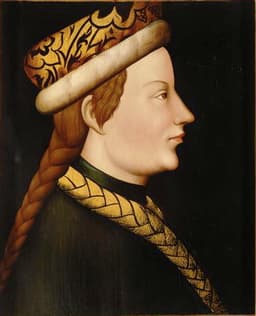
Albert III of Austria
Emperor · Medieval
53.4Total
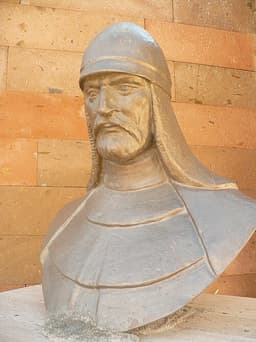
Alp Tigin
Emperor · Medieval
50.5Total
Basic Information
Born
1349
911
Died
1395
963
Era
Medieval
Medieval
Nationality
Austria
Ghaznavid Empire
Occupation
Emperor
Emperor
Civilization
Western
Middle Eastern
Score Comparison
Military (10%)
50.0
55.0
Political (20%)
54.7
33.6
Influence (20%)
53.3
56.4
Legacy (20%)
44.2
49.2
Leadership (15%)
80.0
50.7
Strategy (15%)
38.6
60.0
TOTAL
53.4
50.5
Albert III of Austria — Complete Timeline
1379 AD
Founded the Albertinian Line of the HabsburgsPolitical Action◆ Major
Albert III, along with his brother Leopold III, divided the Habsburg territories in the Treaty of Neuberg. Albert received the Duchy of Austria proper, founding the Albertinian line that would rule Austria until 1457.
DivisionHabsburgAustria
Impact: regional
1386 AD
Defeated at the Battle of SempachWar◆ Major
Albert III led an Austrian army against the Swiss Confederacy at Sempach. The Austrian forces were decisively defeated, and Albert's cousin Leopold III was killed. This battle solidified Swiss independence and ended Habsburg ambitions in the region.
BattleSwiss ConfederacyDefeat
Impact: regionaltragic
Alp Tigin — Complete Timeline
961 AD
Rebellion against the SamanidsPolitical Action◆ Major
Alp Tigin rebelled against the Samanid ruler Mansur I after being passed over for a governorship. He marched from Nishapur to Ghazni, defeating Samanid forces along the way, and established his own rule in eastern Afghanistan.
Impact: regional
963 AD
Consolidation of GhazniPolitical Action
Alp Tigin fortified Ghazni and organized a military state based on slave soldiers (ghilman). He established a stable administration that attracted scholars and merchants, turning Ghazni into a major regional power center.
Impact: regionalconstructive
Expert Analysis
Alp Tigin vs Albert III of Austria
### The Slave Who Built a Dynasty and The Duke Who Divided a House
History often presents us with the strangest of bedfellows: a Turkic slave commander carving out an empire from the ashes of a Persian kingdom, and a cautious Habsburg duke trying to hold his family’s lands together with parchment and treaties. Alp Tigin and Albert III of Austria never met, never corresponded, and belonged to worlds that would have regarded each other with utter incomprehension. Yet both men faced the same fundamental question of medieval rulership: how does a leader secure power in an age of uncertainty? Their answers—one forged in rebellion and the blood of slave soldiers, the other in legal partition and the quiet consolidation of estates—reveal how personal ambition, cultural context, and sheer circumstance shaped two radically different paths to legacy.
Origins
Alp Tigin was born a slave in the steppes of Central Asia around 911, a time when the Samanid Empire dominated the eastern Islamic world. The *ghilman* system—training enslaved Turkic boys to become elite soldiers and administrators—offered a rare ladder to power for those without noble birth. Alp Tigin climbed that ladder with ruthless competence, eventually becoming a commander in the Samanid army. He was a creature of the frontier, where loyalty was transactional and power flowed to the man who could hold a sword and command an army.
Albert III, born in 1349, entered the world as the second son of the Holy Roman Empire’s most powerful dynasty. The Habsburgs had spent centuries accumulating lands through marriage, inheritance, and strategic warfare. Albert grew up in the shadow of his father’s ambitions and his elder brother Rudolf’s early death, trained for governance rather than combat. His Austria was a patchwork of duchies, counties, and fragmented jurisdictions, where a ruler’s primary skill was not fighting but negotiating.
The difference in their origins is stark: one man rose from nothing, the other was born into everything. But that very abundance would prove a burden.
Rise to Power
Alp Tigin’s path to power came through a single, decisive act of defiance. In 961, after being passed over for the governorship of Khorasan by the new Samanid ruler Mansur I, he rebelled. He marched his army from Nishapur eastward, fighting through hostile territory until he reached the remote fortress city of Ghazni in what is now Afghanistan. There, he seized control and declared himself independent. The rebellion was not a war of ideology or religion—it was a personal vendetta against a slight, and it succeeded because Alp Tigin understood that in the fractured politics of the late Samanid world, a loyal commander was only as valuable as his last victory.
Albert III’s rise was quieter, more legalistic. When his father died in 1365, Albert and his younger brother Leopold III inherited the Habsburg lands jointly. But joint rule proved unworkable. In 1379, they signed the Treaty of Neuberg, formally dividing the family territories. Albert took the core Austrian duchies—Upper and Lower Austria—while Leopold received Styria, Carinthia, Carniola, and Tyrol. This was not a rebellion but a partition, a bureaucratic solution to a dynastic problem. Where Alp Tigin seized power with a sword, Albert III accepted it with a seal.
Leadership & Governance
Alp Tigin ruled Ghazni as a military state. He fortified the city, built a loyal army of *ghilman*—slave soldiers personally bound to him—and established a system where military merit, not birth, determined advancement. His government was lean, brutal, and effective. He collected taxes, suppressed revolts, and launched raids into India and the surrounding regions to secure wealth and slaves. His leadership score of 47.0 reflects a commander who was competent but not charismatic, ruling through fear and reward rather than inspiration.
Albert III governed differently. His political score of 57.6 and leadership score of 74.0 suggest a ruler who excelled in administration and diplomacy. He focused on consolidating his lands through legal reforms, promoting trade, and patronizing the University of Vienna. He was a builder, not a conqueror—founding monasteries, fortifying towns, and strengthening the institutions that would allow his Albertinian line to survive for centuries. His military score of 41.5, however, reveals his weakness: he was not a warrior.
Triumph & Tragedy
Alp Tigin’s greatest triumph was the consolidation of Ghazni itself. By 963, he had transformed a remote frontier outpost into the capital of a rising military power. His slave-soldier system would be perfected by his successors, most famously Mahmud of Ghazni, who would turn the Ghaznavid Empire into a major force in South Asia. Alp Tigin died in 963, his dynasty secure, his enemies cowed.
Albert III’s tragedy came in 1386 at the Battle of Sempach. The Swiss Confederacy, a loose alliance of rural cantons, had been resisting Habsburg authority for decades. Albert, perhaps pressured by his nobles or overestimating his army, led an Austrian force into the forests of central Switzerland. The result was a disaster. The Swiss infantry, wielding long pikes against the knights’ heavy cavalry, shattered the Austrian army. Albert survived the battle, but his reputation did not. The defeat permanently weakened Habsburg influence in Switzerland and marked the beginning of Swiss independence.
Character & Destiny
Alp Tigin’s character was forged in the crucible of slavery and war. He was pragmatic, ruthless, and unsentimental. He understood that in the world of Turkic slave commanders, loyalty was a commodity, and power was the only currency that mattered. His decisions were driven by survival and ambition, not ideology or dynasty.
Albert III was a man of his time and class: cautious, legalistic, and family-oriented. He believed in the power of treaties, boundaries, and institutional continuity. But his caution led him to divide his inheritance, and his reluctance to embrace military reform led to Sempach. Where Alp Tigin’s character created a dynasty, Albert’s character inadvertently created a fracture that would take generations to heal.
Legacy
Alp Tigin’s legacy is the Ghaznavid Empire itself. Though he ruled only a small state, his methods—the slave army, the frontier fortress, the personal loyalty network—became the template for later Turkic and Mughal rulers. His influence score of 71.6 and legacy score of 62.1 reflect a founder whose impact outlived his immediate achievements.
Albert III’s legacy is more ambiguous. The Albertinian line he founded survived until 1457, ruling Austria for nearly a century. But the Treaty of Neuberg, which he signed, weakened the Habsburgs at a critical moment, allowing the Swiss to escape and creating internal divisions. His legacy score of 58.4 is lower than Alp Tigin’s, perhaps because his greatest achievement—preserving his line—was overshadowed by the disasters his caution could not prevent.
Conclusion
In the end, the slave commander and the Habsburg duke remind us that history judges leaders not by their intentions but by their outcomes. Alp Tigin, the rebel who seized a city, founded a dynasty that would conquer an empire. Albert III, the administrator who divided a kingdom, set in motion events that would limit his family’s power. One built with blood and iron, the other with ink and parchment. Both did what their world demanded—but only one understood that in the medieval game of thrones, you must be willing to lose everything to win anything.
Rankings
🥇
Albert III of AustriaLeader
Mil: 50.0Pol: 54.7Inf: 53.3
53.4
🥈
Alp Tigin
Mil: 55.0Pol: 33.6Inf: 56.4
50.5
+2.9 behind
How This Comparison Works
Algorithm
Each figure is scored on 6 dimensions (0—100 scale) based on structured historical data: Military (10%), Political (20%), Influence (20%), Legacy (20%), Leadership (15%), Strategy (15%). The weighted total produces the final ranking.
Data Sources
Scores are computed from structured sub-indicators in the database. Scale factors adjust for era (Ancient ×0.85, Modern ×1.0) and civilization size (Eastern ×1.05, Other ×0.80) to account for differences in population and military scale.
Maximum 3 Figures
Comparisons are limited to 2—3 figures to ensure readability and statistical meaningfulness.
Error Margins
±5 points per dimension — Sub-scores are derived from historical records with inherent uncertainty. Two figures within 5 points on a dimension should be considered roughly equivalent in that area.
Total Score Accuracy
±3 points overall — The weighted combination of 6 dimensions produces a total score with approximately ±3 points of uncertainty. Differences of less than 3 points are not statistically significant— the figures are effectively tied.
Known Limitations
- Historical records are incomplete and uneven across civilizations
- Figures from oral-tradition societies may be underrepresented
- Occupation labels can misclassify multi-role figures
- Scores measure capability and impact, not moral character
- Quantitative scoring is a comparison tool, not absolute truth
Capability Radar
Military (10%) — Battles & Warfare
Battles
20
45
Win Rate
25
50
Expansion
20
50
Political (20%) — Governance & Reform
Reform
40
20
Diplomacy
45
30
Economy
40
20
Influence (20%) — Cultural & Global Reach
Cultural
30
30
Global
20
30
Legacy (20%) — Historical Impact
Historical
35
45
Longevity
30
40
Leadership (15%) — Power & Stability
Tenure
60
25
Stability
35
25
Strategy (15%) — Tactics & Innovation
Strategy
25
45
Tactics
20
40
Reform
15
30
Similar Comparisons
Comments & Discussion
ALP THE ACTUAL FOUNDER6/16/2026
Saying these two are comparable is like comparing a wildfire to a potted fern. Alp Tigin didn't just "hold power"—he *seized* Ghazni in 962 by personally routing the Samanid governor's army with his own slave-soldiers, then immediately minted coins in his own name to legitimize his breakaway state. That's not cautious ambition; that's tectonic plate shift. Albert III fumbled his family's inheritance by signing the Treaty of Neuberg in 1379; he literally split Habsburg lands with his brother Leop
阿尔卑斯山上的批發商6/16/2026
別拿奴隸將軍和中歐公爵比了。阿爾普·特勤(Alp Tegin)在962年征服加茲尼後,直接把波斯總督的兒子當人質,逼薩曼王朝承認他的獨立。這是戰略家該有的狠勁。而奧地利阿爾布雷希特三世呢?他1379年簽了諾伊貝格條約,把奧地利、施蒂里亞、卡林西亞分給弟弟利奧波德。這叫什麼「謹慎」?這叫軟弱——一個在刀尖上搶地盤,一個用筆尖送江山。誰更偉大?顯而易見。
DATA DEBUNKER6/16/2026
This "comparison" is historical clickbait dressed up in academic robes. Alp Tigin's territory—Ghazni and parts of eastern Afghanistan—covered maybe 100,000 km² at its peak, with minimal population records. Albert III ruled over core Habsburg lands stretching from Vienna to the Adriatic, encompassing over 200,000 km² by 1380. The difference in scale alone makes a competency comparison laughable. Alp Tigin's "dynasty" lasted exactly one generation before his son was deposed. Albert's line produced
古典學派的局外人6/16/2026
說真的,把阿爾普·特勤和阿爾布雷希特三世並列,好比把蒙古騎兵和威尼斯商船隊比速度——根本不同維度。阿爾普·特勤是來自中亞的突厥奴隸,通過古拉姆系統在薩曼王朝軍隊中爬到將軍。962年他政變自立,建立的加茲尼王朝後來成了伊斯蘭世界東部的強權,他的後代馬赫穆德(Mahmud of Ghazni)甚至入侵印度十七次。而阿爾布雷希特三世1379年把奧地利分給了弟弟,創下了哈布斯堡家族內訌先例。奴隸起家與貴族二世,誰更難?還用