Loading...
Albert II of Germany vs Ibrahim Lodi
Albert II of Germany leads by 3.9 pts · 2 figures compared
…
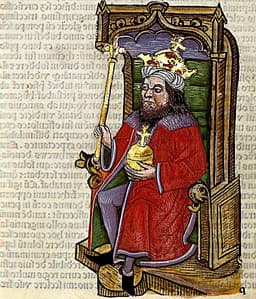
Albert II of Germany
Emperor · Medieval
44.5Total
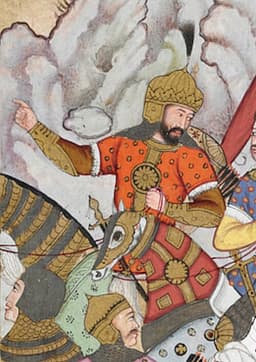
Ibrahim Lodi
Emperor · Medieval
40.6Total
Basic Information
Born
1397
1480
Died
1439
1526
Era
Medieval
Medieval
Nationality
Holy Roman Empire
India
Occupation
Emperor
Emperor
Civilization
Western
Indian
Score Comparison
Military (10%)
50.0
50.0
Political (20%)
32.2
29.3
Influence (20%)
51.0
47.1
Legacy (20%)
44.2
36.7
Leadership (15%)
45.0
48.4
Strategy (15%)
41.0
30.3
TOTAL
44.5
40.6
Albert II of Germany — Complete Timeline
1438 AD
Elected King of the RomansPolitical Action◆ Major
Albert was elected King of the Romans, succeeding his father-in-law Sigismund. This election made him the first Habsburg to permanently hold the German crown, establishing the dynasty's long-term claim to the imperial title.
Habsburg DynastyImperial Election
Impact: regionalconstructive
Crowned King of HungaryPolitical Action◆ Major
Albert was crowned King of Hungary following the death of Sigismund. His rule was contested by Polish and Ottoman interests, but he secured the crown through his marriage to Sigismund's daughter Elizabeth.
HungarySuccession
Impact: regionalconstructive
Crowned King of BohemiaPolitical Action
Albert was crowned King of Bohemia, but his rule was challenged by Hussite factions. The Hussite Wars had left Bohemia divided, and Albert's Catholic alignment faced resistance from the Utraquist nobility.
BohemiaHussite Conflict
Impact: regional
1439 AD
Campaign against the Ottoman EmpireWar◆ Major
Albert led a military campaign against the Ottoman Empire in the Balkans. The campaign was cut short by his death from dysentery at Neszm
Ottoman WarsBalkans
Impact: regionaltragic
Ibrahim Lodi — Complete Timeline
1520 AD
Alienation of the Afghan NobilityPolitical Action◆ Major
Ibrahim Lodi alienated the Afghan nobles by replacing them with low-born officials and treating them harshly. This led to widespread disaffection and rebellions, including the defection of Daulat Khan Lodi to Babur. It fatally weakened his rule.
NobilityPolitical MistakeRebellion
Impact: nationaldestructive
1524 AD
Suppression of the Rebellion of Rana SangaWar
Ibrahim Lodi led a campaign against the Rajput ruler Rana Sanga of Mewar, who had invaded Lodi territory. He forced Sanga to retreat but failed to decisively defeat him. This conflict diverted resources from the growing Mughal threat.
Rajput WarMewarMilitary Campaign
Impact: regional
1526 AD
Battle of PanipatWar
Ibrahim Lodi's army was defeated by Babur's Mughal forces at the First Battle of Panipat. Babur used gunpowder weapons and cavalry tactics to overwhelm the larger Lodi army. Ibrahim Lodi was killed in battle, ending the Lodi dynasty.
BattleMughal ConquestEnd of Dynasty
Impact: globaltragic
Expert Analysis
Origins
Albert II of Germany was born in 1397 as Albert of Habsburg, the son of Albert IV, Duke of Austria. He inherited the Duchy of Austria in 1404 and was educated in the chivalric traditions of the Holy Roman Empire. His marriage to Elizabeth of Luxembourg, daughter of Emperor Sigismund, positioned him as a key heir to the imperial legacy. In contrast, Ibrahim Lodi was born in the late 15th century to Sultan Sikandar Lodi, ruler of the Delhi Sultanate. He grew up in a court rife with factionalism among Afghan nobles, and his education emphasized military command and administration, but he lacked the diplomatic finesse of his predecessors.
Rise to Power
Albert II rose through dynastic succession and election. He became King of Hungary in 1437 after Sigismund's death, despite opposition from Polish and Ottoman forces. In 1438, he was elected King of the Romans, making him the first Habsburg to permanently hold the German crown. His acceptance by the prince-electors was based on his familial ties and his reputation as a capable ruler. Ibrahim Lodi ascended the throne in 1517 upon his father's death. He immediately faced challenges from rival Afghan factions, including his own brother Jalal Khan. He consolidated power through executions and appointments of low-born officials, but this alienated the nobility. His rise was marked by internal strife rather than external recognition.
Leadership & Governance
Albert II's leadership was characterized by traditional feudal governance. He relied on the support of the prince-electors and the Catholic Church. He faced the Hussite rebellion in Bohemia, where his Catholic stance clashed with Hussite factions, leading to instability. His governance scored 45.0 in leadership and 32.2 in political acumen. He attempted to maintain imperial unity but lacked the resources to enforce his will. Ibrahim Lodi's leadership was autocratic and militaristic. He scored 48.4 in leadership but only 29.3 in political skill. He replaced experienced Afghan nobles with loyalists from lower classes, causing widespread resentment. He suppressed rebellions harshly, as seen in his campaign against Rana Sanga of Mewar, but failed to secure lasting peace. His governance alienated the very elites needed to defend his realm.
Triumph & Tragedy
Albert II's greatest triumph was securing the German crown for the Habsburgs, setting a precedent that lasted for centuries. He was also crowned King of Hungary and Bohemia, expanding Habsburg influence. His tragedy was his premature death from dysentery in 1439 during a campaign against the Ottoman Empire, leaving his territories disputed and his reforms incomplete. Ibrahim Lodi's triumph was maintaining control over the Delhi Sultanate for a decade despite internal dissent. He successfully repelled an invasion by Rana Sanga in 1518, forcing the Rajput ruler to retreat. His tragedy was the catastrophic defeat at the First Battle of Panipat in 1526, where his army was outmaneuvered by Babur's gunpowder weapons and cavalry tactics. He died on the battlefield, and his sultanate collapsed, paving the way for Mughal rule.
Character & Destiny
Albert II was cautious and diplomatic, but his health was fragile. His decision-making was influenced by his advisors and his wife Elizabeth. He prioritized stability over expansion, which limited his military achievements (military score 50.0). His early death cut short his potential. Ibrahim Lodi was proud and inflexible. He alienated his nobles through harsh treatment and lacked strategic foresight (strategy score 30.3). His refusal to reconcile with Afghan chieftains led to defections during the Battle of Panipat. His character—combative and distrustful—directly contributed to his downfall.
Legacy
Albert II's legacy is as the founder of the Habsburg domination of the Holy Roman Empire. His brief reign established a dynasty that would control Europe for centuries. His political score of 32.2 reflects limited immediate impact, but his influence score of 51.0 acknowledges the long-term significance. Ibrahim Lodi is remembered as the last sultan of the Lodi dynasty, whose defeat opened India to Mughal rule. His legacy is largely negative, with a score of 36.7. The Battle of Panipat is a turning point in Indian history, and his failure to unite his nobility is a cautionary tale. His influence score of 47.1 reflects the impact of his loss.
Conclusion
Albert II had a greater long-term impact than Ibrahim Lodi. Despite a total score of 44.5 compared to 40.6, Albert's establishment of Habsburg rule shaped European politics for centuries, while Ibrahim's defeat ended his dynasty and ushered in Mughal dominance. Albert's legacy is institutional and enduring; Ibrahim's is a lesson in failure. The score gap of 3.9 points understates Albert's strategic importance. He achieved more with limited resources, while Ibrahim's mismanagement squandered a powerful sultanate.
Rankings
🥇
Albert II of GermanyLeader
Mil: 50.0Pol: 32.2Inf: 51.0
44.5
🥈
Ibrahim Lodi
Mil: 50.0Pol: 29.3Inf: 47.1
40.6
+3.9 behind
How This Comparison Works
Algorithm
Each figure is scored on 6 dimensions (0—100 scale) based on structured historical data: Military (10%), Political (20%), Influence (20%), Legacy (20%), Leadership (15%), Strategy (15%). The weighted total produces the final ranking.
Data Sources
Scores are computed from structured sub-indicators in the database. Scale factors adjust for era (Ancient ×0.85, Modern ×1.0) and civilization size (Eastern ×1.05, Other ×0.80) to account for differences in population and military scale.
Maximum 3 Figures
Comparisons are limited to 2—3 figures to ensure readability and statistical meaningfulness.
Error Margins
±5 points per dimension — Sub-scores are derived from historical records with inherent uncertainty. Two figures within 5 points on a dimension should be considered roughly equivalent in that area.
Total Score Accuracy
±3 points overall — The weighted combination of 6 dimensions produces a total score with approximately ±3 points of uncertainty. Differences of less than 3 points are not statistically significant— the figures are effectively tied.
Known Limitations
- Historical records are incomplete and uneven across civilizations
- Figures from oral-tradition societies may be underrepresented
- Occupation labels can misclassify multi-role figures
- Scores measure capability and impact, not moral character
- Quantitative scoring is a comparison tool, not absolute truth
Capability Radar
Military (10%) — Battles & Warfare
Battles
20
20
Win Rate
25
10
Expansion
15
15
Political (20%) — Governance & Reform
Reform
25
15
Diplomacy
35
10
Economy
20
15
Influence (20%) — Cultural & Global Reach
Cultural
20
10
Global
15
10
Legacy (20%) — Historical Impact
Historical
35
20
Longevity
30
10
Leadership (15%) — Power & Stability
Tenure
30
30
Stability
25
10
Strategy (15%) — Tactics & Innovation
Strategy
20
15
Tactics
20
15
Reform
10
10
Similar Comparisons
Comments & Discussion
No comments yet. Be the first to share your thoughts!