Loading...
Borommaracha III vs Ibrahim Lodi
Borommaracha III leads by 7.0 pts · 2 figures compared
…

Borommaracha III
Emperor · Medieval
47.6Total
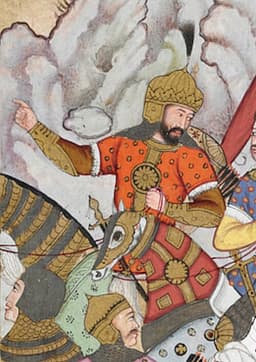
Ibrahim Lodi
Emperor · Medieval
40.6Total
Basic Information
Born
1463
1480
Died
1491
1526
Era
Medieval
Medieval
Nationality
Thailand
India
Occupation
Emperor
Emperor
Civilization
Eastern
Indian
Score Comparison
Military (10%)
50.0
50.0
Political (20%)
40.8
29.3
Influence (20%)
48.6
47.1
Legacy (20%)
40.0
36.7
Leadership (15%)
62.2
48.4
Strategy (15%)
50.0
30.3
TOTAL
47.6
40.6
Borommaracha III — Complete Timeline
1485 AD
Continued Implementation of Sakdina ReformsReform
Borommaracha III continued the administrative and social reforms initiated by his father Trailokanat, particularly the sakdina system. He extended the system's application to newly conquered territories and refined the ranking of officials, further entrenching the hierarchy in Ayutthayan society.
Administrative ReformSakdinaContinuation
Impact: nationalconstructive
1487 AD
Campaign to Suppress Northern RebellionsWar
Borommaracha III led military forces to suppress rebellions in the northern provinces of the kingdom, which had been annexed during Trailokanat's reign. The campaigns restored royal authority and prevented the fragmentation of the expanded territory, though they required significant military expenditure.
Military CampaignRebellionNorthern Provinces
Impact: regional
1488 AD
Diplomatic Relations with the Ming DynastyPolitical Action
Borommaracha III sent a tributary mission to the Ming court in China, reaffirming Ayutthaya's subordinate relationship under the Chinese tributary system. This diplomatic engagement secured trade privileges and maintained peaceful relations with the powerful Ming Empire, benefiting Ayutthaya's economy.
DiplomacyMing DynastyTributary Relations
Impact: regionalconstructive
Ibrahim Lodi — Complete Timeline
1520 AD
Alienation of the Afghan NobilityPolitical Action◆ Major
Ibrahim Lodi alienated the Afghan nobles by replacing them with low-born officials and treating them harshly. This led to widespread disaffection and rebellions, including the defection of Daulat Khan Lodi to Babur. It fatally weakened his rule.
NobilityPolitical MistakeRebellion
Impact: nationaldestructive
1524 AD
Suppression of the Rebellion of Rana SangaWar
Ibrahim Lodi led a campaign against the Rajput ruler Rana Sanga of Mewar, who had invaded Lodi territory. He forced Sanga to retreat but failed to decisively defeat him. This conflict diverted resources from the growing Mughal threat.
Rajput WarMewarMilitary Campaign
Impact: regional
1526 AD
Battle of PanipatWar
Ibrahim Lodi's army was defeated by Babur's Mughal forces at the First Battle of Panipat. Babur used gunpowder weapons and cavalry tactics to overwhelm the larger Lodi army. Ibrahim Lodi was killed in battle, ending the Lodi dynasty.
BattleMughal ConquestEnd of Dynasty
Impact: globaltragic
Expert Analysis
Origins
Borommaracha III (born c. 1430s, reign 1488–1491) was a king of the Ayutthaya Kingdom in modern-day Thailand. He was the son of King Trailokanat, under whom the kingdom underwent significant administrative reforms. Borommaracha III was raised in a royal environment steeped in the traditions of Theravada Buddhism and the hierarchical sakdina system. His early life was shaped by his father's centralization efforts, which aimed to curb the power of provincial nobles and streamline governance.
Ibrahim Lodi (born c. 1480s, reign 1517–1526) was the last sultan of the Lodi dynasty, which ruled the Delhi Sultanate in northern India. He was the son of Sikandar Lodi, a capable ruler who expanded the sultanate. Ibrahim was raised in the Afghan courtly traditions of the Lodi dynasty, which emphasized military prowess and noble patronage. However, his upbringing lacked the diplomatic finesse required to manage the fractious Afghan nobility, setting the stage for his eventual downfall.
Rise to Power
Borommaracha III ascended the throne in 1488 after the death of his father, Trailokanat. His rise was smooth, as he was the designated heir and had been involved in governance during his father's later years. He continued Trailokanat's policies, particularly the sakdina reforms that assigned land and social status based on rank. His reign was largely a continuation of his father's work, with no major power struggles or dramatic ascents.
Ibrahim Lodi became sultan in 1517 upon the death of his father, Sikandar Lodi. Unlike Borommaracha III, Ibrahim faced immediate challenges to his authority. He sought to centralize power and reduce the influence of the Afghan nobility, who had grown powerful under his predecessors. This led to conflicts with nobles such as Daulat Khan Lodi, who eventually invited Babur to invade India. Ibrahim's rise was marked by internal strife and a failure to secure loyalty among his own ranks.
Leadership & Governance
Borommaracha III's leadership style was administrative and reformist. He focused on consolidating the sakdina system, which categorized the population into ranks with specific land entitlements and obligations. This system helped standardize taxation and military conscription, strengthening the central government. He also maintained tributary relations with the Ming Dynasty, sending a mission in 1489 to reaffirm Ayutthaya's subordinate status, which secured peaceful trade relations. His governance was methodical but lacked innovation, scoring 62.2 in leadership.
Ibrahim Lodi's leadership was autocratic and confrontational. He attempted to break the power of the Afghan nobles by replacing them with low-born officials, which alienated key supporters. His military campaigns, such as the suppression of Rana Sanga's rebellion in 1519, showed tactical capability but failed to decisively defeat his enemies. His political score of 29.3 reflects his inability to build coalitions or maintain stability. Unlike Borommaracha III, Ibrahim's rule was marked by constant rebellion and external threats.
Triumph & Tragedy
Borommaracha III's greatest success was the continued implementation of the sakdina reforms, which provided a stable administrative framework for Ayutthaya for centuries. He also successfully suppressed northern rebellions, maintaining the territorial integrity inherited from his father. However, his reign was brief (three years) and largely uneventful, with no major expansions or cultural achievements. His legacy score of 40.0 reflects a competent but unremarkable rule.
Ibrahim Lodi's tragedy was his defeat at the First Battle of Panipat in 1526, where his army was routed by Babur's Mughal forces. Babur's use of gunpowder weapons and cavalry tactics overwhelmed Ibrahim's larger but less disciplined army. This defeat ended the Lodi dynasty and ushered in Mughal rule. Ibrahim's failure to unite the Afghan nobility and his harsh treatment of subordinates led to internal betrayal, as nobles like Daulat Khan Lodi allied with Babur. His greatest success was defending against Rana Sanga's invasion, but this was overshadowed by his ultimate failure.
Character & Destiny
Borommaracha III was a cautious, bureaucratic ruler who prioritized stability and continuity. His character was shaped by his father's reforms, and he lacked the ambition to strike out on his own. This conservatism ensured a peaceful reign but limited his historical impact. He scored 48.6 in influence, reflecting a modest but positive role in Ayutthaya's development.
Ibrahim Lodi was proud, inflexible, and distrustful of the nobility. His decision to centralize power alienated the very people he needed to rely on. Historical assessments describe him as arrogant and short-sighted. His character directly contributed to his downfall; the Battle of Panipat was as much a political defeat as a military one. His influence score of 47.1 is slightly lower than Borommaracha III's, but his legacy is more dramatic as the last sultan of the Delhi Sultanate.
Legacy
Borommaracha III's legacy lies in the sakdina system, which remained a cornerstone of Siamese society until the 19th century. His reign reinforced the administrative reforms that allowed Ayutthaya to prosper. However, his impact is overshadowed by his father Trailokanat, who initiated the reforms. Borommaracha III is remembered as a faithful steward rather than a transformative leader.
Ibrahim Lodi's legacy is defined by his defeat. He is the last sultan of the Delhi Sultanate, and his failure paved the way for the Mughal Empire, which would dominate India for centuries. His inability to manage the nobility led to the collapse of the Lodi dynasty. While his military score of 50.0 matches Borommaracha III, his political score of 29.3 is significantly lower. His total score of 40.6 reflects a ruler whose failures had far-reaching consequences.
Conclusion
Borommaracha III, with a total score of 47.6, had a greater impact within his domain than Ibrahim Lodi (40.6). Borommaracha III's continuation of the sakdina reforms provided long-term administrative stability for Ayutthaya, whereas Ibrahim Lodi's rule ended in a catastrophic defeat that destroyed his dynasty. While Ibrahim Lodi's defeat was a pivotal historical event, his personal contributions were negative. Borommaracha III's competent, if unspectacular, leadership ensured the smooth functioning of his kingdom. Therefore, Borommaracha III ranks higher in overall historical impact.
Rankings
🥇
Borommaracha IIILeader
Mil: 50.0Pol: 40.8Inf: 48.6
47.6
🥈
Ibrahim Lodi
Mil: 50.0Pol: 29.3Inf: 47.1
40.6
+7.0 behind
How This Comparison Works
Algorithm
Each figure is scored on 6 dimensions (0—100 scale) based on structured historical data: Military (10%), Political (20%), Influence (20%), Legacy (20%), Leadership (15%), Strategy (15%). The weighted total produces the final ranking.
Data Sources
Scores are computed from structured sub-indicators in the database. Scale factors adjust for era (Ancient ×0.85, Modern ×1.0) and civilization size (Eastern ×1.05, Other ×0.80) to account for differences in population and military scale.
Maximum 3 Figures
Comparisons are limited to 2—3 figures to ensure readability and statistical meaningfulness.
Error Margins
±5 points per dimension — Sub-scores are derived from historical records with inherent uncertainty. Two figures within 5 points on a dimension should be considered roughly equivalent in that area.
Total Score Accuracy
±3 points overall — The weighted combination of 6 dimensions produces a total score with approximately ±3 points of uncertainty. Differences of less than 3 points are not statistically significant— the figures are effectively tied.
Known Limitations
- Historical records are incomplete and uneven across civilizations
- Figures from oral-tradition societies may be underrepresented
- Occupation labels can misclassify multi-role figures
- Scores measure capability and impact, not moral character
- Quantitative scoring is a comparison tool, not absolute truth
Capability Radar
Military (10%) — Battles & Warfare
Battles
20
20
Win Rate
20
10
Expansion
15
15
Political (20%) — Governance & Reform
Reform
50
15
Diplomacy
30
10
Economy
30
15
Influence (20%) — Cultural & Global Reach
Cultural
20
10
Global
10
10
Legacy (20%) — Historical Impact
Historical
20
20
Longevity
20
10
Leadership (15%) — Power & Stability
Tenure
40
30
Stability
40
10
Strategy (15%) — Tactics & Innovation
Strategy
20
15
Tactics
20
15
Reform
30
10
Similar Comparisons
Comments & Discussion
No comments yet. Be the first to share your thoughts!