Loading...
Al-Mutasim vs Albert II of Germany
Al-Mutasim leads by 19.1 pts · 2 figures compared
…

Al-Mutasim
Emperor · Medieval
63.6Total
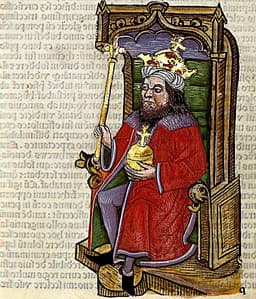
Albert II of Germany
Emperor · Medieval
44.5Total
Basic Information
Born
796
1397
Died
842
1439
Era
Medieval
Medieval
Nationality
Abbasid Caliphate
Holy Roman Empire
Occupation
Emperor
Emperor
Civilization
Middle Eastern
Western
Score Comparison
Military (10%)
82.0
50.0
Political (20%)
68.0
32.2
Influence (20%)
56.7
51.0
Legacy (20%)
52.0
44.2
Leadership (15%)
74.0
45.0
Strategy (15%)
69.1
41.0
TOTAL
63.6
44.5
Al-Mutasim — Complete Timeline
830 AD
Recruitment of Turkish Slave SoldiersReform
Al-Mutasim began systematically recruiting Turkish slave soldiers (ghilman) into the Abbasid army. This policy created a new military elite loyal to the caliph but later led to the decline of Abbasid power as the Turks gained influence.
Military ReformTurkish Guard
Impact: regional
836 AD
Foundation of SamarraPolitical Action◆ Major
Al-Mutasim moved the Abbasid capital from Baghdad to the new city of Samarra. This relocation was intended to separate the caliph from the Baghdad populace and house his Turkish guard, but it weakened central control.
Capital MoveUrban Foundation
Impact: regional
838 AD
Campaign against the ByzantinesWar◆ Major
Al-Mutasim led a major campaign against the Byzantine Empire, including the sack of the city of Amorium. This victory was celebrated in the Abbasid world and demonstrated the military power of the Turkish guard.
Arab-Byzantine WarsMilitary Campaign
Impact: regional
Albert II of Germany — Complete Timeline
1438 AD
Elected King of the RomansPolitical Action◆ Major
Albert was elected King of the Romans, succeeding his father-in-law Sigismund. This election made him the first Habsburg to permanently hold the German crown, establishing the dynasty's long-term claim to the imperial title.
Habsburg DynastyImperial Election
Impact: regionalconstructive
Crowned King of HungaryPolitical Action◆ Major
Albert was crowned King of Hungary following the death of Sigismund. His rule was contested by Polish and Ottoman interests, but he secured the crown through his marriage to Sigismund's daughter Elizabeth.
HungarySuccession
Impact: regionalconstructive
Crowned King of BohemiaPolitical Action
Albert was crowned King of Bohemia, but his rule was challenged by Hussite factions. The Hussite Wars had left Bohemia divided, and Albert's Catholic alignment faced resistance from the Utraquist nobility.
BohemiaHussite Conflict
Impact: regional
1439 AD
Campaign against the Ottoman EmpireWar◆ Major
Albert led a military campaign against the Ottoman Empire in the Balkans. The campaign was cut short by his death from dysentery at Neszm
Ottoman WarsBalkans
Impact: regionaltragic
Expert Analysis
Origins
Al-Mutasim was born around 794 CE as the third son of Caliph Harun al-Rashid and a Turkish concubine named Marida. He grew up in the opulent Abbasid court in Baghdad, receiving military training and exposure to the diverse cultures of the empire. His mixed heritage gave him a unique perspective on the Turkish soldiers who would later become his power base.
Albert II of Germany was born in 1397 in Vienna, the son of Albert IV, Duke of Austria, and Johanna Sophia of Bavaria. As a Habsburg prince, he was educated in chivalric and administrative traditions. His marriage to Elizabeth of Luxembourg, daughter of Emperor Sigismund, positioned him as heir to vast territories, though his early life lacked the dramatic military exploits of his counterpart.
Rise to Power
Al-Mutasim ascended to the caliphate in 833 CE after the death of his brother Al-Ma'mun. Unlike his predecessor, who relied on traditional Arab and Persian factions, Al-Mutasim systematically recruited Turkish slave soldiers (ghilman) from Central Asia. By 836, he had created a large corps of these soldiers, who were personally loyal to him, bypassing the established elites. This move was a turning point, allowing him to consolidate power and suppress revolts, but it also alienated the Baghdad populace.
Albert II rose through inheritance and marriage. After Emperor Sigismund died in 1437, Albert was elected King of the Romans in 1438, becoming the first Habsburg to hold the German crown permanently. He was also crowned King of Hungary and Bohemia, though his rule in Bohemia was contested by Hussite factions. His rise was more diplomatic than military, relying on dynastic ties rather than personal conquest.
Leadership & Governance
Al-Mutasim ruled as an autocratic caliph, centralizing power around his Turkish guard. He moved the capital from Baghdad to Samarra in 836 to escape the influence of the Baghdad populace and traditional elites. This allowed him to govern without local interference, but it also created a rift between the caliph and the people. His administration focused on military expansion and suppressing internal rebellions, such as the revolt of the Zanj slaves, though that occurred after his reign. He scored 74.0 in leadership, reflecting his ability to command loyalty from his Turkish soldiers.
Albert II, with a leadership score of 45.0, governed a fragmented realm. As King of Germany, Hungary, and Bohemia, he faced constant challenges from Hussites in Bohemia and Ottoman threats in Hungary. His governance was characterized by short-term crisis management rather than long-term reforms. He attempted to assert Catholic authority in Hussite Bohemia but lacked the military strength to enforce it. His political score of 32.2 indicates his struggles to consolidate power across multiple crowns.
Triumph & Tragedy
Al-Mutasim's greatest triumph was the campaign against the Byzantine Empire in 838 CE. He led a massive army, including his Turkish guard, to sack the city of Amorium, a major Byzantine stronghold. This victory was celebrated throughout the Islamic world and demonstrated the effectiveness of his military reforms. His military score of 82.0 reflects this success. However, his policy of relying on Turkish soldiers sowed the seeds of future instability. The ghilman became a powerful political force, leading to the 'Anarchy at Samarra' after his death, where successive caliphs were puppets of the Turkish guard.
Albert II's triumph was securing the German crown for the Habsburgs, a dynasty that would dominate Europe for centuries. However, his tragedy was his premature death. In 1439, he led a campaign against the Ottoman Empire but died of dysentery at Neszmély, leaving his territories divided. His military score of 50.0 reflects his inability to achieve decisive victories; the campaign ended in failure.
Character & Destiny
Al-Mutasim was pragmatic and ruthless, willing to break with tradition to secure power. His decision to recruit Turkish slaves was innovative but shortsighted, as it created a power base that eventually eclipsed the caliph. His character was shaped by his background as the son of a concubine, driving him to rely on outsiders rather than established elites. This strategy gave him short-term strength but long-term weakness.
Albert II was cautious and diplomatic, operating within the constraints of dynastic politics. His rise was due to marriage and inheritance, not personal ambition. His early death prevented him from leaving a significant mark, and his character is often seen as competent but unremarkable. Historians note that his reign, though short, established the Habsburgs as a permanent fixture in German politics.
Legacy
Al-Mutasim's legacy is mixed. He is remembered for the sack of Amorium and for founding Samarra, which became a center of Abbasid power. However, his reliance on Turkish soldiers led to the decline of the Abbasid caliphate, as the ghilman became kingmakers. His influence score of 56.7 reflects this ambiguous impact. The practice of using slave soldiers, however, spread to other Islamic states.
Albert II's legacy is primarily dynastic. By being the first permanent Habsburg king of Germany, he paved the way for his son Ladislaus the Posthumous and later Habsburg emperors. His legacy score of 44.2 is modest, as his reign was too short to enact lasting reforms. The Habsburgs, however, built on his foundation to dominate Central Europe.
Conclusion
Al-Mutasim had a greater impact than Albert II, with a total score of 63.6 vs 44.5. Al-Mutasim's military reforms and campaigns reshaped the Abbasid state and influenced Islamic military practices for centuries. Albert II, while important for Habsburg dynastic history, did not achieve significant military or political successes. His early death limited his influence. Al-Mutasim's actions, for better or worse, had lasting consequences, whereas Albert II's reign was a brief prelude to later Habsburg power.
Rankings
🥇
Al-MutasimLeader
Mil: 82.0Pol: 68.0Inf: 56.7
63.6
🥈
Albert II of Germany
Mil: 50.0Pol: 32.2Inf: 51.0
44.5
+19.1 behind
How This Comparison Works
Algorithm
Each figure is scored on 6 dimensions (0—100 scale) based on structured historical data: Military (10%), Political (20%), Influence (20%), Legacy (20%), Leadership (15%), Strategy (15%). The weighted total produces the final ranking.
Data Sources
Scores are computed from structured sub-indicators in the database. Scale factors adjust for era (Ancient ×0.85, Modern ×1.0) and civilization size (Eastern ×1.05, Other ×0.80) to account for differences in population and military scale.
Maximum 3 Figures
Comparisons are limited to 2—3 figures to ensure readability and statistical meaningfulness.
Error Margins
±5 points per dimension — Sub-scores are derived from historical records with inherent uncertainty. Two figures within 5 points on a dimension should be considered roughly equivalent in that area.
Total Score Accuracy
±3 points overall — The weighted combination of 6 dimensions produces a total score with approximately ±3 points of uncertainty. Differences of less than 3 points are not statistically significant— the figures are effectively tied.
Known Limitations
- Historical records are incomplete and uneven across civilizations
- Figures from oral-tradition societies may be underrepresented
- Occupation labels can misclassify multi-role figures
- Scores measure capability and impact, not moral character
- Quantitative scoring is a comparison tool, not absolute truth
Capability Radar
Military (10%) — Battles & Warfare
Battles
75
20
Win Rate
80
25
Expansion
70
15
Political (20%) — Governance & Reform
Reform
60
25
Diplomacy
55
35
Economy
50
20
Influence (20%) — Cultural & Global Reach
Cultural
55
20
Global
60
15
Legacy (20%) — Historical Impact
Historical
70
35
Longevity
65
30
Leadership (15%) — Power & Stability
Tenure
65
30
Stability
45
25
Strategy (15%) — Tactics & Innovation
Strategy
75
20
Tactics
70
20
Reform
85
10
Similar Comparisons
Comments & Discussion
No comments yet. Be the first to share your thoughts!