Loading...
Al-Radi vs Emperor Toba
Emperor Toba leads by 5.0 pts · 2 figures compared
…

Al-Radi
Emperor · Medieval
37.5Total
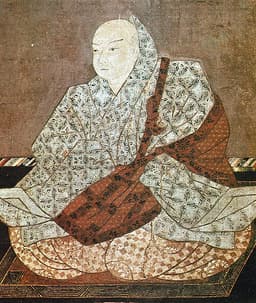
Emperor Toba
Emperor · Medieval
42.5Total
Basic Information
Born
909
1103
Died
940
1156
Era
Medieval
Medieval
Nationality
Abbasid Caliphate
Japan
Occupation
Emperor
Emperor
Civilization
Middle Eastern
Eastern
Score Comparison
Military (10%)
20.0
52.8
Political (20%)
30.7
27.9
Influence (20%)
47.9
48.6
Legacy (20%)
37.5
40.8
Leadership (15%)
33.6
38.1
Strategy (15%)
45.0
50.0
TOTAL
37.5
42.5
Al-Radi — Complete Timeline
934 AD
Accession of Al-RadiPolitical Action◆ Major
Al-Radi became caliph after the deposition of Al-Qahir. His reign saw the continued decline of Abbasid power, with the rise of the Buyid dynasty in Persia and the Hamdanids in Syria.
AccessionDeclineBuyids
Impact: national
940 AD
Last Friday Prayer Led by a CaliphCultural◆ Major
Al-Radi led the Friday prayers in Baghdad, a traditional duty of the caliph. This was the last time an Abbasid caliph personally performed this function, as later caliphs were too weak or controlled by others.
Friday PrayerTraditionLast
Impact: national
Death of Al-RadiPolitical Action◆ Major
Al-Radi died at age 31, possibly from illness. His death marked the end of the last caliph who had any real authority, as his successors were figureheads under Buyid control.
DeathEnd of EraBuyid Control
Impact: nationaltragic
Emperor Toba — Complete Timeline
1129 AD
Rule as cloistered emperorPolitical Action◆ Major
Toba abdicated but continued to govern as a cloistered emperor, following the Insei system established by his grandfather Shirakawa. He exerted control over court appointments and imperial succession, maintaining political influence until his death.
Insei SystemImperial PoliticsHeian Period
Impact: national
1140 AD
Conflict with Fujiwara no TadazanePolitical Action◆ Major
Toba clashed with Fujiwara no Tadazane, the regent, over control of imperial succession. Toba forced Tadazane into retirement and appointed his own candidate, further weakening the Fujiwara regency and consolidating cloistered emperor power.
Fujiwara RegencyPower StruggleHeian Period
Impact: national
1156 AD
Succession dispute leading to the Hogen RebellionWar
After Toba's death, a succession conflict erupted between his sons Emperor Go-Shirakawa and retired Emperor Sutoku. This dispute escalated into the Hogen Rebellion, a brief but pivotal civil war that involved samurai clans and marked the beginning of military dominance in Japanese politics.
Hogen RebellionSamuraiSuccession War
Impact: nationaldestructive
Expert Analysis
Origins
Al-Radi (born 909 CE) was the twentieth caliph of the Abbasid Caliphate, the son of Caliph al-Muqtadir. He grew up in a court weakened by factional infighting and military decline. His early life was marked by the murder of his father in 932 and the brief, tumultuous reign of his uncle al-Qahir. He received a traditional Islamic education but never commanded the loyalty of the Turkish military elite that dominated Baghdad.
Emperor Toba (born 1103 CE) was the 74th emperor of Japan, the son of Emperor Horikawa. He ascended the throne at age 4 and was raised under the regency of the Fujiwara clan. His grandfather, Emperor Shirakawa, had pioneered the Insei system of cloistered rule, where retired emperors wielded real power from monasteries. Toba was trained in court rituals and poetry, but his political education came from observing Shirakawa's manipulation of the Fujiwara.
Rise to Power
Al-Radi became caliph in 934 CE after the deposition of al-Qahir, who had been blinded and imprisoned. His rise was orchestrated by the Turkish commander Bajkam, who controlled Baghdad. Al-Radi had little choice but to accept the throne as a figurehead. In 936, he appointed Muhammad ibn Ra'iq as amir al-umara (commander of commanders), effectively ceding executive power. His reign saw the Buyids, a Shia dynasty from Daylam, encroach on Abbasid territory, taking Ahvaz in 940.
Emperor Toba abdicated in 1123 CE at age 20, but continued to rule as cloistered emperor from the Sanjo-in palace. He forced his brother-in-law Fujiwara no Tadazane into retirement in 1121, appointing his own candidate as regent. Toba's authority grew after the death of his grandfather Shirakawa in 1129, and he dominated the court for two decades. He manipulated succession, arranging for his son Sutoku to become emperor in 1123, then forcing Sutoku to abdicate in favor of another son, Go-Shirakawa, in 1155.
Leadership & Governance
Al-Radi's leadership was constrained by his lack of military power. He scored 20.0 in military and 33.6 in leadership on the HistoryVersus scale. He attempted to maintain the caliph's traditional role by leading Friday prayers, a symbolic act last performed by a caliph under his reign. However, he could not prevent the Buyid conquest of Baghdad in 945, which occurred after his death. His political score of 30.7 reflects his inability to control the amir al-umara or the Turkish factions.
Emperor Toba scored 52.8 in military (higher due to his role in the Hogen Rebellion) and 38.1 in leadership. He governed through the Insei system, issuing edicts from retirement. His political score of 27.9 reflects his success in outmaneuvering the Fujiwara, but his tactics created instability. He appointed regents from lower-ranking families to weaken the Fujiwara, but this alienated traditional supporters. His strategy score of 50.0 indicates a methodical approach to consolidating power, though it led to civil war after his death.
Triumph & Tragedy
Al-Radi's greatest success was maintaining the caliphate's symbolic authority despite its decline. He led Friday prayers, reinforcing his religious legitimacy. His greatest failure was his inability to stop the Buyid advance; by the time of his death, the caliphate had lost all real power. He died at age 31 in 940 CE, possibly from illness, leaving no strong successor. His total score of 37.5 reflects his minimal impact.
Emperor Toba's triumph was his successful use of the Insei system to rule for over 20 years after abdication. He forced the Fujiwara regent into retirement and controlled imperial succession. His tragedy was that his manipulation sparked the Hogen Rebellion of 1156, a brutal civil war between his sons Sutoku and Go-Shirakawa. The rebellion ended the era of courtly rule and ushered in the samurai ascendancy. Toba died in 1156, just before the rebellion erupted, but his policies directly caused it. His total score of 42.5 is higher than Al-Radi's, but his legacy is mixed.
Character & Destiny
Al-Radi was described as pious and well-educated, but weak-willed. He relied on ministers and generals, never asserting his own authority. His early death at 31 prevented any chance of recovery. Historians note that he was the last caliph to have any real agency, but his character was too passive to reverse the decline.
Emperor Toba was cunning and ruthless. He played factions against each other, using the Insei system to centralize power. However, his obsession with controlling succession created a dynastic feud that destroyed the old order. His character was that of a micromanager who could not see the long-term consequences of his actions. The Hogen Rebellion, which resulted from his decisions, led to the rise of the Minamoto and Taira clans, changing Japan forever.
Legacy
Al-Radi's legacy is that of a symbol: the last caliph to lead Friday prayers. His reign marked the end of effective Abbasid rule. The Buyids took over Baghdad soon after his death, and later caliphs were puppets of successive dynasties. His influence score of 47.9 reflects this symbolic importance, but his legacy score of 37.5 shows his limited tangible impact.
Emperor Toba's legacy is the Hogen Rebellion and the end of the Heian period. His political maneuvering inadvertently triggered the Gempei War and the establishment of the Kamakura shogunate. His influence score of 48.6 is comparable to Al-Radi's, but his legacy score of 40.8 is higher because the rebellion he caused reshaped Japanese history. The Insei system he perfected was used by later cloistered emperors but ultimately failed to prevent military rule.
Conclusion
Emperor Toba had a greater impact than Al-Radi. His total score of 42.5 exceeds Al-Radi's 37.5 by 5.0 points. While Al-Radi's reign marked the end of an era, Toba's actions directly caused the Hogen Rebellion, which destroyed the old court system and led to the samurai age. Al-Radi was a passive figure in a fading empire; Toba was an active agent of change, even if unintended. In the data-driven assessment, Toba's military and strategy scores are significantly higher, and his legacy reshaped Japan for centuries. Al-Radi remains a footnote in Islamic history, the last caliph to hold Friday prayers, but Toba's machinations echo through Japanese history as the catalyst for the rise of the warrior class.
Rankings
🥇
Emperor TobaLeader
Mil: 52.8Pol: 27.9Inf: 48.6
42.5
🥈
Al-Radi
Mil: 20.0Pol: 30.7Inf: 47.9
37.5
+5.0 behind
How This Comparison Works
Algorithm
Each figure is scored on 6 dimensions (0—100 scale) based on structured historical data: Military (10%), Political (20%), Influence (20%), Legacy (20%), Leadership (15%), Strategy (15%). The weighted total produces the final ranking.
Data Sources
Scores are computed from structured sub-indicators in the database. Scale factors adjust for era (Ancient ×0.85, Modern ×1.0) and civilization size (Eastern ×1.05, Other ×0.80) to account for differences in population and military scale.
Maximum 3 Figures
Comparisons are limited to 2—3 figures to ensure readability and statistical meaningfulness.
Error Margins
±5 points per dimension — Sub-scores are derived from historical records with inherent uncertainty. Two figures within 5 points on a dimension should be considered roughly equivalent in that area.
Total Score Accuracy
±3 points overall — The weighted combination of 6 dimensions produces a total score with approximately ±3 points of uncertainty. Differences of less than 3 points are not statistically significant— the figures are effectively tied.
Known Limitations
- Historical records are incomplete and uneven across civilizations
- Figures from oral-tradition societies may be underrepresented
- Occupation labels can misclassify multi-role figures
- Scores measure capability and impact, not moral character
- Quantitative scoring is a comparison tool, not absolute truth
Capability Radar
Military (10%) — Battles & Warfare
Battles
5
48
Win Rate
5
46
Expansion
5
49
Political (20%) — Governance & Reform
Reform
10
20
Diplomacy
15
25
Economy
10
20
Influence (20%) — Cultural & Global Reach
Cultural
15
15
Global
10
5
Legacy (20%) — Historical Impact
Historical
15
25
Longevity
10
20
Leadership (15%) — Power & Stability
Tenure
20
30
Stability
10
15
Strategy (15%) — Tactics & Innovation
Strategy
5
52
Tactics
5
59
Reform
5
58
Similar Comparisons
Comments & Discussion
No comments yet. Be the first to share your thoughts!