Loading...
Al-Qahir vs Emperor Toba
Al-Qahir leads by 14.0 pts · 2 figures compared
…
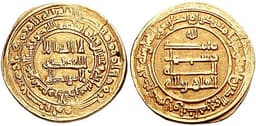
Al-Qahir
Emperor · Medieval
56.5Total
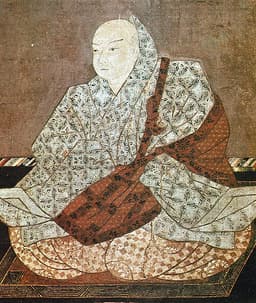
Emperor Toba
Emperor · Medieval
42.5Total
Basic Information
Born
899
1103
Died
950
1156
Era
Medieval
Medieval
Nationality
Abbasid Caliphate
Japan
Occupation
Emperor
Emperor
Civilization
Middle Eastern
Eastern
Score Comparison
Military (10%)
33.0
52.8
Political (20%)
64.5
27.9
Influence (20%)
55.6
48.6
Legacy (20%)
57.3
40.8
Leadership (15%)
62.2
38.1
Strategy (15%)
60.0
50.0
TOTAL
56.5
42.5
Al-Qahir — Complete Timeline
932 AD
Accession of Al-QahirPolitical Action◆ Major
Al-Qahir became caliph after the assassination of his brother Al-Muqtadir. His reign was brief and marked by tyranny and paranoia, as he executed many officials and family members to secure his position.
AccessionTyrannyPurge
Impact: nationaldestructive
934 AD
Deposition and Blinding of Al-QahirPolitical Action◆ Major
Al-Qahir was deposed by court officials and military commanders after only two years. He was blinded and imprisoned, later living as a beggar in Baghdad. This event highlighted the powerlessness of the caliph against the military.
DepositionBlindingFall
Impact: nationaltragic
Life as a BeggarOther
After his deposition and blinding, Al-Qahir was released from prison and lived as a beggar in the streets of Baghdad. He was occasionally recognized and given alms by former subjects, a stark contrast to his former status.
BeggarHumiliationPost-Caliph
tragic
Emperor Toba — Complete Timeline
1129 AD
Rule as cloistered emperorPolitical Action◆ Major
Toba abdicated but continued to govern as a cloistered emperor, following the Insei system established by his grandfather Shirakawa. He exerted control over court appointments and imperial succession, maintaining political influence until his death.
Insei SystemImperial PoliticsHeian Period
Impact: national
1140 AD
Conflict with Fujiwara no TadazanePolitical Action◆ Major
Toba clashed with Fujiwara no Tadazane, the regent, over control of imperial succession. Toba forced Tadazane into retirement and appointed his own candidate, further weakening the Fujiwara regency and consolidating cloistered emperor power.
Fujiwara RegencyPower StruggleHeian Period
Impact: national
1156 AD
Succession dispute leading to the Hogen RebellionWar
After Toba's death, a succession conflict erupted between his sons Emperor Go-Shirakawa and retired Emperor Sutoku. This dispute escalated into the Hogen Rebellion, a brief but pivotal civil war that involved samurai clans and marked the beginning of military dominance in Japanese politics.
Hogen RebellionSamuraiSuccession War
Impact: nationaldestructive
Expert Analysis
Origins
Al-Qahir was born in 899 in Baghdad, the capital of the Abbasid Caliphate, as the son of Caliph al-Mu'tadid. His early life was shaped by the turbulent politics of the court, where his brother al-Muqtadir became caliph in 908. Al-Qahir was raised in the harem and had limited formal education, but he was known for his cunning and ambition. He lacked military experience and was more focused on court intrigue.
Emperor Toba was born in 1103 in Heian-kyo (modern Kyoto), Japan, as the son of Emperor Horikawa. He was part of the imperial clan and was raised in the cloistered imperial system, where retired emperors held real power. Toba was trained in literature and governance from a young age. He became emperor at age 4 after his father's death, with his grandfather, retired Emperor Shirakawa, acting as regent.
Rise to Power
Al-Qahir rose to power in 932 after the assassination of his brother al-Muqtadir by the military commander Mu'nis al-Khadim. Al-Qahir was chosen as caliph by the court officials, but he quickly alienated them with his tyranny. He executed many who had served his brother, including Mu'nis, and ruled with paranoia. His reign lasted only two years before he was deposed in 934 by a coup led by the chief qadi and other officials.
Emperor Toba ascended the throne in 1107 at age 4, but real power was held by his grandfather, retired Emperor Shirakawa. After Shirakawa's death in 1129, Toba became the cloistered emperor, ruling from retirement. He exerted control over the court, clashing with the Fujiwara regent Tadazane. In 1141, he forced Tadazane into retirement and appointed his own candidate as regent. Toba's rule as cloistered emperor lasted until his death in 1156.
Leadership & Governance
Al-Qahir's leadership was characterized by brutality and incompetence. He executed officials without trial, confiscated property, and created an atmosphere of fear. His political score of 64.5 reflects his initial ability to seize power, but his governance was disastrous. He failed to secure the loyalty of the military and court, leading to his downfall. His strategy score of 60.0 was undermined by his paranoia, as he made enemies of powerful figures.
Emperor Toba's leadership was more indirect, as he governed from behind the scenes. He used the Insei system to maintain control, appointing loyalists and managing succession. His political score of 27.9 is low because his power was largely delegated, and he lacked direct authority. His strategy score of 50.0 indicates average decision-making, but his handling of the Fujiwara clan showed some skill. However, his failure to secure a stable succession led to the Hogen Rebellion after his death.
Triumph & Tragedy
Al-Qahir's greatest success was becoming caliph despite his lack of military support. However, his reign was a tragedy: he was deposed, blinded, and imprisoned. After his release, he lived as a beggar in Baghdad, occasionally recognized and given alms. His military score of 33.0 reflects his inability to command armies, and his legacy score of 57.3 is tempered by his brief, tyrannical rule.
Emperor Toba's triumph was maintaining the cloistered emperor system and controlling the court for over 20 years. He successfully sidelined the Fujiwara regent and appointed his own allies. However, his tragedy was the succession dispute after his death, which sparked the Hogen Rebellion in 1156. His sons Go-Shirakawa and Sutoku fought a civil war that weakened imperial authority. Toba's leadership score of 38.1 reflects his indirect and often divisive rule.
Character & Destiny
Al-Qahir was paranoid, vengeful, and short-sighted. His character led him to alienate allies and make enemies. His destiny was sealed by his own actions: he was blinded and reduced to begging, a stark fall from power. Historical assessments view him as one of the worst Abbasid caliphs.
Emperor Toba was calculating, patient, and focused on maintaining clan power. He was not a warrior but a political manipulator. His character shaped his fate: he avoided open conflict but sowed the seeds of future rebellion. His legacy is mixed, as he strengthened the Insei system but also contributed to the Genpei War era.
Legacy
Al-Qahir's legacy is minimal. He is remembered as a cautionary tale of tyranny and downfall. The Abbasid Caliphate continued its decline after him, but his brief reign had no lasting impact. His overall score of 56.5 is inflated by his political and influence scores, but his military and leadership scores are low.
Emperor Toba's legacy is more significant. He perpetuated the Insei system, which allowed retired emperors to rule, a system that lasted for decades. The Hogen Rebellion, triggered by his succession, led to the rise of the samurai class and the Genpei War. His overall score of 42.5 reflects his indirect influence, but his political score is low due to his lack of direct power.
Conclusion
Al-Qahir had a higher total score (56.5 vs 42.5), but this is misleading. Al-Qahir's impact was negative and short-lived, while Toba's actions had long-term consequences for Japan. Toba's role in the Hogen Rebellion and the cloistered system shaped Japanese history for centuries. Al-Qahir was a failed ruler whose only legacy is as a historical footnote. Therefore, Emperor Toba had greater impact, despite his lower score, because his actions influenced the course of Japanese history, while Al-Qahir's reign was a brief, destructive episode.
Rankings
🥇
Al-QahirLeader
Mil: 33.0Pol: 64.5Inf: 55.6
56.5
🥈
Emperor Toba
Mil: 52.8Pol: 27.9Inf: 48.6
42.5
+14.0 behind
How This Comparison Works
Algorithm
Each figure is scored on 6 dimensions (0—100 scale) based on structured historical data: Military (10%), Political (20%), Influence (20%), Legacy (20%), Leadership (15%), Strategy (15%). The weighted total produces the final ranking.
Data Sources
Scores are computed from structured sub-indicators in the database. Scale factors adjust for era (Ancient ×0.85, Modern ×1.0) and civilization size (Eastern ×1.05, Other ×0.80) to account for differences in population and military scale.
Maximum 3 Figures
Comparisons are limited to 2—3 figures to ensure readability and statistical meaningfulness.
Error Margins
±5 points per dimension — Sub-scores are derived from historical records with inherent uncertainty. Two figures within 5 points on a dimension should be considered roughly equivalent in that area.
Total Score Accuracy
±3 points overall — The weighted combination of 6 dimensions produces a total score with approximately ±3 points of uncertainty. Differences of less than 3 points are not statistically significant— the figures are effectively tied.
Known Limitations
- Historical records are incomplete and uneven across civilizations
- Figures from oral-tradition societies may be underrepresented
- Occupation labels can misclassify multi-role figures
- Scores measure capability and impact, not moral character
- Quantitative scoring is a comparison tool, not absolute truth
Capability Radar
Military (10%) — Battles & Warfare
Battles
33
48
Win Rate
32
46
Expansion
38
49
Political (20%) — Governance & Reform
Reform
59
20
Diplomacy
62
25
Economy
63
20
Influence (20%) — Cultural & Global Reach
Cultural
67
15
Global
78
5
Legacy (20%) — Historical Impact
Historical
73
25
Longevity
77
20
Leadership (15%) — Power & Stability
Tenure
58
30
Stability
66
15
Strategy (15%) — Tactics & Innovation
Strategy
41
52
Tactics
42
59
Reform
48
58
Similar Comparisons
Comments & Discussion
No comments yet. Be the first to share your thoughts!