Loading...
Al-Qadir vs Murad I
Murad I leads by 7.0 pts · 2 figures compared
…
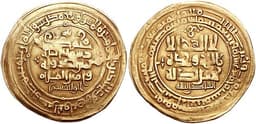
Al-Qadir
Emperor · Medieval
55.1Total
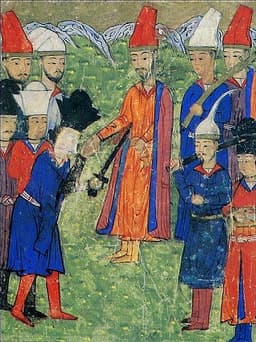
Murad I
Emperor · Medieval
62.1Total
Basic Information
Born
947
1326
Died
1031
1389
Era
Medieval
Medieval
Nationality
Abbasid Caliphate
Ottoman Empire
Occupation
Emperor
Emperor
Civilization
Middle Eastern
Middle Eastern
Score Comparison
Military (10%)
21.2
77.2
Political (20%)
68.0
64.8
Influence (20%)
60.0
56.7
Legacy (20%)
52.0
52.0
Leadership (15%)
74.0
72.0
Strategy (15%)
36.8
67.2
TOTAL
55.1
62.1
Al-Qadir — Complete Timeline
1011 AD
Assertion of Sunni OrthodoxyPolitical Action◆ Major
Caliph Al-Qadir issued a manifesto condemning Shia doctrines and affirming Sunni orthodoxy. This document was read in mosques across Baghdad and served to strengthen Sunni identity against the Shia Buyid emirs who controlled the caliphate politically.
Sunni-Shia RelationsReligious PolicyBuyid Era
Impact: regionalconstructive
1018 AD
Al-Qadir CreedCultural◆ Major
Al-Qadir promulgated a formal creed (al-i'tiqad al-qadiri) that defined Sunni beliefs, including the createdness of the Quran and the legitimacy of the first four caliphs. This creed was enforced in Baghdad and influenced later Sunni theology.
TheologySunni OrthodoxyCreed
Impact: regionalconstructive
1020 AD
Suppression of Shia RitualsPolitical Action
Al-Qadir ordered the suppression of public Shia mourning rituals for Husayn ibn Ali in Baghdad. This action aimed to reduce Shia influence and assert caliphal authority over religious practices in the capital.
Religious SuppressionShiaBaghdad
destructive
Murad I — Complete Timeline
1362 AD
Accession as Ottoman SultanPolitical Action
Murad I became the third Ottoman ruler after the death of his father, Orhan. He was the first to use the title of Sultan, marking the transition from a beylik to an empire.
SuccessionOttoman Empire
Impact: regionalconstructive
1369 AD
Conquest of AdrianopleWar◆ Major
Murad I captured the city of Adrianople (Edirne) from the Byzantine Empire. He made it the new Ottoman capital, shifting the center of power into Europe.
ConquestCapital Move
Impact: regionalconstructive
1380 AD
Establishment of the devshirme systemReform◆ Major
Murad I institutionalized the devshirme system, recruiting Christian boys from the Balkans to serve as Janissaries and administrators. This created a loyal elite corps and strengthened the Ottoman state.
Military ReformJanissaries
Impact: regionalconstructive
1389 AD
Battle of KosovoWar
Murad I led Ottoman forces against a coalition of Balkan states led by Serbia at the Battle of Kosovo. The battle was a tactical stalemate but resulted in heavy losses for both sides. Murad I was assassinated during or after the battle.
BattleAssassination
Impact: regionaltragic
Expert Analysis
Origins
Al-Qadir, born Abd al-Rahman in 947 CE, was a prince of the Abbasid dynasty, which had been reduced to a ceremonial role under Buyid suzerainty. His father, Caliph al-Muttaqi, was blinded and deposed, leaving the family in obscurity. Al-Qadir grew up in the shadow of Shia Buyid amirs who controlled Baghdad, yet he received a traditional Sunni education in jurisprudence and theology. His early life was marked by political impotence, as the Buyids appointed and dismissed caliphs at will.
Murad I, born in 1326 CE, was the son of Orhan I, the second Ottoman ruler. He was raised in the frontier principality of the Ottoman beylik in northwestern Anatolia, where warfare against Byzantines and rival Turkic states was constant. Murad learned military command and administration from a young age, participating in his father's campaigns. His mother, Nilüfer Hatun, was of Greek origin, reflecting the multicultural environment of the early Ottoman state.
Rise to Power
Al-Qadir became caliph in 991 CE after the Buyid amir Baha al-Dawla deposed his predecessor, al-Ta'i. Unlike earlier caliphs who were figureheads, Al-Qadir gradually asserted his authority by exploiting divisions among the Buyids. In 1000 CE, he issued a manifesto condemning Shia doctrines and affirming Sunni orthodoxy, which was read in mosques across Baghdad. This 'Al-Qadir Creed' defined Sunni beliefs, including the createdness of the Quran and the legitimacy of the first three caliphs. By 1010 CE, he ordered the suppression of public Shia mourning rituals for Husayn ibn Ali, reducing Shia influence in the capital.
Murad I ascended to the Ottoman throne in 1362 CE after his father Orhan's death. He immediately faced challenges from his brothers and from Byzantine efforts to regain lost territories. Murad consolidated power by executing potential rivals and expanding into Thrace. His first major conquest was the capture of Adrianople (Edirne) in 1369 CE, which he made the new Ottoman capital, shifting the center of power into Europe. This strategic move gave the Ottomans a foothold in the Balkans and a base for further expansion.
Leadership & Governance
Al-Qadir's leadership style was that of a spiritual and legal figurehead, leveraging religious authority to compensate for military weakness (scoring 21.2 in military). He governed through decrees and creeds, not armies. His Al-Qadir Creed standardized Sunni theology, which became the foundation for later Sunni orthodoxy. He also reformed the caliphal court, emphasizing Abbasid prestige and patronage of scholars. However, his governance was limited to Baghdad and its environs; real power remained with the Buyids until the Seljuk conquest in 1055 CE.
Murad I, with a military score of 77.2, was a hands-on commander who led armies personally. He institutionalized the devshirme system, recruiting Christian boys from the Balkans to serve as Janissaries and administrators. This created a loyal elite that owed allegiance directly to the sultan, bypassing the old Turkish nobility. Murad also established the position of grand vizier and centralized tax collection, strengthening the state apparatus. His conquest of Adrianople and the Battle of Kosovo (1389 CE) demonstrated his strategic acumen (scoring 67.2 in strategy).
Triumph & Tragedy
Al-Qadir's greatest success was the assertion of Sunni orthodoxy at a time when Shia Buyids dominated. His creed influenced later Sunni scholars like al-Ghazali and became a benchmark for orthodoxy. However, his failure to restore political power to the caliphate was evident; after his death in 1031 CE, the Abbasids remained puppets until the Seljuks revived their temporal authority. His suppression of Shia rituals also alienated a significant portion of the population.
Murad I's triumphs include the conquest of Adrianople, which made the Ottomans a European power, and the Battle of Kosovo, which broke Serbian resistance and opened the Balkans to Ottoman expansion. The devshirme system provided a reliable military and administrative corps. His tragedy was his death at Kosovo in 1389 CE, reportedly killed by a Serbian nobleman during or after the battle. Though the battle was a tactical stalemate, Murad's death could have derailed Ottoman expansion, but his successor Bayezid I quickly took command.
Character & Destiny
Al-Qadir was patient and cunning, using religious tools to achieve political goals. He was a theologian-sultan, more comfortable with decrees than with swords. His character shaped his fate: he preserved the caliphate's spiritual authority but could not revive its temporal power. Historical assessments view him as a key figure in the Sunni revival, but limited by the era's political realities.
Murad I was a pragmatic warrior-king, ruthless in eliminating rivals and strategic in state-building. His decision to recruit devshirme boys created a durable system that lasted centuries. His death in battle reflects his hands-on leadership. Historians credit him with transforming the Ottoman beylik into a sultanate and a major power.
Legacy
Al-Qadir's legacy is theological: his creed influenced Sunni Islam's doctrinal development. The Al-Qadir Creed was reaffirmed by later caliphs and became part of Sunni orthodoxy. He scored 52.0 in legacy, reflecting limited institutional persistence. The Abbasid caliphate continued until 1258 CE but never regained political power.
Murad I's legacy is institutional and territorial. The devshirme system and Janissary corps lasted until the 19th century. His conquests laid the foundation for Ottoman dominance in the Balkans for 500 years. He scored 52.0 in legacy as well, but with tangible geopolitical impact. The city of Edirne remains a historical capital.
Conclusion
Murad I had greater impact than Al-Qadir. While Al-Qadir preserved Sunni orthodoxy, his influence was largely doctrinal and confined to the caliphate's diminishing sphere. Murad I, with a total score of 62.1 versus Al-Qadir's 55.1, reshaped the political and military landscape of southeastern Europe. His innovations in statecraft, such as the devshirme system, created institutions that outlasted his reign. Al-Qadir's creed was important but did not alter the balance of power; Murad's conquests did. Therefore, Murad I stands as the more significant figure in world history.
Rankings
🥇
Murad ILeader
Mil: 77.2Pol: 64.8Inf: 56.7
62.1
🥈
Al-Qadir
Mil: 21.2Pol: 68.0Inf: 60.0
55.1
+7.0 behind
How This Comparison Works
Algorithm
Each figure is scored on 6 dimensions (0—100 scale) based on structured historical data: Military (10%), Political (20%), Influence (20%), Legacy (20%), Leadership (15%), Strategy (15%). The weighted total produces the final ranking.
Data Sources
Scores are computed from structured sub-indicators in the database. Scale factors adjust for era (Ancient ×0.85, Modern ×1.0) and civilization size (Eastern ×1.05, Other ×0.80) to account for differences in population and military scale.
Maximum 3 Figures
Comparisons are limited to 2—3 figures to ensure readability and statistical meaningfulness.
Error Margins
±5 points per dimension — Sub-scores are derived from historical records with inherent uncertainty. Two figures within 5 points on a dimension should be considered roughly equivalent in that area.
Total Score Accuracy
±3 points overall — The weighted combination of 6 dimensions produces a total score with approximately ±3 points of uncertainty. Differences of less than 3 points are not statistically significant— the figures are effectively tied.
Known Limitations
- Historical records are incomplete and uneven across civilizations
- Figures from oral-tradition societies may be underrepresented
- Occupation labels can misclassify multi-role figures
- Scores measure capability and impact, not moral character
- Quantitative scoring is a comparison tool, not absolute truth
Capability Radar
Military (10%) — Battles & Warfare
Battles
10
75
Win Rate
10
80
Expansion
10
82
Political (20%) — Governance & Reform
Reform
60
75
Diplomacy
50
68
Economy
40
65
Influence (20%) — Cultural & Global Reach
Cultural
60
55
Global
40
60
Legacy (20%) — Historical Impact
Historical
60
70
Longevity
50
65
Leadership (15%) — Power & Stability
Tenure
60
70
Stability
50
60
Strategy (15%) — Tactics & Innovation
Strategy
10
78
Tactics
10
70
Reform
10
72
Similar Comparisons
Comments & Discussion
No comments yet. Be the first to share your thoughts!