Loading...
Al-Qadir vs Alfonso I of Aragon
Alfonso I of Aragon leads by 2.1 pts · 2 figures compared
…
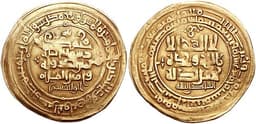
Al-Qadir
Emperor · Medieval
55.1Total
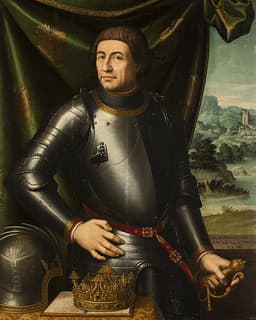
Alfonso I of Aragon
Emperor · Medieval
57.2Total
Basic Information
Born
947
1073
Died
1031
1134
Era
Medieval
Medieval
Nationality
Abbasid Caliphate
Aragon
Occupation
Emperor
Emperor
Civilization
Middle Eastern
Western
Score Comparison
Military (10%)
21.2
60.0
Political (20%)
68.0
48.0
Influence (20%)
60.0
55.7
Legacy (20%)
52.0
49.2
Leadership (15%)
74.0
74.0
Strategy (15%)
36.8
66.3
TOTAL
55.1
57.2
Al-Qadir — Complete Timeline
1011 AD
Assertion of Sunni OrthodoxyPolitical Action◆ Major
Caliph Al-Qadir issued a manifesto condemning Shia doctrines and affirming Sunni orthodoxy. This document was read in mosques across Baghdad and served to strengthen Sunni identity against the Shia Buyid emirs who controlled the caliphate politically.
Sunni-Shia RelationsReligious PolicyBuyid Era
Impact: regionalconstructive
1018 AD
Al-Qadir CreedCultural◆ Major
Al-Qadir promulgated a formal creed (al-i'tiqad al-qadiri) that defined Sunni beliefs, including the createdness of the Quran and the legitimacy of the first four caliphs. This creed was enforced in Baghdad and influenced later Sunni theology.
TheologySunni OrthodoxyCreed
Impact: regionalconstructive
1020 AD
Suppression of Shia RitualsPolitical Action
Al-Qadir ordered the suppression of public Shia mourning rituals for Husayn ibn Ali in Baghdad. This action aimed to reduce Shia influence and assert caliphal authority over religious practices in the capital.
Religious SuppressionShiaBaghdad
destructive
Alfonso I of Aragon — Complete Timeline
1109 AD
Marriage to Urraca of Leon and CastilePolitical Action◆ Major
Alfonso I married Queen Urraca of Leon and Castile, uniting the kingdoms of Aragon, Navarre, Leon, and Castile. The union was politically unstable, leading to conflict with Urraca and the Church, and was annulled by the Pope in 1114.
MarriagePolitical UnionConflict
Impact: regional
1118 AD
Conquest of ZaragozaWar◆ Major
Alfonso I led a coalition of Aragonese, Navarrese, and French crusaders to capture the city of Zaragoza from the Almoravid Moors. This victory made Zaragoza the capital of Aragon and significantly expanded Christian territory in the Ebro valley.
ReconquistaConquestAragon
Impact: regionalconstructive
1120 AD
Battle of CutandaWar◆ Major
Alfonso I defeated a large Almoravid army at Cutanda, near Calamocha. This victory consolidated Christian control over the Ebro valley and opened the way for further Aragonese advances into Moorish territory.
ReconquistaBattleAragon
Impact: regionalconstructive
1134 AD
Battle of FragaWar◆ Major
Alfonso I was defeated and killed by Almoravid forces near Fraga while attempting to besiege the town. His death without direct heirs led to a succession crisis in Aragon and Navarre, separating the two kingdoms.
ReconquistaBattleDeath
Impact: regionaltragic
Expert Analysis
Origins
Al-Qadir (born 947 CE) was the 25th Abbasid caliph, reigning from 991 to 1031. He was born into a caliphate that had lost temporal power to the Shia Buyid dynasty, which controlled Baghdad. His father, Caliph al-Muttaqi, was blinded and deposed, and Al-Qadir spent years in hiding before being elevated by the Buyid amir Baha al-Dawla. His early life was shaped by the precarious position of Sunni Islam under Shia dominance.
Alfonso I of Aragon (born 1073 CE) was the son of King Sancho Ramirez of Aragon and Navarre. He was raised in the context of the Reconquista, the Christian reconquest of Iberia from Muslim rule. His upbringing emphasized military training and piety, preparing him for a life of constant warfare against the Almoravid Moors.
Rise to Power
Al-Qadir became caliph in 991 after the Buyid amir deposed the previous caliph. His rise was entirely dependent on Buyid sufferance, as the caliphate had no military power. However, he skillfully used his religious authority to counter Shia influence. In 1011, he issued a manifesto condemning Shia doctrines, which was read in mosques across Baghdad. This was a bold move given the political risks.
Alfonso I inherited the throne of Aragon and Navarre in 1104 upon his brother's death. He immediately pursued military campaigns. His major breakthrough came in 1118 with the conquest of Zaragoza, a major city under Almoravid control. This victory was achieved through a coalition of Aragonese, Navarrese, and French crusaders, and it made him a celebrated Christian king.
Leadership & Governance
Al-Qadir's leadership was primarily religious and symbolic. He promulgated the "Al-Qadir Creed" (al-i'tiqad al-qadiri), which defined Sunni beliefs including the createdness of the Quran and the legitimacy of the first three caliphs. He suppressed public Shia mourning rituals for Husayn ibn Ali. His political score of 68.0 reflects his ability to navigate Buyid power while strengthening Sunni identity, but his military score of 21.2 indicates his lack of temporal force.
Alfonso I was a warrior king, leading from the front. His military score of 60.0 and strategy score of 66.3 reflect his battlefield successes. He also attempted political unification by marrying Queen Urraca of Leon and Castile in 1109, but the union was fraught with conflict and ended in separation. His governance was focused on war and expansion, with less emphasis on administrative reforms.
Triumph & Tragedy
Al-Qadir's greatest triumph was the assertion of Sunni orthodoxy during a period of Shia ascendancy. His creed became a cornerstone of Sunni identity, influencing later scholars. However, his tragedy was the continued decline of caliphal power; after his death, the Buyids remained dominant, and the caliphate never regained temporal authority.
Alfonso I's triumph was the conquest of Zaragoza in 1118, which opened the Ebro valley to Christian control. He also won the Battle of Cutanda in 1120, crushing an Almoravid army. His tragedy came at the Battle of Fraga in 1134, where he was defeated and killed by Almoravid forces. His death without direct heirs led to a succession crisis, splitting his kingdoms.
Character & Destiny
Al-Qadir was patient and politically astute, using his religious office to shape doctrine despite military weakness. His character was suited to survival under Buyid domination, but it limited his ability to restore caliphal power. Historians note his role in defining Sunni identity as a lasting achievement.
Alfonso I was aggressive and determined, earning the epithet "the Battler." His relentless campaigning expanded Christian territory but also led to overreach. His death at Fraga was a direct result of his strategic ambition. He is remembered as a crusader king who pushed the Reconquista forward.
Legacy
Al-Qadir's legacy is doctrinal: his creed influenced Sunni theology for centuries, and his actions strengthened the Sunni-Shia divide. His influence score of 60.0 reflects this enduring impact. In contrast, Alfonso I's legacy is territorial: he captured key cities like Zaragoza and expanded Aragon's borders. His military achievements are commemorated in Spanish history, but his political union failed. His legacy score of 49.2 is lower than Al-Qadir's 52.0.
Conclusion
While Alfonso I had a higher total score (57.2 to 55.1) due to his military and strategic prowess, Al-Qadir's influence on religious identity has had a more enduring impact. Alfonso's conquests were significant but eventually were surpassed by later Christian kings. Al-Qadir's creed shaped Sunni orthodoxy that persists today. Therefore, Al-Qadir had a greater long-term impact on world history.
Rankings
🥇
Alfonso I of AragonLeader
Mil: 60.0Pol: 48.0Inf: 55.7
57.2
🥈
Al-Qadir
Mil: 21.2Pol: 68.0Inf: 60.0
55.1
+2.1 behind
How This Comparison Works
Algorithm
Each figure is scored on 6 dimensions (0—100 scale) based on structured historical data: Military (10%), Political (20%), Influence (20%), Legacy (20%), Leadership (15%), Strategy (15%). The weighted total produces the final ranking.
Data Sources
Scores are computed from structured sub-indicators in the database. Scale factors adjust for era (Ancient ×0.85, Modern ×1.0) and civilization size (Eastern ×1.05, Other ×0.80) to account for differences in population and military scale.
Maximum 3 Figures
Comparisons are limited to 2—3 figures to ensure readability and statistical meaningfulness.
Error Margins
±5 points per dimension — Sub-scores are derived from historical records with inherent uncertainty. Two figures within 5 points on a dimension should be considered roughly equivalent in that area.
Total Score Accuracy
±3 points overall — The weighted combination of 6 dimensions produces a total score with approximately ±3 points of uncertainty. Differences of less than 3 points are not statistically significant— the figures are effectively tied.
Known Limitations
- Historical records are incomplete and uneven across civilizations
- Figures from oral-tradition societies may be underrepresented
- Occupation labels can misclassify multi-role figures
- Scores measure capability and impact, not moral character
- Quantitative scoring is a comparison tool, not absolute truth
Capability Radar
Military (10%) — Battles & Warfare
Battles
10
70
Win Rate
10
75
Expansion
10
65
Political (20%) — Governance & Reform
Reform
60
45
Diplomacy
50
50
Economy
40
40
Influence (20%) — Cultural & Global Reach
Cultural
60
40
Global
40
35
Legacy (20%) — Historical Impact
Historical
60
55
Longevity
50
40
Leadership (15%) — Power & Stability
Tenure
60
60
Stability
50
45
Strategy (15%) — Tactics & Innovation
Strategy
10
70
Tactics
10
65
Reform
10
40
Similar Comparisons
Comments & Discussion
No comments yet. Be the first to share your thoughts!