Loading...
Murad I vs Qin Shi Huang
Qin Shi Huang leads by 23.1 pts · 2 figures compared
…
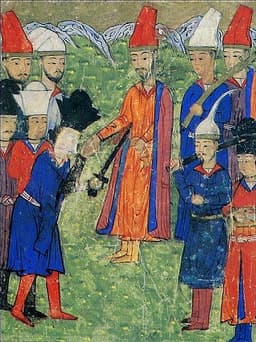
Murad I
Emperor · Medieval
62.1Total
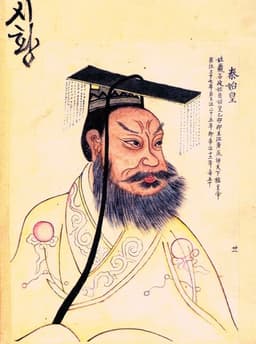
Qin Shi Huang
Emperor · Ancient
85.2Total
Basic Information
Born
1326
-259
Died
1389
-210
Era
Medieval
Ancient
Nationality
Ottoman Empire
China
Occupation
Emperor
Emperor
Civilization
Middle Eastern
Eastern
Score Comparison
Military (10%)
77.2
80.0
Political (20%)
64.8
90.0
Influence (20%)
56.7
85.0
Legacy (20%)
52.0
90.0
Leadership (15%)
72.0
78.0
Strategy (15%)
67.2
82.0
TOTAL
62.1
85.2
Murad I — Complete Timeline
1362 AD
Accession as Ottoman SultanPolitical Action
Murad I became the third Ottoman ruler after the death of his father, Orhan. He was the first to use the title of Sultan, marking the transition from a beylik to an empire.
SuccessionOttoman Empire
Impact: regionalconstructive
1369 AD
Conquest of AdrianopleWar◆ Major
Murad I captured the city of Adrianople (Edirne) from the Byzantine Empire. He made it the new Ottoman capital, shifting the center of power into Europe.
ConquestCapital Move
Impact: regionalconstructive
1380 AD
Establishment of the devshirme systemReform◆ Major
Murad I institutionalized the devshirme system, recruiting Christian boys from the Balkans to serve as Janissaries and administrators. This created a loyal elite corps and strengthened the Ottoman state.
Military ReformJanissaries
Impact: regionalconstructive
1389 AD
Battle of KosovoWar
Murad I led Ottoman forces against a coalition of Balkan states led by Serbia at the Battle of Kosovo. The battle was a tactical stalemate but resulted in heavy losses for both sides. Murad I was assassinated during or after the battle.
BattleAssassination
Impact: regionaltragic
Qin Shi Huang — Complete Timeline
246 BC
Construction of the Mausoleum and Terracotta ArmyOther◆ Major
Qin Shi Huang commissioned a vast mausoleum complex near Xi'an, guarded by thousands of life-sized terracotta soldiers, horses, and chariots. The project employed hundreds of thousands of workers and reflected his obsession with immortality and imperial power.
Impact: global
230 BC
Conquest of the Six Warring StatesWar
From 230 to 221 BCE, Ying Zheng led the Qin state in a series of campaigns that conquered the Han, Zhao, Wei, Chu, Yan, and Qi states. This unified China under a single ruler for the first time, ending the Warring States period.
Impact: global
221 BC
Standardization of Writing, Currency, and MeasurementsReform◆ Major
Qin Shi Huang ordered the standardization of Chinese script, currency, and weights and measures across the unified empire. This facilitated administration, trade, and cultural integration, laying a foundation for future dynasties.
Impact: globalconstructive
Proclamation of the Qin DynastyPolitical Action
After conquering the last independent state, Ying Zheng declared himself Shi Huangdi (First Emperor), founding the Qin Dynasty. He adopted a new title to signify his supreme authority and initiated centralized imperial rule.
Impact: global
214 BC
Initiation of the Great Wall ConstructionOther◆ Major
Qin Shi Huang ordered the connection and extension of existing northern fortifications to create a unified defensive wall against nomadic Xiongnu raids. This project involved massive conscripted labor and became the precursor to the later Great Wall.
Impact: regional
213 BC
Burning of Books and Burying of ScholarsPolitical Action◆ Major
On the advice of Li Si, Qin Shi Huang ordered the burning of historical records and philosophical texts not aligned with Legalist doctrine. He also had 460 Confucian scholars buried alive to suppress dissent and consolidate ideological control.
Impact: nationaldestructive
Expert Analysis
murad-i-vs-qin-shi-huang
# The First Emperor and the Sultan
On a June morning in 1389, on a field in Kosovo, a Serbian knight named Miloš Obilić approached the Ottoman Sultan Murad I under the pretense of surrender. He drew a hidden dagger and plunged it into the Sultan’s chest. Murad died on the battlefield, but his army did not falter; they crushed the Balkan coalition and secured Ottoman dominance in Europe for centuries. Nearly 1,600 years earlier and half a world away, another ruler—Qin Shi Huang—died in a carriage during an eastern inspection tour, his body hidden under a cartload of fish to mask the stench of decay while his ministers rushed to secure his dynasty’s succession. Both men were empire-builders, but their deaths—one heroic and public, the other secret and squalid—capture the vast differences between two of history’s most formidable figures.
Origins
Qin Shi Huang was born in 259 BC as Ying Zheng, the son of a Qin prince who had been a hostage in the state of Zhao. His childhood was precarious, shaped by the brutal politics of the Warring States period, when seven Chinese kingdoms fought incessantly for supremacy. The young prince grew up surrounded by Legalist philosophers who taught that human nature was inherently selfish and that only strict laws and harsh punishments could maintain order. This worldview would define his reign.
Murad I, born in 1326, inherited a very different world. The Ottoman beylik he was born into was a small frontier principality in northwestern Anatolia, one of many Turkish states vying for power in the ruins of the Seljuk Empire. His father, Orhan, had already begun transforming this band of nomadic warriors into a state, capturing Bursa and establishing a foothold in Europe. Murad grew up not in a palace but in a war camp, learning to command men from horseback and to negotiate with fractious tribal leaders. Where Qin Shi Huang’s world was one of ancient civilizations and rigid hierarchies, Murad’s was fluid, improvisational, and still being invented.
Rise to Power
Qin Shi Huang’s ascent was methodical and ruthless. He became King of Qin at thirteen, but real power initially lay with his regent, Lü Buwei, and later with the eunuch Lao Ai. In 238 BC, at twenty-one, Ying Zheng staged a swift coup, purging his rivals and taking direct control. For the next nine years, he unleashed the Qin military machine against the other six kingdoms, conquering them one by one. By 221 BC, he had unified all of China under a single rule—an achievement no one had accomplished before. He then proclaimed himself Shi Huangdi, the First Emperor, coining a new title to match his unprecedented power.
Murad I’s path was more gradual and less dramatic. He became Sultan in 1362 upon his father’s death, but his authority was not absolute. He had to contend with his brothers, rebellious Turkish emirs, and the fragile loyalty of his ghazi warriors. His first major act was not a conquest but a relocation: in 1369, he captured Adrianople from the Byzantines and made it his capital, shifting the Ottoman center of gravity from Asia to Europe. This was a gamble that paid off, giving him a strategic base for further expansion. Unlike Qin Shi Huang, who inherited a powerful state and perfected it, Murad had to build his power base from scratch, constantly proving himself on the battlefield.
Leadership & Governance
Qin Shi Huang governed through terror and uniformity. He standardized writing, currency, and measurements across his empire, imposing a single script that could be read from the Yellow River to the Yangtze. He connected the northern fortifications into what would become the Great Wall, a project that cost countless lives. His Legalist ministers, led by Li Si, advised him to burn all books that did not glorify the Qin state and to bury alive 460 scholars who protested. The result was an empire that functioned with mechanical precision but at a terrible human cost. His military prowess was formidable—he conquered six kingdoms in nine years—but his strategy was more about overwhelming force than subtle maneuvering, reflected in his military score of 80.
Murad I ruled through adaptation and incorporation. He institutionalized the devshirme system in 1380, recruiting Christian boys from the Balkans to serve as Janissaries and administrators. These recruits, loyal only to the Sultan, became the backbone of the Ottoman state, bypassing the old Turkish aristocracy. Murad also tolerated religious diversity, allowing Christians and Jews to practice their faiths under Ottoman rule as long as they paid a special tax. His military strategy was more nuanced than Qin’s: he used diplomacy to divide his enemies, married into Balkan royal families, and led from the front at Kosovo. His leadership score of 89.7 reflects this personal courage, but his military score of 64.1 suggests he was more a political consolidator than a tactical genius.
Triumph & Tragedy
Qin Shi Huang’s greatest triumph was the unification of China itself—a feat that defined East Asian history for two millennia. His greatest tragedy was his obsession with immortality. He sent expeditions to find the elixir of life, consumed mercury pills prescribed by alchemists, and built a vast mausoleum guarded by the Terracotta Army, hoping to rule in the afterlife as he had in life. Instead, the mercury likely killed him. Within three years of his death in 210 BC, the Qin dynasty collapsed in rebellion, its harshness having alienated everyone.
Murad I’s triumph was the Battle of Kosovo in 1389, where he broke the back of Serbian resistance and opened the Balkans to Ottoman colonization. His tragedy was dying on that same field, struck down by a man he had admitted to his presence. Yet his death did not shatter his empire; his son Bayezid I took command immediately and completed the victory. The Ottoman state proved more resilient than the Qin, partly because Murad had built institutions—the devshirme, the Janissaries, the centralized bureaucracy—that could survive any single ruler.
Character & Destiny
Qin Shi Huang was a man of grand visions and absolute paranoia. He believed he could control everything—writing, thought, even the weather—and he could not tolerate dissent. His personality drove him to destroy anything that questioned his authority, including the very histories that recorded his predecessors. This rigidity made his empire efficient but brittle; when he died, there was no one capable of holding it together.
Murad I was more pragmatic. He was a warrior-sultan who led his men in battle, but he was also a diplomat who married Serbian princesses and a reformer who created new institutions. He understood that power required consent as well as force. His flexibility allowed the Ottoman Empire to absorb diverse peoples and adapt to changing circumstances, giving it a longevity that Qin’s empire never achieved.
Legacy
Qin Shi Huang is remembered as the First Emperor, the man who gave China its name and its administrative DNA. The Great Wall, the standardized script, the Terracotta Army—these endure as monuments to his ambition. But he is also remembered as a tyrant who burned books and buried scholars, a cautionary tale about the costs of absolute power. His total score of 83.5 reflects this mixed legacy: immense influence tainted by cruelty.
Murad I is less famous in the West but equally foundational. He transformed a small frontier beylik into a European power, created the Janissary corps, and established the Ottoman model of governance that would last until 1922. His legacy score of 69.3 is lower partly because he is overshadowed by later sultans like Mehmed the Conqueror and Suleiman the Magnificent, but without Murad’s institutional innovations, those later triumphs would have been impossible.
Conclusion
Two empire-builders, two different paths to power. Qin Shi Huang sought to control everything and failed within a generation; Murad I learned to adapt and built a dynasty that lasted six centuries. One died in secret, hidden by fish; the other died in battle, his blood soaking the soil of Kosovo. Both understood that empire requires iron will, but only one understood that it also requires flexibility. The First Emperor’s ghost still haunts China’s political imagination, while Murad’s institutional legacy echoes in modern Turkey. Their stories remind us that the most powerful rulers are not always the most rigid—and that the empires that endure are those that learn to bend without breaking.
Rankings
🥇
Qin Shi HuangLeader
Mil: 80.0Pol: 90.0Inf: 85.0
85.2
🥈
Murad I
Mil: 77.2Pol: 64.8Inf: 56.7
62.1
+23.1 behind
How This Comparison Works
Algorithm
Each figure is scored on 6 dimensions (0—100 scale) based on structured historical data: Military (10%), Political (20%), Influence (20%), Legacy (20%), Leadership (15%), Strategy (15%). The weighted total produces the final ranking.
Data Sources
Scores are computed from structured sub-indicators in the database. Scale factors adjust for era (Ancient ×0.85, Modern ×1.0) and civilization size (Eastern ×1.05, Other ×0.80) to account for differences in population and military scale.
Maximum 3 Figures
Comparisons are limited to 2—3 figures to ensure readability and statistical meaningfulness.
Error Margins
±5 points per dimension — Sub-scores are derived from historical records with inherent uncertainty. Two figures within 5 points on a dimension should be considered roughly equivalent in that area.
Total Score Accuracy
±3 points overall — The weighted combination of 6 dimensions produces a total score with approximately ±3 points of uncertainty. Differences of less than 3 points are not statistically significant— the figures are effectively tied.
Known Limitations
- Historical records are incomplete and uneven across civilizations
- Figures from oral-tradition societies may be underrepresented
- Occupation labels can misclassify multi-role figures
- Scores measure capability and impact, not moral character
- Quantitative scoring is a comparison tool, not absolute truth
Capability Radar
Military (10%) — Battles & Warfare
Battles
75
85
Win Rate
80
90
Expansion
82
90
Political (20%) — Governance & Reform
Reform
75
95
Diplomacy
68
75
Economy
65
90
Influence (20%) — Cultural & Global Reach
Cultural
55
95
Global
60
85
Legacy (20%) — Historical Impact
Historical
70
95
Longevity
65
95
Leadership (15%) — Power & Stability
Tenure
70
70
Stability
60
65
Strategy (15%) — Tactics & Innovation
Strategy
78
85
Tactics
70
80
Reform
72
95
Similar Comparisons
Comments & Discussion
KosovoStriker6/17/2026
Wait—we’re really comparing a guy who got stabbed by a lone Serbian knight to the man who unified China and buried scholars alive? Obilić’s “heroic” assassination is just romantic Balkan propaganda; Murad died because his security was laughably lax. Qin Shi Huang’s death was a masterclass in damage control—stinking fish to hide a corpse while the succession was locked down. Public death doesn’t equal greatness; Murad’s exit was a tactical failure, not a ballad. Give me the guy who planned his ow
大秦铁血6/17/2026
拿穆拉德一世跟秦始皇比?别逗了。前者只是个部落酋长,靠运气捡了块欧亚交界的地盘,而嬴政是终结五百年战国的天神!秦始皇死时用咸鱼遮臭,这算什么“秘密又肮脏”?这叫帝王心术!穆拉德死得再“英勇”,他儿子巴耶济德不照样得内战清场?秦朝统一度量衡、修长城、书同文,这些硬核遗产穆拉德拿什么碰瓷?论格局,差着十万里!|
FishCartTruth6/17/2026
The "cartload of fish" detail always gets romanticized, but let’s be real: it’s just ancient Chinese damage control, not some deep philosophical statement. Both guys died as humans, not legends. Qin Shi Huang’s death was hidden because his regime was brittle—even with all those terracotta guards, the empire collapsed within years. Murad’s public death actually froze his army’s morale and let it power through. I’ll take a kill that inspires over a corpse that stinks any day.|
塞外刀客6/17/2026
说穆拉德死得“英勇”?哈,那叫蠢!战场上玩什么信义?真英雄就该像秦始皇,用铁腕压住一切变数。六国贵族想暗杀他?结果呢,张良扔大铁锥都砸不中!穆拉德被个投降骑士捅死,证明他连身边人都镇不住。而且死后还得靠儿子砍人头平叛,哪像始皇,死后一堆汞矿假人照样吓住天下人?论权谋,草原雏鹰跟关中猛虎不是一级别。|
TombGuardian6/17/2026
Here’s the overlooked angle: both deaths expose how their empires really ran. Murad’s killers expected chaos, but the janissaries and devshirme system just rolled on—it was institutional, not personal. Qin Shi Huang’s death had to be faked because his whole rule was one-man show; no bureaucracy, just terror. So which empire was more resilient? The one that could lose a sultan mid-battle and keep fighting, not the one that collapsed when its emperor’s fish