Loading...
Al-Mutasim vs Cuauhtemoc
Al-Mutasim leads by 14.6 pts · 2 figures compared
…

Al-Mutasim
Emperor · Medieval
63.6Total
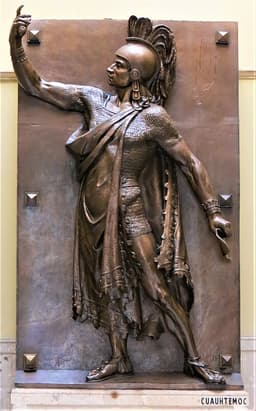
Cuauhtemoc
Emperor · Medieval
49.0Total
Basic Information
Born
796
1497
Died
842
1525
Era
Medieval
Medieval
Nationality
Abbasid Caliphate
Aztec Empire
Occupation
Emperor
Emperor
Civilization
Middle Eastern
Other
Score Comparison
Military (10%)
82.0
46.7
Political (20%)
68.0
30.7
Influence (20%)
56.7
56.7
Legacy (20%)
52.0
58.0
Leadership (15%)
74.0
33.6
Strategy (15%)
69.1
60.0
TOTAL
63.6
49.0
Al-Mutasim — Complete Timeline
830 AD
Recruitment of Turkish Slave SoldiersReform
Al-Mutasim began systematically recruiting Turkish slave soldiers (ghilman) into the Abbasid army. This policy created a new military elite loyal to the caliph but later led to the decline of Abbasid power as the Turks gained influence.
Military ReformTurkish Guard
Impact: regional
836 AD
Foundation of SamarraPolitical Action◆ Major
Al-Mutasim moved the Abbasid capital from Baghdad to the new city of Samarra. This relocation was intended to separate the caliph from the Baghdad populace and house his Turkish guard, but it weakened central control.
Capital MoveUrban Foundation
Impact: regional
838 AD
Campaign against the ByzantinesWar◆ Major
Al-Mutasim led a major campaign against the Byzantine Empire, including the sack of the city of Amorium. This victory was celebrated in the Abbasid world and demonstrated the military power of the Turkish guard.
Arab-Byzantine WarsMilitary Campaign
Impact: regional
Cuauhtemoc — Complete Timeline
1440 AD
Expanded the Aztec Empire through Military CampaignsWar◆ Major
Moctezuma I launched a series of military campaigns that extended Aztec control into the Gulf Coast, Oaxaca, and Guerrero regions. He conquered cities such as Cuetlaxtlan and Coixtlahuaca, incorporating them into the tribute system.
Aztec ExpansionMilitary ConquestTribute System
Impact: regional
1450 AD
Implemented the Flower Wars (Xochiyaoyotl)War◆ Major
Moctezuma I institutionalized the Flower Wars, ritualized conflicts with Tlaxcala and other city-states. These battles were designed to capture prisoners for religious sacrifice rather than territorial conquest, reinforcing Aztec religious practices.
Ritual WarfareHuman SacrificeAztec Religion
Impact: regionaldestructive
Constructed the Aqueduct of ChapultepecCultural
Moctezuma I commissioned the construction of a stone aqueduct from Chapultepec springs to Tenochtitlan, providing fresh water to the island city. This engineering project improved public health and supported the city's growing population.
InfrastructureWater SupplyUrban Development
constructive
Expert Analysis
Origins
Al-Mutasim (born 794) was the son of the Abbasid Caliph Harun al-Rashid and a Turkish slave concubine. He grew up in the opulent court of Baghdad, but his mixed heritage made him sensitive to the power dynamics between Arabs, Persians, and Turks. He received military training and commanded campaigns against the Byzantines under his brother al-Ma'mun. Cuauhtemoc (born c. 1502) was a nephew of Moctezuma II, raised in the noble class of Tenochtitlan. He was educated in Aztec religion, warfare, and governance, likely attending the calmecac school. His name means "One Who Has Descended Like an Eagle." He became tlatoani (emperor) in 1521 during the final Spanish siege, inheriting a devastated empire.
Rise to Power
Al-Mutasim became caliph in 833 after the death of his brother al-Ma'mun. He quickly faced a revolt by the Turkic guard that his brother had established. To secure his position, he began systematically recruiting Turkish slave soldiers (ghilman), creating a loyal military force independent of the established Arab and Persian factions. By 836, he moved the capital from Baghdad to Samarra to distance himself from the unruly Baghdad populace. Cuauhtemoc rose to power in February 1521 after his cousin Cuitlahuac died of smallpox. The Aztec Empire was already shattered by Spanish alliances with indigenous enemies and the devastating epidemic. He was chosen by the remaining nobles to lead the defense of Tenochtitlan, though his authority was limited to the besieged city.
Leadership & Governance
Al-Mutasim's governance relied on his Turkish guard, who were given high military and administrative posts. This created a new elite loyal to him personally, but alienated the traditional Arab aristocracy. He built Samarra as a show of power, with grand palaces and a vast mosque. His military campaigns, like the sack of Amorium in 838, were carefully planned and executed. However, his reliance on Turkish commanders eventually weakened the caliph's authority. Cuauhtemoc's leadership was purely defensive. He organized the city's resistance, using canoes to attack Spanish brigantines and repairing causeways. He refused Spanish offers of surrender, even as famine and disease ravaged the population. His governance was decentralized; he relied on local lords to hold sectors of the city.
Triumph & Tragedy
Al-Mutasim's greatest triumph was the sack of Amorium in 838, a major Byzantine city. This victory was celebrated in poetry and propaganda, and it temporarily secured the Abbasid frontier. His greatest failure was the creation of a military elite that would later dominate and destabilize the caliphate. The Turkish guard became kingmakers, assassinating caliphs and plunging the empire into chaos. Cuauhtemoc's triumph was his relentless defense of Tenochtitlan for 93 days against overwhelming odds. He captured Spanish weapons and even took Hernán Cortés's horse. His tragedy was his capture on August 13, 1521, while trying to escape by canoe. He was later tortured, his feet burned, to reveal the location of Aztec gold. He refused to betray his people and was eventually executed by Cortés in 1525.
Character & Destiny
Al-Mutasim was pragmatic and ruthless. He understood that his power depended on a loyal military force, and he acted decisively to create one. His decision to move the capital to Samarra showed his willingness to break with tradition. However, his short-term solution created long-term instability. Cuauhtemoc was stoic and defiant. Despite his youth, he displayed courage and endurance. His torture and execution made him a martyr. His character is remembered as embodying Aztec resistance. Historians note that his score of 33.6 in leadership reflects his limited control over a collapsing empire, while Al-Mutasim scored 74.0, indicating more effective command.
Legacy
Al-Mutasim's legacy is mixed. He is remembered as the caliph who built Samarra and sacked Amorium, but also as the one who introduced Turkish dominance that led to the decline of the Abbasid Caliphate. His military score of 82.0 reflects his success in campaigns, but his political score of 68.0 shows the erosion of caliphal authority. Cuauhtemoc's legacy is powerful in Mexican national identity. He is a symbol of resistance against colonial oppression. His name is given to streets, towns, and a Mexican beer. However, his total score of 49.0 reflects his failure to preserve the Aztec Empire. His influence score of 56.7 is similar to Al-Mutasim's 56.7, but his legacy score of 58.0 is higher than Al-Mutasim's 52.0.
Conclusion
Al-Mutasim had a greater immediate impact on the Islamic world, with his military campaigns and political restructuring. His total score of 63.6 versus Cuauhtemoc's 49.0 reflects this. However, Cuauhtemoc's symbolic legacy as a resistance figure endures more strongly in modern culture. Al-Mutasim's actions contributed to the eventual fragmentation of the caliphate, while Cuauhtemoc's defiance became a foundational myth for Mexico. In terms of direct historical influence, Al-Mutasim's policies shaped the course of the Abbasid Empire for centuries, making him the more significant figure in world history.
Rankings
🥇
Al-MutasimLeader
Mil: 82.0Pol: 68.0Inf: 56.7
63.6
🥈
Cuauhtemoc
Mil: 46.7Pol: 30.7Inf: 56.7
49.0
+14.6 behind
How This Comparison Works
Algorithm
Each figure is scored on 6 dimensions (0—100 scale) based on structured historical data: Military (10%), Political (20%), Influence (20%), Legacy (20%), Leadership (15%), Strategy (15%). The weighted total produces the final ranking.
Data Sources
Scores are computed from structured sub-indicators in the database. Scale factors adjust for era (Ancient ×0.85, Modern ×1.0) and civilization size (Eastern ×1.05, Other ×0.80) to account for differences in population and military scale.
Maximum 3 Figures
Comparisons are limited to 2—3 figures to ensure readability and statistical meaningfulness.
Error Margins
±5 points per dimension — Sub-scores are derived from historical records with inherent uncertainty. Two figures within 5 points on a dimension should be considered roughly equivalent in that area.
Total Score Accuracy
±3 points overall — The weighted combination of 6 dimensions produces a total score with approximately ±3 points of uncertainty. Differences of less than 3 points are not statistically significant— the figures are effectively tied.
Known Limitations
- Historical records are incomplete and uneven across civilizations
- Figures from oral-tradition societies may be underrepresented
- Occupation labels can misclassify multi-role figures
- Scores measure capability and impact, not moral character
- Quantitative scoring is a comparison tool, not absolute truth
Capability Radar
Military (10%) — Battles & Warfare
Battles
75
55
Win Rate
80
30
Expansion
70
10
Political (20%) — Governance & Reform
Reform
60
10
Diplomacy
55
15
Economy
50
10
Influence (20%) — Cultural & Global Reach
Cultural
55
60
Global
60
55
Legacy (20%) — Historical Impact
Historical
70
65
Longevity
65
60
Leadership (15%) — Power & Stability
Tenure
65
20
Stability
45
10
Strategy (15%) — Tactics & Innovation
Strategy
75
55
Tactics
70
60
Reform
85
10
Similar Comparisons
Comments & Discussion
No comments yet. Be the first to share your thoughts!