Loading...
Kirtivarman II vs Pachacuti
Pachacuti leads by 33.0 pts · 2 figures compared
…
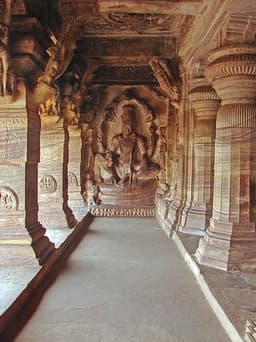
Kirtivarman II
Emperor · Medieval
36.4Total
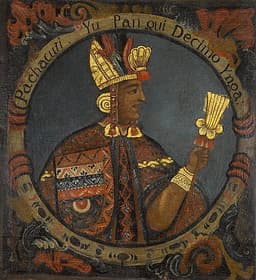
Pachacuti
Emperor · Medieval
69.4Total
Basic Information
Born
746
1418
Died
757
1472
Era
Medieval
Medieval
Nationality
India
Inca Empire
Occupation
Emperor
Emperor
Civilization
Indian
Other
Score Comparison
Military (10%)
21.2
78.5
Political (20%)
30.7
58.1
Influence (20%)
46.3
65.0
Legacy (20%)
37.5
72.0
Leadership (15%)
33.6
78.0
Strategy (15%)
36.8
69.2
TOTAL
36.4
69.4
Kirtivarman II — Complete Timeline
753 AD
Defeat by DantidurgaWar◆ Major
Kirtivarman II, the last Badami Chalukya king, was defeated by the Rashtrakuta chief Dantidurga. This battle ended the Badami Chalukya dynasty and established Rashtrakuta rule over the Deccan region.
Impact: regionaldestructive
Pachacuti — Complete Timeline
1438 AD
Conquest of the Chanka KingdomWar
Pachacuti led the Inca army to defeat the Chanka, a powerful rival, in a decisive battle near Cusco. This victory secured his position as Sapa Inca and initiated a period of rapid expansion, transforming the Inca from a small kingdom into a vast empire.
ConquestInca ExpansionChanka
Impact: regional
1440 AD
Reconstruction of CuscoCultural◆ Major
Pachacuti rebuilt Cusco as the imperial capital, designing it in the shape of a puma and constructing massive stone structures like Sacsayhuam
Urban PlanningArchitectureInca Empire
Impact: regionalconstructive
1450 AD
Initiation of Machu Picchu's ConstructionCultural◆ Major
Pachacuti ordered the construction of Machu Picchu, a royal estate and ceremonial site high in the Andes. The complex featured sophisticated dry-stone masonry and terraced agriculture, serving as a symbol of Inca engineering and a retreat for the emperor.
ArchitectureRoyal EstateInca Engineering
Impact: regionalconstructive
Expert Analysis
Pachacuti vs Kirtivarman II
# The Builder and the Last King
In the high Andes of 1438, a young prince stood before the shattered remnants of an army that had nearly destroyed his father's kingdom. The Chanka warriors, fearsome rivals who had threatened to extinguish the Inca, lay broken at his feet. This prince would become Pachacuti, the greatest emperor the Inca ever knew. Half a world away and seven centuries earlier, another ruler faced his own moment of truth—Kirtivarman II, the last Chalukya king of Badami, watched as the Rashtrakuta chieftain Dantidurga marched toward his capital. One man would forge an empire from the ashes of defeat; the other would see his dynasty vanish into history. What made the difference between immortality and oblivion?
Origins
Pachacuti was born in 1418 into a world of mountain kingdoms and constant warfare. The Inca were then a modest power in the Cusco Valley, surrounded by more aggressive neighbors like the Chanka. His father, the Sapa Inca Viracocha, had grown complacent in old age. The young prince, originally named Cusi Yupanqui, grew up watching his people struggle for survival—a crucible that forged both his strategic mind and his iron will.
Kirtivarman II inherited a very different world. The Badami Chalukyas had ruled much of the Deccan plateau for over two centuries by 746, when he ascended the throne. Their empire had weathered storms before, but by his time, the dynasty was running on fumes. The great kings Pulakeshin II and Vikramaditya II were distant memories. Kirtivarman II was born into a system that had already peaked, where the machinery of empire had grown creaky and the vassals restless.
Rise to Power
Pachacuti’s rise came through crisis. When the Chanka attacked Cusco in 1438, his father and the royal court fled. But the young prince refused to retreat. Gathering a desperate army of defenders, he met the Chanka in battle and won a stunning victory that turned the tide of Inca history. His leadership score of 84.5 reflects that moment when courage met opportunity—he didn’t just save his kingdom, he earned the right to rename himself Pachacuti, meaning “Earth-Shaker.”
Kirtivarman II’s path was far quieter. He inherited the throne through normal succession, but by 753, when Dantidurga of the Rashtrakutas challenged him, he had already lost the initiative. His military score of 46.0 and strategy of 30.0 suggest a ruler who never had to fight for his crown—and never learned how to keep it. Where Pachacuti’s rise was forged in fire, Kirtivarman’s was merely a matter of birth.
Leadership & Governance
Pachacuti transformed victory into empire. After defeating the Chanka, he didn’t just celebrate—he rebuilt Cusco in the shape of a puma, a sacred animal, laying out streets and plazas that still awe visitors today. He ordered the construction of Machu Picchu around 1450, not as a fortress but as a royal estate where the emperor could commune with the gods. His political score of 70.6 reflects a ruler who understood that conquest meant nothing without administration. He created the mit’a labor system, standardized tribute, and imposed Quechua as the imperial language—building an empire that would stretch from modern Colombia to Chile.
Kirtivarman II, by contrast, governed a kingdom in decline. His political score of 36.5 tells a story of a ruler who could not hold what his ancestors had built. The Rashtrakutas, once subordinates, grew stronger while the Chalukyas grew weaker. He faced no single catastrophic failure—just a slow erosion of power that culminated in the battle of 753, when Dantidurga’s forces overwhelmed his army. The Chalukya dynasty, which had produced some of India’s finest temple architecture and literature, ended not with a bang but with a whimper.
Triumph & Tragedy
Pachacuti’s greatest moment was the Chanka victory itself—a triumph so complete that it launched an imperial project that would last generations. His tragedy came later, in the succession struggles that plagued his old age. But even then, his system held. The Inca Empire would survive for nearly a century after his death in 1472.
Kirtivarman II’s tragedy was his entire reign. He never had a great triumph to balance the scales. His defeat by Dantidurga in 753 ended not just his rule but the entire Badami Chalukya line. With a legacy score of 48.2, he is remembered today mostly as a footnote—the last of a great dynasty, a name in genealogical lists.
Character & Destiny
Pachacuti’s character explains his success. He was visionary, ruthless, and pragmatic—a builder who understood that power required both temples and roads. His leadership score of 84.5 and strategy of 76.7 show a man who could inspire armies and plan cities with equal skill. He shaped his destiny by shaping his world.
Kirtivarman II’s character is harder to discern from the sparse records. But the scores tell a story: 32.7 for leadership, 30.0 for strategy. He seems to have been a placeholder, a king who ruled but never commanded. Where Pachacuti seized history, Kirtivarman was swept along by it.
Legacy
Pachacuti’s legacy is written in stone—literally. Machu Picchu draws millions of visitors. The Inca road system still crosses the Andes. His administrative reforms influenced Spanish colonial governance. His influence score of 77.6 places him among the world’s great empire-builders.
Kirtivarman II left behind the magnificent temples of Pattadakal and Aihole, built by his ancestors, not by him. His own legacy is cautionary: empires die when they stop producing leaders who can fight for them. His total score of 42.9 is a quiet verdict on a reign that never truly began.
Conclusion
Pachacuti and Kirtivarman II represent two faces of medieval kingship—the builder and the last king. One transformed a crisis into an empire; the other watched his inheritance slip away. Their stories remind us that leadership is not about birthright but about the moment when history asks a question, and a ruler must answer. Pachacuti answered with armies and architecture; Kirtivarman II answered with silence. In the end, the difference between an earth-shaker and a footnote is not luck—it is the courage to act when the world is falling apart.
Rankings
🥇
PachacutiLeader
Mil: 78.5Pol: 58.1Inf: 65.0
69.4
🥈
Kirtivarman II
Mil: 21.2Pol: 30.7Inf: 46.3
36.4
+33.0 behind
How This Comparison Works
Algorithm
Each figure is scored on 6 dimensions (0—100 scale) based on structured historical data: Military (10%), Political (20%), Influence (20%), Legacy (20%), Leadership (15%), Strategy (15%). The weighted total produces the final ranking.
Data Sources
Scores are computed from structured sub-indicators in the database. Scale factors adjust for era (Ancient ×0.85, Modern ×1.0) and civilization size (Eastern ×1.05, Other ×0.80) to account for differences in population and military scale.
Maximum 3 Figures
Comparisons are limited to 2—3 figures to ensure readability and statistical meaningfulness.
Error Margins
±5 points per dimension — Sub-scores are derived from historical records with inherent uncertainty. Two figures within 5 points on a dimension should be considered roughly equivalent in that area.
Total Score Accuracy
±3 points overall — The weighted combination of 6 dimensions produces a total score with approximately ±3 points of uncertainty. Differences of less than 3 points are not statistically significant— the figures are effectively tied.
Known Limitations
- Historical records are incomplete and uneven across civilizations
- Figures from oral-tradition societies may be underrepresented
- Occupation labels can misclassify multi-role figures
- Scores measure capability and impact, not moral character
- Quantitative scoring is a comparison tool, not absolute truth
Capability Radar
Military (10%) — Battles & Warfare
Battles
15
85
Win Rate
10
90
Expansion
5
90
Political (20%) — Governance & Reform
Reform
10
92
Diplomacy
10
75
Economy
15
80
Influence (20%) — Cultural & Global Reach
Cultural
10
85
Global
5
65
Legacy (20%) — Historical Impact
Historical
15
80
Longevity
10
70
Leadership (15%) — Power & Stability
Tenure
20
85
Stability
10
82
Strategy (15%) — Tactics & Innovation
Strategy
10
88
Tactics
15
80
Reform
5
85
Similar Comparisons
Comments & Discussion
Pachacuti Stan6/16/2026
Pachacuti wasn't just a conqueror—he was a city planner who literally reshaped the Andes. He rebuilt Cusco in the shape of a puma and engineered terraces that still feed people today. Kirtivarman II inherited a crumbling dynasty and did nothing to reform his tax system or military. One man built Machu Picchu; the other let his capital fall to Dantidurga. The difference? Pachacuti saw crisis as opportunity. Kirtivarman saw it as Tuesday. No contest.
数据侦探6/16/2026
说Kirtivarman II “无力回天”的人,请先检查数据。Chalukya王朝在8世纪中期仍有庞大的税收基础和战象部队,Kirtivarman在位头十年甚至成功击退过Pallava的入侵。他输给Dantidurga更像是后勤失误或盟友背叛,而非王朝“气数已尽”。反观Pachacuti面对的Chanka,不过是一个部落联盟,规模远小于Rashtrakuta军队。用结果倒推实力,是历史迷最懒惰的把戏。
Sanskrit Scrolls6/16/2026
The real tragedy of Kirtivarman II is literary. Under the Chalukyas, Kannada poetry and Sanskrit drama flourished—the great poet Adikavi Pampa's precursors were supported by these very courts. Pachacuti, for all his roads and terraces, left no written epics. He relied on quipus, which encode numbers but not nuance. So yes, Pachacuti built an empire. But Kirtivarman II presided over a civilization that *wrote its own story*. Which legacy would you rather read?
史海沉钩6/16/2026
别被“末代皇帝”的标签骗了。Kirtivarman II在位超过二十年,期间多次击败周边小国,甚至一度恢复对Konkan海岸的控制。他的失败更多是偶然:Rashtrakuta的Dantidurga恰好是军事天才,而Kirtivarman的将军们在关键战役中叛变。Pachacuti的敌人Chanka却在内部爆发了继承危机。历史的分岔路口,运气比能力更能决定谁被记住。少一点英雄崇拜,多一点随机性的敬畏吧。
Cusco Curmudgeon6/16/2026
Everyone fawns over Pachacuti's "reorganization," but let's be real—he was a tyrant who turned the Andes into a forced-labor camp. The *mita* system he perfected was state slavery disguised as public works, and he exiled any ethnic group that resisted assimilation. Kirtivarman II, by contrast, ruled a multi-ethnic Deccan with relative tolerance; his temples still stand as evidence of patronage, not suppression. I'll take a tolerant loser over a brutal winner any day.