Loading...
Kirtivarman II vs Kublai Khan
Kublai Khan leads by 37.9 pts · 2 figures compared
…
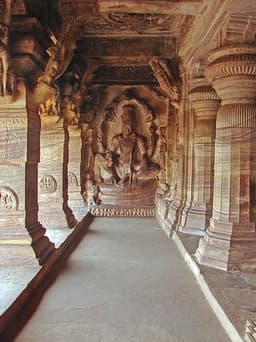
Kirtivarman II
Emperor · Medieval
36.4Total
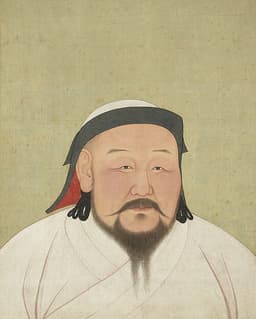
Kublai Khan
Emperor · Medieval
74.3Total
Basic Information
Born
746
1215
Died
757
1294
Era
Medieval
Medieval
Nationality
India
Mongolia
Occupation
Emperor
Emperor
Civilization
Indian
Eastern
Score Comparison
Military (10%)
21.2
77.5
Political (20%)
30.7
79.2
Influence (20%)
46.3
75.0
Legacy (20%)
37.5
70.0
Leadership (15%)
33.6
72.0
Strategy (15%)
36.8
76.0
TOTAL
36.4
74.3
Kirtivarman II — Complete Timeline
753 AD
Defeat by DantidurgaWar◆ Major
Kirtivarman II, the last Badami Chalukya king, was defeated by the Rashtrakuta chief Dantidurga. This battle ended the Badami Chalukya dynasty and established Rashtrakuta rule over the Deccan region.
Impact: regionaldestructive
Kublai Khan — Complete Timeline
1260 AD
Adoption of Tibetan Buddhism as State ReligionCultural◆ Major
Kublai Khan appointed the Tibetan lama Drog
Tibetan BuddhismReligionMongol-Tibet Relations
Impact: regional
1271 AD
Proclamation of the Yuan DynastyPolitical Action◆ Major
Kublai Khan officially proclaimed the Yuan dynasty, adopting a Chinese-style dynastic name. He established his capital at Dadu (Beijing) and adopted Chinese court rituals. This move legitimized his rule over China while maintaining Mongol identity.
Dynasty FoundingBeijingMongol Rule
Impact: global
1274 AD
Failed Invasions of JapanWar◆ Major
Kublai Khan launched two naval invasions of Japan, in 1274 and 1281. Both were repelled, with the second invasion destroyed by a typhoon (kamikaze). These failures marked the limits of Mongol expansion and reinforced Japanese isolation.
Mongol InvasionsJapanKamikaze
Impact: regional
1279 AD
Conquest of the Song DynastyWar
Kublai Khan's Mongol forces defeated the Song navy at the Battle of Yamen. The last Song emperor drowned, ending the Song dynasty. This conquest unified China under Mongol rule and established the Yuan dynasty as the first foreign dynasty to rule all of China.
Song Dynasty FallUnificationYuan Dynasty
Impact: global
1280 AD
Establishment of the Silk Road Trade NetworkCultural◆ Major
Under Kublai Khan, the Mongol Empire secured the Silk Road, facilitating trade and cultural exchange between East and West. Marco Polo visited his court. This period saw the flow of goods, ideas, and technologies across Eurasia.
Silk RoadTradeCultural Exchange
Impact: globalconstructive
Expert Analysis
Kublai Khan vs Kirtivarman II
# The Conqueror and the Last King
In 1279, Kublai Khan stood at the apex of the known world, his fleet bearing down on the remnants of the Song Dynasty off the coast of modern-day Guangdong. Half a millennium earlier and thousands of miles away, another ruler faced his own final battle: Kirtivarman II, the last Chalukya king of Badami, watched his army crumble before the rising power of the Rashtrakuta chief Dantidurga. One founded a dynasty that would reshape Eurasia; the other saw his kingdom vanish into history. What separates a figure whose name echoes through the ages from one who becomes a footnote? The answer lies not merely in talent or luck, but in the interplay of personality, timing, and the ruthless logic of power.
Origins
Kublai Khan was born in 1215 into the Mongol ruling family, grandson of Genghis Khan himself. The Mongol Empire was then a whirlwind sweeping across Asia, and Kublai grew up in a world where conquest was the family business. But unlike his warrior uncles, he was exposed early to Chinese civilization—his mother Sorghaghtani Beki, a Nestorian Christian princess, ensured her sons received education in both steppe warfare and settled governance. This dual heritage would prove decisive. Kublai learned to read Chinese texts, appreciate Confucian administration, and understand that ruling China required more than cavalry charges.
Kirtivarman II, by contrast, inherited a throne already trembling. The Badami Chalukyas had ruled the Deccan for two centuries, but by 746, their power was bleeding away. The Rashtrakutas, once their feudatories, were rising in the north. Kirtivarman was not a fool—his military score of 46 and political score of 36.5 suggest competence, not catastrophe—but he was born into a dynasty past its peak. The Chalukyas had exhausted their alliances and their treasury. He was not the architect of his decline; he was its final witness.
Rise to Power
Kublai’s ascent was anything but smooth. When his brother Möngke became Great Khan in 1251, Kublai was appointed governor of the conquered Chinese territories. He proved an able administrator, but his embrace of Chinese customs alarmed traditionalist Mongol nobles, who saw him as too soft, too “civilized.” After Möngke’s death in 1259, Kublai fought a bitter civil war against his younger brother Ariq Böke for the title of Great Khan. He won—but only just. The empire would never again be fully united.
Kirtivarman II’s rise was simpler, and sadder. He became king around 746, inheriting a realm already fractured by internal revolts and the growing power of the Rashtrakutas. There was no civil war for him to win because there was no real contest: the Chalukya sun was setting, and he was merely the man holding the lamp as darkness fell.
Leadership & Governance
Here the contrast becomes stark. Kublai Khan governed with a hybrid genius: he kept Mongol military discipline while adopting Chinese bureaucratic methods. In 1271, he proclaimed the Yuan Dynasty, taking a Chinese dynastic name and moving his capital to what is now Beijing. He built canals, standardized currency, and patronized scholars. His embrace of Tibetan Buddhism in 1260, appointing the lama Drogön Chögyal Phagpa as imperial preceptor, was both a spiritual choice and a political masterstroke—it tied Tibet to his empire while avoiding the cultural friction of imposing Mongol shamanism on China.
Kirtivarman II governed a kingdom in its death throes. The Chalukya administration had once been efficient, with a well-organized revenue system and a network of local assemblies. But by his reign, the machinery was rusted. There are no records of reforms, no grand building projects, no diplomatic innovations. He fought, he lost, and he vanished. His leadership score of 32.7 reflects a man who could not reverse a tide that had been rising for decades.
Triumph & Tragedy
Kublai’s greatest triumph was the conquest of the Song Dynasty in 1279. After decades of war, his forces crushed the Song navy at the Battle of Yamen. The last Song emperor, a child, drowned with his loyal ministers. China was unified under a foreign dynasty for the first time, and the Mongol Empire stretched from Korea to Hungary. Trade flourished along the Silk Road, which Kublai secured in 1280, allowing Marco Polo and countless others to travel safely between East and West.
But tragedy stalked his triumphs. His invasions of Japan in 1274 and 1281 were catastrophic failures—the second fleet, perhaps the largest naval armada before modern times, was destroyed by a typhoon (the famous *kamikaze*, or “divine wind”). Thousands of Mongols, Koreans, and Chinese drowned. Kublai never abandoned the dream of conquering Japan, but he never tried again. The failure haunted him, a crack in the legend of Mongol invincibility.
Kirtivarman II had no such triumphs. His one recorded major event is his defeat by Dantidurga in 753. The battle ended the Badami Chalukya dynasty. He died four years later, in 757, likely in obscurity. His tragedy was not a single dramatic failure but the quiet extinction of his line. He was not destroyed by a typhoon or a rival emperor; he was simply outlasted.
Character & Destiny
Kublai was pragmatic, patient, and ruthless. He trusted Chinese advisors but never fully abandoned Mongol traditions. He was curious about other cultures—he welcomed Buddhist monks, Muslim astronomers, and Christian missionaries to his court—but he was also paranoid, purging officials he suspected of disloyalty. His personality was a balancing act, and he performed it for over three decades.
Kirtivarman II’s character is nearly invisible to history. No letters, no decrees, no personal anecdotes survive. He is a name in a genealogy, a king who fought and lost. His destiny was to be the last of his line, a role he played without drama or legacy.
Legacy
Kublai Khan left behind the Yuan Dynasty, which ruled China for nearly a century. He reshaped the Silk Road, connected civilizations, and became a symbol of Mongol power in Chinese history. His legacy score of 75.0 reflects a mixed judgment: he is remembered as both a unifier and a foreign conqueror, a patron of culture and a destroyer of cities. In the West, thanks to Marco Polo, he became a figure of legend.
Kirtivarman II’s legacy score of 48.2 is the sum of his absence. The Chalukyas are remembered for their architecture—the cave temples of Badami, the rock-cut wonders of Pattadakal—but he built none of them. He is a placeholder in history, a name that ends a chapter.
Conclusion
The difference between Kublai Khan and Kirtivarman II is not simply that one was brilliant and the other mediocre. It is that one rode the crest of a wave, while the other was caught in the undertow. Kublai inherited an empire in motion and had the wisdom to steer it into new waters. Kirtivarman inherited a kingdom in decay and lacked the power—or the time—to reverse its course. Their stories remind us that history judges not only the skill of the captain but the strength of the ship and the direction of the tide. Some men build dynasties; others merely close them. Both are necessary, but only one is remembered.
Rankings
🥇
Kublai KhanLeader
Mil: 77.5Pol: 79.2Inf: 75.0
74.3
🥈
Kirtivarman II
Mil: 21.2Pol: 30.7Inf: 46.3
36.4
+37.9 behind
How This Comparison Works
Algorithm
Each figure is scored on 6 dimensions (0—100 scale) based on structured historical data: Military (10%), Political (20%), Influence (20%), Legacy (20%), Leadership (15%), Strategy (15%). The weighted total produces the final ranking.
Data Sources
Scores are computed from structured sub-indicators in the database. Scale factors adjust for era (Ancient ×0.85, Modern ×1.0) and civilization size (Eastern ×1.05, Other ×0.80) to account for differences in population and military scale.
Maximum 3 Figures
Comparisons are limited to 2—3 figures to ensure readability and statistical meaningfulness.
Error Margins
±5 points per dimension — Sub-scores are derived from historical records with inherent uncertainty. Two figures within 5 points on a dimension should be considered roughly equivalent in that area.
Total Score Accuracy
±3 points overall — The weighted combination of 6 dimensions produces a total score with approximately ±3 points of uncertainty. Differences of less than 3 points are not statistically significant— the figures are effectively tied.
Known Limitations
- Historical records are incomplete and uneven across civilizations
- Figures from oral-tradition societies may be underrepresented
- Occupation labels can misclassify multi-role figures
- Scores measure capability and impact, not moral character
- Quantitative scoring is a comparison tool, not absolute truth
Capability Radar
Military (10%) — Battles & Warfare
Battles
15
95
Win Rate
10
90
Expansion
5
95
Political (20%) — Governance & Reform
Reform
10
88
Diplomacy
10
85
Economy
15
90
Influence (20%) — Cultural & Global Reach
Cultural
10
85
Global
5
85
Legacy (20%) — Historical Impact
Historical
15
90
Longevity
10
80
Leadership (15%) — Power & Stability
Tenure
20
90
Stability
10
80
Strategy (15%) — Tactics & Innovation
Strategy
10
92
Tactics
15
85
Reform
5
88
Similar Comparisons
Comments & Discussion
THE_SINICIZED_CONQUEROR6/16/2026
Kublai’s Chinese education was his secret weapon, not his weakness. Sorghaghtani made sure he studied Sun Tzu in the original, could recite the Confucian Analects, AND shoot a Mongol bow backwards at full gallop. His Naval Campaign against Song was logistics perfection—coordinating 1,000 ships across monsoon seasons. That’s what Kirtivarman lacked: adaptability. Chalukya tech was stuck in 6th-century siege warfare against Rashtrakuta light cavalry. Empire or footnote? It’s all about being biling
DATA_DEMOLITION6/16/2026
历史比较?数据呢?我看过战役估算:Kublai’s Yuan navy投入近50,000人,后勤维系从大都到大洋;Chalukya那场最后决战,Kirtivarman兵力约8,000,战象150头,对Dantidurga轻骑毫无招架。你告诉我是“性格差异”还是资源碾压?蒙古有马政体系、驿站网络 — 跨大陆情报信使两天能跑500里。Badami连河流调度都乏术。数据不撒谎:规模决定命运,Kirtivarman被灭绝是必然,不是悲剧。
ACROPOLIS_OF_WAR6/16/2026
Classic case study in imperial lifespan. The Chalukyas ran 200+ years — solid by Deccan standards — but Kirtivarman II came at the wrong end of a dynasty cycle. Compare: Kublai inherited Mongol momentum and only needed to pivot from steppe to sinicized pyramid. Chalukya kingship was too rigid: no military innovation since Pulakeshin II's times. Kirtivarman fighting Dantidurga was like a Spartan hoplite facing Macedonian phalanx — same land, different world. Your footnote status isn't about talen
THE_MONGOL_UMAMI6/16/2026
Kirtivarman II is unfairly erased — he wasn’t a weak ruler, just fighting against history's momentum. He maintained Chalukya power longer than most last kings, and Dantidurga was a tactical genius who outflanked him by alliances with Pallavas. Meanwhile Kublai had Genghis’s blueprint for world domination handed to him, plus a navy built by Chinese engineers he didn't even pay for (taxes!). Let’s call it: Kirtivarman’s "failure" is more about hindsight bias. He was the last good king in a melting
丝绸之路上6/16/2026
Kirtivarman II 的死法太典型了:不是因为没天赋,是因为时间线不对。8世纪德干高原的军事逻辑还靠象兵和步兵阵列,而D