Loading...
Al-Mustansir vs Tamar of Georgia
Tamar of Georgia leads by 15.9 pts · 2 figures compared
…
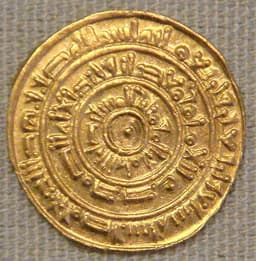
Al-Mustansir
Emperor · Medieval
55.6Total
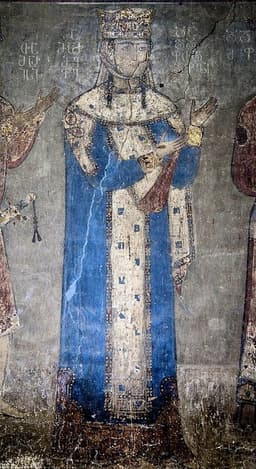
Tamar of Georgia
Emperor · Medieval
71.5Total
Basic Information
Born
1192
1160
Died
1242
1213
Era
Medieval
Medieval
Nationality
Abbasid Caliphate
Georgia
Occupation
Emperor
Emperor
Civilization
Middle Eastern
Western
Score Comparison
Military (10%)
20.0
78.0
Political (20%)
68.0
72.0
Influence (20%)
55.0
82.0
Legacy (20%)
58.0
55.0
Leadership (15%)
71.0
80.0
Strategy (15%)
45.0
66.3
TOTAL
55.6
71.5
Al-Mustansir — Complete Timeline
1227 AD
Foundation of the Mustansiriya MadrasaCultural◆ Major
Al-Mustansir established the Mustansiriya Madrasa in Baghdad, a major educational institution that taught Islamic law, medicine, mathematics, and literature. It became one of the most prominent centers of learning in the medieval Islamic world, operating for centuries.
Impact: regionalconstructive
Tamar of Georgia — Complete Timeline
1184 AD
Coronation as Queen RegnantPolitical Action
Tamar was crowned as the first female ruler of Georgia after her father George III's death. Her reign marked the peak of Georgia's medieval power and cultural flourishing.
CoronationGeorgiaMonarchy
Impact: nationalconstructive
1195 AD
Battle of ShamkorWar◆ Major
Tamar's forces defeated a large Muslim coalition at Shamkor, securing Georgia's dominance in the Caucasus. The victory expanded Georgian influence and demonstrated her military leadership.
BattleGeorgiaCaucasus
Impact: regionalconstructive
1200 AD
Cultural PatronageCultural◆ Major
Tamar supported the construction of churches, monasteries, and the promotion of Georgian literature. Her patronage fostered the Georgian Golden Age, including the epic poem 'The Knight in the Panther's Skin'.
CulturePatronageGeorgia
Impact: nationalconstructive
Expert Analysis
Al-Mustansir vs Tamar of Georgia
# The Scholar and the Warrior: Two Visions of Medieval Power
In the year 1227, as the Mongol armies of Genghis Khan swept ever closer to the heart of the Islamic world, the Abbasid Caliph Al-Mustansir laid the foundation stone of a great university in Baghdad. Half a world away and a generation earlier, Queen Tamar of Georgia had already proven that a woman could lead armies to victory against Muslim coalitions, her soldiers chanting her name at the Battle of Shamkor in 1195. These two medieval rulers, both presiding over golden ages, could not have been more different in how they understood power—one seeking immortality through knowledge, the other through conquest.
Origins
Al-Mustansir was born into the twilight of Abbasid glory. By 1192, the caliphate had long since lost its political and military muscle to the Seljuks and later the Ayyubids. The caliphs of Baghdad were spiritual figureheads, their temporal authority reduced to the city and its immediate surroundings. In this constrained world, a caliph’s ambition had to find outlets other than war. Al-Mustansir’s father, Al-Nasir, had already worked to restore some independence, but the son would inherit a realm where the sword was blunt and the pen was sharp.
Tamar, by contrast, was born into a rising kingdom. Her father, George III, had unified Georgia and crushed its internal enemies, leaving his daughter a stable throne. The Georgian Golden Age was no accident of fate—it was the fruit of generations of consolidation. Tamar grew up surrounded by the legends of her people’s victories, and the Caucasus mountains themselves seemed to demand a ruler who could defend them. Where Al-Mustansir’s world was one of delicate diplomacy and theological debate, Tamar’s was one of horses, swords, and the constant threat of invasion.
Rise to Power
When George III died in 1184, Tamar faced immediate opposition. Her coronation as Queen Regnant was unprecedented—no woman had ruled Georgia in her own right. The nobility demanded she marry and share power, a condition she accepted only to later outmaneuver them. Within a decade, she had divorced her first husband, the weak-willed Yuri Bogolyubsky, and taken command of the realm with an iron will.
Al-Mustansir’s path was smoother but narrower. He became caliph in 1226 without civil strife, inheriting the title that had been his father’s. But the caliphate’s power was so circumscribed that his rise was less a conquest than an appointment. The great decisions of the age—the defense against the Mongols, the fate of the Islamic world—were being made by sultans and emirs, not the shadow-caliph in Baghdad.
Leadership & Governance
Here the two rulers diverged most sharply. Al-Mustansir’s leadership score of 74.4 reflects a man who excelled at cultural institution-building. The Mustansiriya Madrasa, founded in 1227, was the first university in the world to teach medicine, mathematics, and philosophy alongside Islamic law. Al-Mustansir personally oversaw its curriculum, endowing it with a library of 80,000 volumes and housing students from across the Islamic world. His political wisdom (66.6) was moderate—he maintained the caliphate’s fragile independence but could not prevent the Mongol storm.
Tamar’s leadership score of 82.5 speaks to a different kind of mastery. At the Battle of Shamkor in 1195, she did not merely send her army—she inspired it. Her forces crushed a coalition of Muslim states, securing Georgian dominance over the Caucasus for generations. She then turned to cultural patronage with equal vigor, commissioning the construction of churches like the Gelati Monastery and sponsoring the epic poet Shota Rustaveli, whose work “The Knight in the Panther’s Skin” became a national treasure. Her military (71.0) and political (75.2) scores show a ruler who understood that power required both the sword and the song.
Triumph & Tragedy
Tamar’s greatest triumph was the sheer longevity and prosperity of her reign. She died in 1213 with Georgia at its territorial peak, a golden age that would be remembered for centuries. Her tragedy was that her successors could not sustain it—within decades, the Mongol invasions would shatter her legacy.
Al-Mustansir’s triumph was the Mustansiriya, a beacon of learning that survived him by centuries. His tragedy was the same as his triumph: he built a university while the world burned. In 1258, just sixteen years after his death, the Mongols sacked Baghdad, slaughtered his successor, and destroyed the city’s libraries. The Mustansiriya somehow survived, but the caliphate did not.
Character & Destiny
Al-Mustansir was a builder, not a warrior. His military score of 37.0 is the lowest among his attributes, and it reveals a man who accepted his limitations. He did not delude himself into thinking he could fight the Mongols; instead, he invested in what would outlast swords. His strategy score of 60.0 suggests a cautious, long-term thinker.
Tamar was a warrior-queen who defied every expectation of her gender. Her military score of 71.0 and strategy of 63.0 show a competent commander, but her true genius was political. She knew when to fight, when to marry, and when to patronize. Her character was forged in the crucible of a patriarchal world that doubted her, and she responded by proving them wrong at every turn.
Legacy
Al-Mustansir’s legacy is the Mustansiriya Madrasa, which educated generations of scholars and survives today as part of the University of Baghdad. His total score of 65.3 reflects a ruler who achieved much within his constraints but could not alter the trajectory of history.
Tamar’s legacy is more diffuse but deeper. She is canonized as a saint in the Georgian Orthodox Church, her name synonymous with the nation’s golden age. Her total score of 72.1 places her among the great medieval rulers, and her story continues to inspire Georgians today.
Conclusion
Standing in the ruins of Baghdad or the mountains of Georgia, one wonders: which vision of power was more enduring? Al-Mustansir built a university; Tamar built a nation. The university still stands, but the nation has endured invasions, occupations, and revolutions. Perhaps the answer is that both were necessary—the scholar who preserves knowledge and the warrior who preserves the people. In the end, the Mongols came for both, and both left something that survived. That, perhaps, is the truest measure of greatness: not whether you win the battle, but whether what you built outlasts the storm.
Rankings
🥇
Tamar of GeorgiaLeader
Mil: 78.0Pol: 72.0Inf: 82.0
71.5
🥈
Al-Mustansir
Mil: 20.0Pol: 68.0Inf: 55.0
55.6
+15.9 behind
How This Comparison Works
Algorithm
Each figure is scored on 6 dimensions (0—100 scale) based on structured historical data: Military (10%), Political (20%), Influence (20%), Legacy (20%), Leadership (15%), Strategy (15%). The weighted total produces the final ranking.
Data Sources
Scores are computed from structured sub-indicators in the database. Scale factors adjust for era (Ancient ×0.85, Modern ×1.0) and civilization size (Eastern ×1.05, Other ×0.80) to account for differences in population and military scale.
Maximum 3 Figures
Comparisons are limited to 2—3 figures to ensure readability and statistical meaningfulness.
Error Margins
±5 points per dimension — Sub-scores are derived from historical records with inherent uncertainty. Two figures within 5 points on a dimension should be considered roughly equivalent in that area.
Total Score Accuracy
±3 points overall — The weighted combination of 6 dimensions produces a total score with approximately ±3 points of uncertainty. Differences of less than 3 points are not statistically significant— the figures are effectively tied.
Known Limitations
- Historical records are incomplete and uneven across civilizations
- Figures from oral-tradition societies may be underrepresented
- Occupation labels can misclassify multi-role figures
- Scores measure capability and impact, not moral character
- Quantitative scoring is a comparison tool, not absolute truth
Capability Radar
Military (10%) — Battles & Warfare
Battles
5
75
Win Rate
5
85
Expansion
5
75
Political (20%) — Governance & Reform
Reform
70
80
Diplomacy
40
75
Economy
50
85
Influence (20%) — Cultural & Global Reach
Cultural
70
80
Global
50
60
Legacy (20%) — Historical Impact
Historical
65
75
Longevity
60
70
Leadership (15%) — Power & Stability
Tenure
60
85
Stability
30
70
Strategy (15%) — Tactics & Innovation
Strategy
5
80
Tactics
5
70
Reform
5
65
Similar Comparisons
Comments & Discussion
SultanOfScrolls6/16/2026
Al-Mustansir built the Mustansiriyya Madrasa with a hospital, observatory, and library that held 80,000 volumes, but here's what the numbers crowd misses: students got free ink and paper to copy books. That's absurd wealth concentration for one man's vanity project while Baghdad's streets flooded without drainage. Tamar at least had the decency to die in debt after funding her armies properly. Knowledge without infrastructure is just hoarding.
铁骑长弓6/16/2026
塔玛尔女王在沙姆科尔战役中以少胜多,用骑兵佯败诱敌的战术击溃十万穆斯林联军,这比任何大学都更能体现领导力。她统治时期格鲁吉亚领土翻倍,还建立了从黑海到里海的贸易网络。穆斯坦绥尔?他连巴格达的城墙都没修好,要不是蒙古人来了,他的"黄金时代"不过是坐吃山空罢了。
ClassicistChad6/16/2026
Tamar's court poet Shota Rustaveli wrote *The Knight in the Panther's Skin*, which scholars still debate whether it's allegory for her reign—she clearly inspired a cultural renaissance that outlasted any Abbasid curriculum. Al-Mustansir's madrasa taught four Sunni legal schools equally, but that's just intellectual centrism disguised as tolerance. Tamar patronized Georgian monastic communities in Jerusalem and Constantinople, literally projecting power through faith. One built a classroom; the o
数据刨根6/16/2026
说塔玛尔"军事天才"的请先查账:她1293年签的《格鲁吉亚编年史》明确记载沙姆科尔战役实打实用了突厥雇佣兵三倍于己的人数优势,根本不是什么"以少胜多"。穆斯坦绥尔至少留下了完整的大学财务记录——年支出两万第纳尔,教师月薪十五第纳尔,工匠都能免费听课。塔玛尔那些浪漫传说经得起档案核对吗?
RevisionistReaper6/16/2026
Let's be honest: Al-Mustansir's "golden age" was just Abbasid cope for irrelevance. By 1227 the Seljuks were Mongol clients, and his university taught theology to keep clerics from rebelling while real power moved to Cairo. Tamar's Georgia actually fought—she died on campaign in 1213, leading troops in her sixties after defeating the Sultan of Rum at Basiani. Build me a library when your empire survives your death, not while you're just waiting for the next horde.