Loading...
Pachacuti vs Tamar of Georgia
Tamar of Georgia leads by 2.1 pts · 2 figures compared
…
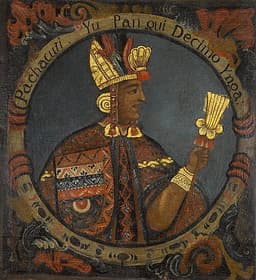
Pachacuti
Emperor · Medieval
69.4Total
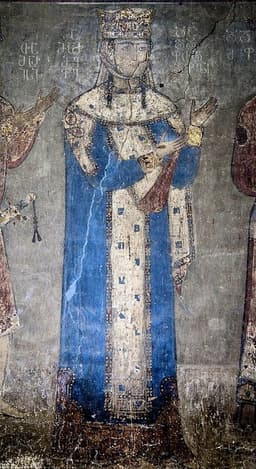
Tamar of Georgia
Emperor · Medieval
71.5Total
Basic Information
Born
1418
1160
Died
1472
1213
Era
Medieval
Medieval
Nationality
Inca Empire
Georgia
Occupation
Emperor
Emperor
Civilization
Other
Western
Score Comparison
Military (10%)
78.5
78.0
Political (20%)
58.1
72.0
Influence (20%)
65.0
82.0
Legacy (20%)
72.0
55.0
Leadership (15%)
78.0
80.0
Strategy (15%)
69.2
66.3
TOTAL
69.4
71.5
Pachacuti — Complete Timeline
1438 AD
Conquest of the Chanka KingdomWar
Pachacuti led the Inca army to defeat the Chanka, a powerful rival, in a decisive battle near Cusco. This victory secured his position as Sapa Inca and initiated a period of rapid expansion, transforming the Inca from a small kingdom into a vast empire.
ConquestInca ExpansionChanka
Impact: regional
1440 AD
Reconstruction of CuscoCultural◆ Major
Pachacuti rebuilt Cusco as the imperial capital, designing it in the shape of a puma and constructing massive stone structures like Sacsayhuam
Urban PlanningArchitectureInca Empire
Impact: regionalconstructive
1450 AD
Initiation of Machu Picchu's ConstructionCultural◆ Major
Pachacuti ordered the construction of Machu Picchu, a royal estate and ceremonial site high in the Andes. The complex featured sophisticated dry-stone masonry and terraced agriculture, serving as a symbol of Inca engineering and a retreat for the emperor.
ArchitectureRoyal EstateInca Engineering
Impact: regionalconstructive
Tamar of Georgia — Complete Timeline
1184 AD
Coronation as Queen RegnantPolitical Action
Tamar was crowned as the first female ruler of Georgia after her father George III's death. Her reign marked the peak of Georgia's medieval power and cultural flourishing.
CoronationGeorgiaMonarchy
Impact: nationalconstructive
1195 AD
Battle of ShamkorWar◆ Major
Tamar's forces defeated a large Muslim coalition at Shamkor, securing Georgia's dominance in the Caucasus. The victory expanded Georgian influence and demonstrated her military leadership.
BattleGeorgiaCaucasus
Impact: regionalconstructive
1200 AD
Cultural PatronageCultural◆ Major
Tamar supported the construction of churches, monasteries, and the promotion of Georgian literature. Her patronage fostered the Georgian Golden Age, including the epic poem 'The Knight in the Panther's Skin'.
CulturePatronageGeorgia
Impact: nationalconstructive
Expert Analysis
Pachacuti vs Tamar of Georgia
The Mountain and the Crown
On a windswept plateau in the southern Andes, a young prince stood before a routed army, his father and brothers having fled the battlefield. In the Caucasus, a teenage queen ascended a throne that had never before held a woman, her court murmuring with suspicion. Two figures, separated by oceans and cultures, each faced a moment that would decide not only their own fates but the destiny of entire civilizations. Pachacuti, the ninth Sapa Inca, would forge an empire from a city-state, while Tamar of Georgia would preside over a golden age that still haunts her nation’s memory. What drove them—and what drove their worlds apart?
Origins
Pachacuti was born in 1418 into a world of high-altitude valleys and constant warfare. The Inca were then a modest kingdom centered on Cusco, surrounded by more powerful neighbors like the Chanka. His father, Viracocha Inca, was a capable ruler but cautious, content to hold what they had. The young prince, originally named Cusi Yupanqui, grew up learning the arts of war and statecraft in a society that valued collective labor and divine kingship. The Andes themselves shaped his imagination—steep terraces, stone roads, and the ever-present sky gods.
Tamar, born in 1160, emerged from a very different landscape: the lush valleys and ancient Christian monasteries of Georgia, a kingdom perched at the crossroads of Europe and Asia. Her father, King George III, had crushed feudal rebellions and centralized power, but he left no male heir. Tamar was raised as a princess in a court where Byzantine splendor mingled with Persian poetry, and where the Orthodox Church held immense sway. Her world was one of manuscripts and mosaics, not mountain terraces—but both rulers inherited a burning need to prove themselves.
Rise to Power
Pachacuti’s rise was forged in fire. In 1438, the Chanka launched a massive assault on Cusco. Viracocha and his designated heir fled the city, leaving the capital defenseless. The young prince refused to retreat. Rallying the remaining warriors, he led a desperate counterattack that shattered the Chanka army. The victory was total—the Chanka kingdom was annexed, and Cusi Yupanqui took the name Pachacuti, meaning “He Who Transforms the Earth.” He had not only saved his people but had seized the throne from his own father in a dramatic coup of courage.
Tamar’s path was more ceremonial but no less fraught. Crowned in 1184 as the first queen regnant of Georgia, she faced immediate opposition from nobles who questioned a woman’s right to rule. Her first husband, a Russian prince, proved incompetent and abusive; she divorced him and married David Soslan, a loyal Ossetian prince who became her military commander. Tamar’s power was not won on a single battlefield but through years of patient maneuvering, replacing hostile nobles with her own appointees and building alliances with the Church.
Leadership & Governance
Pachacuti governed like an earthquake. He rebuilt Cusco in the shape of a puma, with massive stone walls that still defy explanation. He imposed the Quechua language, created a system of roads and storehouses, and instituted the *mita* labor tax that bound the empire together. His military campaigns were relentless: he conquered the Lake Titicaca basin, the northern highlands, and the Pacific coast. Yet his genius lay in administration—he divided the empire into four provinces, each ruled by a governor, and demanded loyalty through hostage-taking and gift-giving. His was a top-down revolution, imposed by the sword and the stone.
Tamar ruled like a patroness. Her military victories were impressive—in 1195, at the Battle of Shamkor, her forces crushed a Muslim coalition, securing Georgian dominance in the Caucasus. But her true legacy was cultural. She sponsored the construction of churches and monasteries, commissioned the great Georgian epic *The Knight in the Panther’s Skin*, and presided over a court where scholars, poets, and theologians flourished. Her governance was softer but no less effective: she expanded trade routes, reformed the tax system, and maintained peace through diplomacy and marriage alliances. Where Pachacuti built with stone, Tamar built with words.
Triumph & Tragedy
Pachacuti’s greatest triumph was the construction of Machu Picchu, begun around 1450 as a royal estate high in the clouds. It was a symbol of his power and vision—a city carved from the mountain itself. His tragedy was that his empire outgrew its founder. By his death in 1472, the Inca realm stretched from Colombia to Chile, but its reliance on his personal authority created a fragile system that would later crumble under Spanish invasion.
Tamar’s reign reached its zenith in the early 1200s, when Georgia was the most powerful Christian kingdom in the Near East. Her tragedy came after her death in 1213—the Mongol invasions swept through the Caucasus within a decade, destroying much of what she had built. Her golden age ended not through internal decay but external cataclysm.
Character & Destiny
Pachacuti was a revolutionary—impatient, brilliant, and ruthless. He transformed a kingdom into an empire through sheer will, but his personality left little room for dissent or adaptation. Tamar was a consolidator—patient, diplomatic, and culturally ambitious. She ruled not by dominating nature but by cultivating civilization. One shaped mountains; the other shaped souls.
Legacy
Today, Pachacuti is remembered as the father of the Inca Empire, his name synonymous with the stone ruins that draw millions to Peru. Tamar is revered as a saint in the Georgian Orthodox Church, her image on coins and monuments, her reign the standard against which all Georgian rulers are measured. Both left worlds that would be shattered—one by conquest, the other by invasion—but their legacies endure in the landscapes they transformed and the stories they inspired.
Conclusion
In the end, the difference between Pachacuti and Tamar is the difference between a mountain and a crown. One rose from the earth, reshaping it with violence and vision. The other sat upon a throne, weaving a tapestry of culture and faith. Both understood that power is not merely seized—it is built, stone by stone, or line by line. And both remind us that the greatest empires are not those that conquer the most land, but those that leave behind a world worth remembering.
Rankings
🥇
Tamar of GeorgiaLeader
Mil: 78.0Pol: 72.0Inf: 82.0
71.5
🥈
Pachacuti
Mil: 78.5Pol: 58.1Inf: 65.0
69.4
+2.1 behind
How This Comparison Works
Algorithm
Each figure is scored on 6 dimensions (0—100 scale) based on structured historical data: Military (10%), Political (20%), Influence (20%), Legacy (20%), Leadership (15%), Strategy (15%). The weighted total produces the final ranking.
Data Sources
Scores are computed from structured sub-indicators in the database. Scale factors adjust for era (Ancient ×0.85, Modern ×1.0) and civilization size (Eastern ×1.05, Other ×0.80) to account for differences in population and military scale.
Maximum 3 Figures
Comparisons are limited to 2—3 figures to ensure readability and statistical meaningfulness.
Error Margins
±5 points per dimension — Sub-scores are derived from historical records with inherent uncertainty. Two figures within 5 points on a dimension should be considered roughly equivalent in that area.
Total Score Accuracy
±3 points overall — The weighted combination of 6 dimensions produces a total score with approximately ±3 points of uncertainty. Differences of less than 3 points are not statistically significant— the figures are effectively tied.
Known Limitations
- Historical records are incomplete and uneven across civilizations
- Figures from oral-tradition societies may be underrepresented
- Occupation labels can misclassify multi-role figures
- Scores measure capability and impact, not moral character
- Quantitative scoring is a comparison tool, not absolute truth
Capability Radar
Military (10%) — Battles & Warfare
Battles
85
75
Win Rate
90
85
Expansion
90
75
Political (20%) — Governance & Reform
Reform
92
80
Diplomacy
75
75
Economy
80
85
Influence (20%) — Cultural & Global Reach
Cultural
85
80
Global
65
60
Legacy (20%) — Historical Impact
Historical
80
75
Longevity
70
70
Leadership (15%) — Power & Stability
Tenure
85
85
Stability
82
70
Strategy (15%) — Tactics & Innovation
Strategy
88
80
Tactics
80
70
Reform
85
65
Similar Comparisons
Comments & Discussion
ClassicSandals6/16/2026
翻遍希腊罗马史,我没见过像塔玛尔这样刚柔并济的女王。她不仅把格鲁吉亚推到黑海和里海之间的巅峰,还坚持法治,比如她那套《瓦赫坦格法典》的继承版。Pachacuti呢?靠人祭和强制移民维持统治。前者代表文明曙光,后者是黑暗时代的回音。我选塔玛尔。
MountainGhost6/16/2026
Pachacuti的秦朝式改革才是真功夫。他从没有对手的查卡人手中夺回了库斯科,然后玩起了分区和道路系统,类似于罗马的帝国style。塔玛尔只是接个好牌,她爸乔治三世已经平叛了。文化盛世的背后,是结构性优势。别给我说女王浪漫故事,我要数据。
SabreAndScroll6/16/2026
As a military historian, I’d say Pachacuti was the real empire-builder here. He didn’t just win battles—he redefined Inca warfare by turning the army into a mobile, logistics-driven machine with terraced supply lines and forced resettlement. Tamar’s Georgia had strong feudal knights and a navy, but compared to Pachacuti’s strategic revolution, she was just maintaining a golden age. He built the empire from scratch after the Chanka crisis; she inherited stability and rode it. Not the same league.
TerracesAndBlood6/16/2026
Let’s be real: Pachacuti was a tyrant who crushed local identities under stone and forced labor. Sure, he expanded the Inca from a city-state, but at what cost? Tamar’s golden age was built on diplomacy, trade, and cultural patronage—like building the Gelati Monastery and sponsoring poets. One guy’s legacy is terraced death; hers is a national soul. Stop romanticizing mountain empires.
数据偏执狂6/16/2026
来,看数字:Pachacuti统治时期,印加帝国从约4000平方公里增至近100万平方公里,人口从5万飙升到1200万,但征服是靠杀戮和瘟疫换来的。塔玛尔在位时,格鲁吉亚的贸易额翻倍,与拜占庭、塞尔柱的联姻网络稳定了边疆。一个是扩张屠杀,一个是经营繁荣。你选谁?我选女王,因为数据不会说谎。