Loading...
Al-Mustansir vs Taejo of Joseon
Taejo of Joseon leads by 14.8 pts · 2 figures compared
…
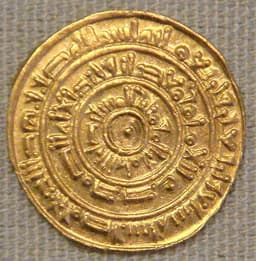
Al-Mustansir
Emperor · Medieval
55.6Total
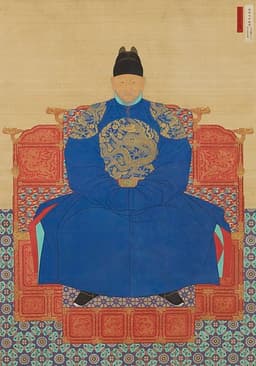
Taejo of Joseon
Emperor · Medieval
70.4Total
Basic Information
Born
1192
1335
Died
1242
1408
Era
Medieval
Medieval
Nationality
Abbasid Caliphate
Korea
Occupation
Emperor
Emperor
Civilization
Middle Eastern
Eastern
Score Comparison
Military (10%)
20.0
74.7
Political (20%)
68.0
65.0
Influence (20%)
55.0
65.0
Legacy (20%)
58.0
80.0
Leadership (15%)
71.0
72.0
Strategy (15%)
45.0
61.2
TOTAL
55.6
70.4
Al-Mustansir — Complete Timeline
1227 AD
Foundation of the Mustansiriya MadrasaCultural◆ Major
Al-Mustansir established the Mustansiriya Madrasa in Baghdad, a major educational institution that taught Islamic law, medicine, mathematics, and literature. It became one of the most prominent centers of learning in the medieval Islamic world, operating for centuries.
Impact: regionalconstructive
Taejo of Joseon — Complete Timeline
1380 AD
Battle of HwangsanWar
General Yi Seong-gye defeated a Japanese pirate (wokou) force at Hwangsan. This victory enhanced his military reputation and demonstrated his capability as a commander.
WokouGoryeo Military
1388 AD
Wihwado RetreatPolitical Action
General Yi Seong-gye, ordered to invade the Ming dynasty's Liaodong region, turned his army back at Wihwado Island. This act of defiance against the Goryeo court led to a coup that eventually brought him to power.
CoupGoryeo-Ming RelationsPower Shift
Impact: national
1391 AD
Land Reform and the Gwajeon LawReform◆ Major
Taejo implemented the Gwajeon Law, a land reform that redistributed land from the old Goryeo aristocracy to his supporters and the state. This weakened the old elite and strengthened the new Joseon ruling class.
Land ReformSocial ChangeJoseon
Impact: nationalconstructive
1392 AD
Founding of the Joseon DynastyPolitical Action
Yi Seong-gye deposed the last Goryeo king and founded the Joseon dynasty, with its capital at Hanyang (modern Seoul). He established a new ruling class based on Confucian ideology, replacing the Buddhist-influenced Goryeo system.
Joseon DynastyConfucianismKorean History
Impact: regionalconstructive
1394 AD
Promulgation of the Gyeongguk DaejeonReform◆ Major
Taejo of Joseon ordered the compilation of the Gyeongguk Daejeon, a comprehensive legal code that established the administrative and social structure of the Joseon dynasty. This code remained in effect for centuries.
Legal CodeGovernanceConfucianism
Impact: nationalconstructive
Expert Analysis
Al-Mustansir vs Taejo of Joseon
# The Founder and the Scholar: Two Paths to Power in a Turbulent Age
In the autumn of 1388, a Korean general named Yi Seong-gye stood on the banks of the Yalu River, facing a choice that would alter the course of East Asian history. His king had ordered him to invade Ming China—a suicidal campaign against an empire that had just driven out the Mongols. Behind him stretched his army, loyal but exhausted. Before him lay the frozen river and, beyond it, certain defeat. He turned his army back. That decision—the Wihwado Retreat—was not merely an act of disobedience; it was the birth of a dynasty.
Meanwhile, in Baghdad, a caliph named Al-Mustansir was pouring his energies into an entirely different kind of foundation. The Mustansiriya Madrasa, which opened its doors in 1227, would become one of the most celebrated centers of learning in the Islamic world. Where Yi Seong-gye seized power through steel and strategy, Al-Mustansir sought to build his legacy through scholarship and stone. Both men ruled in the medieval period, both claimed divine mandate, yet their stories could hardly have been more different.
Origins
Yi Seong-gye was born in 1335 into a military family serving the declining Goryeo dynasty. Korea in the late fourteenth century was a land under siege—from Japanese pirates along its coasts, from Mongol influence in its court, and from the rising Ming dynasty across its northern border. Yi grew up in a world where survival demanded martial prowess and political cunning. His father, Yi Ja-chun, was a minor official who had served the Mongol-backed Goryeo court, and young Yi learned early that loyalty was a negotiable commodity.
Al-Mustansir, born in 1192, came into a very different world—the Abbasid Caliphate, once the greatest empire on earth, now a shadow of its former glory. The Abbasids had long since lost effective control over most of their territories to regional warlords and rival dynasties. But Baghdad remained the symbolic heart of Sunni Islam, and the caliphs still wielded considerable spiritual authority. Al-Mustansir was the son of Caliph Al-Zahir, and his upbringing was steeped in the theological and legal traditions of Islam. His world was one of books and debates, not battlefields.
The difference in their origins was not merely personal but epochal. Yi faced a collapsing order that demanded a strongman; Al-Mustansir inherited a fragile institution that needed a diplomat and patron.
Rise to Power
Yi Seong-gye’s rise was carved from blood and fire. In 1380, at the Battle of Hwangsan, he annihilated a force of Japanese pirates (wokou) that had been terrorizing the southern coast. The victory was decisive—he killed their leader, captured their ships, and scattered their remnants. It was the kind of triumph that made a general’s name echo through the halls of power. But Yi was careful not to become too powerful too quickly. He cultivated allies among reform-minded Confucian scholars, who saw in him a champion against the corrupt Buddhist aristocracy that had long dominated Goryeo.
The Wihwado Retreat in 1388 was his masterstroke. By refusing to invade Ming China, he positioned himself as a patriot who put his country’s welfare above royal orders. The king who had commanded the invasion was deposed, and Yi became the power behind the throne. Four years later, in 1392, he formally deposed the last Goryeo monarch and declared the Joseon dynasty.
Al-Mustansir’s path was quieter. He became caliph in 1226 after his father’s death, inheriting a position that was more ceremonial than powerful. The real military might in the region belonged to the Khwarazmian Empire to the east and the Ayyubids to the west. Al-Mustansir could not conquer his neighbors; he could only outlast them. His power lay in his ability to mediate, to patronize, and to build institutions that would outlive any single ruler.
Leadership & Governance
Taejo of Joseon, as Yi Seong-gye became known, governed with the ruthlessness of a general and the vision of a reformer. His first major act was the Gwajeon Law of 1391, a land reform that confiscated the estates of the old Goryeo aristocracy and redistributed them to his supporters. This was not merely a land grab—it was a fundamental restructuring of Korean society. The new system tied land ownership to service to the state, creating a bureaucracy based on merit rather than birth.
He also moved the capital to Hanyang (modern Seoul), a site chosen for its geomantic properties and defensive advantages. The city was built from scratch, with a palace, walls, and a grid of streets that reflected Confucian principles of order. In 1394, he ordered the compilation of the Gyeongguk Daejeon, a legal code that would govern Joseon for centuries. It was a comprehensive document that covered everything from criminal law to tax collection to court etiquette.
Al-Mustansir governed differently because he had to. His military score of 37.0 reflects the reality that he commanded no armies of consequence. Instead, he invested in culture. The Mustansiriya Madrasa, founded in 1227, was a revolutionary institution—it taught not only Islamic law and theology but also medicine, mathematics, and astronomy. It had a hospital attached, a library, and even a clock. In an age when most learning was confined to mosques and private homes, the Mustansiriya was a public university in all but name.
Triumph & Tragedy
Taejo’s greatest triumph was the founding of Joseon itself—a dynasty that would last 505 years. But his tragedy was personal. He had eight sons, and the question of succession tore his family apart. His fifth son, Yi Bang-won, was brilliant and ambitious, but Taejo favored his younger son, Yi Bang-seok. The resulting conflict led to the First Strife of Princes in 1398, in which Yi Bang-won murdered his half-brothers and forced Taejo to abdicate. The founder of a dynasty spent his final years watching his family destroy itself.
Al-Mustansir’s triumph was the madrasa, which became a model for educational institutions across the Islamic world. His tragedy was that he could not see the storm coming. In 1242, he died peacefully in Baghdad. Just sixteen years later, in 1258, the Mongols under Hulagu Khan sacked the city, destroyed the Mustansiriya, and ended the Abbasid Caliphate forever. Everything Al-Mustansir had built was reduced to rubble.
Character & Destiny
Taejo was a pragmatist who understood that power required both force and legitimacy. He was not a visionary in the grand sense—he did not dream of a new world; he simply saw that the old one was broken and knew how to fix it. His strategy score of 63.8 suggests he was competent rather than brilliant, but his political score of 76.1 shows he knew how to play the long game. He was a man who could retreat when necessary and strike when the moment was right.
Al-Mustansir was a builder, not a warrior. His leadership score of 74.4 reflects his ability to inspire through patronage rather than command. He understood that in a world of crumbling empires, the only lasting power was the power of ideas. But he lacked the strategic vision to see that even ideas need walls to protect them.
Legacy
Taejo’s legacy is written into the very landscape of modern Korea. The Joseon dynasty he founded shaped Korean culture, language, and identity for half a millennium. The Confucian values he institutionalized—filial piety, education, bureaucratic meritocracy—remain central to Korean society today. His capital, Seoul, is now one of the world’s great cities. His legal code influenced Korean law until the twentieth century.
Al-Mustansir’s legacy is more fragile but equally profound. Though the Mustansiriya was destroyed, its model lived on. The concept of a university as a place where multiple disciplines could be studied under one roof spread from Baghdad to Cairo to Fez to Europe. The madrasa that Al-Mustansir built was a seed that would eventually bloom into the great universities of the modern world.
Conclusion
One founded a dynasty that lasted five centuries; the other founded an idea that has lasted eight. Which is the greater achievement? Taejo of Joseon changed the course of a nation; Al-Mustansir changed the course of learning itself. The general who turned his army back at a frozen river and the caliph who opened the doors of a madrasa—both were builders, but they built in different materials. Taejo worked in blood and stone, in laws and land. Al-Mustansir worked in ink and mortar, in curriculum and charity.
In the end, perhaps the most telling difference is this: when the Mongols came to Baghdad, they destroyed the madrasa but could not destroy the idea. When the Japanese invaded Korea in the 1590s, they burned the palaces and the libraries, but the Joseon dynasty survived. Ideas and institutions—both are fragile, both are resilient. The men who build them can only hope that one generation’s destruction becomes another generation’s foundation.
Rankings
🥇
Taejo of JoseonLeader
Mil: 74.7Pol: 65.0Inf: 65.0
70.4
🥈
Al-Mustansir
Mil: 20.0Pol: 68.0Inf: 55.0
55.6
+14.8 behind
How This Comparison Works
Algorithm
Each figure is scored on 6 dimensions (0—100 scale) based on structured historical data: Military (10%), Political (20%), Influence (20%), Legacy (20%), Leadership (15%), Strategy (15%). The weighted total produces the final ranking.
Data Sources
Scores are computed from structured sub-indicators in the database. Scale factors adjust for era (Ancient ×0.85, Modern ×1.0) and civilization size (Eastern ×1.05, Other ×0.80) to account for differences in population and military scale.
Maximum 3 Figures
Comparisons are limited to 2—3 figures to ensure readability and statistical meaningfulness.
Error Margins
±5 points per dimension — Sub-scores are derived from historical records with inherent uncertainty. Two figures within 5 points on a dimension should be considered roughly equivalent in that area.
Total Score Accuracy
±3 points overall — The weighted combination of 6 dimensions produces a total score with approximately ±3 points of uncertainty. Differences of less than 3 points are not statistically significant— the figures are effectively tied.
Known Limitations
- Historical records are incomplete and uneven across civilizations
- Figures from oral-tradition societies may be underrepresented
- Occupation labels can misclassify multi-role figures
- Scores measure capability and impact, not moral character
- Quantitative scoring is a comparison tool, not absolute truth
Capability Radar
Military (10%) — Battles & Warfare
Battles
5
75
Win Rate
5
80
Expansion
5
65
Political (20%) — Governance & Reform
Reform
70
85
Diplomacy
40
70
Economy
50
65
Influence (20%) — Cultural & Global Reach
Cultural
70
80
Global
50
60
Legacy (20%) — Historical Impact
Historical
65
85
Longevity
60
80
Leadership (15%) — Power & Stability
Tenure
60
70
Stability
30
75
Strategy (15%) — Tactics & Innovation
Strategy
5
75
Tactics
5
70
Reform
5
60
Similar Comparisons
Comments & Discussion
ArrowFlip Historian6/16/2026
The Wihwado Retreat wasn't a brave pivot to save lives—it was the most calculated power grab in Korean history. Yi Seong-gye knew Ming China would crush Goryeo, but he also knew a retreat would make him a hero while eroding royal authority. Compare that to Al-Mustansir building a madrasa: one man played the long game of dynastic chess, the other wasted resources on a library when Baghdad was falling apart. Give me a general who wins battles, not a caliph who wins bookish debates.
学塾判官6/16/2026
拿一个退兵的武将和一个建学校的哈里发比,本身就离谱。Yi Seong-gye是开国君主,用兵如神;Al-Mustansir呢?他修的Mustansiriya Madrasa确实有名,但最后还不是让蒙古人把巴格达烧成灰?书院救不了命,但军队能。历史看的是结果,不是情怀。学者型统治者听起来高大上,乱世里就是个摆设。
Rusty Lance6/16/2026
Everyone romanticizes the madrasa, but Al-Mustansir's "golden age" was a sham—his reign was plagued by factional infighting and he couldn't even secure Baghdad's water supply. Meanwhile, Yi Seong-gye unified a fractured Korea, drove out pirates, and established a dynasty that lasted 500 years. It's not even close: one man actually solved problems, the other built a pretty building and called it a day. Legacy isn't about bricks; it's about governance.
北地刀笔吏6/16/2026
必须泼点冷水:Yi Seong-gye的“Wihwado Retreat”被吹成战略天才,但别忘了,他回国后一步步清洗政敌,连自己的女婿都不放过。这哪是“撒退”?这是宫斗教科书。Al-Mustansir至少没搞得血雨腥风,Madrasa里的学者还能自由辩论。别老拿“实干家”吹捧武将,治理天下,耐心和宽容比刀快。
Counterfactual Carl6/16/2026
If Al-Mustansir had the guts to retreat like Yi Seong-gye, maybe Baghdad wouldn't have been sacked by Hulagu in 1258. His madrasa was a vanity project while the Mongol storm gathered—he should've been building walls, not libraries. Yi saw the threat, acted, and saved Korea. Al-Mustansir? He fiddled while Baghdad burned. Facts don't care about your "center of learning."