Loading...
Al-Mustansir vs Kirtivarman II
Al-Mustansir leads by 19.2 pts · 2 figures compared
…
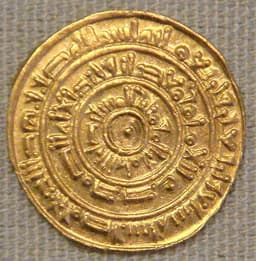
Al-Mustansir
Emperor · Medieval
55.6Total
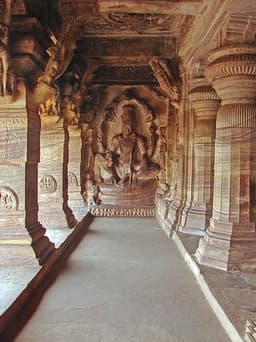
Kirtivarman II
Emperor · Medieval
36.4Total
Basic Information
Born
1192
746
Died
1242
757
Era
Medieval
Medieval
Nationality
Abbasid Caliphate
India
Occupation
Emperor
Emperor
Civilization
Middle Eastern
Indian
Score Comparison
Military (10%)
20.0
21.2
Political (20%)
68.0
30.7
Influence (20%)
55.0
46.3
Legacy (20%)
58.0
37.5
Leadership (15%)
71.0
33.6
Strategy (15%)
45.0
36.8
TOTAL
55.6
36.4
Al-Mustansir — Complete Timeline
1227 AD
Foundation of the Mustansiriya MadrasaCultural◆ Major
Al-Mustansir established the Mustansiriya Madrasa in Baghdad, a major educational institution that taught Islamic law, medicine, mathematics, and literature. It became one of the most prominent centers of learning in the medieval Islamic world, operating for centuries.
Impact: regionalconstructive
Kirtivarman II — Complete Timeline
753 AD
Defeat by DantidurgaWar◆ Major
Kirtivarman II, the last Badami Chalukya king, was defeated by the Rashtrakuta chief Dantidurga. This battle ended the Badami Chalukya dynasty and established Rashtrakuta rule over the Deccan region.
Impact: regionaldestructive
Expert Analysis
Al-Mustansir vs Kirtivarman II
# The Scholar and the Sword: Two Medieval Rulers on Opposite Paths
On a spring morning in 1227, the streets of Baghdad echoed with the sounds of construction. Al-Mustansir, the thirty-seventh caliph of the Abbasid dynasty, stood watching as workers laid the foundation of what would become the Mustansiriya Madrasa. Across the world, in the Deccan plateau of India, another ruler was facing a very different dawn. Kirtivarman II, the last king of the Badami Chalukya dynasty, was preparing for a battle that would decide not just his fate, but the fate of his entire civilization. One man was building for the future; the other was fighting to preserve a dying past. Their stories, separated by nearly five centuries, reveal how character and circumstance conspire to create triumph or tragedy.
Origins
Al-Mustansir was born into the twilight of the Abbasid Caliphate in 1192, a time when the once-mighty empire had been reduced to little more than Baghdad and its immediate surroundings. Yet the caliphate still carried immense spiritual authority across the Islamic world. His father, Al-Nasir, had spent decades restoring some measure of political stability, and young Al-Mustansir grew up in a court that valued learning, diplomacy, and religious legitimacy above military conquest. The world he inherited was one of crumbling walls, but also one where ideas still held power.
Kirtivarman II, by contrast, was born in 746 into a dynasty that had dominated the Deccan for two centuries. The Badami Chalukyas were warriors first and foremost, having carved out their empire through relentless campaigns against the Pallavas and other rivals. Kirtivarman’s birthright was one of swords and fortresses, of tribute and conquest. His ancestors had built temples at Pattadakal and Aihole that still stand today, but their power rested on the loyalty of feudatory chiefs who were always watching for weakness.
Rise to Power
Al-Mustansir became caliph in 1226, inheriting a position that was more symbolic than absolute. His rise was not through battlefield glory but through the careful navigation of court politics and the support of the ulema, the religious scholars who gave the caliphate its moral authority. He understood that in an age of Mongol expansion and Seljuk dominance, the caliph’s true strength lay not in armies but in the power of culture and faith.
Kirtivarman II ascended the throne around 746, during a period of growing internal dissent. The Chalukya empire had been weakened by succession disputes and the rising ambitions of their feudatories. Among these was Dantidurga, a Rashtrakuta chief who had begun consolidating power in the western Deccan. Kirtivarman’s path to rule was one of inherited crisis, not opportunity. He was a young king trying to hold together a kingdom his ancestors had built through centuries of warfare.
Leadership & Governance
Al-Mustansir’s approach to leadership was visionary in its own quiet way. In 1227, he founded the Mustansiriya Madrasa, an institution that would become one of the greatest centers of learning in the medieval world. It taught not only Islamic law and theology but also medicine, mathematics, and astronomy. The caliph personally endowed the school and ensured that students from across the Islamic world could study there free of charge. His political wisdom lay in recognizing that the caliphate’s survival depended on intellectual and cultural prestige rather than military might. His leadership score of 74.4 reflects a ruler who governed through patronage and persuasion.
Kirtivarman II, by contrast, was a military leader in a time that demanded diplomatic genius. His political score of 36.5 and leadership score of 32.7 suggest a ruler who was overwhelmed by the forces arrayed against him. The Chalukya military had once been the terror of the Deccan, but by Kirtivarman’s reign, it had grown complacent. He relied on traditional battlefield tactics against an enemy, the Rashtrakutas, who were innovating in both strategy and diplomacy. While Al-Mustansir built schools, Kirtivarman tried to rebuild armies—but it was too late.
Triumph & Tragedy
Al-Mustansir’s greatest moment was the completion and flourishing of the Mustansiriya Madrasa. It became a beacon of learning that attracted scholars from as far away as Andalusia and Central Asia. The caliph could walk through its halls and see the future of Islamic civilization being shaped in the minds of young students. His tragedy was that he could not stop what was coming. Twelve years after his death in 1242, the Mongols would sack Baghdad, and the Mustansiriya Madrasa would be burned to the ground. His triumph was built on sand.
Kirtivarman II’s tragedy came in 753, when he faced Dantidurga’s Rashtrakuta forces in a decisive battle. The details are lost to history, but the outcome is not: Kirtivarman was defeated, and the Badami Chalukya dynasty came to an end. He was the last of his line, a king who saw his empire crumble in a single engagement. There was no triumphant moment for him, no legacy of learning or law. His greatest achievement was simply lasting as long as he did.
Character & Destiny
Al-Mustansir possessed a patient, scholarly temperament. He understood that power in the medieval world was not just about swords but about ideas, about the legitimacy that comes from being seen as a protector of faith and knowledge. His total score of 65.3 reflects a ruler who was competent but not extraordinary, yet his choice to invest in education rather than armies was a deliberate one. He knew the Abbasids could not match the Mongols in war, so he chose to compete in the realm of the mind.
Kirtivarman II, by contrast, was a product of his warrior culture. He had no choice but to fight, and his military score of 46.0 suggests he was not without skill. But his strategy score of 30.0 reveals a ruler who could not adapt to changing circumstances. He fought the way his ancestors had fought, against an enemy who had learned new tactics. His destiny was sealed not by his own failings alone, but by the rigid traditions of a dynasty that had forgotten how to evolve.
Legacy
Al-Mustansir’s legacy is complex. The Mustansiriya Madrasa was destroyed by the Mongols, but its model inspired later institutions across the Islamic world. His influence score of 72.3 and legacy score of 68.5 remind us that even failed civilizations can leave behind ideas that outlast their walls. Today, the Mustansiriya Madrasa is remembered as a precursor to the modern university.
Kirtivarman II’s legacy is that of a footnote. His defeat ended the Chalukya dynasty and paved the way for the Rashtrakuta empire, which would dominate the Deccan for two centuries. His legacy score of 48.2 reflects a ruler remembered primarily for what he lost. Yet there is a lesson in his story too: that even the mightiest dynasties can fall when their leaders cannot adapt.
Conclusion
Standing in the ruins of the Mustansiriya Madrasa or the forgotten battlefields of the Deccan, one cannot help but wonder about the nature of historical judgment. Al-Mustansir built a school that was destroyed; Kirtivarman II fought a battle he could not win. One is remembered as a patron of learning, the other as a king who lost everything. But both were men trying to hold back the tide of history with the tools they had. The caliph chose culture; the king chose war. In the end, neither choice saved their worlds. But the caliph’s choice left behind an idea that would outlast the Mongol invasion, while the king’s choice left only silence. Perhaps that is the deepest lesson: that what we build with our minds can survive even when our empires cannot.
Rankings
🥇
Al-MustansirLeader
Mil: 20.0Pol: 68.0Inf: 55.0
55.6
🥈
Kirtivarman II
Mil: 21.2Pol: 30.7Inf: 46.3
36.4
+19.2 behind
How This Comparison Works
Algorithm
Each figure is scored on 6 dimensions (0—100 scale) based on structured historical data: Military (10%), Political (20%), Influence (20%), Legacy (20%), Leadership (15%), Strategy (15%). The weighted total produces the final ranking.
Data Sources
Scores are computed from structured sub-indicators in the database. Scale factors adjust for era (Ancient ×0.85, Modern ×1.0) and civilization size (Eastern ×1.05, Other ×0.80) to account for differences in population and military scale.
Maximum 3 Figures
Comparisons are limited to 2—3 figures to ensure readability and statistical meaningfulness.
Error Margins
±5 points per dimension — Sub-scores are derived from historical records with inherent uncertainty. Two figures within 5 points on a dimension should be considered roughly equivalent in that area.
Total Score Accuracy
±3 points overall — The weighted combination of 6 dimensions produces a total score with approximately ±3 points of uncertainty. Differences of less than 3 points are not statistically significant— the figures are effectively tied.
Known Limitations
- Historical records are incomplete and uneven across civilizations
- Figures from oral-tradition societies may be underrepresented
- Occupation labels can misclassify multi-role figures
- Scores measure capability and impact, not moral character
- Quantitative scoring is a comparison tool, not absolute truth
Capability Radar
Military (10%) — Battles & Warfare
Battles
5
15
Win Rate
5
10
Expansion
5
5
Political (20%) — Governance & Reform
Reform
70
10
Diplomacy
40
10
Economy
50
15
Influence (20%) — Cultural & Global Reach
Cultural
70
10
Global
50
5
Legacy (20%) — Historical Impact
Historical
65
15
Longevity
60
10
Leadership (15%) — Power & Stability
Tenure
60
20
Stability
30
10
Strategy (15%) — Tactics & Innovation
Strategy
5
10
Tactics
5
15
Reform
5
5
Similar Comparisons
Comments & Discussion
THE MADRASA BUILDER6/16/2026
Al-Mustansir was a smart strategist, not just a scholar. By pouring resources into the Mustansiriya Madrasa—teaching medicine, math, and law side by side—he created a intellectual fortress that outlasted his own crumbling caliphate. Kirtivarman II threw men at spears; Al-Mustansir invested in minds. That madrasa stood for centuries after Baghdad fell. One built a legacy in stone and thought; the other lost everything in a single afternoon. Choose your battles wisely.
骑兵与诗篇6/16/2026
拿公元8世纪的德干高原骑兵冲锋来说,Kirtivarman II的失败不在战场,而在资源分配。他把国库砸进军事扩张,而Al-Mustansir同时期的策略是先建教育网络再谋战争。历史证明:一个王朝的本钱是知识储备,不是铁蹄数量。Kirtivarman II若早十年重视学校而非战马,结局可能改写。
DATA GEEK6/16/2026
Let’s talk numbers. Al-Mustansir’s madrasa had 300+ students and teachers with salaries—a 13th-century R&D budget. Kirtivarman II fielded about 20,000 troops against the Rashtrakutas, but his dynasty’s tax base was already drying up. You don’t need a military genius to see the math: sustainable infrastructure beats short-term military spending every time. Al-Mustansir put his coin into human capital; Kirtivarman II threw his into a meat grinder. The scoreboard doesn’t lie.
绝代双骄6/16/2026
Al-Mustansir跟Kirtivarman II的差距,本质是战略眼光差了两个世纪。前者清楚知道,1227年的阿拔斯王朝没资格硬刚蒙古铁蹄,不如把信仰和知识攒成软实力——结果马穆鲁克王朝后来还沿用他的制度。后者倒好,以为拿刀剑能强过文化传承,结果德干高原的庙宇、碑文、梵文诗歌全被战火吞了大半。你以为文化是加分项?错了,它是存亡底线。
REVISIONIST HAMMER6/16/2026
Stop romanticizing the “builder vs warrior” narrative. Al-Mustansir built his madrasa because he had no army left to command—it was a desperate PR move to legitimize a hollow throne. Kirtivarman II at least died fighting, which is more than can be said for a caliph who watched his dynasty fade from bookshelf to grave. Intellectual legacy? Sure, if you ignore that Baghdad was sacked 31 years later, with the same madrasa looted for gold. Building schools doesn’t save you from a Mongol horde.