Loading...
Al-Mustansir vs Henry II of Champagne
Al-Mustansir leads by 17.6 pts · 2 figures compared
…
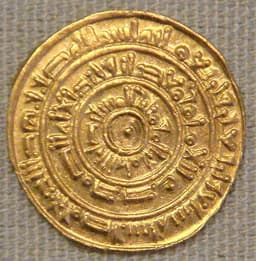
Al-Mustansir
Emperor · Medieval
55.6Total
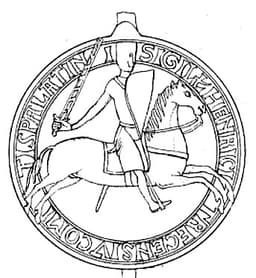
Henry II of Champagne
Emperor · Medieval
38.0Total
Basic Information
Born
1192
1166
Died
1242
1197
Era
Medieval
Medieval
Nationality
Abbasid Caliphate
Kingdom of Jerusalem
Occupation
Emperor
Emperor
Civilization
Middle Eastern
Western
Score Comparison
Military (10%)
20.0
10.2
Political (20%)
68.0
33.6
Influence (20%)
55.0
49.4
Legacy (20%)
58.0
37.5
Leadership (15%)
71.0
41.5
Strategy (15%)
45.0
39.6
TOTAL
55.6
38.0
Al-Mustansir — Complete Timeline
1227 AD
Foundation of the Mustansiriya MadrasaCultural◆ Major
Al-Mustansir established the Mustansiriya Madrasa in Baghdad, a major educational institution that taught Islamic law, medicine, mathematics, and literature. It became one of the most prominent centers of learning in the medieval Islamic world, operating for centuries.
Impact: regionalconstructive
Henry II of Champagne — Complete Timeline
1192 AD
Marriage to Isabella of JerusalemPolitical Action◆ Major
Henry II married Isabella I of Jerusalem, becoming king-consort of the Kingdom of Jerusalem. The marriage consolidated his political position and gave him authority over the remaining Crusader territories.
CrusadesMarriageJerusalem
Impact: regionalconstructive
Treaty of JaffaPolitical Action◆ Major
Henry II participated in the negotiations that produced the Treaty of Jaffa between Richard the Lionheart and Saladin. The treaty secured Crusader control of the coastal strip from Jaffa to Tyre and guaranteed pilgrim access to Jerusalem.
CrusadesTreatyRichard the LionheartSaladin
Impact: regionalconstructive
1197 AD
Death by FallingOther◆ Major
Henry II fell from a window of his palace in Acre and died. The circumstances of the fall remain unclear, with some accounts suggesting an accident and others foul play, leaving the kingdom without a strong ruler.
CrusadesDeathAccident
Impact: regionaltragic
Expert Analysis
Al-Mustansir vs Henry II of Champagne
# The Scholar and the Fallen King
On a spring morning in 1227, the caliph Al-Mustansir stood before the gates of a new institution rising on the banks of the Tigris. The Mustansiriya Madrasa would soon welcome scholars from across the Islamic world, its walls echoing with debates on law, medicine, and astronomy. Just thirty years earlier and a thousand miles to the west, another ruler had plunged to his death from a palace window in Acre, his brief reign ending in an instant of tragic absurdity. Between these two moments lies a question that haunts the study of medieval leadership: Why do some rulers build for eternity while others vanish in a single misstep?
Origins
Al-Mustansir was born in 1192 into the twilight of the Abbasid Caliphate, a dynasty that had once ruled from Spain to Persia but now controlled little more than Baghdad and its environs. His father, Al-Nasir, had spent decades trying to restore caliphal authority, maneuvering between warring sultans and Mongol threats. The young prince grew up in a world of precarious diplomacy, where survival depended on subtlety rather than strength. Baghdad itself remained a beacon of civilization, its libraries and markets attracting merchants and thinkers from three continents.
Henry of Champagne emerged from a very different world. Born in 1166 into the crusader nobility of France, he inherited a county that was wealthy but landlocked, forever overshadowed by the great kingdoms of Europe. The crusader states of the Levant offered ambitious younger sons a chance at glory—and sudden death. Henry arrived in the Holy Land during the Third Crusade, a conflict that had already consumed Richard the Lionheart, Saladin, and thousands of men in a stalemate of blood and sand.
Rise to Power
Al-Mustansir’s path to power was orderly and traditional. He became caliph in 1226 upon his father’s death, inheriting a position that was more spiritual than temporal. The Abbasid caliphs had long since lost military control to Turkish and Persian warlords, but they retained immense prestige as the symbolic leaders of Sunni Islam. Al-Mustansir understood that his authority rested not on armies but on legitimacy, and legitimacy required patronage of the institutions that defined Islamic civilization.
Henry’s rise was far more dramatic—and accidental. In 1192, he married Isabella I of Jerusalem, a queen whose previous husband had been murdered under mysterious circumstances. The marriage made Henry king-consort of a kingdom that was little more than a coastal strip of cities, constantly threatened by Saladin’s forces. He had not sought the crown; it had fallen upon him like a stone from a collapsing wall. His legitimacy depended not on birth or divine right, but on the fragile consent of barons who had seen too many kings come and go.
Leadership & Governance
The contrast in their ruling styles could not be sharper. Al-Mustansir governed through institutions, not personalities. The Mustansiriya Madrasa, founded in 1227, was his masterpiece: a university that taught the four schools of Islamic law alongside medicine, mathematics, and literature. It housed a hospital, a library of 80,000 volumes, and provided free lodging for students. This was governance as architecture—building structures that would outlast any ruler. His political score of 66.6 reflects a man who understood that power flows through knowledge, not swords.
Henry governed through personal negotiation and crisis management. His military score of 43.3 and strategy of 32.0 suggest a man who never truly mastered the brutal chessboard of crusader politics. Yet he achieved one significant diplomatic victory: the Treaty of Jaffa in 1192, where he helped negotiate a three-year truce between Richard the Lionheart and Saladin. The treaty was a masterpiece of compromise, granting Christians control of the coast while Muslims held Jerusalem. But Henry’s leadership score of 37.1 reveals a ruler who could not translate this success into lasting authority.
Triumph & Tragedy
Al-Mustansir’s triumph was the Madrasa itself. For centuries after his death, it remained one of the world’s great centers of learning, producing scholars whose works shaped Islamic thought. His tragedy was that he could not stop the Mongol storm gathering in the east. Just sixteen years after his death, Hulagu’s armies would sack Baghdad, ending the Abbasid Caliphate in a river of blood. Al-Mustansir had built a lighthouse, but he could not prevent the tsunami.
Henry’s tragedy was both more personal and more absurd. In 1197, while standing at a window of his palace in Acre—perhaps watching a procession, perhaps lost in thought—he fell to his death. Some accounts say he was leaning out too far; others whisper of murder. The circumstances remain unclear, but the symbolism is devastating. A king who had spent his reign trying to hold together a crumbling kingdom died not in battle or from poison, but from a moment of carelessness. His triumph—the Treaty of Jaffa—bought three years of peace, but the kingdom he ruled would fall to the Mamluks less than a century later.
Character & Destiny
Al-Mustansir’s personality was shaped by patience and foresight. He understood that the caliphate’s glory lay in its past, not its future, and he chose to preserve what could be preserved. His influence score of 72.3 and legacy of 68.5 reflect a man who invested in the slow work of education while empires crumbled around him. He was, in many ways, the last great Abbasid—a scholar-king who knew that his true monument would be built in minds, not marble.
Henry’s character was that of a survivor, a diplomat in a world that respected warriors. His influence score of 65.6 suggests he was respected, but his leadership score of 37.1 reveals a man who could not command loyalty. The window that killed him was not just a tragic accident; it was the final expression of a reign that had always been precarious, always one step from disaster. He died as he had lived—falling.
Legacy
Al-Mustansir’s legacy is the Mustansiriya Madrasa, which still stands in Baghdad today, a testament to the idea that knowledge outlasts empires. He is remembered not as a conqueror but as a patron, a man who understood that the true wealth of a civilization is not gold or land, but the minds it cultivates. His total score of 65.3 places him among the solid, if unspectacular, rulers of his age—but his influence echoes far beyond the numbers.
Henry’s legacy is more ambiguous. He is remembered, if at all, as the king who fell from a window—a footnote in the bloody chronicle of the crusades. His total score of 46.6 reflects a reign that was brief, troubled, and ultimately tragic. Yet the Treaty of Jaffa remains a rare example of diplomacy triumphing over war in a region that has seen too little of either.
Conclusion
Two rulers, two worlds, two fates. Al-Mustansir built a school; Henry fell from a window. One understood that power is preserved through knowledge, the other that power is lost through carelessness. Yet both faced the same fundamental truth: that in the medieval world, as in our own, the difference between a lasting legacy and a forgotten death often comes down to a single choice. Al-Mustansir chose to build. Henry chose to survive. History, as always, made its own judgment.
Rankings
🥇
Al-MustansirLeader
Mil: 20.0Pol: 68.0Inf: 55.0
55.6
🥈
Henry II of Champagne
Mil: 10.2Pol: 33.6Inf: 49.4
38.0
+17.6 behind
How This Comparison Works
Algorithm
Each figure is scored on 6 dimensions (0—100 scale) based on structured historical data: Military (10%), Political (20%), Influence (20%), Legacy (20%), Leadership (15%), Strategy (15%). The weighted total produces the final ranking.
Data Sources
Scores are computed from structured sub-indicators in the database. Scale factors adjust for era (Ancient ×0.85, Modern ×1.0) and civilization size (Eastern ×1.05, Other ×0.80) to account for differences in population and military scale.
Maximum 3 Figures
Comparisons are limited to 2—3 figures to ensure readability and statistical meaningfulness.
Error Margins
±5 points per dimension — Sub-scores are derived from historical records with inherent uncertainty. Two figures within 5 points on a dimension should be considered roughly equivalent in that area.
Total Score Accuracy
±3 points overall — The weighted combination of 6 dimensions produces a total score with approximately ±3 points of uncertainty. Differences of less than 3 points are not statistically significant— the figures are effectively tied.
Known Limitations
- Historical records are incomplete and uneven across civilizations
- Figures from oral-tradition societies may be underrepresented
- Occupation labels can misclassify multi-role figures
- Scores measure capability and impact, not moral character
- Quantitative scoring is a comparison tool, not absolute truth
Capability Radar
Military (10%) — Battles & Warfare
Battles
5
10
Win Rate
5
10
Expansion
5
5
Political (20%) — Governance & Reform
Reform
70
20
Diplomacy
40
40
Economy
50
25
Influence (20%) — Cultural & Global Reach
Cultural
70
15
Global
50
10
Legacy (20%) — Historical Impact
Historical
65
15
Longevity
60
10
Leadership (15%) — Power & Stability
Tenure
60
30
Stability
30
20
Strategy (15%) — Tactics & Innovation
Strategy
5
10
Tactics
5
10
Reform
5
5
Similar Comparisons
Comments & Discussion
No comments yet. Be the first to share your thoughts!