Loading...
Charles de Gaulle vs Henry II of Champagne
Charles de Gaulle leads by 30.2 pts · 2 figures compared
…
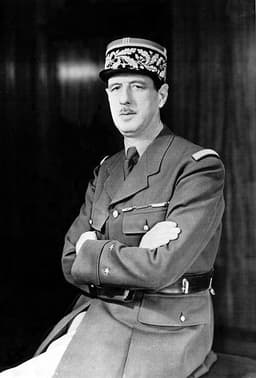
Charles de Gaulle
Politician · Modern
68.2Total
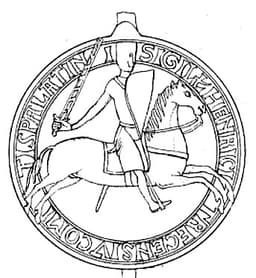
Henry II of Champagne
Emperor · Medieval
38.0Total
Basic Information
Born
1890
1166
Died
1970
1197
Era
Modern
Medieval
Nationality
France
Kingdom of Jerusalem
Occupation
Politician
Emperor
Civilization
Western
Western
Score Comparison
Military (10%)
55.0
10.2
Political (20%)
75.0
33.6
Influence (20%)
65.0
49.4
Legacy (20%)
68.0
37.5
Leadership (15%)
78.0
41.5
Strategy (15%)
65.0
39.6
TOTAL
68.2
38.0
Charles de Gaulle — Complete Timeline
1940 AD
Appeal of 18 June 1940Political Action
From London, de Gaulle broadcast a radio appeal urging French resistance against Nazi occupation. He called on French soldiers and citizens to continue the fight, founding the Free French Forces and becoming the symbol of French defiance.
World War IIResistanceLeadership
Impact: nationalconstructive
1958 AD
Founding of the Fifth RepublicPolitical Action
De Gaulle returned to power during the Algerian crisis and oversaw the drafting of a new constitution. The Fifth Republic established a strong executive presidency, replacing the unstable parliamentary system of the Fourth Republic.
ConstitutionGovernment ReformPolitical System
Impact: nationalconstructive
1962 AD
End of the Algerian WarPolitical Action◆ Major
De Gaulle negotiated the
DecolonizationPeace TreatyAlgeria
Impact: regionalconstructive
1968 AD
May 1968 CrisisPolitical Action◆ Major
Mass student protests and general strikes paralyzed France, challenging de Gaulle's government. De Gaulle briefly fled to Germany, then returned to dissolve the National Assembly and call elections, which his party won, but his authority was weakened.
ProtestPolitical CrisisSocial Unrest
Impact: nationaldestructive
1969 AD
Resignation as PresidentPolitical Action
De Gaulle resigned after losing a referendum on regional reform and Senate restructuring. The defeat marked the end of his political career, as he withdrew from public life and died the following year.
ResignationPolitical DefeatReferendum
Impact: nationaltragic
Henry II of Champagne — Complete Timeline
1192 AD
Marriage to Isabella of JerusalemPolitical Action◆ Major
Henry II married Isabella I of Jerusalem, becoming king-consort of the Kingdom of Jerusalem. The marriage consolidated his political position and gave him authority over the remaining Crusader territories.
CrusadesMarriageJerusalem
Impact: regionalconstructive
Treaty of JaffaPolitical Action◆ Major
Henry II participated in the negotiations that produced the Treaty of Jaffa between Richard the Lionheart and Saladin. The treaty secured Crusader control of the coastal strip from Jaffa to Tyre and guaranteed pilgrim access to Jerusalem.
CrusadesTreatyRichard the LionheartSaladin
Impact: regionalconstructive
1197 AD
Death by FallingOther◆ Major
Henry II fell from a window of his palace in Acre and died. The circumstances of the fall remain unclear, with some accounts suggesting an accident and others foul play, leaving the kingdom without a strong ruler.
CrusadesDeathAccident
Impact: regionaltragic
Expert Analysis
Charles de Gaulle vs Henry II of Champagne
# The Window and the World
In the summer of 1197, Henry II of Champagne stepped onto a windowsill in Acre and fell to his death. In the spring of 1969, Charles de Gaulle walked out of the Élysée Palace and into retirement, having chosen to resign rather than accept a political defeat. One man’s end was a stumble into oblivion; the other’s was a deliberate exit from power. Both were rulers of France—or at least of a French kingdom in the Crusader East—yet their trajectories could hardly have been more different. What separates a footnote from a monument? The answer lies not in the accidents of fate, but in the character of the men who met them.
Origins
Henry II of Champagne was born in 1166 into the high aristocracy of medieval France, a world where power was measured in castles, vassals, and marriages. His family ruled the rich county of Champagne, and Henry grew up trained for war and diplomacy in a society that saw the Crusader states as both a sacred duty and a career opportunity. When he sailed for the Holy Land in 1190, he was following a well-worn path for younger sons and ambitious nobles.
Charles de Gaulle, born in 1890 in Lille, came from a very different France—a republic scarred by the Franco-Prussian War, haunted by national humiliation, and obsessed with revanche. His father was a teacher of history and literature, and young Charles absorbed a vision of France as a providential nation, destined for greatness. Where Henry inherited a title, de Gaulle inherited an idea.
Rise to Power
Henry’s ascent was a matter of luck and marriage. In 1192, after the death of Conrad of Montferrat, he married Isabella I of Jerusalem, becoming king-consort of a kingdom that was little more than a coastal strip. His power derived from his wife’s claim and the support of the military orders. He was, in essence, a placeholder for a dying state.
De Gaulle’s rise was the opposite: a slow, stubborn climb against the current. A junior officer in World War I, he was wounded and captured at Verdun, spending years as a prisoner. Between the wars, he wrote unorthodox books on armored warfare that were ignored by the French high command. When the German invasion came in 1940, his moment arrived—not because he was in power, but because he refused to accept defeat. On June 18, 1940, from a BBC studio in London, a virtually unknown brigadier general broadcast an appeal to the French people. That single act, at the age of 49, transformed him into the symbol of French resistance.
Leadership & Governance
Henry II of Champagne governed a kingdom in terminal decline. The Treaty of Jaffa in 1192, which he helped negotiate between Richard the Lionheart and Saladin, bought a fragile peace for the Crusader states, but it was a truce of exhaustion, not a foundation for revival. His reign lasted just five years, and his main achievement was surviving—until he didn’t. His military score of 43.3 and political score of 44.4 reflect a ruler who managed the status quo but could not transcend it.
De Gaulle’s leadership was defined by transformation. Returning to power in 1958 during the Algerian crisis—at the age of 67—he oversaw the founding of the Fifth Republic, a constitution that concentrated executive power in the presidency. He ended the Algerian War in 1962 through the Évian Accords, a decision that sparked assassination attempts and a military revolt but ultimately saved France from a colonial quagmire. His political score of 82.0 reflects a man who did not merely govern, but reshaped the state itself.
Triumph & Tragedy
Henry’s greatest moment was the Treaty of Jaffa, a diplomatic achievement that temporarily stabilized a doomed kingdom. His tragedy was his death—a fall from a window that remains mysterious, perhaps an accident, perhaps suicide, perhaps murder. He left no lasting mark on history, his legacy score of 49.4 a verdict of obscurity.
De Gaulle’s triumph was the liberation of France and the restoration of its prestige. His tragedy was the May 1968 crisis, when student protests and general strikes paralyzed the nation. De Gaulle briefly fled to Germany to consult with French generals, a moment of panic that nearly cost him everything. He recovered, called elections, and won—but the spell was broken. A year later, he lost a referendum on regional reform and resigned, dying in 1970 at the age of 79.
Character & Destiny
Henry was a product of his world: a nobleman who played the game of medieval politics competently but without vision. His strategy score of 32.0 suggests a man who reacted to events rather than shaping them. He fell from a window because, in a sense, he had nowhere else to go.
De Gaulle was a man of towering will and rigid principle. “France cannot be France without greatness,” he wrote. His leadership score of 78.0 reflects a figure who bent history to his vision—but also one whose inflexibility led to his downfall. He resigned in 1969 not because he had to, but because he would not compromise. The window he stepped through was a door of his own making.
Legacy
Henry II of Champagne is a footnote, remembered only by specialists in Crusader history. De Gaulle’s legacy is the Fifth Republic itself, which still governs France today. His influence score of 65.0 understates his impact: every French president since has governed in his shadow. He gave France a constitution, a nuclear deterrent, and a sense of national purpose that survived his departure.
Conclusion
What drove the difference between these two French rulers? Not talent alone—both were capable men. Not circumstance—both faced impossible odds. The answer is scale of vision. Henry saw a kingdom to be preserved; de Gaulle saw a nation to be reborn. One fell from a window; the other walked through history. The difference between a footnote and a monument is not the length of a life, but the depth of a dream.
Rankings
🥇
Charles de GaulleLeader
Mil: 55.0Pol: 75.0Inf: 65.0
68.2
🥈
Henry II of Champagne
Mil: 10.2Pol: 33.6Inf: 49.4
38.0
+30.2 behind
How This Comparison Works
Algorithm
Each figure is scored on 6 dimensions (0—100 scale) based on structured historical data: Military (10%), Political (20%), Influence (20%), Legacy (20%), Leadership (15%), Strategy (15%). The weighted total produces the final ranking.
Data Sources
Scores are computed from structured sub-indicators in the database. Scale factors adjust for era (Ancient ×0.85, Modern ×1.0) and civilization size (Eastern ×1.05, Other ×0.80) to account for differences in population and military scale.
Maximum 3 Figures
Comparisons are limited to 2—3 figures to ensure readability and statistical meaningfulness.
Error Margins
±5 points per dimension — Sub-scores are derived from historical records with inherent uncertainty. Two figures within 5 points on a dimension should be considered roughly equivalent in that area.
Total Score Accuracy
±3 points overall — The weighted combination of 6 dimensions produces a total score with approximately ±3 points of uncertainty. Differences of less than 3 points are not statistically significant— the figures are effectively tied.
Known Limitations
- Historical records are incomplete and uneven across civilizations
- Figures from oral-tradition societies may be underrepresented
- Occupation labels can misclassify multi-role figures
- Scores measure capability and impact, not moral character
- Quantitative scoring is a comparison tool, not absolute truth
Capability Radar
Military (10%) — Battles & Warfare
Battles
60
10
Win Rate
55
10
Expansion
20
5
Political (20%) — Governance & Reform
Reform
95
20
Diplomacy
90
40
Economy
70
25
Influence (20%) — Cultural & Global Reach
Cultural
70
15
Global
80
10
Legacy (20%) — Historical Impact
Historical
85
15
Longevity
75
10
Leadership (15%) — Power & Stability
Tenure
85
30
Stability
75
20
Strategy (15%) — Tactics & Innovation
Strategy
85
10
Tactics
70
10
Reform
80
5
Similar Comparisons
Comments & Discussion
No comments yet. Be the first to share your thoughts!