Loading...
Al-Mustansir vs Gyeongjong of Goryeo
Al-Mustansir leads by 8.5 pts · 2 figures compared
…
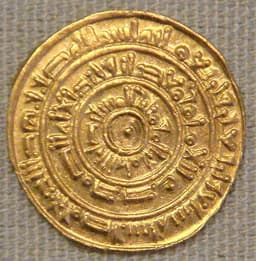
Al-Mustansir
Emperor · Medieval
55.6Total

Gyeongjong of Goryeo
Emperor · Medieval
47.1Total
Basic Information
Born
1192
955
Died
1242
981
Era
Medieval
Medieval
Nationality
Abbasid Caliphate
Korea
Occupation
Emperor
Emperor
Civilization
Middle Eastern
Eastern
Score Comparison
Military (10%)
20.0
20.0
Political (20%)
68.0
53.8
Influence (20%)
55.0
53.3
Legacy (20%)
58.0
47.5
Leadership (15%)
71.0
48.8
Strategy (15%)
45.0
45.0
TOTAL
55.6
47.1
Al-Mustansir — Complete Timeline
1227 AD
Foundation of the Mustansiriya MadrasaCultural◆ Major
Al-Mustansir established the Mustansiriya Madrasa in Baghdad, a major educational institution that taught Islamic law, medicine, mathematics, and literature. It became one of the most prominent centers of learning in the medieval Islamic world, operating for centuries.
Impact: regionalconstructive
Gyeongjong of Goryeo — Complete Timeline
976 AD
Institution of the Jeonsigwa Land SystemReform◆ Major
King Gyeongjong established the jeonsigwa, a land distribution system that allocated state-owned farmland to government officials based on their rank. This reform aimed to secure royal revenue and control over land, while providing a stable income for the bureaucracy.
Impact: nationalconstructive
Expert Analysis
Al-Mustansir vs Gyeongjong of Goryeo
# The Scholar and the Reformer: Two Medieval Rulers Who Shaped Their Worlds
In the year 1227, as the great library of Baghdad echoed with the voices of students debating Islamic jurisprudence, a caliph walked its corridors with quiet satisfaction. Half a world away, in 976, a Korean king had just signed into law a system that would transform his kingdom’s economy. Al-Mustansir and Gyeongjong of Goryeo never met, never corresponded, and likely never knew of each other’s existence. Yet both faced the same fundamental challenge of medieval rule: how to build something lasting when power is fleeting. Their answers reveal not just different personalities, but different civilizations at different crossroads.
Origins
Al-Mustansir was born in 1192 into the twilight of the Abbasid Caliphate. Baghdad, once the jewel of the Islamic world, had seen its empire shrink to little more than the city itself. The caliphs had become spiritual figureheads, their political authority hollowed out by Turkic warlords and Persian dynasties. As a young prince, Al-Mustansir watched his father struggle to maintain dignity without power. The lesson was clear: a ruler’s legacy could not depend on conquest alone.
Gyeongjong of Goryeo was born in 955, a generation removed from the unification of Korea under the Goryeo dynasty. His grandfather, King Taejo, had founded the kingdom through blood and iron. But by Gyeongjong’s time, the challenge had shifted from conquest to consolidation. The aristocracy, rewarded with vast estates for their military service, had grown dangerously powerful. The young prince understood that the sword that builds a kingdom can also destroy it.
Rise to Power
Al-Mustansir became caliph in 1226, inheriting a throne that commanded respect but little real authority. The Mongol Empire was gathering on the horizon, and the crusader states still held parts of the Levant. He did not respond with armies but with institutions. Within a year of his accession, he laid the foundation of the Mustansiriya Madrasa, a decision that would define his reign.
Gyeongjong ascended the throne in 975, following the death of his father, King Gwangjong. His rise was smoother than Al-Mustansir’s, but no less precarious. The Goryeo court was a web of noble families, each with its own ambitions. To rule effectively, Gyeongjong needed to balance their power without provoking rebellion. His solution was administrative rather than military.
Leadership & Governance
Al-Mustansir governed through patronage of learning. The Mustansiriya Madrasa, completed in 1227, was more than a school—it was a statement. It taught not only Islamic law but medicine, mathematics, and literature. Students received stipends. The curriculum was rigorous, the faculty distinguished. In an age when rulers measured their glory in palaces and conquests, Al-Mustansir invested in minds.
His political wisdom lay in understanding that the caliphate’s authority was moral, not military. By sponsoring education, he reinforced Baghdad’s status as the intellectual capital of Islam. He could not stop the Mongols, but he could ensure that the ideas of the Abbasid era outlived its walls.
Gyeongjong’s governance was pragmatic and structural. In 976, he instituted the *jeonsigwa* land system, a reform as elegant as it was necessary. Under this system, state-owned farmland was allocated to government officials based on their rank, not their family connections. This broke the cycle of hereditary estates that had enriched the nobility at the expense of the crown. The *jeonsigwa* stabilized state finances by making land a reward for service rather than birth. It was a quiet revolution, achieved not through war but through bureaucracy.
Triumph & Tragedy
Al-Mustansir’s triumph was the Mustansiriya Madrasa, which became a model for Islamic education across the centuries. His tragedy was the approaching storm. He died in 1242, just sixteen years before the Mongols sacked Baghdad in 1258. The madrasa he built survived the destruction, a testament to his foresight. But he could not prevent the collapse of the caliphate itself.
Gyeongjong’s triumph was the *jeonsigwa*, which provided a stable foundation for Goryeo for generations. His tragedy was his short reign. He died in 981, after only six years on the throne. The system he created outlasted him, but he never saw its full impact. His reforms would be refined by his successors, but the credit—and the legacy—belonged to him.
Character & Destiny
Al-Mustansir was a builder, not a warrior. His military score of 37 reflects a ruler who chose books over battles. His strategy score of 60 suggests competence, not genius. But his leadership score of 74 and influence of 72 reveal a man who understood that true power lies in shaping minds, not commanding armies. He was a realist who accepted the limits of his position and worked within them.
Gyeongjong was an institutionalist. His military score of 55 is modest, his strategy score of 30 surprisingly low for a reformer. Yet his leadership score of 73 and political score of 60 show a ruler who governed through systems, not force. He saw that the greatest threat to his kingdom was not foreign invasion but internal imbalance. His destiny was to be the king who stabilized the crown by limiting the nobles.
Legacy
Al-Mustansir is remembered as the caliph who built the Mustansiriya Madrasa, an institution that educated scholars for centuries. His legacy score of 68 reflects a ruler who achieved cultural immortality despite political failure. In the history of Islam, he is a footnote before the Mongol storm, but in the history of education, he is a landmark.
Gyeongjong’s *jeonsigwa* system became a cornerstone of Goryeo governance, influencing Korean land policy for centuries. His legacy score of 64 is slightly lower, perhaps because his reforms were administrative rather than visionary. Yet in Korean history, he is remembered as a king who strengthened the state when it needed it most.
Conclusion
One built a school. The other built a system. Neither conquered an empire or led a great army. But Al-Mustansir and Gyeongjong understood something that many conquerors never learn: that the most enduring power is the power to shape how people think and how societies are organized. Their differences—the caliph’s cultural patronage, the king’s administrative genius—reflect the different worlds they inhabited. But their similarity is more striking: both chose to build, not destroy, in an age that often rewarded destruction. In the ruins of Baghdad and the records of Goryeo, their quiet achievements still stand.
Rankings
🥇
Al-MustansirLeader
Mil: 20.0Pol: 68.0Inf: 55.0
55.6
🥈
Gyeongjong of Goryeo
Mil: 20.0Pol: 53.8Inf: 53.3
47.1
+8.5 behind
How This Comparison Works
Algorithm
Each figure is scored on 6 dimensions (0—100 scale) based on structured historical data: Military (10%), Political (20%), Influence (20%), Legacy (20%), Leadership (15%), Strategy (15%). The weighted total produces the final ranking.
Data Sources
Scores are computed from structured sub-indicators in the database. Scale factors adjust for era (Ancient ×0.85, Modern ×1.0) and civilization size (Eastern ×1.05, Other ×0.80) to account for differences in population and military scale.
Maximum 3 Figures
Comparisons are limited to 2—3 figures to ensure readability and statistical meaningfulness.
Error Margins
±5 points per dimension — Sub-scores are derived from historical records with inherent uncertainty. Two figures within 5 points on a dimension should be considered roughly equivalent in that area.
Total Score Accuracy
±3 points overall — The weighted combination of 6 dimensions produces a total score with approximately ±3 points of uncertainty. Differences of less than 3 points are not statistically significant— the figures are effectively tied.
Known Limitations
- Historical records are incomplete and uneven across civilizations
- Figures from oral-tradition societies may be underrepresented
- Occupation labels can misclassify multi-role figures
- Scores measure capability and impact, not moral character
- Quantitative scoring is a comparison tool, not absolute truth
Capability Radar
Military (10%) — Battles & Warfare
Battles
5
5
Win Rate
5
5
Expansion
5
5
Political (20%) — Governance & Reform
Reform
70
70
Diplomacy
40
40
Economy
50
65
Influence (20%) — Cultural & Global Reach
Cultural
70
30
Global
50
20
Legacy (20%) — Historical Impact
Historical
65
45
Longevity
60
40
Leadership (15%) — Power & Stability
Tenure
60
55
Stability
30
50
Strategy (15%) — Tactics & Innovation
Strategy
5
5
Tactics
5
5
Reform
5
5
Similar Comparisons
Comments & Discussion
MustangScholar6/16/2026
Al-Mustansir was no real reformer—he was a patron, not a builder. The Mustansiriyya Madrasa was a magnificent vanity project funded by dwindling treasury reserves. Meanwhile Gyeongjong’s land reform hit Goryeo’s corrupt nobles where it hurt: their tax evasion. One built libraries for future glory, the other actually fixed his kingdom’s fiscal system in his lifetime. I’ll take the pragmatist over the bibliophile any day.
突厥锤6/16/2026
说穿了,穆斯坦绥尔就是个软弱的工具人,被突厥禁卫军扶上位的宗教橡皮图章。他的图书馆再大,挡不住旭烈兀的铁蹄吗?高丽景宗至少敢动权贵田产,动真格的地籍清查比阿巴斯那帮空谈家强一万倍。穆斯林世界的黄金时代早烂透了,靠修清真寺和学院求体面,可笑。学院再多,能造火药吗?
QuantumSkeptic6/16/2026
The data doesn't support the romantic narrative. Al-Mustansir's madrasa enrolled maybe 300 students at peak—a rounding error in Baghdad's population. Gyeongjong's land reforms actually redistributed something like 60% of registered arable land to lower-ranked officials and peasants. That's systemic change versus symbolic legacy-building. Numbers don't lie: one ruler reshaped economic structures, the other built a monument to his own ego.
青石将军6/16/2026
这两位本质上都是旧秩序的裱糊匠。景宗搞的田柴科制度看着漂亮,其实就是给门阀换了个马甲收租,底层农民照样饿肚子。穆斯坦绥尔更是把国库堆成书院,禁卫军欠饷哗变时,那些酸儒能帮他守住巴格达城墙吗?读圣贤书读傻了的统治者,哪个文明都不缺。真正的改革者,得敢砍贵族脑袋,这两位都没这个胆量。
SinicRanger6/16/2026
Gyeongjong's reforms look impressive on paper, but let's be real: he reigned only four years before dying mysteriously, probably poisoned by the very aristocrats he tried to control. Al-Mustansir ruled thirty-six years—that's staying power. You can't reform anything if you're dead after one term. The caliph understood soft power: a library outlasts any land decree. Who remembers Gyeongjong's tax brackets today? But scholars still cite the Mustansiriyya’s architecture.