Loading...
Al-Mustansir vs Guo Wei
Guo Wei leads by 1.9 pts · 2 figures compared
…
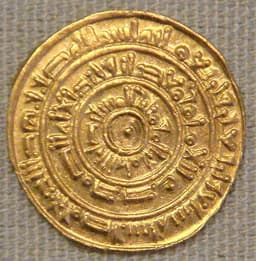
Al-Mustansir
Emperor · Medieval
55.6Total
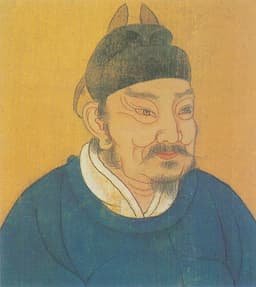
Guo Wei
Emperor · Medieval
57.5Total
Basic Information
Born
1192
904
Died
1242
954
Era
Medieval
Medieval
Nationality
Abbasid Caliphate
China
Occupation
Emperor
Emperor
Civilization
Middle Eastern
Eastern
Score Comparison
Military (10%)
20.0
65.0
Political (20%)
68.0
65.0
Influence (20%)
55.0
56.4
Legacy (20%)
58.0
50.0
Leadership (15%)
71.0
53.2
Strategy (15%)
45.0
66.3
TOTAL
55.6
57.5
Al-Mustansir — Complete Timeline
1227 AD
Foundation of the Mustansiriya MadrasaCultural◆ Major
Al-Mustansir established the Mustansiriya Madrasa in Baghdad, a major educational institution that taught Islamic law, medicine, mathematics, and literature. It became one of the most prominent centers of learning in the medieval Islamic world, operating for centuries.
Impact: regionalconstructive
Guo Wei — Complete Timeline
951 AD
Founded Later Zhou dynastyPolitical Action◆ Major
Guo Wei, a general of Later Han, led a coup and declared himself emperor of Later Zhou. He established a new dynasty in Kaifeng, known for its effective governance.
Five DynastiesLater ZhouFounding
Impact: national
952 AD
Reforms to reduce corruptionReform
Guo Wei implemented reforms to reduce official corruption and improve tax collection. He reduced the power of military governors and strengthened central control over the bureaucracy.
Five DynastiesReformGovernance
Impact: nationalconstructive
Expert Analysis
Al-Mustansir vs Guo Wei
# The Emperor and the Caliph: Two Paths of Power in a Fractured Age
On a spring morning in 951, a Chinese general stood at the gates of Kaifeng, the imperial capital of the crumbling Later Han dynasty. Guo Wei had been betrayed by the very court he served—his family slaughtered, his loyalty repaid with suspicion. Now, as his troops massed behind him, he faced a choice: submit to a regime that had already condemned him, or seize the throne and forge something new. Half a world away, in the sun-drenched streets of Baghdad, another ruler was laying the foundation of a different kind of legacy. Al-Mustansir, the thirty-fifth caliph of the Abbasid line, was not preparing for war. He was planning a school. These two men, born barely three centuries apart, embodied the starkly different possibilities of medieval leadership—one a warrior-emperor who rebuilt a dynasty from ashes, the other a patron of knowledge who tried to preserve a civilization through learning.
Origins
Guo Wei was born in 904, into a China fractured by the collapse of the Tang Dynasty. The Five Dynasties and Ten Kingdoms period was a brutal age of warlords, shifting alliances, and constant warfare. Guo Wei rose from humble origins, likely the son of a minor official or soldier, and learned early that survival depended on strength and cunning. He entered military service under the Later Han, a short-lived dynasty founded by Shatuo Turks, and proved himself a capable commander. His world was one of camps and campaigns, where a general’s life hung on the whims of emperors who rarely trusted their own best men.
Al-Mustansir, by contrast, was born in 1192 into the twilight of Abbasid power. The caliphate had long ceased to be a political empire; by the thirteenth century, the Abbasids ruled little more than Baghdad and its environs, surrounded by rising powers like the Ayyubids and the Mongols. Al-Mustansir was a prince of a dying line, raised in the palace and immersed in the traditions of Islamic scholarship and law. His education was not in tactics but in theology, jurisprudence, and the arts of governance. Where Guo Wei learned to read a battlefield, Al-Mustansir learned to read a manuscript.
Rise to Power
Guo Wei’s ascent was violent and swift. In 951, the Later Han emperor, suspicious of Guo Wei’s growing popularity, ordered his execution. Guo Wei’s family was killed, but he escaped and rallied his troops. Marching on Kaifeng, he deposed the young emperor and declared himself emperor of the Later Zhou dynasty. It was a coup born of desperation and ambition, and Guo Wei knew that his legitimacy rested on results, not bloodlines. His rise was a testament to the raw, unforgiving logic of the Five Dynasties: power belonged to whoever could hold it.
Al-Mustansir’s path was smoother but no less precarious. He became caliph in 1226, inheriting a realm that was a shadow of its former glory. The Abbasid caliphs had long been figureheads, their authority spiritual rather than temporal. Al-Mustansir could not command armies like his predecessors; he could only use the soft power of patronage and persuasion. His rise was not marked by battles but by careful diplomacy, balancing the interests of local governors, religious scholars, and the ever-present threat of Mongol expansion.
Leadership & Governance
Guo Wei’s rule was defined by reform and consolidation. He knew that the Later Zhou, like the dynasties before it, could collapse at any moment. To prevent this, he implemented measures to reduce official corruption, improve tax collection, and curb the power of the military aristocracy that had destabilized previous regimes. His military score of 70.9 reflects a competent general, but his political score of 79.4 reveals a ruler who understood that lasting power required more than swords. He standardized weights and measures, encouraged agriculture, and sought to build a bureaucracy loyal to the state rather than to individual warlords. His was a pragmatic, hands-on governance—the work of a man who had seen too many empires fall to trust in fortune alone.
Al-Mustansir governed through intellect and institution. His greatest achievement was the Mustansiriya Madrasa, founded in 1227. This was not merely a school; it was a university that taught Islamic law, medicine, mathematics, astronomy, and literature. It housed a vast library and attracted scholars from across the Islamic world. Al-Mustansir’s political score of 66.6 and leadership score of 74.4 suggest a ruler who inspired loyalty through vision rather than force. He understood that in an age of crumbling political structures, the true legacy of a civilization lay in its ideas. His governance was that of a patron, not a warrior—a caliph who built halls of learning while the Mongols sharpened their swords on the horizon.
Triumph & Tragedy
Guo Wei’s triumph was the survival of the Later Zhou. He died in 954, having stabilized a dynasty that would eventually be overthrown by his own general, Zhao Kuangyin, who went on to found the Song Dynasty. Guo Wei’s tragedy was that his reforms, though effective, could not outlast him. The Later Zhou lasted only a decade after his death, a brief flicker in China’s long history. Yet his work laid the groundwork for the Song unification—a triumph that was not his own but that he made possible.
Al-Mustansir’s triumph was the Mustansiriya Madrasa, which became a beacon of learning for centuries. His tragedy was that he could not save Baghdad. In 1258, just sixteen years after his death, the Mongols under Hulagu Khan sacked the city, burning the libraries and slaughtering the scholars. The madrasa survived, but the world it served was shattered. Al-Mustansir’s legacy was a monument to what might have been—a reminder that even the most noble institutions cannot withstand the horsemen of history.
Character & Destiny
Guo Wei was a survivor, shaped by betrayal and bloodshed. His decisions were driven by a fierce pragmatism and a deep distrust of those around him. He ruled with the iron hand of a man who knew that kindness was a luxury he could not afford. His destiny was to be a transitional figure, a bridge between the chaos of the Five Dynasties and the stability of the Song. He was not a visionary; he was a fixer, a man who patched the cracks in a crumbling wall.
Al-Mustansir was a builder, not a destroyer. His character was defined by a love of learning and a faith in the power of knowledge to transcend political decay. He ruled as a caliph of a fading empire, choosing to invest in minds rather than armies. His destiny was to be a guardian of culture, a man who tried to light a lamp in the gathering dusk. Where Guo Wei fought the present, Al-Mustansir tried to preserve the future.
Legacy
Guo Wei is remembered as one of the better rulers of the Five Dynasties, a rare figure of competence in a brutal age. His scores—total 72.3—reflect a solid, if unspectacular, legacy. He is a footnote in Chinese history, a necessary step on the road to the Song Dynasty. His reforms were practical, his rule effective, but his name is not carved into the grand narrative of Chinese civilization.
Al-Mustansir’s legacy is more enduring. The Mustansiriya Madrasa remains one of the oldest universities in the world, a symbol of Islamic scholarship and the golden age of Baghdad. His total score of 65.3 is lower than Guo Wei’s, but his influence score of 72.3 and legacy score of 68.5 hint at a different kind of greatness—not of power, but of culture. He is remembered not as a conqueror, but as a patron of the human spirit.
Conclusion
Standing at the crossroads of history, Guo Wei and Al-Mustansir chose different paths—one of steel, the other of ink. The general-turned-emperor built a dynasty that lasted a decade; the caliph built a school that lasted a millennium. Their stories remind us that leadership is not a single virtue but a thousand choices. In an age of collapse, one man chose to fight the darkness with armies, the other with ideas. Both failed in their own way—the Later Zhou fell, and Baghdad burned. But their failures were not equal. For while empires crumble, the knowledge preserved in a madrasa can outlast any throne. And sometimes, the quietest legacies are the loudest.
Rankings
🥇
Guo WeiLeader
Mil: 65.0Pol: 65.0Inf: 56.4
57.5
🥈
Al-Mustansir
Mil: 20.0Pol: 68.0Inf: 55.0
55.6
+1.9 behind
How This Comparison Works
Algorithm
Each figure is scored on 6 dimensions (0—100 scale) based on structured historical data: Military (10%), Political (20%), Influence (20%), Legacy (20%), Leadership (15%), Strategy (15%). The weighted total produces the final ranking.
Data Sources
Scores are computed from structured sub-indicators in the database. Scale factors adjust for era (Ancient ×0.85, Modern ×1.0) and civilization size (Eastern ×1.05, Other ×0.80) to account for differences in population and military scale.
Maximum 3 Figures
Comparisons are limited to 2—3 figures to ensure readability and statistical meaningfulness.
Error Margins
±5 points per dimension — Sub-scores are derived from historical records with inherent uncertainty. Two figures within 5 points on a dimension should be considered roughly equivalent in that area.
Total Score Accuracy
±3 points overall — The weighted combination of 6 dimensions produces a total score with approximately ±3 points of uncertainty. Differences of less than 3 points are not statistically significant— the figures are effectively tied.
Known Limitations
- Historical records are incomplete and uneven across civilizations
- Figures from oral-tradition societies may be underrepresented
- Occupation labels can misclassify multi-role figures
- Scores measure capability and impact, not moral character
- Quantitative scoring is a comparison tool, not absolute truth
Capability Radar
Military (10%) — Battles & Warfare
Battles
5
65
Win Rate
5
70
Expansion
5
60
Political (20%) — Governance & Reform
Reform
70
78
Diplomacy
40
70
Economy
50
72
Influence (20%) — Cultural & Global Reach
Cultural
70
40
Global
50
30
Legacy (20%) — Historical Impact
Historical
65
55
Longevity
60
45
Leadership (15%) — Power & Stability
Tenure
60
55
Stability
30
65
Strategy (15%) — Tactics & Innovation
Strategy
5
72
Tactics
5
68
Reform
5
75
Similar Comparisons
Comments & Discussion
MARKSMAN OF KAIFENG6/16/2026
Guo Wei wasn't some tragic victim—he was a street-smart survivor who outlived every backstabber. People romanticize his "family slaughtered" narrative, but he literally marched on the capital and declared himself emperor anyway. That's not a man betrayed; that's a general with a convenient excuse. His Northern Zhou dynasty lasted barely a decade before dissolving, while Al-Mustansir's school educated generations. Let's not pretend Guo Wei built anything lasting—he just bought time for the Song.
沙漠书虫6/16/2026
拿Al-Mustansir跟郭威比简直是关公战秦琼!一个靠书本当枪,一个靠真刀真枪。你建你的穆斯坦绥尔大学,我搞我的后周改革。郭威手下裁撤了一批节度使,直接削弱了割据势力的根基,为后来赵匡胤的统一铺了路。而那个巴格达的哈里发呢?他在蒙古铁蹄前连学校都保不住,1258年全烧了。谁才是真正的硬汉?一目了然。
PALACE OF WORDS6/16/2026
The real scandal here is how we romanticize warrior-kings while dismissing intellectual legacies. Al-Mustansir didn't just "found a school"—he created the Mustansiriyya Madrasa, a free university that taught medicine, law, and astronomy centuries before Oxford had a proper curriculum. Guo Wei butchered his way to power and his dynasty collapsed within a generation. Which legacy actually served humanity? Caliph built institutions that lasted beyond empires; general built a tomb for his own ambiti
青铜刀锋6/16/2026
你们这些书生懂个屁!郭威不是那种坐在象牙塔里写诗的废物。他出身军旅,亲手终结了后汉的腐败,还颁布《大周刑统》整顿司法。这不是文化?这是实实在在的治国!Al-Mustansir那种靠石油贸易养活的太平皇帝,根本不知道乱世里一纸诗书换不来一顿饭。郭威杀伐果断,但人家懂得休养生息,减免赋税——这就叫务实统治。别拿学院派的虚伪来碰瓷实干家。
REVOLVING THRONE6/16/2026
Everyone's missing the math: Guo Wei ruled four years; Al-Mustansir ruled eleven. Guo Wei's "reforms" were emergency measures for a dynasty he knew wouldn't last—he even adopted a son (Chai Rong) specifically because his biological kids kept dying. Meanwhile, Al-Mustansir outlived three Abbasid power struggles and kept the caliphate intact during the Crusader era. Let's settle this with cold numbers: Guo Wei's dynasty: 9 years total. Al-Mustansir's caliphate: 47 years remaining after his death.