Loading...
Guo Wei vs Pachacuti
Pachacuti leads by 11.9 pts · 2 figures compared
…
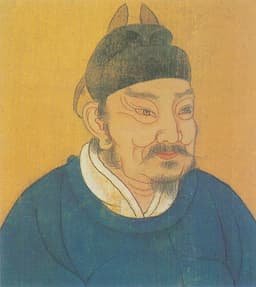
Guo Wei
Emperor · Medieval
57.5Total
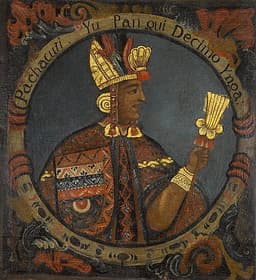
Pachacuti
Emperor · Medieval
69.4Total
Basic Information
Born
904
1418
Died
954
1472
Era
Medieval
Medieval
Nationality
China
Inca Empire
Occupation
Emperor
Emperor
Civilization
Eastern
Other
Score Comparison
Military (10%)
65.0
78.5
Political (20%)
65.0
58.1
Influence (20%)
56.4
65.0
Legacy (20%)
50.0
72.0
Leadership (15%)
53.2
78.0
Strategy (15%)
66.3
69.2
TOTAL
57.5
69.4
Guo Wei — Complete Timeline
951 AD
Founded Later Zhou dynastyPolitical Action◆ Major
Guo Wei, a general of Later Han, led a coup and declared himself emperor of Later Zhou. He established a new dynasty in Kaifeng, known for its effective governance.
Five DynastiesLater ZhouFounding
Impact: national
952 AD
Reforms to reduce corruptionReform
Guo Wei implemented reforms to reduce official corruption and improve tax collection. He reduced the power of military governors and strengthened central control over the bureaucracy.
Five DynastiesReformGovernance
Impact: nationalconstructive
Pachacuti — Complete Timeline
1438 AD
Conquest of the Chanka KingdomWar
Pachacuti led the Inca army to defeat the Chanka, a powerful rival, in a decisive battle near Cusco. This victory secured his position as Sapa Inca and initiated a period of rapid expansion, transforming the Inca from a small kingdom into a vast empire.
ConquestInca ExpansionChanka
Impact: regional
1440 AD
Reconstruction of CuscoCultural◆ Major
Pachacuti rebuilt Cusco as the imperial capital, designing it in the shape of a puma and constructing massive stone structures like Sacsayhuam
Urban PlanningArchitectureInca Empire
Impact: regionalconstructive
1450 AD
Initiation of Machu Picchu's ConstructionCultural◆ Major
Pachacuti ordered the construction of Machu Picchu, a royal estate and ceremonial site high in the Andes. The complex featured sophisticated dry-stone masonry and terraced agriculture, serving as a symbol of Inca engineering and a retreat for the emperor.
ArchitectureRoyal EstateInca Engineering
Impact: regionalconstructive
Expert Analysis
Pachacuti vs Guo Wei
# Two Founders, Two Worlds: The Emperor Who Built Mountains and the Emperor Who Tore Down Walls
On a high Andean ridge in the year 1450, a man who had never seen a wheel or a horse ordered his laborers to begin carving a mountain into a city. Half a world away, in 951, another man who had risen from the blood-soaked chaos of a collapsing dynasty ordered the execution of corrupt officials who had grown fat on peasant misery. One would become the architect of the largest empire in the Americas; the other would build a brief but brilliant dynasty in China. Their paths never crossed, yet Pachacuti Inca Yupanqui and Guo Wei faced a common challenge: how to forge order from chaos. The differences in their answers reveal everything about the worlds they inhabited.
Origins
Pachacuti was born in 1418 into a world of high-altitude warfare and sacred geography. The Inca were then a modest kingdom in the Cusco Valley, surrounded by hostile neighbors. His father, the Sapa Inca Viracocha, ruled over a people who had yet to dream of empire. Young Yupanqui—the name Pachacuti, meaning "earth-shaker," came later—grew up listening to stories of the sun god Inti and learning the arts of war in a landscape where every mountain peak was a god and every river a living spirit.
Guo Wei was born in 904 into the dying gasp of the Tang Dynasty, one of China's golden ages now reduced to ash. The Five Dynasties and Ten Kingdoms period had turned northern China into a slaughterhouse of rival warlords. Guo Wei's father was a minor official murdered when the boy was still young. By the time he was a teenager, Guo Wei had learned that in this world, loyalty was a currency that bought nothing, and a sword was the only law. He became a soldier, then a general, then a survivor—rising through the ranks of a dozen short-lived regimes.
Rise to Power
In 1438, the Chanka Kingdom attacked Cusco with overwhelming force. The Inca emperor Viracocha fled the capital with his chosen heir, abandoning the city to its fate. But his younger son, Yupanqui, refused to run. Gathering what warriors he could, he led a desperate defense of Cusco. The battle was decisive: the Chanka were routed, their king killed, and the young prince emerged as the savior of his people. His father abdicated in shame, and Yupanqui took the throne as Pachacuti, the earth-shaker. The turning point was not just military—it was spiritual. Pachacuti had proven that he was favored by the gods, and that the Inca were no longer a minor kingdom.
Guo Wei's rise followed a different logic. In 947, the Khitan-ruled Liao Dynasty invaded northern China, and the Later Jin emperor died in chaos. Guo Wei, then a general serving the Later Han, helped install a new emperor. But the emperor grew paranoid, executing generals and their families. In 950, the emperor ordered Guo Wei's execution. Learning of the plot, Guo Wei marched on the capital at Kaifeng. The emperor was killed by his own officers. In 951, Guo Wei declared himself emperor of the Later Zhou. Unlike Pachacuti's divine mandate, Guo Wei's legitimacy came from the sword—and from exhaustion. China had seen so many emperors come and go that the people barely cared who sat on the throne, as long as he brought peace.
Leadership & Governance
Pachacuti ruled as a living god. He believed he was the son of the sun, and his subjects believed it too. This gave him extraordinary power to reshape society. He rebuilt Cusco in the shape of a puma, a sacred animal, with massive stone walls fitted so precisely that a knife blade could not slide between them. He initiated the construction of Machu Picchu around 1450, a royal estate that was also a religious sanctuary, perched on a ridge between two peaks. His military strategy was equally divine: he conquered not just to extract tribute, but to incorporate peoples into the Inca system. Conquered chiefs were brought to Cusco to learn Quechua and worship Inti; their children were raised as Inca nobles. The empire grew not by destroying cultures, but by absorbing them into a single cosmic order.
Guo Wei governed as a pragmatist. He had seen too many dynasties fall to believe in divine right. His reforms were aimed at one thing: stability. He reduced the power of military governors who had turned provinces into private fiefdoms. He cracked down on corruption, executing officials who had stolen from the treasury. He lowered taxes on peasants and ordered land redistributed from monasteries to farmers. His political score of 79.4 reflects a ruler who understood that in a shattered world, the only way to build trust was to deliver justice. He had no interest in building palaces or temples. He wanted to build a functioning state.
Triumph & Tragedy
Pachacuti's greatest triumph was the transformation of a valley kingdom into an empire stretching from Colombia to Chile. He conquered the Lake Titicaca region, the northern highlands, and the coastal valleys. His military score of 66.8, while not the highest, understates his genius: he did not just win battles; he won peace. The tragedy came later, after his death in 1472, when his successors pushed the empire too far. The Spanish would arrive in 1532, and the Inca state—so carefully built on divine authority—would shatter because it could not adapt to a world where the gods did not speak Spanish.
Guo Wei's triumph was more modest but perhaps more profound: he gave northern China five years of peace. He defeated the Liao invasions, reformed the bureaucracy, and began the economic recovery that would allow his successors to reunify China. His tragedy was his timing. He died in 954, after only three years as emperor, at the age of fifty. His adopted son Chai Rong succeeded him and continued the reforms, but Chai Rong died young too. The Later Zhou lasted only nine years before being overthrown by a general who founded the Song Dynasty. Guo Wei built a bridge, but he never crossed it.
Character & Destiny
Pachacuti was a visionary who saw the world as clay to be shaped. His leadership score of 84.5 speaks to a man who inspired absolute loyalty because he seemed to embody the divine. He was ruthless when necessary—he executed rival nobles—but his cruelty was always in service of a larger order. He believed he was destined to unify the world, and he nearly succeeded.
Guo Wei was a survivor who saw the world as a machine to be fixed. His political score of 79.4 reflects a ruler who understood that power was not about glory but about competence. He was merciful by the standards of his time—he abolished the practice of executing the families of defeated enemies—but he was also a realist. He knew that in China, dynasties rose and fell like the seasons, and the best he could do was plant seeds for a better harvest.
Legacy
Pachacuti is remembered as the greatest Inca emperor, the man who built Machu Picchu and reshaped a continent. His influence score of 77.6 reflects not just his conquests but his ideas: the Inca system of roads, storehouses, and collective labor survived long after the empire fell. Today, millions of tourists walk through his stone cities, and the Quechua language he spread still echoes in the Andes.
Guo Wei is remembered, if at all, as a footnote in Chinese history—the founder of a dynasty that barely lasted a decade. But his legacy is immense. The Song Dynasty, which followed the Later Zhou, inherited his reforms: a centralized bureaucracy, a professional army, and a tax system that encouraged commerce. China's golden age of the Song was built on foundations Guo Wei laid. His legacy score of 67.9 understates his impact because he is measured by what he built, not by what he made possible.
Conclusion
Standing at Machu Picchu, looking at stones cut so precisely that they have survived five centuries of earthquakes, one can feel the weight of Pachacuti's ambition. He believed he was building an eternal order. Standing in Kaifeng, where nothing remains of Guo Wei's palace but dust, one feels the weight of impermanence. Both men faced the same challenge: how to build something lasting in a world of chaos. Pachacuti built with stone and faith, and his monuments still stand. Guo Wei built with laws and reforms, and his monuments vanished—but the civilization he helped save endured for centuries. Perhaps the real measure of a founder is not how long his own creation lasts, but how long the world remembers what he made possible.
Rankings
🥇
PachacutiLeader
Mil: 78.5Pol: 58.1Inf: 65.0
69.4
🥈
Guo Wei
Mil: 65.0Pol: 65.0Inf: 56.4
57.5
+11.9 behind
How This Comparison Works
Algorithm
Each figure is scored on 6 dimensions (0—100 scale) based on structured historical data: Military (10%), Political (20%), Influence (20%), Legacy (20%), Leadership (15%), Strategy (15%). The weighted total produces the final ranking.
Data Sources
Scores are computed from structured sub-indicators in the database. Scale factors adjust for era (Ancient ×0.85, Modern ×1.0) and civilization size (Eastern ×1.05, Other ×0.80) to account for differences in population and military scale.
Maximum 3 Figures
Comparisons are limited to 2—3 figures to ensure readability and statistical meaningfulness.
Error Margins
±5 points per dimension — Sub-scores are derived from historical records with inherent uncertainty. Two figures within 5 points on a dimension should be considered roughly equivalent in that area.
Total Score Accuracy
±3 points overall — The weighted combination of 6 dimensions produces a total score with approximately ±3 points of uncertainty. Differences of less than 3 points are not statistically significant— the figures are effectively tied.
Known Limitations
- Historical records are incomplete and uneven across civilizations
- Figures from oral-tradition societies may be underrepresented
- Occupation labels can misclassify multi-role figures
- Scores measure capability and impact, not moral character
- Quantitative scoring is a comparison tool, not absolute truth
Capability Radar
Military (10%) — Battles & Warfare
Battles
65
85
Win Rate
70
90
Expansion
60
90
Political (20%) — Governance & Reform
Reform
78
92
Diplomacy
70
75
Economy
72
80
Influence (20%) — Cultural & Global Reach
Cultural
40
85
Global
30
65
Legacy (20%) — Historical Impact
Historical
55
80
Longevity
45
70
Leadership (15%) — Power & Stability
Tenure
55
85
Stability
65
82
Strategy (15%) — Tactics & Innovation
Strategy
72
88
Tactics
68
80
Reform
75
85
Similar Comparisons
Comments & Discussion
MOUNTAIN CARVER6/16/2026
Pachacuti literally moved mountains while Guo Wei just executed a few corrupt officials. You're comparing the man who conceptualized terraced agriculture feeding 10 million people against a general who managed to hold power for three whole years. Pachacuti transformed an entire civilization's relationship with their landscape—that's world-historical. Guo Wei was a competent administrator in a chaotic period. Respect the scope, people.
INCASCEPTIC6/16/2026
Let's be real—Pachacuti gets romanticized because nobody actually understands quipu records and Spanish chroniclers wrote most of what we "know." The "Earth-Shaker" title? Self-promotion. Meanwhile Guo Wei literally abolished tax farming and executed his own corrupt cousin to prove a point. That's actual governance, not mythmaking. Peru's tourism board loves Pachacuti; Chinese historiography barely mentions Guo Wei. Hmm, wonder why.
CLASSICS CHAOS6/16/2026
帕查库蒂修马丘比丘用了二十年,郭威改革后周只用了三年。一个在万米高空建石头城,一个在废墟上重组官僚体系。帕查库蒂的工程是宗教行为,郭威的整顿是政治本能。可惜郭威早死四年,否则五代史可能要重写。帕查库蒂至少活到了七十二,多出来的时间够再建一个印加。
FOUNDERS DEBATE6/16/2026
帕查库蒂的帝国靠信使奔跑传递命令,郭威的王朝靠科举选拔治理人才。一个是山川崇拜的领袖,一个是乱世求存的务实者。帕查库蒂建造了太阳神庙,郭威拆除了苛捐杂税。两人都是废墟上的建设者,但一个从零到一塑造文明基因,一个从一到零清理政治毒素。视角不同,价值迥异。
HISTORY TROLL6/16/2026
Pachacuti: "Let's build a city that can only be seen from above and make everyone carry stones up a mountain!" Guo Wei: "Let's punish corrupt officials and maybe not let my dynasty collapse in a decade." One created an architectural wonder that still baffles engineers, the other created... three years of stable governance. I know which legacy ages better. Sorry not sorry, Zhou loyalists.