Loading...
Al-Mustansir vs Emperor Taizu of Song
Emperor Taizu of Song leads by 16.3 pts · 2 figures compared
…
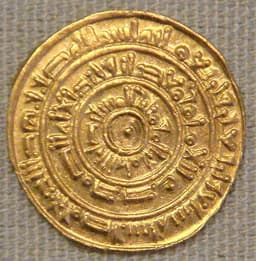
Al-Mustansir
Emperor · Medieval
55.6Total
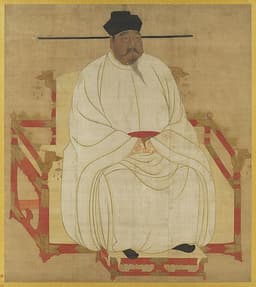
Emperor Taizu of Song
Emperor · Medieval
71.9Total
Basic Information
Born
1192
927
Died
1242
976
Era
Medieval
Medieval
Nationality
Abbasid Caliphate
China
Occupation
Emperor
Emperor
Civilization
Middle Eastern
Eastern
Score Comparison
Military (10%)
20.0
80.0
Political (20%)
68.0
78.0
Influence (20%)
55.0
68.0
Legacy (20%)
58.0
65.0
Leadership (15%)
71.0
78.0
Strategy (15%)
45.0
72.0
TOTAL
55.6
71.9
Al-Mustansir — Complete Timeline
1227 AD
Foundation of the Mustansiriya MadrasaCultural◆ Major
Al-Mustansir established the Mustansiriya Madrasa in Baghdad, a major educational institution that taught Islamic law, medicine, mathematics, and literature. It became one of the most prominent centers of learning in the medieval Islamic world, operating for centuries.
Impact: regionalconstructive
Emperor Taizu of Song — Complete Timeline
960 AD
Chenqiao MutinyPolitical Action
Zhao Kuangyin, a general of the Later Zhou dynasty, was proclaimed emperor by his troops at Chenqiao. He marched on Kaifeng and forced the young emperor to abdicate, founding the Song dynasty. This coup established a new ruling house without major bloodshed.
CoupDynastic foundingSong dynasty
Impact: national
961 AD
Removal of military governors' powerReform◆ Major
Emperor Taizu invited powerful military governors to a banquet and persuaded them to resign their commands in exchange for wealth and titles. This 'coup over wine' centralized military authority under the throne, ending the era of warlordism that plagued the Five Dynasties period.
Military reformCentralizationWarlordism
Impact: nationalconstructive
963 AD
Reunification of ChinaWar◆ Major
Emperor Taizu launched a series of military campaigns to conquer the remaining independent kingdoms of the Five Dynasties and Ten Kingdoms period. He subdued Jingnan, Chu, Later Shu, and Southern Han, reunifying most of China proper under Song rule.
ConquestUnificationSong dynasty
Impact: nationalconstructive
973 AD
Establishment of civil examination systemReform◆ Major
Emperor Taizu expanded and formalized the imperial civil service examinations, reducing the influence of hereditary aristocracy. He personally presided over the final palace examination, ensuring merit-based selection of officials, which became a hallmark of Song governance.
Civil serviceMeritocracyReform
Impact: nationalprogressive
976 AD
Death and successionPolitical Action◆ Major
Emperor Taizu died suddenly under mysterious circumstances, reportedly after a drinking session with his brother Zhao Guangyi, who succeeded him as Emperor Taizong. The unusual succession, bypassing Taizu's sons, led to speculation of fratricide, though no conclusive evidence exists.
SuccessionMysterySong dynasty
Impact: nationaltragic
Expert Analysis
Al-Mustansir vs Emperor Taizu of Song
### The Emperor and the Caliph: Two Paths to Power, Two Legacies for the Ages
History rarely offers a cleaner contrast than the one between Zhao Kuangyin, the Chinese general who became Emperor Taizu of Song in 960, and Al-Mustansir, the Abbasid caliph who ruled from Baghdad from 1226 to 1242. One seized a throne through a midnight mutiny, then spent his reign disarming his own generals; the other inherited a fading empire and poured his energy into a single, magnificent school. Both men sought to secure their dynasties, yet their methods and outcomes could not have been more different. The question is not merely *what* they did, but *why*—and what drove them to such divergent ends.
### Origins: The Weight of Chaos, the Shadow of Glory
Zhao Kuangyin was born in 927 into a world of fractured kingdoms and constant war. The Five Dynasties and Ten Kingdoms period had turned China into a chessboard of warlords, where generals routinely overthrew emperors and loyalty was a luxury few could afford. Zhao grew up a soldier’s son, learning to ride and fight before he could read. His world was one of camps, campaigns, and coups—a brutal school where survival depended on cunning as much as strength.
Al-Mustansir, born in 1192, entered a very different world. The Abbasid Caliphate, once the heart of the Islamic Golden Age, had long since lost its political muscle. By the 13th century, caliphs in Baghdad were figureheads, overshadowed by the Seljuk Turks and the rising power of the Mongols. Al-Mustansir inherited not an empire of conquest, but a city of scholars and a title that carried spiritual weight but little military might. His challenge was not to unify a broken land, but to preserve a fading legacy.
### Rise to Power: A Coup in the Night, a Throne by Blood
Zhao’s rise was the stuff of legend—and betrayal. In 960, as a general of the Later Zhou dynasty, he was ordered north to repel an invasion. At Chenqiao, his troops, weary of a child emperor and hungry for a strong leader, draped a yellow imperial robe over his shoulders and proclaimed him emperor. Zhao accepted, but with a condition: there would be no slaughter in the capital. He marched on Kaifeng, and the young emperor abdicated without a fight. This “Chenqiao Mutiny” was a masterstroke—a coup that looked like destiny.
Al-Mustansir’s path was quieter. He became caliph in 1226 upon the death of his father, Al-Zahir. There was no mutiny, no dramatic seizure of power. He was the chosen heir, and his authority, such as it was, came from lineage, not arms. Yet his inheritance was precarious: the Abbasid state was weak, its treasury thin, and the Mongol storm was gathering on the horizon. He did not need to conquer; he needed to endure.
### Leadership & Governance: The Disarming of an Army, the Building of a School
Zhao Kuangyin’s greatest act of leadership came in 961, just a year after his coup. He invited the most powerful military governors of the realm to a banquet. As they drank, he spoke of his sleepless nights, fearing that one day their own troops might robe them in yellow. The message was clear: resign your commands, accept wealth and titles, and live in peace. They did. In a single evening, Zhao dismantled the warlord system that had plagued China for decades. He centralized military power under the throne, replaced generals with civil officials, and made the army loyal to the state, not to any individual.
Al-Mustansir could not disarm anyone—he had no army to speak of. Instead, he turned to culture. In 1227, he founded the Mustansiriya Madrasa in Baghdad, a vast institution that taught law, medicine, mathematics, and theology. It was the Harvard of its age, a beacon of learning in a city that had long been the intellectual capital of the Islamic world. The caliph personally oversaw its construction and curriculum, ensuring that it would outlast him. He understood that in an era of decline, the only true power was knowledge.
### Triumph & Tragedy: The Unifier and the Last Scholar
Zhao’s triumph was the reunification of China. Between 963 and 976, he launched campaigns that swallowed the kingdoms of the south—Shu, Nanping, Later Shu, and others—until the land was whole again. He did not fight like a conqueror, but like a surgeon, preferring diplomacy and bribery to bloodshed. His tragedy came in 976, when he died suddenly after a night of drinking with his brother, Zhao Guangyi. Rumors of poisoning and fratricide have never fully faded. The man who had so carefully controlled his generals could not control his own family.
Al-Mustansir’s triumph was the madrasa itself. For centuries, it would produce scholars, judges, and administrators who shaped the Islamic world. His tragedy was that he could not see the storm coming. In 1242, when he died, the Mongols were already at the gates. Sixteen years later, Baghdad would fall, the caliphate would be extinguished, and the Mustansiriya Madrasa would be sacked. His legacy was a library in a world about to burn.
### Character & Destiny: The Cautious Strategist and the Quiet Builder
Zhao was a man of immense self-control and strategic vision. He knew that power, once seized, had to be secured not by force, but by institutions. His decision to elevate civil officials over military men shaped the Song Dynasty for three centuries, creating a culture of bureaucracy and scholarship that valued peace over war. Yet his caution also limited him. He never fully conquered the northern Liao dynasty, leaving a wound that would fester.
Al-Mustansir was a builder, not a warrior. His character was that of a patron, a man who believed that civilization was measured by its libraries, not its armies. He was out of step with his time—a scholar-king in an age of horsemen. His destiny was to be remembered not for what he conquered, but for what he created.
### Legacy: The Song Dynasty and the Lost House of Wisdom
Emperor Taizu of Song left behind a dynasty that would last until 1279, a golden age of art, commerce, and technology. His reforms made China’s government more meritocratic, its army more controlled, and its culture more refined. He is remembered as a founder, a unifier, and a man who understood that the greatest threat to a ruler is not the enemy outside, but the ambition within.
Al-Mustansir left behind a school. The Mustansiriya Madrasa survived the Mongol sack, rebuilt and repurposed, and stands today in Baghdad—a testament to a caliph who chose knowledge over power. He is remembered as a patron, a scholar, and a man who, in the twilight of his dynasty, built a light that would not be easily extinguished.
### Conclusion
Both men faced the same fundamental question: how to make power last. Zhao answered by disarming the sword; Al-Mustansir by sharpening the pen. One unified a shattered land; the other preserved a dying flame. Their stories remind us that leadership is not a single path, but a choice shaped by circumstance, character, and the quiet weight of history. In the end, the general and the caliph both built something that outlasted them—one an empire, the other an idea.
Rankings
🥇
Emperor Taizu of SongLeader
Mil: 80.0Pol: 78.0Inf: 68.0
71.9
🥈
Al-Mustansir
Mil: 20.0Pol: 68.0Inf: 55.0
55.6
+16.3 behind
How This Comparison Works
Algorithm
Each figure is scored on 6 dimensions (0—100 scale) based on structured historical data: Military (10%), Political (20%), Influence (20%), Legacy (20%), Leadership (15%), Strategy (15%). The weighted total produces the final ranking.
Data Sources
Scores are computed from structured sub-indicators in the database. Scale factors adjust for era (Ancient ×0.85, Modern ×1.0) and civilization size (Eastern ×1.05, Other ×0.80) to account for differences in population and military scale.
Maximum 3 Figures
Comparisons are limited to 2—3 figures to ensure readability and statistical meaningfulness.
Error Margins
±5 points per dimension — Sub-scores are derived from historical records with inherent uncertainty. Two figures within 5 points on a dimension should be considered roughly equivalent in that area.
Total Score Accuracy
±3 points overall — The weighted combination of 6 dimensions produces a total score with approximately ±3 points of uncertainty. Differences of less than 3 points are not statistically significant— the figures are effectively tied.
Known Limitations
- Historical records are incomplete and uneven across civilizations
- Figures from oral-tradition societies may be underrepresented
- Occupation labels can misclassify multi-role figures
- Scores measure capability and impact, not moral character
- Quantitative scoring is a comparison tool, not absolute truth
Capability Radar
Military (10%) — Battles & Warfare
Battles
5
75
Win Rate
5
80
Expansion
5
75
Political (20%) — Governance & Reform
Reform
70
95
Diplomacy
40
80
Economy
50
85
Influence (20%) — Cultural & Global Reach
Cultural
70
75
Global
50
70
Legacy (20%) — Historical Impact
Historical
65
85
Longevity
60
80
Leadership (15%) — Power & Stability
Tenure
60
70
Stability
30
90
Strategy (15%) — Tactics & Innovation
Strategy
5
85
Tactics
5
70
Reform
5
95
Similar Comparisons
Comments & Discussion
Barefoot General6/16/2026
Taizu wasn't a visionary emperor; he was a paranoid military dictator who disarmed China for centuries. His "cup of poisoned wine" trick disempowered his best commanders, leaving the Song perpetually weak against northern invaders. The Liao and Jin laughed all the way to the tribute table. Al-Mustansir at least built something permanent—the Mustansiriyya. Taizu just cashed out his loyalty chips.
沙漠学者6/16/2026
Al-Mustansir花大钱修了穆斯坦绥里耶书院,结果蒙古人一来,书卷当了柴火,知识分子四散逃命。文明不是一座房子,而是能扛住刀子的军队。赵匡胤哪怕武装再集中,至少宋朝活了三百多年,政权不倒,文化繁荣,比那个纸上富贵、铁蹄成灰的巴格达强太多了。我选实用派,不选浪漫废物。
Chariot of Iron6/16/2026
Stop romanticizing a caliph who lost half his empire before breakfast. By 1242, Al-Mustansir's Baghdad couldn't even hold Basra without bribes. Taizu unified a shattered China under one rule in sixteen years—no small feat when previous dynasties lasted eight. The Song military reforms may have centralized power, but they also gave us the Song navy, gunpowder, and the compass. Abbasids gave us... a pretty madrasa that got sacked.
数据猎人6/16/2026
别光看谁“慷慨”或“腹黑”。Al-Mustansir在位16年,留下的实体建设只有一座书院和一堆宗教法令。赵匡胤16年打下七十州,平均两个月拿一个省。建立了一套官僚体系,使人口从约3000万稳定攀升至超1亿。数字不说谎:一套管用的架构远比砖瓦重。老赵在战术和制度层面是数据上的胜利者,Al-Mustansir被高估了。
Crossbow Scholar6/16/2026
你们这些“铁血派”该看仔细了:赵匡胤杯酒释兵权,改革科举、设立三衙、废藩镇,是为“文治”奠基。这才让宋朝出现了活字印刷、交子、苏东坡。Al-Mustansir只有一个孤零零的书院挡不住旭烈兀。真文明不是一间教室,而是一个能滋养千年的制度。老赵才是真正有远见的校长,Al-Mustansir只是个好心的书店老板。