Loading...
Emperor Taizu of Song vs Pachacuti
Emperor Taizu of Song leads by 2.5 pts · 2 figures compared
…
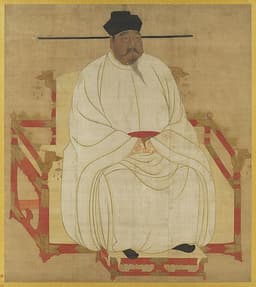
Emperor Taizu of Song
Emperor · Medieval
71.9Total
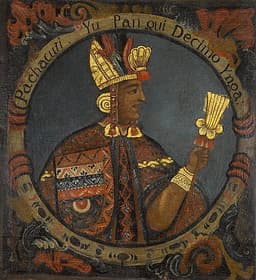
Pachacuti
Emperor · Medieval
69.4Total
Basic Information
Born
927
1418
Died
976
1472
Era
Medieval
Medieval
Nationality
China
Inca Empire
Occupation
Emperor
Emperor
Civilization
Eastern
Other
Score Comparison
Military (10%)
80.0
78.5
Political (20%)
78.0
58.1
Influence (20%)
68.0
65.0
Legacy (20%)
65.0
72.0
Leadership (15%)
78.0
78.0
Strategy (15%)
72.0
69.2
TOTAL
71.9
69.4
Emperor Taizu of Song — Complete Timeline
960 AD
Chenqiao MutinyPolitical Action
Zhao Kuangyin, a general of the Later Zhou dynasty, was proclaimed emperor by his troops at Chenqiao. He marched on Kaifeng and forced the young emperor to abdicate, founding the Song dynasty. This coup established a new ruling house without major bloodshed.
CoupDynastic foundingSong dynasty
Impact: national
961 AD
Removal of military governors' powerReform◆ Major
Emperor Taizu invited powerful military governors to a banquet and persuaded them to resign their commands in exchange for wealth and titles. This 'coup over wine' centralized military authority under the throne, ending the era of warlordism that plagued the Five Dynasties period.
Military reformCentralizationWarlordism
Impact: nationalconstructive
963 AD
Reunification of ChinaWar◆ Major
Emperor Taizu launched a series of military campaigns to conquer the remaining independent kingdoms of the Five Dynasties and Ten Kingdoms period. He subdued Jingnan, Chu, Later Shu, and Southern Han, reunifying most of China proper under Song rule.
ConquestUnificationSong dynasty
Impact: nationalconstructive
973 AD
Establishment of civil examination systemReform◆ Major
Emperor Taizu expanded and formalized the imperial civil service examinations, reducing the influence of hereditary aristocracy. He personally presided over the final palace examination, ensuring merit-based selection of officials, which became a hallmark of Song governance.
Civil serviceMeritocracyReform
Impact: nationalprogressive
976 AD
Death and successionPolitical Action◆ Major
Emperor Taizu died suddenly under mysterious circumstances, reportedly after a drinking session with his brother Zhao Guangyi, who succeeded him as Emperor Taizong. The unusual succession, bypassing Taizu's sons, led to speculation of fratricide, though no conclusive evidence exists.
SuccessionMysterySong dynasty
Impact: nationaltragic
Pachacuti — Complete Timeline
1438 AD
Conquest of the Chanka KingdomWar
Pachacuti led the Inca army to defeat the Chanka, a powerful rival, in a decisive battle near Cusco. This victory secured his position as Sapa Inca and initiated a period of rapid expansion, transforming the Inca from a small kingdom into a vast empire.
ConquestInca ExpansionChanka
Impact: regional
1440 AD
Reconstruction of CuscoCultural◆ Major
Pachacuti rebuilt Cusco as the imperial capital, designing it in the shape of a puma and constructing massive stone structures like Sacsayhuam
Urban PlanningArchitectureInca Empire
Impact: regionalconstructive
1450 AD
Initiation of Machu Picchu's ConstructionCultural◆ Major
Pachacuti ordered the construction of Machu Picchu, a royal estate and ceremonial site high in the Andes. The complex featured sophisticated dry-stone masonry and terraced agriculture, serving as a symbol of Inca engineering and a retreat for the emperor.
ArchitectureRoyal EstateInca Engineering
Impact: regionalconstructive
Expert Analysis
Pachacuti vs Emperor Taizu of Song
### The Emperor and the Sapa Inca: Two Paths to Power in a Medieval World
On a late winter night in 960, a Chinese general named Zhao Kuangyin was roused from his sleep by his own soldiers, who draped a yellow imperial robe over his shoulders. He had not asked for the throne, he later claimed, but the army had made its choice. Half a world away, in the high Andes of the 1430s, a young prince named Cusi Yupanqui watched his father and the entire Inca army flee before the Chanka invaders. He refused to retreat. Instead, he rallied a handful of warriors, charged into battle, and emerged not merely victorious, but as the man who would become Pachacuti—“Earth-Shaker.” Two founders of empires, two moments of destiny. Yet the empires they built could not have been more different. Why did the Song Dynasty, founded by a reluctant usurper, become a golden age of civil bureaucracy and cultural refinement, while the Inca Empire, born of a desperate defense, became a machine of conquest and state control? The answer lies not in their brilliance, but in the worlds that shaped them.
### Origins
Zhao Kuangyin was born in 927, a child of chaos. China’s Tang Dynasty had collapsed two decades earlier, and the land had splintered into a dozen warring kingdoms. His father was a mid-level military officer in the Later Zhou, one of five ephemeral dynasties that rose and fell in the north. Zhao grew up in barracks, learning the sword and the saddle, watching generals become emperors and then die by the sword themselves. The lesson was clear: power was a prize seized by the strongest, but it was never secure.
Pachacuti, born in 1418, grew up in a world that was also small and uncertain, but for different reasons. The Inca were a minor tribe in the Cusco Valley, surrounded by more powerful neighbors like the Chanka. His father, Viracocha Inca, was a cautious ruler who preferred diplomacy to war. Pachacuti was not the heir; his older brother Urco was groomed for the throne. The young prince was trained in the arts of war and ritual, but he was an outsider in his own court, a man with something to prove.
### Rise to Power
The Chenqiao Mutiny of 960 was a masterpiece of theater. Zhao Kuangyin, then a general of the Later Zhou, had been sent north to repel a Khitan invasion. Before he left, rumors spread through the capital that “the son of heaven” was about to change. At Chenqiao, his officers—many of them his sworn brothers—staged a mutiny, draping him in the yellow robe. Zhao wept, protested, then accepted. He marched back to Kaifeng, where the child emperor abdicated without a fight. Zhao never claimed to have planned it; he was a man carried by fate, or at least by his own carefully cultivated reputation.
Pachacuti’s rise was the opposite: a raw, desperate gamble. In 1438, the Chanka army, 40,000 strong, marched on Cusco. Viracocha Inca and his chosen heir, Urco, fled to a fortress. The city was doomed. But the young prince Cusi refused to flee. He called the remaining warriors to him, said a prayer to the sun god Inti, and led a suicidal charge. In the battle that followed, he killed the Chanka general with his own hands, and the enemy broke. The victory was so total that the Incas believed the very stones of the battlefield had turned to warriors. Cusi was proclaimed Sapa Inca and took the name Pachacuti, meaning “he who remakes the world.”
### Leadership & Governance
Emperor Taizu of Song ruled with a velvet glove over an iron fist. His first great act was the “Removal of Military Governors’ Power” in 961. At a banquet, he plied his most powerful generals with wine, then spoke to them as friends: “The man who wants the highest office is only human. Why not trade your commands for wealth and ease?” They understood. They resigned. Taizu then divided the army into units that reported directly to the emperor, ensuring no general could ever again stage a mutiny. But his genius was in creating a counterbalance: he expanded the civil examination system in 973, opening government to scholars rather than soldiers. For the first time, a man could rise by merit, not birth or violence. The Song Dynasty would become a paradise of poets, painters, and philosophers.
Pachacuti ruled differently. He did not disarm his warriors; he unleashed them. After 1438, he launched a series of lightning campaigns against the kingdoms of the Andes, conquering them not just by force but by a system of state terror and generosity. He would offer surrender, and if accepted, the conquered elite were brought to Cusco, given honors, and their children educated as Incas. If they resisted, their villages were destroyed, and their people resettled in distant provinces. He rebuilt Cusco in the shape of a puma, with stone walls so precisely cut that a knife blade could not fit between them. And around 1450, he ordered the construction of Machu Picchu, a mountain palace for the royal family, hidden from the world. His rule was absolute, personal, and divine—he was the Son of the Sun.
### Triumph & Tragedy
Taizu’s greatest triumph was the reunification of China. Between 963 and 976, he conquered the southern kingdoms of Shu, Southern Han, and Southern Tang, bringing most of China under one rule for the first time in fifty years. He was a merciful conqueror: he took the kings captive, gave them posts, and let them live. His tragedy came in 976, when he died suddenly after a drinking session with his brother Zhao Guangyi. The official story was illness, but rumors whispered of poison. The brother succeeded him, and the mystery of Taizu’s death remains unsolved—a fitting end for a man who built a dynasty on shadows.
Pachacuti’s triumph was the creation of an empire that stretched from Ecuador to Chile. He conquered the Chimú, the largest kingdom on the coast, by cutting off their water supply. He built roads, storehouses, and a system of knotted strings called quipus to administer his realm. But his tragedy was that he could not stop. He pushed his armies into the Amazon, where the jungle swallowed them. He grew old, paranoid, and fought with his own sons. He died in 1472, leaving an empire that was too vast, too rigid, and too dependent on his will to survive without him.
### Character & Destiny
Taizu was a man of restraint. He once said, “I would rather have no territory than harm the people.” He was cautious, calculating, and deeply aware of the fragility of power. He chose to rule through scholars because he feared the sword that had raised him. His personality created a dynasty that valued stability over expansion, culture over conquest.
Pachacuti was a man of fire. He believed he was chosen by the sun, and he acted like it. He was ruthless, visionary, and tireless. He built an empire on the belief that the Inca way was the only way. His personality created a state that was efficient, brutal, and brittle—a single crack would shatter it.
### Legacy
Emperor Taizu of Song is remembered as the founder of a dynasty that lasted three centuries, a golden age of Chinese civilization. His civil service exams became the model for China’s bureaucracy for a thousand years. Scholars praise him for ending the age of warlords and beginning the age of the literati. His legacy is paper and ink, poetry and porcelain.
Pachacuti is remembered as the father of the Inca Empire, a man who transformed a tribe into a superpower. His roads, his terraces, and his stone cities still stand in the Andes, monuments to his will. But his empire fell to 168 Spanish soldiers in 1532, less than sixty years after his death. His legacy is stone and blood, a warning that even the mightiest walls can crumble.
### Conclusion
Standing at the edge of Machu Picchu, watching the mist rise over the Urubamba River, you can feel the weight of Pachacuti’s ambition. And walking through the quiet halls of the Forbidden City, built centuries later by the Song’s successors, you can feel the weight of Taizu’s caution. Both men remade their worlds. But one built a dynasty on trust in men, the other on trust in stone. In the end, stone crumbles, and men are forgotten—but the Song Dynasty’s scholars wrote themselves into eternity, while the Inca’s builders left only ruins. Perhaps the deepest difference is this: Taizu built a system that could survive him, while Pachacuti built a monument to himself. History, as always, judges both.
Rankings
🥇
Emperor Taizu of SongLeader
Mil: 80.0Pol: 78.0Inf: 68.0
71.9
🥈
Pachacuti
Mil: 78.5Pol: 58.1Inf: 65.0
69.4
+2.5 behind
How This Comparison Works
Algorithm
Each figure is scored on 6 dimensions (0—100 scale) based on structured historical data: Military (10%), Political (20%), Influence (20%), Legacy (20%), Leadership (15%), Strategy (15%). The weighted total produces the final ranking.
Data Sources
Scores are computed from structured sub-indicators in the database. Scale factors adjust for era (Ancient ×0.85, Modern ×1.0) and civilization size (Eastern ×1.05, Other ×0.80) to account for differences in population and military scale.
Maximum 3 Figures
Comparisons are limited to 2—3 figures to ensure readability and statistical meaningfulness.
Error Margins
±5 points per dimension — Sub-scores are derived from historical records with inherent uncertainty. Two figures within 5 points on a dimension should be considered roughly equivalent in that area.
Total Score Accuracy
±3 points overall — The weighted combination of 6 dimensions produces a total score with approximately ±3 points of uncertainty. Differences of less than 3 points are not statistically significant— the figures are effectively tied.
Known Limitations
- Historical records are incomplete and uneven across civilizations
- Figures from oral-tradition societies may be underrepresented
- Occupation labels can misclassify multi-role figures
- Scores measure capability and impact, not moral character
- Quantitative scoring is a comparison tool, not absolute truth
Capability Radar
Military (10%) — Battles & Warfare
Battles
75
85
Win Rate
80
90
Expansion
75
90
Political (20%) — Governance & Reform
Reform
95
92
Diplomacy
80
75
Economy
85
80
Influence (20%) — Cultural & Global Reach
Cultural
75
85
Global
70
65
Legacy (20%) — Historical Impact
Historical
85
80
Longevity
80
70
Leadership (15%) — Power & Stability
Tenure
70
85
Stability
90
82
Strategy (15%) — Tactics & Innovation
Strategy
85
88
Tactics
70
80
Reform
95
85
Similar Comparisons
Comments & Discussion
PachacutiFanatic6/16/2026
The real question isn’t who was more effective—it’s who had more guts. Pachacuti turned a tribal rout into the foundations of Tawantinsuyu. Zhao Kuangyin was handed power in his sleep by mutineers. Sure, the Song bureaucracy was impressive, but the Inca built Machu Picchu without iron, wheels, or a written language. Pachacuti didn’t just take the throne—he earned it, soaked in Chanka blood. That’s empire-building.
数字侦探6/16/2026
数据不会骗人:宋朝人口峰值过1亿,GDP占全球四分之一,而印加帝国巅峰时人口才一千万左右,连个正规货币系统都没有。Pachacuti把黄金当墙纸,但赵匡胤用‘更戍法’让军队十年不乱。比征服者?看看谁统治的人多、谁留下的文明延续更久。印加被168个西班牙人干翻,宋朝撑了三百年——算算这笔账吧。
ClassicsChad6/16/2026
Comparing a Sapa Inca to a Chinese emperor is like comparing a llama to a dragon. Pachacuti’s mythos is pure pre-Columbian epic—he literally “shook the earth” and channeled the Sun god Inti. Zhao’s story is pragmatism: a general draped in yellow. Song culture gave us Neo-Confucian philosophy, movable type, and gunpowder. Inca gave us quipus and human sacrifice. I know which legacy I’d rather inherit.
地主老财6/16/2026
真有意思,说什么‘天降黄袍’——赵匡胤那叫装蒜。陈桥兵变玩得溜,还不是仗着手里十万禁军?Pachacuti至少是在战场上搏命反杀,打出来的政权根基更稳。可宋朝搞科举选官、建运河、推贸易,把文官体系刷到古代天花板。Pachacuti呢?修了条太阳大道,最后还是靠口传历史治国。一个是系统,一个是独裁——高下立判。
RevisionistRick6/16/2026
Hold on—everyone’s romanticizing Zhao as a reluctant founder? The guy was a career general from a military family and had already crushed rival warlords. His “reluctance” was theater. Meanwhile, Pachacuti’s story of single-handedly turning the tide against the Chanka is suspiciously heroic. No contemporary chronicles from the Andes survive, just Spanish accounts filtered through colonial bias. We’re essentially comparing two mythologies—one of a brilliant politician, one of a mythical warrior. T
史海沉钩6/16/2026
别把印加想象成原始部落——Pachacuti搞了mit‘a劳役制,六成粮食充国库,还能养活专职工匠和