Loading...
Al-Mustansir vs Emperor Go-Toba
Al-Mustansir leads by 14.7 pts · 2 figures compared
…
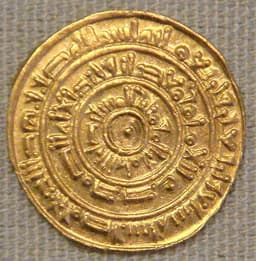
Al-Mustansir
Emperor · Medieval
55.6Total
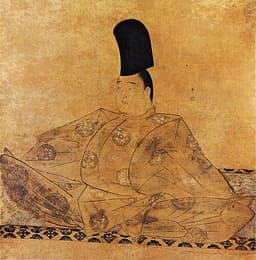
Emperor Go-Toba
Emperor · Medieval
40.9Total
Basic Information
Born
1192
1180
Died
1242
1239
Era
Medieval
Medieval
Nationality
Abbasid Caliphate
Japan
Occupation
Emperor
Emperor
Civilization
Middle Eastern
Eastern
Score Comparison
Military (10%)
20.0
21.2
Political (20%)
68.0
27.9
Influence (20%)
55.0
53.3
Legacy (20%)
58.0
46.7
Leadership (15%)
71.0
34.6
Strategy (15%)
45.0
43.7
TOTAL
55.6
40.9
Al-Mustansir — Complete Timeline
1227 AD
Foundation of the Mustansiriya MadrasaCultural◆ Major
Al-Mustansir established the Mustansiriya Madrasa in Baghdad, a major educational institution that taught Islamic law, medicine, mathematics, and literature. It became one of the most prominent centers of learning in the medieval Islamic world, operating for centuries.
Impact: regionalconstructive
Emperor Go-Toba — Complete Timeline
1200 AD
Patronage of poetry and the artsCultural◆ Major
Go-Toba was a noted poet and patron of waka poetry, sponsoring the compilation of the Shin Kokin Wakashu, an imperial anthology. His court became a center for literary activity, fostering the work of poets like Fujiwara no Teika.
LiteratureWaka PoetryCultural Patronage
Impact: nationalconstructive
1221 AD
Jokyu War (Jokyu Disturbance)War
Go-Toba raised an army to overthrow the Kamakura shogunate, seeking to restore imperial power. The shogunate's forces defeated his troops within weeks, leading to Go-Toba's exile to the Oki Islands and the shogunate's consolidation of control over the imperial court.
Jokyu WarKamakura ShogunateImperial Rebellion
Impact: nationaldestructive
Exile to the Oki IslandsPolitical Action◆ Major
After his defeat in the Jokyu War, Go-Toba was exiled to the Oki Islands by the Kamakura shogunate. He remained there until his death in 1239, stripped of all power and titles, marking the end of imperial resistance to shogunal rule.
ExileKamakura ShogunateImperial Decline
Impact: nationaltragic
Expert Analysis
Al-Mustansir vs Emperor Go-Toba
# The Scholar and the Rebel: Two Emperors Who Shaped Their Worlds
In the year 1221, two emperors faced radically different fates. In distant corners of the medieval world, one was building a university that would illuminate Baghdad for centuries, while the other was raising an army that would seal his own doom. Al-Mustansir of the Abbasid Caliphate and Emperor Go-Toba of Japan both inherited thrones, both possessed grand visions, yet their paths diverged so completely that they became symbols of two very different kinds of imperial ambition. One chose knowledge; the other chose war. One built an institution that outlasted his dynasty; the other ignited a rebellion that destroyed his reign. What drove these two rulers to such different outcomes?
Origins
Al-Mustansir was born in 1192 into a Baghdad that had long passed its golden age but still shimmered with the residue of greatness. The Abbasid Caliphate, once the unrivaled center of Islamic civilization, had been shattered by Mongol threats and internal decay. His father, al-Nasir, had spent decades trying to restore caliphal authority through diplomacy and religious legitimacy. Young al-Mustansir grew up in a world where the caliph’s power was more symbolic than real, a shadow of the empire that had once stretched from Spain to India.
Across the world, Emperor Go-Toba was born in 1180 into a Japan that had just witnessed the Genpei War, a brutal conflict that ended with the establishment of the Kamakura shogunate. The imperial court in Kyoto had become a ceremonial relic, its political power usurped by warrior clans. Go-Toba ascended the throne as a child, but by 1198 he had abdicated, only to rule from behind the scenes as a retired emperor—a common practice in medieval Japan that allowed former sovereigns to wield influence without the constraints of court ritual.
Rise to Power
Al-Mustansir became caliph in 1226, inheriting a position that required careful navigation between the crumbling remnants of Abbasid authority and the rising military powers that surrounded him. His rise was not dramatic but deliberate. He understood that the caliphate could no longer command armies or conquer territories; its strength lay in spiritual and cultural leadership.
Go-Toba’s path was far more restless. After his abdication, he spent two decades consolidating influence, patronizing poets, and building alliances with disaffected warrior families. He was a man of immense cultural refinement—a celebrated poet who personally supervised the compilation of the *Shin Kokin Wakashu*, one of Japan’s greatest imperial anthologies. But beneath the aesthetic surface burned a fierce ambition to restore the emperor’s political power. By 1221, he believed the moment had come.
Leadership & Governance
Al-Mustansir’s greatest act of leadership was the foundation of the Mustansiriya Madrasa in Baghdad in 1227. This was no ordinary school. It was a vast institution that taught not only Islamic law but also medicine, mathematics, astronomy, and literature. It housed a library of unparalleled richness and provided free education to students from across the Islamic world. Al-Mustansir personally oversaw its construction and endowment, ensuring that it would survive long after his death. His governance was quiet, patient, and focused on what could actually be achieved: the preservation and transmission of knowledge in an age of violence.
Go-Toba’s leadership was the opposite—bold, poetic, and ultimately catastrophic. In 1221, he issued a call to arms against the Kamakura shogunate, rallying samurai loyal to the throne. The Jōkyū War that followed was a disaster. The shogunate’s forces, led by the Hōjō regents, crushed the imperial army within weeks. Go-Toba’s miscalculation was not in his desire to restore imperial authority but in his profound underestimation of the military power that the shogunate commanded. He had spent years composing verses but not enough time studying the realities of warfare.
Triumph & Tragedy
Al-Mustansir’s triumph was the Mustansiriya Madrasa, which became a beacon of learning in the medieval world. It survived the Mongol sack of Baghdad in 1258, though much of the city was destroyed. The tragedy of his reign was that he could not halt the forces that would ultimately destroy his dynasty. He died in 1242, just sixteen years before the Mongols would extinguish the Abbasid Caliphate forever.
Go-Toba’s tragedy was immediate and personal. After his defeat, he was stripped of his title and exiled to the Oki Islands, a remote and windswept archipelago in the Sea of Japan. He spent the remaining eighteen years of his life in isolation, composing poetry that reflected on loss and regret. One of his most famous poems reads: “Though I am now a prisoner on this lonely shore, my heart still yearns for the capital I once ruled.” He died in 1239, a broken man but a haunting symbol of imperial resistance.
Character & Destiny
Al-Mustansir was a pragmatist who understood that power in his era meant influence, not conquest. He chose to build something that could endure—a school, not an army. His character was shaped by the long decline of the Abbasid Caliphate, which taught him that survival depended on adaptation. Go-Toba, by contrast, was a romantic idealist. He believed that the emperor’s sacred authority could still command the loyalty of warriors, that the old order could be restored through sheer will and cultural prestige. His character was forged in the elegant but illusory world of the Kyoto court, where poetry mattered more than politics.
Legacy
Al-Mustansir’s legacy is carved in stone and ink. The Mustansiriya Madrasa remained a center of learning for centuries, influencing educational institutions across the Islamic world. Today, it stands as a testament to what a ruler can achieve when he chooses to cultivate minds rather than conquer lands. His political score of 66.6 and legacy score of 68.5 reflect a leader who understood the quiet power of institutions.
Go-Toba’s legacy is more ambiguous. His rebellion failed, but it became a foundational myth for later emperors who sought to reclaim power. His poetry, collected in the *Shin Kokin Wakashu*, remains a masterpiece of Japanese literature. Yet his influence score of 72.7 and leadership score of 74.6 cannot hide the fact that his greatest act—the Jōkyū War—was a disaster that permanently weakened the imperial house.
Conclusion
These two emperors, born only twelve years apart, represent a fundamental choice that every ruler must face: whether to fight the current of history or to build something that can withstand it. Al-Mustansir accepted that his world was changing and chose to preserve what could be saved. Go-Toba refused to accept his diminished role and paid the price. In the end, the scholar-emperor’s madrasa outlived both the Mongols and the Abbasids, while the poet-emperor’s rebellion became a cautionary tale. Perhaps the most profound lesson is not about power at all, but about wisdom: knowing what kind of world you truly live in, and what kind of legacy is possible within it.
Rankings
🥇
Al-MustansirLeader
Mil: 20.0Pol: 68.0Inf: 55.0
55.6
🥈
Emperor Go-Toba
Mil: 21.2Pol: 27.9Inf: 53.3
40.9
+14.7 behind
How This Comparison Works
Algorithm
Each figure is scored on 6 dimensions (0—100 scale) based on structured historical data: Military (10%), Political (20%), Influence (20%), Legacy (20%), Leadership (15%), Strategy (15%). The weighted total produces the final ranking.
Data Sources
Scores are computed from structured sub-indicators in the database. Scale factors adjust for era (Ancient ×0.85, Modern ×1.0) and civilization size (Eastern ×1.05, Other ×0.80) to account for differences in population and military scale.
Maximum 3 Figures
Comparisons are limited to 2—3 figures to ensure readability and statistical meaningfulness.
Error Margins
±5 points per dimension — Sub-scores are derived from historical records with inherent uncertainty. Two figures within 5 points on a dimension should be considered roughly equivalent in that area.
Total Score Accuracy
±3 points overall — The weighted combination of 6 dimensions produces a total score with approximately ±3 points of uncertainty. Differences of less than 3 points are not statistically significant— the figures are effectively tied.
Known Limitations
- Historical records are incomplete and uneven across civilizations
- Figures from oral-tradition societies may be underrepresented
- Occupation labels can misclassify multi-role figures
- Scores measure capability and impact, not moral character
- Quantitative scoring is a comparison tool, not absolute truth
Capability Radar
Military (10%) — Battles & Warfare
Battles
5
15
Win Rate
5
10
Expansion
5
5
Political (20%) — Governance & Reform
Reform
70
15
Diplomacy
40
20
Economy
50
10
Influence (20%) — Cultural & Global Reach
Cultural
70
40
Global
50
20
Legacy (20%) — Historical Impact
Historical
65
45
Longevity
60
35
Leadership (15%) — Power & Stability
Tenure
60
30
Stability
30
10
Strategy (15%) — Tactics & Innovation
Strategy
5
25
Tactics
5
20
Reform
5
10
Similar Comparisons
Comments & Discussion
AL-MUSTANSIR FANBOI6/16/2026
Look, Go-Toba was throwing a tantrum with his little rebellion, while al-Mustansir actually built something that mattered. The Mustansiriyah Madrasa wasn't just some dusty library—it taught medicine, astronomy, and math alongside theology, centuries before European universities caught up. Go-Toba got himself exiled to Oki Island. One emperor left a legacy of knowledge; the other, a cautionary tale. Easy choice.
数据控6/16/2026
说Go-Toba是失败者?数据不会骗人:1221年他起兵时,动员了约10,000名武士,而幕府军起码有190,000人。这仗怎么打?Al-Mustansir建学校花了大概5年,但蒙古人1277年洗劫巴格达时,它关门了。Go-Toba至少造成了承久之乱,让皇室彻底失去军政实权。别美化失败,也别神化成功——两个都是屎坑里的棍子,没有赢家。
WEEABOO IN THE DARK6/16/2026
You guys are sleeping on Go-Toba. Yeah, he lost, but the Jōkyū War was pure poetry—a lone emperor, backed by samurai loyal to the old court, taking on the shogunate with nothing but grit. His exile poems are haunting, especially those about the moon over Oki. Al-Mustansir built a school? Cool. Go-Toba became the template for the tragic rebel emperor in Japanese lore. Legacy isn't always bricks.
文史硬核派6/16/2026
拿大学堂对抗蒙古铁骑?Al-Mustansir的粉饰太平真是自欺欺人。1258年旭烈兀屠城时,那些他培养的学者不过成了刀下亡魂。反观Go-Toba,他的失败反而催生了《神皇正统记》这类史书,塑造了日本中世纪皇权叙事。承久之乱后朝廷虽弱,但symbolic power反而被重新阐释。一个建了知识的棺材,一个点燃了故事的野火。哪个更值?
REVISIONIST SLAP6/16/2026
Al-Mustansir's madrasa is the "look what your dollar bought" of medieval Baghdad. Sure, it taught four Sunni schools of law—impressive for niche scholars. But his Caliphate was terminally weak; the Mongols ended it in six weeks. Go-Toba at least forced the Kamakura regime to consolidate, which ultimately preserved Japanese institutional continuity. Al-Mustansir built a library, Go-Toba built a paradox that shaped a nation's identity for centuries.