Loading...
Al-Mustansir vs Axayacatl
Axayacatl leads by 1.1 pts · 2 figures compared
…
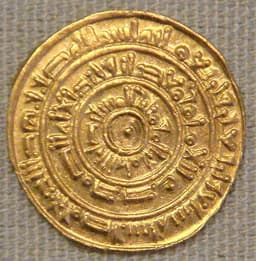
Al-Mustansir
Emperor · Medieval
55.6Total
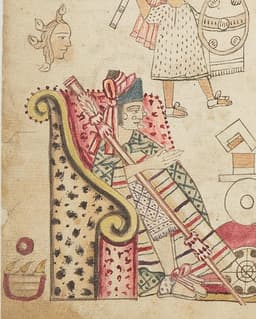
Axayacatl
Emperor · Medieval
56.7Total
Basic Information
Born
1192
1449
Died
1242
1481
Era
Medieval
Medieval
Nationality
Abbasid Caliphate
Aztec Empire
Occupation
Emperor
Emperor
Civilization
Middle Eastern
Western
Score Comparison
Military (10%)
20.0
70.0
Political (20%)
68.0
54.7
Influence (20%)
55.0
56.4
Legacy (20%)
58.0
47.5
Leadership (15%)
71.0
65.0
Strategy (15%)
45.0
57.5
TOTAL
55.6
56.7
Al-Mustansir — Complete Timeline
1227 AD
Foundation of the Mustansiriya MadrasaCultural◆ Major
Al-Mustansir established the Mustansiriya Madrasa in Baghdad, a major educational institution that taught Islamic law, medicine, mathematics, and literature. It became one of the most prominent centers of learning in the medieval Islamic world, operating for centuries.
Impact: regionalconstructive
Axayacatl — Complete Timeline
1469 AD
Coronation as Tlatoani of TenochtitlanPolitical Action◆ Major
Axayacatl succeeded his grandfather Moctezuma I as the sixth tlatoani of Tenochtitlan. His coronation campaign against the Matlatzinca was successful, capturing many prisoners for sacrifice and establishing his military credentials.
Impact: national
1473 AD
Conquest of TlatelolcoWar◆ Major
Axayacatl led Tenochtitlan forces against the neighboring city-state of Tlatelolco, which had rebelled against Aztec dominance. The war ended with the defeat of Tlatelolco and the death of its tlatoani Moquihuix, incorporating Tlatelolco into Tenochtitlan.
Impact: regionaldestructive
1478 AD
Campaign against the Tarascan EmpireWar◆ Major
Axayacatl led a large Aztec army into the Tarascan Empire (Pur
Impact: regionaldestructive
1481 AD
Construction of the Great Temple of TenochtitlanCultural◆ Major
Axayacatl oversaw the expansion of the Templo Mayor in Tenochtitlan, dedicating a new phase of construction. The temple was the religious center of the Aztec Empire, and this expansion included new sculptures and offerings.
Impact: nationalconstructive
Death of AxayacatlOther
Axayacatl died after a short illness, possibly from a disease or complications from wounds. His death led to the succession of his brother Tizoc, whose weak reign contrasted with Axayacatl's earlier successes.
Impact: national
Expert Analysis
Al-Mustansir vs Axayacatl
# The Scholar and the Conqueror: Two Visions of Power in a Divided World
In the year 1227, as the great library of the Mustansiriya Madrasa rose from the banks of the Tigris, a thousand miles away in the Valley of Mexico, a young prince named Axayacatl was learning to wield a macuahuitl, the obsidian-studded sword that would carve his name into the stone of Aztec history. One man built walls of books; the other built walls of skulls. Both called themselves emperors. Both ruled civilizations at the height of their power. Yet their paths diverged so sharply that they seem to belong to different species of ruler entirely. What explains the difference between a caliph who spent his reign founding a university and a tlatoani who spent his conquering a neighboring city? The answer lies not in their bloodlines, but in the worlds that shaped them.
Origins
Al-Mustansir was born in 1192 into the twilight of the Abbasid Caliphate, a dynasty that had once ruled from Spain to India but now controlled little more than Iraq. His father, al-Nasir, had spent decades trying to revive the caliphate's spiritual authority, maneuvering between rival sultans and crusaders. The young prince grew up in a world where the caliph's power was symbolic, not absolute—where a ruler's greatest weapon was not an army but a reputation for piety and learning. Baghdad, though diminished, remained the intellectual capital of the Islamic world, its streets lined with bookshops and its mosques echoing with debates between theologians and philosophers.
Axayacatl, born in 1449, inherited a very different inheritance. The Aztec Empire was young, hungry, and expanding. His grandfather, Moctezuma I, had transformed Tenochtitlan from a city-state into the dominant power of central Mexico. The young prince was raised in the calmecac, the elite school where noble boys learned not just history and religion, but the art of war. Every Aztec ruler had to prove himself in battle before he could take the throne—his coronation campaign was not a ceremony but a blood-soaked necessity. In Tenochtitlan, power was something you took, not something you inherited.
Rise to Power
Al-Mustansir became caliph in 1226, at the age of thirty-four, after his father's death. There was no dramatic conquest, no civil war. The transition was smooth, almost bureaucratic. His challenge was not to seize power but to define what power meant in a world where the real military might belonged to the Seljuk Turks and the Ayyubids. He chose the path of the scholar. In 1227, he founded the Mustansiriya Madrasa, a sprawling complex that would become the largest educational institution in the medieval world. Its curriculum was astonishingly broad: Quranic exegesis, Hadith, law, medicine, mathematics, astronomy, and grammar. Students received stipends, lived in dormitories, and studied in a library that housed hundreds of thousands of volumes.
Axayacatl's rise was far bloodier. He was crowned tlatoani in 1469 at the age of twenty, after the death of his grandfather. But the coronation was merely a formality; the real test came immediately after. Aztec tradition demanded that a new ruler lead a military campaign to capture prisoners for sacrifice. Axayacatl led his army against the city of Tehuantepec, returning with thousands of captives. His first act as emperor was to wash the temple steps in blood. Within four years, he faced his greatest challenge: the rebellion of Tlatelolco, Tenochtitlan's twin city and bitter rival. In 1473, he crushed the uprising, killing the ruler Moquihuix and incorporating Tlatelolco fully into the Aztec domain. The skulls of the defeated were displayed on a rack that stretched across the main plaza.
Leadership & Governance
The contrast in their ruling styles could not be starker. Al-Mustansir governed through patronage and persuasion. The Mustansiriya Madrasa was not just a school; it was a political instrument. By attracting scholars from across the Islamic world, he made Baghdad a center of intellectual gravity that no sultan could ignore. He appointed judges, distributed funds, and maintained the caliphate's prestige through ceremony and diplomacy. His military score of 37 reflects a ruler who rarely led armies—but his political score of 66.6 shows a man who understood that in his world, power flowed from the pen, not the sword.
Axayacatl ruled through conquest and terror. His military score of 60.1 and leadership score of 79.8 tell the story of a warrior-king who personally led his armies into battle. He expanded the empire's borders, subjugated rebellious provinces, and oversaw the construction of the Templo Mayor, the great pyramid that dominated Tenochtitlan's sacred precinct. In 1478, he launched a massive campaign against the Tarascan Empire, the only power in Mexico that rivaled the Aztecs. It was a disaster. The Aztec army was routed, thousands died, and Axayacatl himself barely escaped. It was the worst defeat in Aztec history—a reminder that even the most brilliant conqueror can overreach.
Triumph & Tragedy
Al-Mustansir's greatest triumph was the Mustansiriya Madrasa itself. For centuries after his death, it remained one of the world's great centers of learning, producing scholars who would shape Islamic thought for generations. His tragedy was that he could not save the Abbasid Caliphate from its inevitable collapse. Twenty years after his death, the Mongols would sack Baghdad, destroy the Madrasa, and end the caliphate forever. Al-Mustansir built a monument to knowledge in a world that was about to burn.
Axayacatl's triumph was the conquest of Tlatelolco, which completed the unification of the Valley of Mexico under Aztec rule. His tragedy was the Tarascan defeat, which shattered the myth of Aztec invincibility and left a wound that would never fully heal. He died in 1481 at the age of thirty-two, possibly from a disease or complications from battle wounds. His son, Montezuma II, would inherit an empire that was powerful but brittle—and would face a threat far greater than any Tarascan army.
Character & Destiny
Al-Mustansir was a builder, not a destroyer. His personality was suited to an age of diplomacy and learning, where a caliph's greatest asset was his reputation for justice and wisdom. He understood that the Abbasid Caliphate could no longer compete militarily with the great sultanates, so he competed intellectually. It was a gamble that paid off in the short term but could not survive the Mongol storm.
Axayacatl was a warrior through and through. His short life was a series of campaigns, victories, and defeats. He ruled in an age when the Aztec Empire was still expanding, when every new tlatoani had to prove his worth through blood. He was aggressive, ambitious, and ruthless—qualities that served him well in the Valley of Mexico but would have been disastrous in the courts of Baghdad. He died young, leaving behind a son who would face the Spanish.
Legacy
Al-Mustansir is remembered as a patron of learning, the man who built the Mustansiriya Madrasa. His legacy score of 68.5 reflects a ruler whose influence outlasted his dynasty. The Madrasa became a model for universities across the Islamic world, and its library preserved texts that might otherwise have been lost. Today, the Mustansiriya Madrasa still stands in Baghdad, a monument to a ruler who believed that knowledge was the truest form of power.
Axayacatl is remembered as a conqueror and builder, the father of Montezuma II and the man who completed the unification of the Aztec heartland. His legacy score of 62.9 is complicated by the fact that his empire was destroyed within a generation of his death. But the Templo Mayor he expanded still stands in the heart of Mexico City, a reminder of a world that was lost.
Conclusion
Two emperors, two worlds, two definitions of power. Al-Mustansir built a university and watched his civilization crumble under Mongol hooves. Axayacatl built an empire and watched his son lose it to Spanish steel. Both men did what their times demanded: one preserved knowledge, the other seized territory. In the end, both were swept away by forces they could not control. But the Mustansiriya Madrasa still stands, and the ruins of the Templo Mayor still draw pilgrims. Perhaps that is the only legacy any ruler can truly claim: not the power they wielded, but the stones they left behind.
Rankings
🥇
AxayacatlLeader
Mil: 70.0Pol: 54.7Inf: 56.4
56.7
🥈
Al-Mustansir
Mil: 20.0Pol: 68.0Inf: 55.0
55.6
+1.1 behind
How This Comparison Works
Algorithm
Each figure is scored on 6 dimensions (0—100 scale) based on structured historical data: Military (10%), Political (20%), Influence (20%), Legacy (20%), Leadership (15%), Strategy (15%). The weighted total produces the final ranking.
Data Sources
Scores are computed from structured sub-indicators in the database. Scale factors adjust for era (Ancient ×0.85, Modern ×1.0) and civilization size (Eastern ×1.05, Other ×0.80) to account for differences in population and military scale.
Maximum 3 Figures
Comparisons are limited to 2—3 figures to ensure readability and statistical meaningfulness.
Error Margins
±5 points per dimension — Sub-scores are derived from historical records with inherent uncertainty. Two figures within 5 points on a dimension should be considered roughly equivalent in that area.
Total Score Accuracy
±3 points overall — The weighted combination of 6 dimensions produces a total score with approximately ±3 points of uncertainty. Differences of less than 3 points are not statistically significant— the figures are effectively tied.
Known Limitations
- Historical records are incomplete and uneven across civilizations
- Figures from oral-tradition societies may be underrepresented
- Occupation labels can misclassify multi-role figures
- Scores measure capability and impact, not moral character
- Quantitative scoring is a comparison tool, not absolute truth
Capability Radar
Military (10%) — Battles & Warfare
Battles
5
55
Win Rate
5
60
Expansion
5
60
Political (20%) — Governance & Reform
Reform
70
45
Diplomacy
40
50
Economy
50
45
Influence (20%) — Cultural & Global Reach
Cultural
70
40
Global
50
30
Legacy (20%) — Historical Impact
Historical
65
45
Longevity
60
40
Leadership (15%) — Power & Stability
Tenure
60
50
Stability
30
50
Strategy (15%) — Tactics & Innovation
Strategy
5
55
Tactics
5
50
Reform
5
40
Similar Comparisons
Comments & Discussion
BookWall Emperor6/16/2026
Al-Mustansir built a university while Axayacatl built an empire—but let’s not romanticize the scholar too much. The Mustansiriya Madrasa was a PR move for a dying caliphate, not a golden age. Baghdad’s bookshops were impressive, but by 1227, the Mongols were literally at the door. Axayacatl at least conquered Tenochtitlan’s rivals and expanded the triple alliance. Which ruler actually changed history? The warrior, hands down. Books don’t stop armies—skulls do.
书墙皇帝6/16/2026
拉倒吧,Al-Mustansir搞大学是苟延残喘,不是盛世。Mustansiriya Madrasa再牛,也挡不住蒙古人。Axayacatl是真刀真枪征服Tlatelolco,扩张阿兹特克联盟。你选哪个?学者靠墙,战士靠刀。历史是血写的,不是墨水。我们阿兹特克人知道什么叫帝国。