Loading...
Axayacatl vs Charles de Gaulle
Charles de Gaulle leads by 11.5 pts · 2 figures compared
…
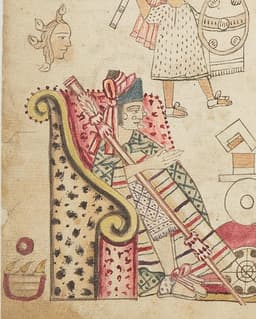
Axayacatl
Emperor · Medieval
56.7Total
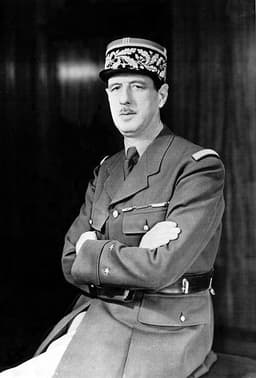
Charles de Gaulle
Politician · Modern
68.2Total
Basic Information
Born
1449
1890
Died
1481
1970
Era
Medieval
Modern
Nationality
Aztec Empire
France
Occupation
Emperor
Politician
Civilization
Western
Western
Score Comparison
Military (10%)
70.0
55.0
Political (20%)
54.7
75.0
Influence (20%)
56.4
65.0
Legacy (20%)
47.5
68.0
Leadership (15%)
65.0
78.0
Strategy (15%)
57.5
65.0
TOTAL
56.7
68.2
Axayacatl — Complete Timeline
1469 AD
Coronation as Tlatoani of TenochtitlanPolitical Action◆ Major
Axayacatl succeeded his grandfather Moctezuma I as the sixth tlatoani of Tenochtitlan. His coronation campaign against the Matlatzinca was successful, capturing many prisoners for sacrifice and establishing his military credentials.
Impact: national
1473 AD
Conquest of TlatelolcoWar◆ Major
Axayacatl led Tenochtitlan forces against the neighboring city-state of Tlatelolco, which had rebelled against Aztec dominance. The war ended with the defeat of Tlatelolco and the death of its tlatoani Moquihuix, incorporating Tlatelolco into Tenochtitlan.
Impact: regionaldestructive
1478 AD
Campaign against the Tarascan EmpireWar◆ Major
Axayacatl led a large Aztec army into the Tarascan Empire (Pur
Impact: regionaldestructive
1481 AD
Construction of the Great Temple of TenochtitlanCultural◆ Major
Axayacatl oversaw the expansion of the Templo Mayor in Tenochtitlan, dedicating a new phase of construction. The temple was the religious center of the Aztec Empire, and this expansion included new sculptures and offerings.
Impact: nationalconstructive
Death of AxayacatlOther
Axayacatl died after a short illness, possibly from a disease or complications from wounds. His death led to the succession of his brother Tizoc, whose weak reign contrasted with Axayacatl's earlier successes.
Impact: national
Charles de Gaulle — Complete Timeline
1940 AD
Appeal of 18 June 1940Political Action
From London, de Gaulle broadcast a radio appeal urging French resistance against Nazi occupation. He called on French soldiers and citizens to continue the fight, founding the Free French Forces and becoming the symbol of French defiance.
World War IIResistanceLeadership
Impact: nationalconstructive
1958 AD
Founding of the Fifth RepublicPolitical Action
De Gaulle returned to power during the Algerian crisis and oversaw the drafting of a new constitution. The Fifth Republic established a strong executive presidency, replacing the unstable parliamentary system of the Fourth Republic.
ConstitutionGovernment ReformPolitical System
Impact: nationalconstructive
1962 AD
End of the Algerian WarPolitical Action◆ Major
De Gaulle negotiated the
DecolonizationPeace TreatyAlgeria
Impact: regionalconstructive
1968 AD
May 1968 CrisisPolitical Action◆ Major
Mass student protests and general strikes paralyzed France, challenging de Gaulle's government. De Gaulle briefly fled to Germany, then returned to dissolve the National Assembly and call elections, which his party won, but his authority was weakened.
ProtestPolitical CrisisSocial Unrest
Impact: nationaldestructive
1969 AD
Resignation as PresidentPolitical Action
De Gaulle resigned after losing a referendum on regional reform and Senate restructuring. The defeat marked the end of his political career, as he withdrew from public life and died the following year.
ResignationPolitical DefeatReferendum
Impact: nationaltragic
Expert Analysis
Charles de Gaulle vs Axayacatl
The Two Faces of Power: De Gaulle’s Republic and Axayacatl’s Empire
In the spring of 1969, a weary Charles de Gaulle, aged seventy-eight, walked out of the Élysée Palace for the last time. A referendum on regional reform had gone against him, and he kept his word. Across the Atlantic, nearly five centuries earlier, another ruler had faced a different kind of end. In 1481, Axayacatl, the sixth tlatoani of the Aztec Empire, died after a short illness, possibly from wounds or disease, at just thirty-two. One leader fell by the ballot box, the other by the body’s betrayal. Yet both had risen to shape their worlds with iron will. Why did de Gaulle, who lost a vote, leave a republic that endures, while Axayacatl, who conquered a city, left an empire that crumbled within decades? The answer lies not in the outcomes but in the men themselves—and the civilizations they embodied.
Origins
Charles de Gaulle was born in 1890 in Lille, France, into a devoutly Catholic, patriotic family. His father taught philosophy and history, instilling in young Charles a sense of national destiny. The France of his youth was a republic scarred by the Franco-Prussian War, a humiliation that burned into de Gaulle’s consciousness. He chose a military career, but he was no ordinary soldier; he read widely, wrote on strategy, and dreamed of a France restored to greatness. His era was one of industrial might, mass politics, and the brutal machinery of world war.
Axayacatl, born in 1449, grew up in Tenochtitlan, the gleaming island capital of the Aztec Empire. His world was a theocracy of blood and maize, where gods demanded human sacrifice and the sun required nourishment. His grandfather, Moctezuma I, had expanded the empire’s reach, and Axayacatl was raised in a court where power was inherited, not elected. The Aztec cosmos was cyclical, fatalistic—a world where a ruler’s duty was to feed the gods, not to reshape the state. De Gaulle emerged from a literate, bureaucratic civilization that debated ideas in print; Axayacatl emerged from a civilization of oral tradition, ritual, and tribute. Their origins were not just different—they were opposite poles of human organization.
Rise to Power
De Gaulle’s rise was a long, lonely ascent. In 1940, as France collapsed before the Nazi blitzkrieg, he was a little-known brigadier general. On June 18, from a BBC studio in London, he broadcast a radio appeal. “France has lost a battle,” he said, “but France has not lost the war.” That single act of defiance made him the symbol of French resistance. He was not elected; he willed himself into leadership. He spent the war years in exile, struggling to unite fractious resistance factions and secure Allied recognition. His turning point came in 1958, when the Algerian War threatened to tear France apart. The Fourth Republic, weak and paralyzed, called him back. He drafted a new constitution, founded the Fifth Republic, and became its first president. He was a man who seized opportunity from catastrophe.
Axayacatl’s rise was more conventional, though no less dramatic. He succeeded his grandfather Moctezuma I in 1469, at age twenty, as tlatoani of Tenochtitlan. His coronation campaign—a ritual war to capture victims for sacrifice—was his first test. He proved himself in battle, but his power was not built on personal charisma or political maneuvering. It was inherited, sanctified by priests, and rooted in a system where the emperor was both warrior and high priest. Where de Gaulle had to persuade and outmaneuver, Axayacatl had only to prove his valor. The difference is stark: one rose through words, the other through blood.
Leadership & Governance
De Gaulle’s leadership was a study in strategic aloofness. He believed in a strong executive, a president above party politics, who could guide the nation. He ended the Algerian War in 1962 with the Évian Accords, a decision that enraged the military and the pieds-noirs but saved France from endless conflict. He rebuilt the economy, pursued an independent foreign policy, and withdrew from NATO’s military command. His military score of 65 reflects his wartime role, but his political score of 82 captures his true genius: he was a master of statecraft, not battlefield tactics. He governed through referendums, television addresses, and an aura of grandeur. “A statesman,” he wrote, “must be a good actor.”
Axayacatl ruled differently. His military score of 60 and strategy score of 46 show a competent but not brilliant commander. In 1473, he conquered the rival city of Tlatelolco, a major victory that unified the Valley of Mexico under Tenochtitlan. But in 1478, he led a huge army against the Tarascan Empire and suffered a devastating defeat. He survived, but the Aztec expansion was checked. His political score of 52 reflects a system where the emperor’s power was real but circumscribed by nobles, priests, and tradition. He oversaw the expansion of the Templo Mayor, the great pyramid at the heart of Tenochtitlan, dedicating it with thousands of sacrifices. His governance was ritualized, focused on tribute and religious observance, not on institutions or reform. De Gaulle rewrote constitutions; Axayacatl built temples.
Triumph & Tragedy
De Gaulle’s greatest moment was probably the 1962 end of the Algerian War—a triumph of political courage over military pride. Yet his tragedy came in 1968, when student protests and a general strike paralyzed France. De Gaulle briefly fled to Germany, then returned to dissolve the National Assembly and call elections. He won, but the magic was broken. A year later, he lost a referendum on regional reform and resigned. He died in 1970, a hero to some, a relic to others.
Axayacatl’s triumph was the conquest of Tlatelolco in 1473, a brutal victory that cemented Aztec dominance. His tragedy was the Tarascan defeat in 1478, a humiliation that exposed the limits of Aztec power. But his greatest tragedy was unseen: his son, Montezuma II, would inherit an empire that de Gaulle’s France would later help destroy. Axayacatl died young, leaving a stable but brittle state. De Gaulle left a republic designed to endure.
Character & Destiny
De Gaulle was arrogant, aloof, and stubborn—qualities that made him a great wartime leader but a difficult peacetime politician. He saw himself as the embodiment of France, and he acted accordingly. His personality drove his decisions: he resigned not because he lost a vote, but because his authority had been challenged. For him, power was inseparable from prestige.
Axayacatl was a warrior-king in a world where valor was divine. He was not a reformer or a visionary; he was a custodian of a cosmic order. His personality—likely proud, dutiful, and fatalistic—shaped a reign of conquest and construction, but not of innovation. He did not question the system; he fulfilled it.
Legacy
De Gaulle’s legacy is the Fifth Republic itself, a stable democracy that has outlasted him by half a century. His influence score of 65 and legacy score of 75 reflect a man who shaped modern France but whose direct impact has faded. He is remembered as a symbol of resistance, a founder, a giant of the twentieth century.
Axayacatl’s legacy is more obscure. His influence score of 74.9 suggests a significant impact on Aztec history, but his empire was destroyed by Cortés within forty years of his death. He is remembered today mainly as Montezuma II’s father, a footnote in a story of collapse. His legacy score of 62.9 reflects a civilization that was erased.
Conclusion
De Gaulle and Axayacatl never met, but their worlds collided when French conquistadors landed in Mexico. The contrast between them is the contrast between two eras: one of print, law, and institutions; the other of ritual, tribute, and sacrifice. De Gaulle built a republic that could survive his death; Axayacatl built an empire that could not survive the arrival of men like de Gaulle’s ancestors. In the end, the difference was not in their courage or ambition, but in the civilizations that shaped them—and the tools they left behind.
Rankings
🥇
Charles de GaulleLeader
Mil: 55.0Pol: 75.0Inf: 65.0
68.2
🥈
Axayacatl
Mil: 70.0Pol: 54.7Inf: 56.4
56.7
+11.5 behind
How This Comparison Works
Algorithm
Each figure is scored on 6 dimensions (0—100 scale) based on structured historical data: Military (10%), Political (20%), Influence (20%), Legacy (20%), Leadership (15%), Strategy (15%). The weighted total produces the final ranking.
Data Sources
Scores are computed from structured sub-indicators in the database. Scale factors adjust for era (Ancient ×0.85, Modern ×1.0) and civilization size (Eastern ×1.05, Other ×0.80) to account for differences in population and military scale.
Maximum 3 Figures
Comparisons are limited to 2—3 figures to ensure readability and statistical meaningfulness.
Error Margins
±5 points per dimension — Sub-scores are derived from historical records with inherent uncertainty. Two figures within 5 points on a dimension should be considered roughly equivalent in that area.
Total Score Accuracy
±3 points overall — The weighted combination of 6 dimensions produces a total score with approximately ±3 points of uncertainty. Differences of less than 3 points are not statistically significant— the figures are effectively tied.
Known Limitations
- Historical records are incomplete and uneven across civilizations
- Figures from oral-tradition societies may be underrepresented
- Occupation labels can misclassify multi-role figures
- Scores measure capability and impact, not moral character
- Quantitative scoring is a comparison tool, not absolute truth
Capability Radar
Military (10%) — Battles & Warfare
Battles
55
60
Win Rate
60
55
Expansion
60
20
Political (20%) — Governance & Reform
Reform
45
95
Diplomacy
50
90
Economy
45
70
Influence (20%) — Cultural & Global Reach
Cultural
40
70
Global
30
80
Legacy (20%) — Historical Impact
Historical
45
85
Longevity
40
75
Leadership (15%) — Power & Stability
Tenure
50
85
Stability
50
75
Strategy (15%) — Tactics & Innovation
Strategy
55
85
Tactics
50
70
Reform
40
80
Similar Comparisons
Comments & Discussion
AXIATOR6/16/2026
Calling Axayacatl a "tlatoani" misses the point—his empire was a tributary death cult, not a state. He conquered Tlatelolco in 1473, yes, but his realm had no diplomatic corps, no written legal code, and no succession plan beyond bloodbaths. De Gaulle fought for a republic that outlived him; Axayacatl's "empire" was a pyramid built on skulls that fell to a few hundred Spaniards with horses. One left institutions, the other left an epitaph.
朝代粉碎机6/16/2026
别美化阿萨亚卡特尔了,他统治的特诺奇蒂特兰本质是个部落联盟,连个像样的行政系统都没有。他占领特拉特洛尔科后,把俘虏扔给太阳神,而戴高乐在二战流亡伦敦时都在起草第五共和国宪法。前者把血浇在金字塔上,后者把法律刻进石头里——谁更文明?答案写在科尔特斯登陆时本土反叛的部族名单里。
SQUAD-FORMATION6/16/2026
Military historian here: compare command-and-control. De Gaulle built the Free French forces from scratch in 1940, managing logistics across continents with radio and couriers. Axayacatl led 24,000 warriors against Tenochtitlan rebels, but his strategic depth was zero—when Cortés arrived, the Aztec response was just "throw more prisoners at the horses." De Gaulle's 1958 return to power was a coup in all but name, but he stabilized France's nuclear program. Axayacatl's legacy? A empire that folde
数据刺客6/16/2026
纯数据流:戴高乐执政11年,法国GDP年均增长5.1%,建立了独立核威慑力量,人均寿命增长3.2年。阿萨亚卡特尔在位12年(1469-1481),特诺奇蒂特兰的玉米产量数据?零档案。唯一可查的是他把阿兹特克帝国向南方扩张了,但扩张的消化率呢?科尔特斯1519年登陆,没到10年帝国就没了。十个世纪的生存测试:戴高乐的法国活着,阿萨亚卡特尔的帝国死了。数据不骗人。
CLASSICUS TARANTINUS6/16/2026
Let's not play civilizational ranking games. De Gaulle inherited Roman law, gunpowder, and centuries of diplomatic precedent. Axayacatl inherited jade masks, obsidian, and a pantheon needing human hearts to keep the sun rising. The real question: why did Western historians have to dress up this matchup as "comparison" rather than admit it's a mismatch of political complexity? Call a spade a spade: de Gaulle ran post-industrial nuclear statecraft; Ax