Loading...
Al-Mustansir vs Alp Tigin
Al-Mustansir leads by 5.1 pts · 2 figures compared
…
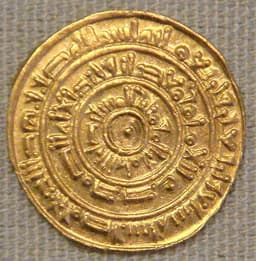
Al-Mustansir
Emperor · Medieval
55.6Total
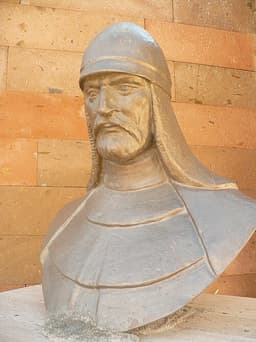
Alp Tigin
Emperor · Medieval
50.5Total
Basic Information
Born
1192
911
Died
1242
963
Era
Medieval
Medieval
Nationality
Abbasid Caliphate
Ghaznavid Empire
Occupation
Emperor
Emperor
Civilization
Middle Eastern
Middle Eastern
Score Comparison
Military (10%)
20.0
55.0
Political (20%)
68.0
33.6
Influence (20%)
55.0
56.4
Legacy (20%)
58.0
49.2
Leadership (15%)
71.0
50.7
Strategy (15%)
45.0
60.0
TOTAL
55.6
50.5
Al-Mustansir — Complete Timeline
1227 AD
Foundation of the Mustansiriya MadrasaCultural◆ Major
Al-Mustansir established the Mustansiriya Madrasa in Baghdad, a major educational institution that taught Islamic law, medicine, mathematics, and literature. It became one of the most prominent centers of learning in the medieval Islamic world, operating for centuries.
Impact: regionalconstructive
Alp Tigin — Complete Timeline
961 AD
Rebellion against the SamanidsPolitical Action◆ Major
Alp Tigin rebelled against the Samanid ruler Mansur I after being passed over for a governorship. He marched from Nishapur to Ghazni, defeating Samanid forces along the way, and established his own rule in eastern Afghanistan.
Impact: regional
963 AD
Consolidation of GhazniPolitical Action
Alp Tigin fortified Ghazni and organized a military state based on slave soldiers (ghilman). He established a stable administration that attracted scholars and merchants, turning Ghazni into a major regional power center.
Impact: regionalconstructive
Expert Analysis
Al-Mustansir vs Alp Tigin
# The Slave Who Built a Kingdom and the Caliph Who Built a School
In the year 961, two men stood at crossroads that would define the medieval Islamic world. One, a Turkic slave commander named Alp Tigin, marched from Nishapur in open rebellion against his Samanid overlords, his sword raised not for glory but for survival. The other, a young Abbasid prince named Al-Mustansir, was still three decades away from his caliphate, but already the seeds of his life’s work were being planted in the fertile soil of Baghdad’s libraries. They never met. They never could have. Yet their stories, unfolding in the same civilization across three centuries, reveal a profound truth about power: that it can be seized by the sword or nurtured by the pen, and that the choice between them shapes not only a life but an empire.
Origins
Alp Tigin was born in 911, a child of the vast Central Asian steppes, into a world where the only currency was loyalty and the only ladder was military service. He was a Turkic slave—a *mamluk*—sold into the households of the Samanid Empire, where he learned that freedom was earned through blood. His era was one of fractured dynasties and shifting allegiances, where a man with a sword could rise from nothing to rule a kingdom. The Samanids, who controlled much of Persia and Central Asia, relied on these slave soldiers to enforce their will, but they also feared them. Alp Tigin embodied that tension: indispensable and dangerous.
Al-Mustansir, born in 1192, entered a very different world. He was an Abbasid prince, a descendant of the Prophet’s uncle, raised in the gilded halls of Baghdad. His era was the twilight of the Abbasid Caliphate, a once-mighty empire now reduced to a shadow of its former self, squeezed between Seljuk warlords and the looming Mongol storm. While Alp Tigin’s world demanded martial prowess, Al-Mustansir’s required wisdom, patience, and a deep understanding of faith and law. For him, the sword was a last resort; the pen was the true weapon.
Rise to Power
Alp Tigin’s ascent was brutal and direct. By the 950s, he had become a commander in the Samanid army, trusted with key posts in Nishapur and Khorasan. But when the Samanid ruler Mansur I passed him over for the governorship of Khorasan in 961, Alp Tigin did not accept the slight quietly. He rebelled, marching his army out of Nishapur and heading east toward the mountains of Afghanistan. It was a gamble of the highest order. He knew he could not defeat the Samanids in open battle, so he seized the fortress city of Ghazni, a strategic stronghold in what is now eastern Afghanistan. By 963, he had consolidated his power there, organizing a military state built on a new class of slave soldiers—the *ghilman*—who owed him absolute loyalty. He died that same year, but he had laid the foundation for the Ghaznavid Empire, which would later conquer much of India.
Al-Mustansir’s rise was quieter but no less deliberate. He became caliph in 1226, inheriting a Baghdad that was a ghost of its former glory. The Abbasid caliphs had long been figureheads, their real power stripped by Buyid and Seljuk warlords. But Al-Mustansir understood that influence could be rebuilt through culture. In 1227, he founded the Mustansiriya Madrasa, a sprawling educational complex on the banks of the Tigris. It taught Islamic law, medicine, mathematics, and astronomy, and it was open to students of all backgrounds—a radical idea in a world of rigid hierarchies. Through this school, Al-Mustansir cultivated a new kind of authority: not over armies, but over minds.
Leadership & Governance
Alp Tigin ruled as a warlord, his leadership defined by the sword. His military score of 48.6 and strategy of 51.1 place him as a competent but not brilliant commander; his true genius lay in organization. He built Ghazni into a fortress that would withstand sieges for decades, and he created a system where slave soldiers were trained from childhood to be fanatically loyal. This was not a kingdom of laws but of men—men bound to him by chains of blood and gold. His political score of 50.7 reflects a man who could seize power but struggled to legitimize it. He was a usurper, and he knew it.
Al-Mustansir governed with a different hand. His leadership score of 74.4 and political score of 66.6 reveal a caliph who understood that true power lies in consensus. He did not command armies; he commanded respect. The Mustansiriya Madrasa was his masterpiece—a school that attracted scholars from across the Islamic world, from Spain to India. It became a center of learning that rivaled the great universities of Cairo and Cordoba. By investing in education, Al-Mustansir revived the caliphate’s moral authority, even as its military power waned. His strategy score of 60.0 shows a man who thought in decades, not days.
Triumph & Tragedy
Alp Tigin’s greatest triumph was the creation of Ghazni itself, a city that would become the springboard for the Ghaznavid conquests under his successor, Mahmud of Ghazni. But his tragedy was that he never lived to see it. He died in 963, just as his state was taking shape, leaving a legacy that others would build—and ultimately squander. His rebellion against the Samanids was a success, but it was a success born of desperation, not vision.
Al-Mustansir’s triumph was the Mustansiriya Madrasa, which stood for centuries as a beacon of learning. But his tragedy was the approaching Mongol horde. In 1242, he died just as the storm was gathering. Sixteen years later, in 1258, the Mongols sacked Baghdad, burning the Mustansiriya to the ground and extinguishing the Abbasid Caliphate. Al-Mustansir’s school, his life’s work, was reduced to ash. He could not have stopped the Mongols, but his efforts to build a legacy of knowledge seemed, in the end, heartbreakingly fragile.
Character & Destiny
Alp Tigin was a man of action, not reflection. His personality was forged in the crucible of slavery and war—ruthless, pragmatic, and suspicious. He trusted only his own sword and the men he had trained from childhood. This made him a formidable rebel but a lonely ruler. His destiny was to be a founder, but a founder of a dynasty that would soon outgrow him.
Al-Mustansir was a builder of a different kind. He was patient, learned, and diplomatic—a man who believed that the caliphate’s true strength lay in its culture, not its armies. His personality was shaped by the Abbasid tradition of scholarship and the bitter lessons of political decline. He knew that swords could be broken, but knowledge endured. His destiny was to be a preserver, a man who tried to save his civilization by teaching it.
Legacy
Alp Tigin is remembered today as the founder of the Ghaznavid Empire, a dynasty that would spread Islam into the Indian subcontinent. His total score of 56.5 reflects a man who achieved much in a short life, but whose influence was mediated by his successors. His legacy is one of ambition and violence—a reminder that empires are often born from a single act of defiance.
Al-Mustansir’s legacy is quieter but deeper. His total score of 65.3 places him higher in historical impact, and for good reason. The Mustansiriya Madrasa became a model for universities across the Islamic world and, later, Europe. Even after its destruction, the idea of a place where all could seek knowledge survived. His legacy is not a dynasty but a tradition—a belief that the pen is mightier than the sword.
Conclusion
Standing at the edge of Ghazni’s ruins or the vanished halls of the Mustansiriya, one cannot help but wonder: which man chose the better path? Alp Tigin built a kingdom that crumbled; Al-Mustansir built a school that burned. Yet one gave rise to the Ghaznavid conquests, the other to the great universities of the world. Perhaps the answer is not in their successes but in their intentions. Alp Tigin fought for power; Al-Mustansir fought for knowledge. In the end, the sword and the pen both fade, but the ideas they carry—of loyalty, of learning, of what it means to rule—echo across centuries. And in that echo, we see ourselves.
Rankings
🥇
Al-MustansirLeader
Mil: 20.0Pol: 68.0Inf: 55.0
55.6
🥈
Alp Tigin
Mil: 55.0Pol: 33.6Inf: 56.4
50.5
+5.1 behind
How This Comparison Works
Algorithm
Each figure is scored on 6 dimensions (0—100 scale) based on structured historical data: Military (10%), Political (20%), Influence (20%), Legacy (20%), Leadership (15%), Strategy (15%). The weighted total produces the final ranking.
Data Sources
Scores are computed from structured sub-indicators in the database. Scale factors adjust for era (Ancient ×0.85, Modern ×1.0) and civilization size (Eastern ×1.05, Other ×0.80) to account for differences in population and military scale.
Maximum 3 Figures
Comparisons are limited to 2—3 figures to ensure readability and statistical meaningfulness.
Error Margins
±5 points per dimension — Sub-scores are derived from historical records with inherent uncertainty. Two figures within 5 points on a dimension should be considered roughly equivalent in that area.
Total Score Accuracy
±3 points overall — The weighted combination of 6 dimensions produces a total score with approximately ±3 points of uncertainty. Differences of less than 3 points are not statistically significant— the figures are effectively tied.
Known Limitations
- Historical records are incomplete and uneven across civilizations
- Figures from oral-tradition societies may be underrepresented
- Occupation labels can misclassify multi-role figures
- Scores measure capability and impact, not moral character
- Quantitative scoring is a comparison tool, not absolute truth
Capability Radar
Military (10%) — Battles & Warfare
Battles
5
45
Win Rate
5
50
Expansion
5
50
Political (20%) — Governance & Reform
Reform
70
20
Diplomacy
40
30
Economy
50
20
Influence (20%) — Cultural & Global Reach
Cultural
70
30
Global
50
30
Legacy (20%) — Historical Impact
Historical
65
45
Longevity
60
40
Leadership (15%) — Power & Stability
Tenure
60
25
Stability
30
25
Strategy (15%) — Tactics & Innovation
Strategy
5
45
Tactics
5
40
Reform
5
30
Similar Comparisons
Comments & Discussion
Ghazi's Ghost6/16/2026
Alp Tigin didn't just rebel—he rewrote the playbook. By fleeing to Ghazna in 962, he didn't carve out a petty fiefdom; he lit the fuse for the Ghaznavid Empire, which would stretch from the Caspian to the Punjab. Al-Mustansir built a school in 1234, sure, but his caliphate collapsed into Mongol dust in 1258. One sword built a dynasty that lasted 200 years; one school built a library that burned. I'll take the slave who conquered over the scholar who preached.
墨香铁骑6/16/2026
比较文学视角?在对比奴隶将军与书生哈里发时,别忘了关键一点:阿勒普·提金死后仅二十年,他的养子苏布克特金就真正建立了加兹尼王朝,而穆斯坦绥尔死后仅十六年,蒙古铁骑踏平巴格达。学校里的知识确实珍贵,但若没有刀剑守护,知识不过是篝火旁的宣纸。没有实用权力的底蕴,精致文化终将烟消云散。
DataDervish6/16/2026
Let's talk numbers. Al-Mustansir's Mustansiriyya Madrasa opened in 1234 with 300 students across four legal schools. Great. Alp Tigin captured Ghazni with maybe 200-300 loyal ghulams and his personal retinue. By his death, he controlled a revenue base funding thousands of troops. Education ROI is 20+ years to see impact; military conquest pays instant dividends. The caliph was playing a long game his collapsing empire couldn't afford. The slave commander bet on immediate, tangible power and won.
苏幕遮6/16/2026
争议之处在于:这两个人从根本上代表着两种不同的权力形态。阿勒普·提金是典型的"阶梯权力"——从奴隶一步步往上爬,每一个台阶都是用鲜血和忠诚换来的个人资本。而穆斯坦绥尔是"位置权力"——他生为阿拔斯王族,所建立的学校只是巩固既有的合法性。哪种更具革命性?毫无疑问是前者。一个奴隶敢于建立自己的王国,而哈里发只是维护祖先的光环。历史的天平明显偏向刀锋。