Loading...
Al-Muqtafi vs Baoyi Qaghan
Al-Muqtafi leads by 1.0 pts · 2 figures compared
…
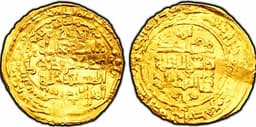
Al-Muqtafi
Emperor · Medieval
50.6Total

Baoyi Qaghan
Emperor · Medieval
49.6Total
Basic Information
Born
1096
760
Died
1160
821
Era
Medieval
Medieval
Nationality
Abbasid Caliphate
Uyghur Khaganate
Occupation
Emperor
Emperor
Civilization
Middle Eastern
Eastern
Score Comparison
Military (10%)
55.0
50.0
Political (20%)
68.0
46.6
Influence (20%)
52.5
51.8
Legacy (20%)
45.8
43.3
Leadership (15%)
40.0
65.0
Strategy (15%)
43.3
41.0
TOTAL
50.6
49.6
Al-Muqtafi — Complete Timeline
1136 AD
Reassertion of Caliphal AuthorityPolitical Action
Upon becoming caliph, Al-Muqtafi began to reassert caliphal authority over Baghdad. He expelled Seljuk officials from the city and appointed his own viziers, marking a reversal of decades of Seljuk domination.
IndependenceSeljuk DeclineBaghdad
Impact: regionalconstructive
1140 AD
Reform of the ArmyReform◆ Major
Al-Muqtafi reformed the caliphal army by recruiting new troops and reducing reliance on Seljuk mercenaries. He established a standing army loyal to the caliph, which enabled his military successes.
Military ReformArmyCaliphal Power
Impact: regionalconstructive
1146 AD
Defense of Baghdad Against SeljuksWar◆ Major
Al-Muqtafi successfully defended Baghdad against a Seljuk siege led by Sultan Mas'ud. The caliph's forces repelled the attack, solidifying his control over the city and demonstrating the caliphate's renewed military capability.
SiegeMilitary VictorySeljuk-Abbasid War
Impact: regionalconstructive
1150 AD
Expansion of Caliphal TerritoryWar◆ Major
Al-Muqtafi expanded caliphal territory by conquering several towns in Iraq, including Wasit and Kufa. These conquests restored the caliphate's territorial base and increased its revenue and prestige.
Territorial ExpansionMilitary CampaignIraq
Impact: regionalconstructive
Baoyi Qaghan — Complete Timeline
789 AD
Accession as Baoyi QaghanPolitical Action◆ Major
Baoyi Qaghan ascended to the throne of the Uyghur Khaganate after the death of his father, Tun Bagha Tarkhan. His reign continued the policies of his father, maintaining stability and alliance with Tang.
SuccessionKhaganateLeadership
Impact: regionalconstructive
790 AD
Marriage to a Tang princessPolitical Action◆ Major
Baoyi Qaghan married a Tang princess, Princess Xian'an, as part of a diplomatic alliance. This marriage strengthened ties between the Uyghur Khaganate and Tang China, ensuring peace and trade.
MarriageAllianceTang Dynasty
Impact: regionalconstructive
795 AD
Military campaigns against the KyrgyzWar
Baoyi Qaghan led campaigns against the Yenisei Kyrgyz, who were threatening Uyghur northern borders. The Uyghur forces defeated the Kyrgyz, securing the khaganate's northern frontier.
Military CampaignKyrgyzBorder Security
Impact: regional
821 AD
Death and successionPolitical Action
Baoyi Qaghan died in 821, succeeded by his son Chongde Qaghan. His reign was marked by continued prosperity and strong relations with Tang China.
DeathSuccessionLegacy
Impact: regional
Expert Analysis
Origins
**Al-Muqtafi** (born 1096) was an Abbasid caliph who ascended to power in 1136 during a period of severe Seljuk domination. His father, al-Mustazhir, had been a caliph, but the family's authority had eroded under Turkish military control. Al-Muqtafi grew up in the shadow of Seljuk sultans who dictated caliphal appointments. His early life was marked by political maneuvering among rival factions, including the caliphal court and Turkish commanders. He was educated in Islamic jurisprudence and governance, preparing him for a role that initially seemed ceremonial.
**Baoyi Qaghan** (died 821) was the ruler of the Uyghur Khaganate from 808 to 821. His father, Tun Bagha Tarkhan, had established a stable reign, and Baoyi inherited a powerful steppe empire that controlled the Silk Road. The Uyghurs were known for their Manichaean religion and close ties with Tang China. Baoyi likely received training in military strategy and diplomacy, essential for a khagan managing a multi-ethnic confederation.
Rise to Power
Al-Muqtafi became caliph after the death of his predecessor, al-Rashid, who had been deposed by the Seljuk sultan Mas'ud. Initially, al-Muqtafi was a puppet, but he quickly moved to assert independence. In 1135, he expelled Seljuk officials from Baghdad and appointed his own vizier. This led to a siege by Sultan Mas'ud in 1136, which al-Muqtafi successfully repelled using a reformed army and support from local militias. The victory solidified his control over Iraq, a key turning point that marked the first time an Abbasid caliph had defied Seljuk authority in decades.
Baoyi Qaghan ascended upon his father's death in 808, inheriting a stable empire. He continued his father's policies of maintaining peace with Tang China and trading along the Silk Road. His major diplomatic achievement came in 813 when he married Princess Xian'an, a Tang imperial princess, cementing an alliance that provided Uyghur khans with Chinese legitimacy and economic benefits. This marriage was a highlight of his rise, showcasing his diplomatic skill.
Leadership & Governance
Al-Muqtafi's leadership focused on restoring caliphal sovereignty. He reformed the army by recruiting free men and reducing reliance on Seljuk mercenaries, creating a force loyal to him. He also expanded territory, conquering towns like Wasit and Kufa (1136-1137). His governance was centralized, with direct control over tax collection and appointments. For example, he replaced Seljuk-appointed governors with his own men. His political score of 68.0 reflects his success in reasserting authority, though his military score of 55.0 indicates limited expansion beyond Iraq.
Baoyi Qaghan led a decentralized steppe empire. His governance relied on tribal alliances and the support of Uyghur nobles. He maintained the Uyghur tradition of dual administration: Chinese-style bureaucracy for settled areas and tribal structures for nomads. His marriage to a Tang princess secured Chinese subsidies and trade, boosting the economy. However, his leadership score of 65.0 is tempered by a strategy score of 41.0, suggesting he was more a caretaker than an innovator. He did not undertake major reforms, instead preserving existing systems.
Triumph & Tragedy
Al-Muqtafi's greatest triumph was the successful defense of Baghdad against the Seljuk siege in 1136. This restored caliphal prestige and proved that the Abbasids could resist Turkish domination. He also expanded territory, briefly restoring caliphal control over parts of Iraq. His tragedy was that his gains were temporary; after his death in 1160, the Seljuks reasserted influence, and the caliphate again declined. His reforms did not create lasting institutions, and his military expansion was limited.
Baoyi Qaghan's triumph was securing the Tang alliance through marriage, which brought peace and prosperity. He also led successful campaigns against the Yenisei Kyrgyz, defending the northern borders. His tragedy was that his reign marked the peak of Uyghur power; after his death, internal strife and Kyrgyz attacks weakened the khaganate, leading to its collapse by 840. His diplomatic success was not matched by military strength, as his military score of 50.0 suggests.
Character & Destiny
Al-Muqtafi was determined and pragmatic. He seized opportunities to assert power, but his rule was reactive, responding to Seljuk threats rather than pursuing grand strategy. His decision to confront Sultan Mas'ud was bold but risky; success made him a hero, but failure would have ended the caliphate. Historians note that he was cautious in foreign policy, avoiding overextension. His character was shaped by the struggle for survival, leading to a focus on short-term gains.
Baoyi Qaghan was a diplomat and stabilizer. He preferred alliance and trade over war, which suited the Uyghur reliance on Silk Road commerce. His marriage to a Tang princess showed his willingness to integrate Chinese culture. However, his lack of military aggression may have left the khaganate vulnerable. His character was that of a consolidator, not an expander, which is reflected in his lower strategy score.
Legacy
Al-Muqtafi's legacy is mixed. He temporarily revived the Abbasid caliphate's authority, inspiring later caliphs like al-Nasir. His reforms laid groundwork for future autonomy, but the caliphate never regained its former power. His reign is remembered as a brief resurgence. His total score of 50.6 reflects his limited long-term impact.
Baoyi Qaghan's legacy is tied to the Uyghur-Tang alliance. His marriage set a precedent for Chinese-Uyghur relations, and his reign is seen as a golden age. However, the khaganate's collapse soon after his death diminished his influence. His legacy score of 43.3 is lower than al-Muqtafi's 45.8, partly because the Uyghur state did not endure.
Conclusion
Al-Muqtafi had a slightly greater historical impact, with a total score of 50.6 compared to Baoyi Qaghan's 49.6. While both rulers achieved short-term successes, al-Muqtafi's reassertion of caliphal authority was a more significant political shift, breaking a century of Seljuk domination. Baoyi Qaghan's achievements were diplomatic and economic, but his empire collapsed soon after. Al-Muqtafi's actions had a direct effect on the balance of power in the Islamic world, while Baoyi's influence was more localized. Therefore, Al-Muqtafi edges ahead in impact.
Rankings
🥇
Al-MuqtafiLeader
Mil: 55.0Pol: 68.0Inf: 52.5
50.6
🥈
Baoyi Qaghan
Mil: 50.0Pol: 46.6Inf: 51.8
49.6
+1.0 behind
How This Comparison Works
Algorithm
Each figure is scored on 6 dimensions (0—100 scale) based on structured historical data: Military (10%), Political (20%), Influence (20%), Legacy (20%), Leadership (15%), Strategy (15%). The weighted total produces the final ranking.
Data Sources
Scores are computed from structured sub-indicators in the database. Scale factors adjust for era (Ancient ×0.85, Modern ×1.0) and civilization size (Eastern ×1.05, Other ×0.80) to account for differences in population and military scale.
Maximum 3 Figures
Comparisons are limited to 2—3 figures to ensure readability and statistical meaningfulness.
Error Margins
±5 points per dimension — Sub-scores are derived from historical records with inherent uncertainty. Two figures within 5 points on a dimension should be considered roughly equivalent in that area.
Total Score Accuracy
±3 points overall — The weighted combination of 6 dimensions produces a total score with approximately ±3 points of uncertainty. Differences of less than 3 points are not statistically significant— the figures are effectively tied.
Known Limitations
- Historical records are incomplete and uneven across civilizations
- Figures from oral-tradition societies may be underrepresented
- Occupation labels can misclassify multi-role figures
- Scores measure capability and impact, not moral character
- Quantitative scoring is a comparison tool, not absolute truth
Capability Radar
Military (10%) — Battles & Warfare
Battles
30
20
Win Rate
35
25
Expansion
25
15
Political (20%) — Governance & Reform
Reform
55
30
Diplomacy
50
60
Economy
45
40
Influence (20%) — Cultural & Global Reach
Cultural
30
30
Global
25
20
Legacy (20%) — Historical Impact
Historical
40
35
Longevity
35
25
Leadership (15%) — Power & Stability
Tenure
60
55
Stability
55
45
Strategy (15%) — Tactics & Innovation
Strategy
35
20
Tactics
30
20
Reform
40
10
Similar Comparisons
Comments & Discussion
No comments yet. Be the first to share your thoughts!