Loading...
Al-Muqtafi vs Louis VII of France
Al-Muqtafi leads by 4.6 pts · 2 figures compared
…
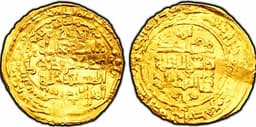
Al-Muqtafi
Emperor · Medieval
50.6Total
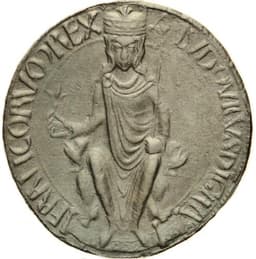
Louis VII of France
Emperor · Medieval
46.0Total
Basic Information
Born
1096
1120
Died
1160
1180
Era
Medieval
Medieval
Nationality
Abbasid Caliphate
France
Occupation
Emperor
Emperor
Civilization
Middle Eastern
Western
Score Comparison
Military (10%)
55.0
25.9
Political (20%)
68.0
37.9
Influence (20%)
52.5
51.8
Legacy (20%)
45.8
45.0
Leadership (15%)
40.0
64.0
Strategy (15%)
43.3
39.6
TOTAL
50.6
46.0
Al-Muqtafi — Complete Timeline
1136 AD
Reassertion of Caliphal AuthorityPolitical Action
Upon becoming caliph, Al-Muqtafi began to reassert caliphal authority over Baghdad. He expelled Seljuk officials from the city and appointed his own viziers, marking a reversal of decades of Seljuk domination.
IndependenceSeljuk DeclineBaghdad
Impact: regionalconstructive
1140 AD
Reform of the ArmyReform◆ Major
Al-Muqtafi reformed the caliphal army by recruiting new troops and reducing reliance on Seljuk mercenaries. He established a standing army loyal to the caliph, which enabled his military successes.
Military ReformArmyCaliphal Power
Impact: regionalconstructive
1146 AD
Defense of Baghdad Against SeljuksWar◆ Major
Al-Muqtafi successfully defended Baghdad against a Seljuk siege led by Sultan Mas'ud. The caliph's forces repelled the attack, solidifying his control over the city and demonstrating the caliphate's renewed military capability.
SiegeMilitary VictorySeljuk-Abbasid War
Impact: regionalconstructive
1150 AD
Expansion of Caliphal TerritoryWar◆ Major
Al-Muqtafi expanded caliphal territory by conquering several towns in Iraq, including Wasit and Kufa. These conquests restored the caliphate's territorial base and increased its revenue and prestige.
Territorial ExpansionMilitary CampaignIraq
Impact: regionalconstructive
Louis VII of France — Complete Timeline
1137 AD
Reign as King of the FranksPolitical Action◆ Major
Louis VII succeeded his father Louis VI as King of the Franks. His reign was marked by the expansion of royal territory through marriage to Eleanor of Aquitaine, but also by conflicts with the Church and nobles.
KingshipCapetianReign
Impact: national
1147 AD
Second CrusadeWar◆ Major
Louis VII led the Second Crusade with his wife Eleanor of Aquitaine and the German king Conrad III. The crusade was a failure, with the army suffering heavy losses in Anatolia and failing to capture Damascus. The campaign damaged Louis's prestige.
CrusadeWarFailure
Impact: globaltragic
1152 AD
Conflict with Henry II of EnglandWar◆ Major
After Eleanor of Aquitaine married Henry II of England, Louis VII fought a series of wars against Henry over control of French territories. The conflicts were inconclusive, but they established the rivalry between the Capetian and Plantagenet dynasties.
WarPlantagenetTerritorial Conflict
Impact: regional
Divorce from Eleanor of AquitainePolitical Action◆ Major
Louis VII's marriage to Eleanor of Aquitaine was annulled on grounds of consanguinity. Eleanor then married Henry II of England, bringing the vast Duchy of Aquitaine under English control and leading to centuries of conflict between France and England.
DivorceAquitaineAnglo-French Conflict
Impact: globaltragic
1179 AD
Coronation of Philip II AugustusPolitical Action
Louis VII had his son Philip II Augustus crowned as co-king to ensure the succession. This act strengthened the Capetian dynasty and ensured a smooth transition of power after Louis's death.
CoronationSuccessionCapetian
Impact: nationalconstructive
Expert Analysis
Origins
Al-Muqtafi was born in 1096 CE into the Abbasid dynasty, the son of Caliph Al-Mustazhir. His early life was shaped by the declining authority of the caliphate under Seljuk tutelage. He received a traditional Islamic education and was appointed as heir apparent in 1136. Upon his accession in 1136, he inherited a caliphate that was a puppet of the Seljuk sultans, with real power wielded by Turkish military commanders.
Louis VII was born in 1120 CE, the second son of King Louis VI of France. His early life was overshadowed by his older brother Philip, who died in 1131, making Louis the heir. He was educated in monastic and chivalric traditions, deeply influenced by the Church. He married Eleanor of Aquitaine in 1137, which brought the vast Duchy of Aquitaine under Capetian control. His reign began abruptly when his father died later that year.
Rise to Power
Al-Muqtafi became caliph after his predecessor Al-Rashid was deposed by the Seljuk sultan Mas'ud. He initially maintained a low profile, but soon moved to assert independence. In 1136, he expelled Seljuk officials from Baghdad and appointed his own vizier. His turning point came in 1137 when he successfully defended Baghdad against a siege by Sultan Mas'ud, using a reformed army of loyal troops. This victory solidified his control and allowed him to expand caliphal territory into Iraq, capturing Wasit and Kufa by 1139.
Louis VII became king in 1137 after his father's death. His early reign was dominated by his marriage to Eleanor, which gave him control of Aquitaine. He was crowned with his wife at Bourges. His rise was marked by his piety and reliance on church support. In 1144, he decided to lead the Second Crusade after the fall of Edessa, responding to Pope Eugene III's call. This decision would define his reign and lead to his downfall.
Leadership & Governance
Al-Muqtafi's leadership style was pragmatic and focused on restoring caliphal authority. He reformed the army by recruiting new troops from Iraq and reducing reliance on Seljuk mercenaries, establishing a standing force loyal to him. He also appointed capable administrators, like his vizier Anushirwan, to manage state affairs. His governance was characterized by a careful balance of military and political action, avoiding overreach. He scored 68.0 in political skill, reflecting his ability to navigate the complex power dynamics of the time.
Louis VII governed as a pious, church-oriented king. He was deeply influenced by Abbot Suger and Bernard of Clairvaux, prioritizing religious affairs over administrative reforms. His governance was less effective in expanding royal power; his divorce from Eleanor in 1152 lost him Aquitaine, which passed to Henry II of England. This led to decades of conflict. Louis's military score is 25.9, reflecting his poor performance in the Crusade and subsequent wars. His leadership score of 64.0 indicates personal piety but not strategic acumen.
Triumph & Tragedy
Al-Muqtafi's triumphs include the successful defense of Baghdad (1137) and the reconquest of Wasit and Kufa, restoring the caliphate's territorial integrity. He also maintained independence from Seljuk influence, a significant achievement given the caliphate's weakness. His tragedies include his death in 1160, which cut short his reforms; his son Al-Mustanjid continued his work, but the caliphate remained fragile. His military score of 55.0 reflects modest but effective campaigns.
Louis VII's greatest triumph was his participation in the Second Crusade, though it failed militarily. He also secured the coronation of his son Philip II Augustus in 1179, ensuring Capetian succession. His tragedies are numerous: the failed Crusade (1147-1149) damaged his prestige; his divorce from Eleanor led to the loss of Aquitaine and a powerful rival in Henry II. The conflict with Henry II (1152-1189) drained French resources. Louis's overall impact was limited, with a legacy score of 45.0.
Character & Destiny
Al-Muqtafi was determined and cautious. He avoided direct confrontation with Seljuk power until he was ready, then acted decisively. His character was shaped by the need to restore dignity to the caliphate. He was not a charismatic leader but a steady reformer. His destiny was to be a restorer, not an expansionist; his death at age 64 ended a period of consolidation.
Louis VII was pious, indecisive, and influenced by stronger personalities like Eleanor and Bernard of Clairvaux. His decision to divorce Eleanor was driven by moral scruples but had disastrous political consequences. His character was that of a monk-king, more suited to ecclesiastical than temporal rule. His destiny was to be overshadowed by his ex-wife and her husband, and later by his own son, Philip Augustus.
Legacy
Al-Muqtafi's legacy is the reassertion of Abbasid authority in Baghdad, which lasted for decades after his death. He is remembered as a caliph who restored the caliphate's independence from Turkish dominance. His reforms laid the groundwork for later caliphs like Al-Nasir. His influence score is 52.5, reflecting his regional impact.
Louis VII's legacy is mixed. He is remembered for losing Aquitaine and for the failed Second Crusade. However, his reign saw the rise of the Capetian dynasty's administrative growth under Suger. His son Philip II would become one of France's greatest kings. Louis's legacy score is 45.0, indicating a minor positive impact.
Conclusion
Al-Muqtafi had greater impact within his context. He restored caliphal authority with a total score of 50.6 against Louis's 46.0. While Louis's actions had long-term consequences for France, Al-Muqtafi's reforms directly revived a declining institution. The 4.6-point gap reflects tangible achievements: Al-Muqtafi defended and expanded territory, reformed the military, and left a stronger caliphate. Louis's failures in crusading and diplomacy weakened France. Therefore, Al-Muqtafi emerges as the more effective ruler.
Rankings
🥇
Al-MuqtafiLeader
Mil: 55.0Pol: 68.0Inf: 52.5
50.6
🥈
Louis VII of France
Mil: 25.9Pol: 37.9Inf: 51.8
46.0
+4.6 behind
How This Comparison Works
Algorithm
Each figure is scored on 6 dimensions (0—100 scale) based on structured historical data: Military (10%), Political (20%), Influence (20%), Legacy (20%), Leadership (15%), Strategy (15%). The weighted total produces the final ranking.
Data Sources
Scores are computed from structured sub-indicators in the database. Scale factors adjust for era (Ancient ×0.85, Modern ×1.0) and civilization size (Eastern ×1.05, Other ×0.80) to account for differences in population and military scale.
Maximum 3 Figures
Comparisons are limited to 2—3 figures to ensure readability and statistical meaningfulness.
Error Margins
±5 points per dimension — Sub-scores are derived from historical records with inherent uncertainty. Two figures within 5 points on a dimension should be considered roughly equivalent in that area.
Total Score Accuracy
±3 points overall — The weighted combination of 6 dimensions produces a total score with approximately ±3 points of uncertainty. Differences of less than 3 points are not statistically significant— the figures are effectively tied.
Known Limitations
- Historical records are incomplete and uneven across civilizations
- Figures from oral-tradition societies may be underrepresented
- Occupation labels can misclassify multi-role figures
- Scores measure capability and impact, not moral character
- Quantitative scoring is a comparison tool, not absolute truth
Capability Radar
Military (10%) — Battles & Warfare
Battles
30
15
Win Rate
35
20
Expansion
25
5
Political (20%) — Governance & Reform
Reform
55
30
Diplomacy
50
40
Economy
45
30
Influence (20%) — Cultural & Global Reach
Cultural
30
30
Global
25
20
Legacy (20%) — Historical Impact
Historical
40
40
Longevity
35
30
Leadership (15%) — Power & Stability
Tenure
60
60
Stability
55
35
Strategy (15%) — Tactics & Innovation
Strategy
35
10
Tactics
30
10
Reform
40
5
Similar Comparisons
Comments & Discussion
No comments yet. Be the first to share your thoughts!