Loading...
Al-Muqtafi vs Yelu Longxu
Yelu Longxu leads by 1.4 pts · 2 figures compared
…
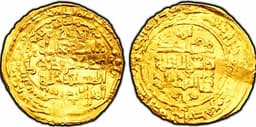
Al-Muqtafi
Emperor · Medieval
50.6Total

Yelu Longxu
Emperor · Medieval
52.0Total
Basic Information
Born
1096
971
Died
1160
1031
Era
Medieval
Medieval
Nationality
Abbasid Caliphate
Khitan Empire
Occupation
Emperor
Emperor
Civilization
Middle Eastern
Eastern
Score Comparison
Military (10%)
55.0
55.0
Political (20%)
68.0
48.0
Influence (20%)
52.5
51.8
Legacy (20%)
45.8
44.2
Leadership (15%)
40.0
72.0
Strategy (15%)
43.3
45.0
TOTAL
50.6
52.0
Al-Muqtafi — Complete Timeline
1136 AD
Reassertion of Caliphal AuthorityPolitical Action
Upon becoming caliph, Al-Muqtafi began to reassert caliphal authority over Baghdad. He expelled Seljuk officials from the city and appointed his own viziers, marking a reversal of decades of Seljuk domination.
IndependenceSeljuk DeclineBaghdad
Impact: regionalconstructive
1140 AD
Reform of the ArmyReform◆ Major
Al-Muqtafi reformed the caliphal army by recruiting new troops and reducing reliance on Seljuk mercenaries. He established a standing army loyal to the caliph, which enabled his military successes.
Military ReformArmyCaliphal Power
Impact: regionalconstructive
1146 AD
Defense of Baghdad Against SeljuksWar◆ Major
Al-Muqtafi successfully defended Baghdad against a Seljuk siege led by Sultan Mas'ud. The caliph's forces repelled the attack, solidifying his control over the city and demonstrating the caliphate's renewed military capability.
SiegeMilitary VictorySeljuk-Abbasid War
Impact: regionalconstructive
1150 AD
Expansion of Caliphal TerritoryWar◆ Major
Al-Muqtafi expanded caliphal territory by conquering several towns in Iraq, including Wasit and Kufa. These conquests restored the caliphate's territorial base and increased its revenue and prestige.
Territorial ExpansionMilitary CampaignIraq
Impact: regionalconstructive
Yelu Longxu — Complete Timeline
982 AD
Accession as Sixth Liao EmperorPolitical Action◆ Major
Yelu Longxu became the sixth Liao emperor at a young age, with his mother, Empress Dowager Xiao, serving as regent. His reign, the longest in Liao history, lasted until 1031 and saw the consolidation of Liao power.
Liao dynastySuccessionLong reign
Impact: regional
1009 AD
End of Regency and Personal RulePolitical Action◆ Major
After the death of Empress Dowager Xiao, Yelu Longxu assumed full personal rule. He continued her policies, maintaining peace with the Song dynasty and focusing on internal development and cultural patronage.
Liao dynastyPersonal ruleTransition
Impact: regional
1020 AD
Patronage of Buddhism and CultureCultural
Yelu Longxu was a patron of Buddhism, commissioning the construction of temples and the translation of Buddhist texts. His reign saw a flourishing of Khitan culture, including the development of the Khitan script and literature.
Liao dynastyBuddhismCultural patronage
Impact: regionalconstructive
Expert Analysis
Origins
Al-Muqtafi (1096–1160) was born into the Abbasid caliphate, the son of Caliph Al-Mustazhir. He grew up in a politically fragmented Baghdad, dominated by Seljuk sultans who controlled the caliphs. His early life was shaped by the caliphate's decline, with the caliphs acting as figureheads. He received traditional Islamic education but had limited exposure to military command before his accession.
Yelu Longxu (972–1031), known as Emperor Shengzong of the Liao dynasty, was born into the Khitan imperial clan. His father, Emperor Jingzong, died when Longxu was 11, leaving the throne to him under the regency of his mother, Empress Dowager Xiao Yanyan. He was educated in Khitan and Chinese traditions, including Confucian classics and Buddhist texts, preparing him for a long reign.
Rise to Power
Al-Muqtafi became caliph in 1136 after the death of his predecessor, Al-Rashid, who was deposed by the Seljuk sultan. His rise was not through military prowess but as a compromise candidate. However, he quickly moved to assert independence. In 1136–1137, he expelled Seljuk officials from Baghdad and appointed his own viziers, beginning a reassertion of caliphal authority. He faced a major challenge in 1139 when Seljuk Sultan Mas'ud besieged Baghdad, but Al-Muqtafi successfully defended the city, a turning point that solidified his control.
Yelu Longxu ascended the throne in 982 at age 11, with his mother as regent. Under her guidance, the Liao consolidated gains against the Song dynasty. In 1004, the Liao launched a major campaign south, leading to the Treaty of Chanyuan in 1005, which established peace and tribute from Song. Longxu assumed personal rule after his mother's death in 1009, inheriting a stable empire and continuing her policies.
Leadership & Governance
Al-Muqtafi focused on restoring caliphal autonomy. He reformed the army by recruiting new troops from local Iraqi tribes and reducing reliance on Seljuk mercenaries, establishing a standing army loyal to him. He expanded caliphal territory by conquering towns like Wasit and Kufa in Iraq. His governance was centralized, with direct control over Baghdad and its hinterland. However, his authority did not extend beyond Iraq, and the Seljuks remained powerful elsewhere.
Yelu Longxu's leadership was characterized by stability and cultural patronage. He maintained peace with the Song through the treaty, which brought annual tribute and allowed the Liao to focus on internal development. He promoted Buddhism, building temples and translating texts, and supported Confucian administration. His reign saw the compilation of the Liao legal code and the promotion of Khitan and Chinese cultures. He scored 72.0 in leadership, reflecting his ability to maintain a long, stable reign.
Triumph & Tragedy
Al-Muqtafi's greatest success was the defense of Baghdad against the Seljuk siege in 1139, which reestablished the caliphate as a military power in Iraq. He also expanded territory, with his conquests restoring some prestige. However, his failure to expand beyond Iraq limited his impact. He died in 1160, and his successors could not maintain his gains, leading to a gradual decline.
Yelu Longxu's triumphs include the longest reign in Liao history (49 years) and the maintenance of peace with the Song, securing tribute and stability. His patronage of Buddhism and culture enriched Liao civilization. A tragedy was the death of his mother, after which he faced some internal unrest, but he managed it effectively. His reign set the stage for the Liao's continued prosperity, but later dynastic decline was inevitable.
Character & Destiny
Al-Muqtafi was determined and pragmatic, willing to confront the Seljuks despite their military superiority. His political score of 68.0 reflects his ability to navigate the complex politics of Baghdad. However, his strategic score of 43.3 indicates limited vision beyond immediate consolidation. His character as a restorer of caliphal power shaped his destiny, but the caliphate's structural weaknesses limited his long-term success.
Yelu Longxu was a capable administrator and patron, but his leadership was heavily influenced by his mother's regency. He scored 72.0 in leadership, showing his ability to sustain a stable regime. His strategic score of 45.0 suggests a cautious approach, avoiding risky wars. His character as a peacetime emperor ensured stability but left the Liao vulnerable to internal decay.
Legacy
Al-Muqtafi's legacy is as a restorer of caliphal authority in Baghdad, but his achievements were temporary. He scored 45.8 in legacy, reflecting the limited endurance of his reforms. The caliphate continued to decline after his death, and his territorial gains were lost. He is remembered as a capable but ultimately unsuccessful ruler.
Yelu Longxu's legacy is more enduring. His long reign stabilized the Liao empire and fostered cultural development. He scored 44.2 in legacy, but his impact on Liao history is significant. The Treaty of Chanyuan shaped East Asian diplomacy for centuries. He is remembered as a peaceful and culturally enlightened emperor.
Conclusion
Yelu Longxu had a greater overall impact, with a total score of 52.0 vs. Al-Muqtafi's 50.6. While Al-Muqtafi's reassertion of caliphal authority was impressive, it was short-lived and geographically limited. Yelu Longxu's 49-year reign brought lasting peace, cultural flourishing, and stability to the Liao empire. His leadership score of 72.0 far exceeds Al-Muqtafi's 40.0, demonstrating superior governance. Though neither was a transformative figure, Yelu Longxu's consistent rule and patronage left a more substantial mark on history.
Rankings
🥇
Yelu LongxuLeader
Mil: 55.0Pol: 48.0Inf: 51.8
52.0
🥈
Al-Muqtafi
Mil: 55.0Pol: 68.0Inf: 52.5
50.6
+1.4 behind
How This Comparison Works
Algorithm
Each figure is scored on 6 dimensions (0—100 scale) based on structured historical data: Military (10%), Political (20%), Influence (20%), Legacy (20%), Leadership (15%), Strategy (15%). The weighted total produces the final ranking.
Data Sources
Scores are computed from structured sub-indicators in the database. Scale factors adjust for era (Ancient ×0.85, Modern ×1.0) and civilization size (Eastern ×1.05, Other ×0.80) to account for differences in population and military scale.
Maximum 3 Figures
Comparisons are limited to 2—3 figures to ensure readability and statistical meaningfulness.
Error Margins
±5 points per dimension — Sub-scores are derived from historical records with inherent uncertainty. Two figures within 5 points on a dimension should be considered roughly equivalent in that area.
Total Score Accuracy
±3 points overall — The weighted combination of 6 dimensions produces a total score with approximately ±3 points of uncertainty. Differences of less than 3 points are not statistically significant— the figures are effectively tied.
Known Limitations
- Historical records are incomplete and uneven across civilizations
- Figures from oral-tradition societies may be underrepresented
- Occupation labels can misclassify multi-role figures
- Scores measure capability and impact, not moral character
- Quantitative scoring is a comparison tool, not absolute truth
Capability Radar
Military (10%) — Battles & Warfare
Battles
30
35
Win Rate
35
40
Expansion
25
30
Political (20%) — Governance & Reform
Reform
55
40
Diplomacy
50
50
Economy
45
45
Influence (20%) — Cultural & Global Reach
Cultural
30
30
Global
25
20
Legacy (20%) — Historical Impact
Historical
40
35
Longevity
35
30
Leadership (15%) — Power & Stability
Tenure
60
85
Stability
55
60
Strategy (15%) — Tactics & Innovation
Strategy
35
35
Tactics
30
30
Reform
40
25
Similar Comparisons
Comments & Discussion
No comments yet. Be the first to share your thoughts!