Loading...
Al-Muqtafi vs King Wonjong of Goryeo
Al-Muqtafi leads by 5.8 pts · 2 figures compared
…
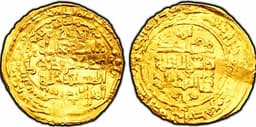
Al-Muqtafi
Emperor · Medieval
50.6Total

King Wonjong of Goryeo
Emperor · Medieval
44.8Total
Basic Information
Born
1096
1219
Died
1160
1274
Era
Medieval
Medieval
Nationality
Abbasid Caliphate
Korea
Occupation
Emperor
Emperor
Civilization
Middle Eastern
Eastern
Score Comparison
Military (10%)
55.0
21.2
Political (20%)
68.0
40.8
Influence (20%)
52.5
53.3
Legacy (20%)
45.8
45.0
Leadership (15%)
40.0
55.3
Strategy (15%)
43.3
36.8
TOTAL
50.6
44.8
Al-Muqtafi — Complete Timeline
1136 AD
Reassertion of Caliphal AuthorityPolitical Action
Upon becoming caliph, Al-Muqtafi began to reassert caliphal authority over Baghdad. He expelled Seljuk officials from the city and appointed his own viziers, marking a reversal of decades of Seljuk domination.
IndependenceSeljuk DeclineBaghdad
Impact: regionalconstructive
1140 AD
Reform of the ArmyReform◆ Major
Al-Muqtafi reformed the caliphal army by recruiting new troops and reducing reliance on Seljuk mercenaries. He established a standing army loyal to the caliph, which enabled his military successes.
Military ReformArmyCaliphal Power
Impact: regionalconstructive
1146 AD
Defense of Baghdad Against SeljuksWar◆ Major
Al-Muqtafi successfully defended Baghdad against a Seljuk siege led by Sultan Mas'ud. The caliph's forces repelled the attack, solidifying his control over the city and demonstrating the caliphate's renewed military capability.
SiegeMilitary VictorySeljuk-Abbasid War
Impact: regionalconstructive
1150 AD
Expansion of Caliphal TerritoryWar◆ Major
Al-Muqtafi expanded caliphal territory by conquering several towns in Iraq, including Wasit and Kufa. These conquests restored the caliphate's territorial base and increased its revenue and prestige.
Territorial ExpansionMilitary CampaignIraq
Impact: regionalconstructive
King Wonjong of Goryeo — Complete Timeline
1259 AD
Accepted Mongol SuzeraintyPolitical Action
King Wonjong sent his son (future King Chungnyeol) as a hostage to the Mongol court and agreed to Goryeo becoming a vassal state of the Mongol Empire. This ended decades of military resistance and established a tributary relationship that lasted for nearly a century.
Mongol InvasionDiplomacyVassalage
Impact: national
Returned to Goryeo as KingPolitical Action◆ Major
After the death of King Gojong, Wonjong returned from the Mongol court where he had been held as a hostage. He was installed as king with Mongol approval, marking the beginning of direct Mongol influence over Goryeo's throne.
SuccessionMongol Influence
Impact: national
1270 AD
Suppressed Military RebellionWar◆ Major
King Wonjong ordered the dissolution of the Sambyeolcho, a elite military unit that resisted Mongol domination. The Sambyeolcho rebelled and held out on Jeju Island until 1273, when Mongol-Goryeo forces crushed them, ending organized military opposition to Mongol rule.
RebellionMongol CooperationMilitary
Impact: nationaldestructive
Expert Analysis
Origins
**Al-Muqtafi** (born 1096 CE) was a caliph of the Abbasid Caliphate, the son of Caliph Al-Mustazhir. His early life was spent in the shadow of Seljuk dominance over Baghdad, where the caliphs were figureheads with limited temporal power. His mother was a Turkish slave, and he received a traditional Islamic education but little military training. He ascended to the caliphate in 1136 after the death of his brother, Al-Rashid, who had been deposed by the Seljuk sultan.
**King Wonjong of Goryeo** (born 1219 CE) was the son of King Gojong of Goryeo. His early life was marked by the Mongol invasions of Korea, which began in 1231. He was sent as a hostage to the Mongol court in 1259, where he spent years negotiating his kingdom's survival. His background was steeped in Confucian scholarship and court politics, but he lacked military experience.
Rise to Power
**Al-Muqtafi** became caliph at a time when the Seljuk Empire was fracturing. His predecessor, Al-Rashid, had attempted to rebel against the Seljuk sultan Mas'ud and was deposed. Al-Muqtafi was chosen by the Seljuk sultan as a compromise candidate. However, he quickly began asserting independence. In 1136, he expelled Seljuk officials from Baghdad and appointed his own vizier. His turning point came in 1139 when he successfully defended Baghdad against a Seljuk siege led by Sultan Mas'ud, solidifying his control over the city.
**King Wonjong** rose to power after the death of his father, King Gojong, in 1259. At that time, he was still a hostage in the Mongol court. He returned to Goryeo with Mongol approval and was installed as king, but his authority was contingent on Mongol support. His political position was weak, as the military elite (the Sambyeolcho) resisted Mongol domination. In 1270, he ordered the dissolution of the Sambyeolcho, leading to a rebellion that he suppressed with Mongol help.
Leadership & Governance
**Al-Muqtafi** focused on rebuilding caliphal authority. He reformed the army by recruiting new troops (mostly from Iraq and Syria) to reduce reliance on Seljuk mercenaries. He established a standing army loyal to the caliphate, which he used to expand territory. He conquered towns like Wasit and Kufa, restoring the caliphate's territorial holdings in Iraq. His governance was autocratic but effective, as he centralized power in Baghdad.
**King Wonjong** governed under Mongol suzerainty, which limited his independence. He accepted Goryeo's status as a vassal state, sending tribute and hostages to the Mongol court. Domestically, he tried to maintain Confucian governance structures but faced opposition from the military. His dissolution of the Sambyeolcho was a decisive act that ended armed resistance but also weakened Goryeo's military capacity.
Triumph & Tragedy
**Al-Muqtafi's** greatest triumph was the successful defense of Baghdad against the Seljuk siege in 1139, which restored caliphal sovereignty. He also expanded territory, scoring 55.0 in military. His failure was that his gains were limited to Iraq; he did not restore the caliphate's former glory. After his death in 1160, the Seljuks reasserted influence, and his reforms did not endure.
**King Wonjong's** greatest achievement was preserving Goryeo as a distinct entity under Mongol rule, rather than being fully annexed. He secured the succession of his son, King Chungnyeol, who continued the dynasty. His tragedy was the loss of sovereignty; Goryeo became a vassal state, and he was seen as a collaborator by some Koreans. His military score of 21.2 reflects his lack of independent military action.
Character & Destiny
**Al-Muqtafi** was determined and politically shrewd (political score 68.0). He recognized the opportunity in Seljuk division and acted decisively. His character was shaped by a desire to restore caliphal prestige, but he lacked the resources to fully achieve it. His leadership score of 40.0 suggests he was not a transformative ruler but a competent consolidator.
**King Wonjong** was pragmatically submissive. He accepted Mongol overlordship as a necessity, prioritizing survival over glory. His political score of 40.8 indicates he was adept at navigating court politics but constrained by external forces. His leadership score of 55.3 reflects his ability to maintain the dynasty despite immense pressure.
Legacy
**Al-Muqtafi** is remembered as a caliph who briefly revived Abbasid power, but his legacy is overshadowed by the later sack of Baghdad by the Mongols in 1258. His reforms did not prevent the caliphate's decline. His legacy score of 45.8 reflects this limited impact.
**King Wonjong** is a controversial figure in Korean history. He is seen as the king who accepted Mongol domination, but also as a pragmatist who preserved the Goryeo dynasty for another century. His influence score of 53.3 is higher than Al-Muqtafi's 52.5, due to the lasting impact of Mongol suzerainty on Korean society.
Conclusion
Al-Muqtafi had a greater immediate impact, reasserting caliphal authority and achieving military successes (total score 50.6 vs. 44.8). However, King Wonjong's decisions had longer-lasting consequences for Korea, shaping its relationship with China for centuries. While Al-Muqtafi scored higher, Wonjong's legacy of accommodation and survival is arguably more significant in the long term. Therefore, King Wonjong of Goryeo had a greater overall impact on history.
Rankings
🥇
Al-MuqtafiLeader
Mil: 55.0Pol: 68.0Inf: 52.5
50.6
🥈
King Wonjong of Goryeo
Mil: 21.2Pol: 40.8Inf: 53.3
44.8
+5.8 behind
How This Comparison Works
Algorithm
Each figure is scored on 6 dimensions (0—100 scale) based on structured historical data: Military (10%), Political (20%), Influence (20%), Legacy (20%), Leadership (15%), Strategy (15%). The weighted total produces the final ranking.
Data Sources
Scores are computed from structured sub-indicators in the database. Scale factors adjust for era (Ancient ×0.85, Modern ×1.0) and civilization size (Eastern ×1.05, Other ×0.80) to account for differences in population and military scale.
Maximum 3 Figures
Comparisons are limited to 2—3 figures to ensure readability and statistical meaningfulness.
Error Margins
±5 points per dimension — Sub-scores are derived from historical records with inherent uncertainty. Two figures within 5 points on a dimension should be considered roughly equivalent in that area.
Total Score Accuracy
±3 points overall — The weighted combination of 6 dimensions produces a total score with approximately ±3 points of uncertainty. Differences of less than 3 points are not statistically significant— the figures are effectively tied.
Known Limitations
- Historical records are incomplete and uneven across civilizations
- Figures from oral-tradition societies may be underrepresented
- Occupation labels can misclassify multi-role figures
- Scores measure capability and impact, not moral character
- Quantitative scoring is a comparison tool, not absolute truth
Capability Radar
Military (10%) — Battles & Warfare
Battles
30
10
Win Rate
35
10
Expansion
25
10
Political (20%) — Governance & Reform
Reform
55
30
Diplomacy
50
50
Economy
45
30
Influence (20%) — Cultural & Global Reach
Cultural
30
20
Global
25
30
Legacy (20%) — Historical Impact
Historical
40
40
Longevity
35
30
Leadership (15%) — Power & Stability
Tenure
60
40
Stability
55
30
Strategy (15%) — Tactics & Innovation
Strategy
35
10
Tactics
30
10
Reform
40
10
Similar Comparisons
Comments & Discussion
No comments yet. Be the first to share your thoughts!