Loading...
Al-Amin vs Yuwen Yong
Yuwen Yong leads by 27.3 pts · 2 figures compared
…

Al-Amin
Emperor · Medieval
39.9Total
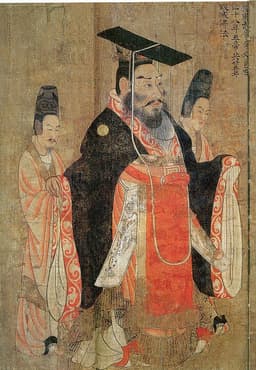
Yuwen Yong
Emperor · Medieval
67.2Total
Basic Information
Born
787
543
Died
813
578
Era
Medieval
Medieval
Nationality
Abbasid Caliphate
China
Occupation
Emperor
Emperor
Civilization
Middle Eastern
Eastern
Score Comparison
Military (10%)
50.0
78.0
Political (20%)
30.7
78.0
Influence (20%)
47.9
58.0
Legacy (20%)
38.3
54.0
Leadership (15%)
33.6
85.0
Strategy (15%)
36.8
69.1
TOTAL
39.9
67.2
Al-Amin — Complete Timeline
811 AD
Fourth Fitna (Civil War)War
Al-Amin's reign was dominated by the Fourth Fitna, a civil war against his brother al-Mamun. The conflict began when al-Amin tried to remove al-Mamun from succession, leading to a devastating war that weakened the Abbasid Caliphate.
Impact: regionaldestructive
812 AD
Siege of BaghdadWar◆ Major
Al-Mamun's forces, led by Tahir ibn Husayn, besieged Baghdad in 812-813. The siege lasted over a year, causing widespread destruction and famine. Al-Amin was captured and executed in 813, ending his caliphate.
Impact: regionaltragic
813 AD
Execution of Al-AminPolitical Action◆ Major
After the fall of Baghdad, al-Amin was captured by Tahir's forces. He was executed on al-Mamun's orders, marking the end of the civil war and the beginning of al-Mamun's sole rule.
Impact: nationaltragic
Yuwen Yong — Complete Timeline
574 AD
Suppression of Buddhism in Northern ZhouReform◆ Major
Emperor Wu of Northern Zhou (Yuwen Yong) ordered the suppression of Buddhism, confiscating monastic lands, forcing monks and nuns to return to lay life, and destroying temples. He aimed to increase state revenue and military manpower, strengthening the state.
Northern ZhouBuddhist PersecutionReform
Impact: nationaldestructive
577 AD
Conquest of Northern QiWar
Emperor Wu led a successful campaign against the rival Northern Qi dynasty, conquering its territory and unifying northern China under Northern Zhou. This victory ended the division of the north and set the stage for the Sui dynasty's unification of all China.
Northern ZhouUnificationNorthern Qi
Impact: regionalconstructive
578 AD
Death during campaign against the TurksWar◆ Major
Emperor Wu died of illness while leading a campaign against the G
Northern ZhouMilitary CampaignDeath
Impact: regionaltragic
Expert Analysis
Yuwen Yong vs Al-Amin
# The Brothers of the Caliphate and the Emperor of the North
On a dusty road outside Baghdad in September 813, a captured caliph begged for water. Al-Amin, once master of the Islamic world, was led before a soldier named Tahir ibn Husayn. Within moments, the caliph’s head was severed, and the Abbasid Empire passed to his brother al-Mamun. Half a world away and three centuries earlier, another ruler—Yuwen Yong, Emperor Wu of Northern Zhou—died of illness in his tent while campaigning against the Göktürks in 578. His empire was at its zenith, north China united under his iron hand. Two medieval sovereigns, one dead in a ditch, the other on a battlefield, both leaving behind legacies that could not have diverged more sharply. Why did one man’s story end in fratricidal ruin, while the other’s ended in triumph cut short by fate?
Origins
Al-Amin was born in 787 into the gilded cage of the Abbasid court, son of the legendary Caliph Harun al-Rashid. His mother Zubayda was a princess of the Abbasid line, making him the purest of the pure—a caliph’s son from a caliph’s daughter. His brother al-Mamun, by contrast, was born to a Persian concubine. This difference in blood would poison their relationship from childhood. Harun al-Rashid, in a moment of fatal indecision, named al-Amin as his immediate successor but also designated al-Mamun as governor of the eastern provinces, effectively creating two rival courts.
Yuwen Yong was born in 543, not in a palace but in the chaos of China’s Sixteen Kingdoms period. His father was a general of the Western Wei, a state perpetually at war with its neighbors. The Yuwen clan were Xianbei warriors, steppe nomads who had adapted to Chinese court life but never forgot the saddle. Yuwen Yong grew up watching his elder brothers seize and lose power in bloody coups. When he became emperor in 560, he was the fourth Yuwen ruler in a decade. He had learned early that survival meant patience, cunning, and absolute control.
Rise to Power
Al-Amin’s path to power was a coronation, not a conquest. When Harun al-Rashid died in 809, al-Amin simply inherited the throne in Baghdad. His brother al-Mamun ruled from distant Merv in Khorasan. The young caliph saw his brother not as a partner but as a threat. He demanded al-Mamun surrender his eastern territories, revoked his inheritance rights, and sent an army to enforce obedience. It was an act of breathtaking arrogance—starting a war he could not finish.
Yuwen Yong’s rise was the opposite: a slow, deliberate climb over corpses. He was placed on the throne by his cousin Yuwen Hu, a regent who had already murdered two emperors. For twelve years, Yuwen Yong played the fool—deferential, weak, uninterested in power. Meanwhile, he built alliances among the military aristocracy, waiting for his moment. In 572, he struck. During a routine audience, he killed Yuwen Hu with a single blow from a jade tablet. The court was stunned. The boy emperor had become a man of iron.
Leadership & Governance
Al-Amin ruled as a pleasure-seeker in a time of crisis. The Fourth Fitna, the civil war that consumed his reign, began in 811 and revealed a ruler who trusted poetry more than strategy. He appointed generals based on loyalty rather than competence, squandered the treasury on luxuries, and failed to secure the loyalty of Baghdad’s populace. When al-Mamun’s general Tahir ibn Husayn besieged Baghdad in 812–813, the city starved while the caliph’s factions bickered. Al-Amin’s political score of 35.7 reflects a ruler who never understood that power requires more than a title.
Yuwen Yong governed with the precision of a siege engineer. His suppression of Buddhism in 574 was brutal but calculated: he confiscated monastic lands to fund his armies, forced monks back into taxable labor, and broke the political power of the Buddhist clergy. This was not religious fanaticism but state-building. He reformed the military, merging Xianbei cavalry with Chinese infantry into a disciplined force. His conquest of Northern Qi in 577 unified north China for the first time in decades. His leadership score of 76.9 and strategy score of 81.8 are not numbers but epitaphs.
Triumph & Tragedy
Al-Amin’s triumph was never his own—it was his father’s. The tragedy was personal and total. The siege of Baghdad, lasting over a year, reduced the Round City to rubble. Starving citizens ate dogs and leather. When the walls fell, al-Amin tried to negotiate, offering to abdicate. Tahir ibn Husayn, acting on al-Mamun’s orders, had him executed anyway. The caliph who had inherited the greatest empire of the age died begging for a drink of water, his body left unburied for days.
Yuwen Yong’s triumph was the conquest of Northern Qi in 577, a campaign that showcased his strategic genius. He led from the front, shared his soldiers’ rations, and personally interrogated captured enemy generals. The tragedy came a year later, in 578, when he died at the age of 35 while leading an expedition against the Göktürks. His son was a child, and within three years the Northern Zhou fell to a usurper who founded the Sui dynasty. Yuwen Yong’s legacy was not his dynasty but the unified north he bequeathed to his conquerors.
Character & Destiny
Al-Amin’s character was shaped by privilege and insecurity. Born to rule, he never learned to earn it. His decisions were impulsive, his trust misplaced, his cruelty pointless. He executed his own governor for refusing to fight his brother, then promoted incompetent flatterers. The civil war was not forced upon him—he chose it. His destiny was to be a footnote in his brother’s story, a warning about the dangers of entitlement.
Yuwen Yong’s character was forged in fear and patience. He spent twelve years pretending to be weak, learning the weaknesses of others. His cruelty was calculated, his mercy strategic. When he killed Yuwen Hu, he did not purge the regent’s family—he absorbed them. When he suppressed Buddhism, he spared temples that paid taxes. His destiny was to be the architect of a unification he did not live to see. He died as he lived: in command, on campaign, with his boots on.
Legacy
Al-Amin’s legacy is a cautionary tale. The Fourth Fitna shattered the unity of the Abbasid Caliphate, leading to the rise of regional dynasties and the eventual decline of Baghdad. His name is remembered only in the context of his brother’s triumph. His scores—Military 11.4, Political 35.7, Leadership 32.0—are not judgments but descriptions of a vacuum where a ruler should have been.
Yuwen Yong’s legacy is foundational. His unification of north China made possible the Sui and Tang dynasties, which would reunite all of China and create a golden age. His suppression of Buddhism, while harsh, broke the power of monastic estates that had drained state resources for centuries. His military reforms influenced Chinese warfare for generations. His scores—Military 74.6, Political 72.0, Leadership 76.9—reflect a ruler who built an empire from a throne that had been a trap.
Conclusion
Al-Amin and Yuwen Yong faced the same fundamental challenge: how to hold power in a world where everyone wants it. One inherited it and lost it. The other seized it and built with it. The difference was not luck or circumstance but character. Al-Amin saw power as a possession, something to enjoy. Yuwen Yong saw power as a tool, something to use. In the end, the caliph died thirsty on a dusty road, and the emperor died on campaign, his empire still expanding. History does not reward birthright. It rewards the hand that holds the reins.
Rankings
🥇
Yuwen YongLeader
Mil: 78.0Pol: 78.0Inf: 58.0
67.2
🥈
Al-Amin
Mil: 50.0Pol: 30.7Inf: 47.9
39.9
+27.3 behind
How This Comparison Works
Algorithm
Each figure is scored on 6 dimensions (0—100 scale) based on structured historical data: Military (10%), Political (20%), Influence (20%), Legacy (20%), Leadership (15%), Strategy (15%). The weighted total produces the final ranking.
Data Sources
Scores are computed from structured sub-indicators in the database. Scale factors adjust for era (Ancient ×0.85, Modern ×1.0) and civilization size (Eastern ×1.05, Other ×0.80) to account for differences in population and military scale.
Maximum 3 Figures
Comparisons are limited to 2—3 figures to ensure readability and statistical meaningfulness.
Error Margins
±5 points per dimension — Sub-scores are derived from historical records with inherent uncertainty. Two figures within 5 points on a dimension should be considered roughly equivalent in that area.
Total Score Accuracy
±3 points overall — The weighted combination of 6 dimensions produces a total score with approximately ±3 points of uncertainty. Differences of less than 3 points are not statistically significant— the figures are effectively tied.
Known Limitations
- Historical records are incomplete and uneven across civilizations
- Figures from oral-tradition societies may be underrepresented
- Occupation labels can misclassify multi-role figures
- Scores measure capability and impact, not moral character
- Quantitative scoring is a comparison tool, not absolute truth
Capability Radar
Military (10%) — Battles & Warfare
Battles
20
75
Win Rate
15
80
Expansion
5
80
Political (20%) — Governance & Reform
Reform
10
85
Diplomacy
10
70
Economy
15
75
Influence (20%) — Cultural & Global Reach
Cultural
15
40
Global
10
40
Legacy (20%) — Historical Impact
Historical
20
65
Longevity
10
50
Leadership (15%) — Power & Stability
Tenure
20
60
Stability
10
70
Strategy (15%) — Tactics & Innovation
Strategy
10
75
Tactics
15
70
Reform
5
85
Similar Comparisons
Comments & Discussion
XiongnuSmasher6/16/2026
Data doesn't lie: Al-Amin inherited a tax base of 100 million dirhams and still lost to his half-brother. That's like inheriting Google and going bankrupt in three years. Yuwen Yong took over a Northern Zhou that was literally a rump state and conquered the Northern Qi, its larger rival. If you're comparing ancient warlords, the guy who doubled his territory beats the guy who couldn't even hold Baghdad.
沙漠狼6/16/2026
阿敏是含着金汤匙出生的废物,他老爹哈伦·拉希德把帝国分成两半就是找死。看看宇文邕,他他妈是从权臣宇文护手里夺回权力的,连命都差点搭进去。阿敏连自己兄弟都防不住,宇文邕却能把突厥打得跪地求饶。一个死在沟里,一个死在征途上——高下立判。
CaliphsAreForLosers6/16/2026
Let's be real: Al-Amin got beheaded by his own general. That's not a tragic end—that's a career-ending error. Yuwen Yong died of natural causes at 35 while expanding his empire. One was a pampered prince who couldn't manage succession, the other a self-made emperor who crushed bureaucracy and Buddhism to centralize power. Comparing them is like matching a spoiled heir against a ruthless CEO.
汉书小诸葛6/16/2026
军事实力?宇文邕灭北齐时只用了一年半,打的还是高纬这种昏君。阿敏呢?巴格达围城战拖了整整一年,城里饿到人吃人,他还在宫里喝酒。关键是宇文邕死了儿子继位还是强,阿敏死了帝国直接分裂——领导力的差距,死法都替他们定了性。
RevisionistReckoning6/16/2026
Both were victims of their systems: Al-Amin trapped in Abbasid harem politics where loyalty was currency, Yuwen Yong fighting a constant war against nomadic threats. But here's the twist—Al-Amin's death sparked the translation movement under al-Mamun, accelerating Islamic Golden Age knowledge. Yuwen Yong died heirless with a toddler on the throne, leading to Northern Zhou's collapse within three years. Sometimes defeat fertilizes history more than victory.