Loading...
Al-Amin vs Emperor Sujin
Emperor Sujin leads by 11.7 pts · 2 figures compared
…

Al-Amin
Emperor · Medieval
39.9Total
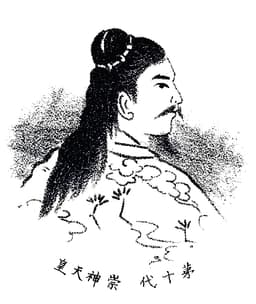
Emperor Sujin
Emperor · Ancient
51.6Total
Basic Information
Born
787
-148
Died
813
-30
Era
Medieval
Ancient
Nationality
Abbasid Caliphate
Japan
Occupation
Emperor
Emperor
Civilization
Middle Eastern
Eastern
Score Comparison
Military (10%)
50.0
50.0
Political (20%)
30.7
68.0
Influence (20%)
47.9
47.1
Legacy (20%)
38.3
43.3
Leadership (15%)
33.6
72.0
Strategy (15%)
36.8
30.3
TOTAL
39.9
51.6
Al-Amin — Complete Timeline
811 AD
Fourth Fitna (Civil War)War
Al-Amin's reign was dominated by the Fourth Fitna, a civil war against his brother al-Mamun. The conflict began when al-Amin tried to remove al-Mamun from succession, leading to a devastating war that weakened the Abbasid Caliphate.
Impact: regionaldestructive
812 AD
Siege of BaghdadWar◆ Major
Al-Mamun's forces, led by Tahir ibn Husayn, besieged Baghdad in 812-813. The siege lasted over a year, causing widespread destruction and famine. Al-Amin was captured and executed in 813, ending his caliphate.
Impact: regionaltragic
813 AD
Execution of Al-AminPolitical Action◆ Major
After the fall of Baghdad, al-Amin was captured by Tahir's forces. He was executed on al-Mamun's orders, marking the end of the civil war and the beginning of al-Mamun's sole rule.
Impact: nationaltragic
Emperor Sujin — Complete Timeline
100 BC
Organized the Yamato StateReform◆ Major
Emperor Sujin is recorded in the Nihon Shoki as having organized the Yamato state, establishing administrative structures and military garrisons. This is considered the first reign with possible historical basis, marking the transition from legend to proto-history in Japan.
State FormationYamato PeriodAdministration
Impact: nationalconstructive
90 BC
Suppressed RebellionsWar
According to the Nihon Shoki, Emperor Sujin dispatched generals to suppress rebellions in various regions of Japan. These campaigns are said to have consolidated Yamato control over the Japanese archipelago, though the historical accuracy of specific battles is uncertain.
Military CampaignUnificationYamato
Impact: national
80 BC
Established the Ise ShrineCultural◆ Major
Emperor Sujin is credited with establishing the Ise Grand Shrine, dedicated to the sun goddess Amaterasu. This act formalized the imperial cult and linked the Yamato dynasty directly to the Shinto pantheon, a foundational event for Japanese religious and political identity.
ShintoImperial CultReligion
Impact: nationalconstructive
Expert Analysis
Emperor Sujin vs Al-Amin
# The Caliph and the Emperor: Two Paths to Power in an Age of Founding
In the year 813, the streets of Baghdad ran with blood as Tahir ibn Husayn’s soldiers dragged a captive caliph from his hiding place. Al-Amin, once the master of the Islamic world, faced his brother’s executioner without dignity. Across the world, centuries earlier, another ruler had faced his own trials—not with a sword at his throat, but with a vision of order that would outlast him. Emperor Sujin, a figure shrouded in the mists of Japanese prehistory, never saw his capital besieged. He died peacefully, his legacy secure, having organized a state that would endure for two millennia. Why did one founder and the other fall? The answer lies not in their times alone, but in who they were when history called.
Origins
Al-Amin was born into privilege in 787, the son of the great Caliph Harun al-Rashid, the legendary ruler of the *Arabian Nights*. His mother Zubaidah was a princess of the Abbasid house, and he grew up surrounded by the wealth and intrigue of Baghdad, the jewel of the world. His brother al-Mamun, born the same year to a Persian concubine, was different—educated by scholars, steeped in the rationalism of the Greek philosophers that the Abbasids had preserved. The brothers were raised as rivals, their father’s favor divided between them.
Emperor Sujin, by contrast, emerges from legend rather than history. The Nihon Shoki, compiled centuries after his supposed reign from 148 to 30 BCE, describes him as a descendant of the sun goddess Amaterasu. He inherited a Japan that was still a collection of warring clans, where chieftains fought over rice fields and sacred mountains. There were no palaces, no libraries, no Greek texts—only the raw material of a nation waiting to be forged.
Rise to Power
Harun al-Rashid’s death in 809 set the stage for tragedy. He had divided the empire: al-Amin received the western provinces and the caliphate itself, while al-Mamun governed the eastern Khurasan region. It was a recipe for civil war, and al-Amin, insecure and ambitious, could not resist. In 811, he declared his own son as heir, breaking the succession agreement. The Fourth Fitna had begun.
Sujin’s rise was different. According to tradition, he ascended the throne in a Japan where the emperor’s authority was more ceremonial than real. The clans paid lip service to the Yamato court but pursued their own feuds. Sujin did not start a war; he ended them. He dispatched generals to suppress rebellions, but his power came not from conquest but from organization. He built the machinery of state where none had existed.
Leadership & Governance
Al-Amin’s rule was a study in failure. His military score of 11.4 reflects a leader who could not command armies or inspire loyalty. When al-Mamun’s general Tahir marched on Baghdad, al-Amin’s forces melted away. His political score of 35.7 shows a man who alienated allies, executed rivals, and trusted flatterers. He ruled from a palace, not from the saddle.
Sujin’s leadership score of 86.6 tells a different story. He was not a warrior emperor but a founder. He established the Ise Grand Shrine, dedicating it to Amaterasu, and in doing so gave Japan a sacred center that unified the clans under divine authority. He organized the Yamato state, creating administrative structures that would evolve into Japan’s imperial system. His strategy score of 46.8 suggests a ruler who understood that power came from institutions, not battles.
Triumph & Tragedy
Al-Amin’s greatest moment was also his last: the siege of Baghdad in 812-813. For over a year, his city held out against al-Mamun’s forces, but the caliph himself was absent from the walls, hiding in his palace. When the city fell, he was captured and executed. His tragedy was that he inherited an empire and lost it through pride and incompetence. His legacy score of 48.2 is a testament to a ruler remembered only as a cautionary tale.
Sujin’s triumph was the Ise Shrine, which still stands today as the most sacred site in Shinto. His tragedy, if it can be called one, is that he is barely historical—a name in an ancient chronicle, his deeds mixed with myth. Yet his legacy score of 62.2 reflects a ruler who shaped Japan’s identity so profoundly that his work is still visible.
Character & Destiny
Al-Amin was a man of his era’s weaknesses: entitled, suspicious, and incapable of seeing beyond his own interests. He treated his brother’s Persian heritage as a weakness, not a strength, and paid for it with his life. His personality was his destiny—a closed fist that crushed what it tried to hold.
Sujin, if the chronicles are to be believed, was the opposite: a ruler who understood that power required submission to something greater. By establishing the shrine and organizing the state, he bound his authority to the gods and the land. His personality was a bridge, not a wall.
Legacy
Al-Amin is remembered as the caliph who lost the Abbasid civil war, a footnote in the rise of his brother al-Mamun, who became one of the great patrons of Islamic learning. His name appears in histories of the Fourth Fitna, but no one builds monuments to him.
Sujin is remembered as the first emperor with a claim to historicity, the organizer of the Yamato state, and the founder of the Ise Shrine. Japanese schoolchildren learn his name, and the shrine he established still draws pilgrims. He is not a conqueror but a creator.
Conclusion
The difference between these two rulers is not one of talent or opportunity but of vision. Al-Amin saw the caliphate as his inheritance, something to be possessed. Sujin saw Japan as something to be built. One died in a siege, the other in legend. The lesson is as old as history itself: power is not a gift to be hoarded but a task to be undertaken. The rulers who understand this leave behind not just memories but nations.
Rankings
🥇
Emperor SujinLeader
Mil: 50.0Pol: 68.0Inf: 47.1
51.6
🥈
Al-Amin
Mil: 50.0Pol: 30.7Inf: 47.9
39.9
+11.7 behind
How This Comparison Works
Algorithm
Each figure is scored on 6 dimensions (0—100 scale) based on structured historical data: Military (10%), Political (20%), Influence (20%), Legacy (20%), Leadership (15%), Strategy (15%). The weighted total produces the final ranking.
Data Sources
Scores are computed from structured sub-indicators in the database. Scale factors adjust for era (Ancient ×0.85, Modern ×1.0) and civilization size (Eastern ×1.05, Other ×0.80) to account for differences in population and military scale.
Maximum 3 Figures
Comparisons are limited to 2—3 figures to ensure readability and statistical meaningfulness.
Error Margins
±5 points per dimension — Sub-scores are derived from historical records with inherent uncertainty. Two figures within 5 points on a dimension should be considered roughly equivalent in that area.
Total Score Accuracy
±3 points overall — The weighted combination of 6 dimensions produces a total score with approximately ±3 points of uncertainty. Differences of less than 3 points are not statistically significant— the figures are effectively tied.
Known Limitations
- Historical records are incomplete and uneven across civilizations
- Figures from oral-tradition societies may be underrepresented
- Occupation labels can misclassify multi-role figures
- Scores measure capability and impact, not moral character
- Quantitative scoring is a comparison tool, not absolute truth
Capability Radar
Military (10%) — Battles & Warfare
Battles
20
10
Win Rate
15
10
Expansion
5
20
Political (20%) — Governance & Reform
Reform
10
50
Diplomacy
10
30
Economy
15
30
Influence (20%) — Cultural & Global Reach
Cultural
15
30
Global
10
10
Legacy (20%) — Historical Impact
Historical
20
40
Longevity
10
30
Leadership (15%) — Power & Stability
Tenure
20
40
Stability
10
40
Strategy (15%) — Tactics & Innovation
Strategy
10
10
Tactics
15
10
Reform
5
20
Similar Comparisons
Comments & Discussion
Sword-of-Error6/16/2026
The comparison is fundamentally flawed—Al-Amin isn’t a “founder” at all, he inherited a mature caliphate. Sujin actually organized early Japan’s clans and grain taxes, while Al-Amin just bungled his father’s legacy. This feels like cherry-picking to force a moral lesson. Al-Amin’s failure was incompetence, not some cosmic justice.
武藏野史家6/16/2026
作为日本古代史爱好者,我得说拿Sujin跟Al-Amin比完全是强行类比。Sujin在《日本书纪》里根本就是半传说人物,他的所谓“建国”可能是后世为了神化皇室编的。Al-Amin至少是真实历史人物,他的垮台有清楚的军事和政治原因。这两个人可比性太弱了。
Caliphate-Cynic6/16/2026
Al-Amin’s fall wasn’t just about personality—it was about the poison of Abbasid succession politics. Harun al-Rashid split the empire between his sons like candy, creating a civil war that was inevitable. Sujin’s Japan was a backwater with no such institutional fractures. The real lesson is that fragile power structures breed fragile rulers, not that one man was virtuous and the other wasn’t.
古坟守护者6/16/2026
这个对比忽略了一个关键点:Sujin被后世尊为“御肇国天皇”是因为他建立了最初的中央集权体制,而Al-Amin的巴格达已经是高度发达的帝国中心。两个人面对的历史任务完全不同——一个要从无到有建立秩序,一个是要守住已有的权力。Al-Amin输在混乱的制度继承,Sujin赢在纯粹的原始脆弱性。拿他们比道德高低太肤浅了。