Loading...
Al-Amin vs Kublai Khan
Kublai Khan leads by 34.4 pts · 2 figures compared
…

Al-Amin
Emperor · Medieval
39.9Total
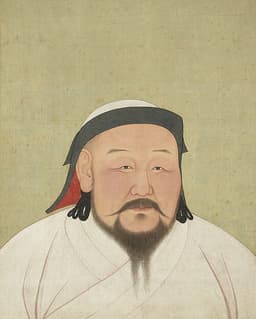
Kublai Khan
Emperor · Medieval
74.3Total
Basic Information
Born
787
1215
Died
813
1294
Era
Medieval
Medieval
Nationality
Abbasid Caliphate
Mongolia
Occupation
Emperor
Emperor
Civilization
Middle Eastern
Eastern
Score Comparison
Military (10%)
50.0
77.5
Political (20%)
30.7
79.2
Influence (20%)
47.9
75.0
Legacy (20%)
38.3
70.0
Leadership (15%)
33.6
72.0
Strategy (15%)
36.8
76.0
TOTAL
39.9
74.3
Al-Amin — Complete Timeline
811 AD
Fourth Fitna (Civil War)War
Al-Amin's reign was dominated by the Fourth Fitna, a civil war against his brother al-Mamun. The conflict began when al-Amin tried to remove al-Mamun from succession, leading to a devastating war that weakened the Abbasid Caliphate.
Impact: regionaldestructive
812 AD
Siege of BaghdadWar◆ Major
Al-Mamun's forces, led by Tahir ibn Husayn, besieged Baghdad in 812-813. The siege lasted over a year, causing widespread destruction and famine. Al-Amin was captured and executed in 813, ending his caliphate.
Impact: regionaltragic
813 AD
Execution of Al-AminPolitical Action◆ Major
After the fall of Baghdad, al-Amin was captured by Tahir's forces. He was executed on al-Mamun's orders, marking the end of the civil war and the beginning of al-Mamun's sole rule.
Impact: nationaltragic
Kublai Khan — Complete Timeline
1260 AD
Adoption of Tibetan Buddhism as State ReligionCultural◆ Major
Kublai Khan appointed the Tibetan lama Drog
Tibetan BuddhismReligionMongol-Tibet Relations
Impact: regional
1271 AD
Proclamation of the Yuan DynastyPolitical Action◆ Major
Kublai Khan officially proclaimed the Yuan dynasty, adopting a Chinese-style dynastic name. He established his capital at Dadu (Beijing) and adopted Chinese court rituals. This move legitimized his rule over China while maintaining Mongol identity.
Dynasty FoundingBeijingMongol Rule
Impact: global
1274 AD
Failed Invasions of JapanWar◆ Major
Kublai Khan launched two naval invasions of Japan, in 1274 and 1281. Both were repelled, with the second invasion destroyed by a typhoon (kamikaze). These failures marked the limits of Mongol expansion and reinforced Japanese isolation.
Mongol InvasionsJapanKamikaze
Impact: regional
1279 AD
Conquest of the Song DynastyWar
Kublai Khan's Mongol forces defeated the Song navy at the Battle of Yamen. The last Song emperor drowned, ending the Song dynasty. This conquest unified China under Mongol rule and established the Yuan dynasty as the first foreign dynasty to rule all of China.
Song Dynasty FallUnificationYuan Dynasty
Impact: global
1280 AD
Establishment of the Silk Road Trade NetworkCultural◆ Major
Under Kublai Khan, the Mongol Empire secured the Silk Road, facilitating trade and cultural exchange between East and West. Marco Polo visited his court. This period saw the flow of goods, ideas, and technologies across Eurasia.
Silk RoadTradeCultural Exchange
Impact: globalconstructive
Expert Analysis
Kublai Khan vs Al-Amin
# The Emperor and the Caliph: Two Paths to Power in a Medieval World
In the year 1274, Kublai Khan stood at the helm of the largest land empire in human history, dispatching a fleet of nearly 900 ships against Japan. Twenty-six years earlier, in 813, al-Amin, the sixth caliph of the Abbasid dynasty, was dragged from a hiding place in Baghdad and executed on the orders of his own brother. One man died with an empire still expanding at his command; the other perished as his capital burned around him. What separates a ruler who reshapes the world from one who is erased by it? The answer lies not merely in circumstance, but in the profound differences of character, strategy, and the eras that forged them.
Origins
Kublai Khan was born in 1215, a grandson of Genghis Khan, into a world of relentless conquest. The Mongol steppe was a crucible of violence and loyalty, where a man's worth was measured by his skill with a bow and his ability to command. Yet Kublai was not raised solely in the saddle. His mother, Sorghaghtani Beki, a Nestorian Christian princess, ensured he received an education in Chinese statecraft and Buddhist philosophy. This hybrid upbringing—steppe warrior and civilized administrator—would define his reign.
Al-Amin, born in 787, was the son of the legendary Abbasid caliph Harun al-Rashid, whose Baghdad was the jewel of the Islamic world, a city of poets, scholars, and merchants. Al-Amin grew up in palaces of marble and gardens of jasmine, surrounded by luxury and intrigue. But his father made a fatal error: he divided the empire between his two sons, al-Amin and al-Mamun, hoping for harmony. Instead, he sowed the seeds of fratricide. Al-Amin was groomed for power, al-Mamun for learning. The result was a prince who knew how to command but not how to govern.
Rise to Power
Kublai’s ascent was not a birthright but a contest. In 1260, after the death of his brother Möngke Khan, he fought a bitter civil war against his younger brother Ariq Böke for the title of Great Khan. Kublai won not by sheer force but by outmaneuvering his rival, securing the support of Chinese officials and Mongol nobles who saw him as a pragmatist. He understood that to rule China, he must become Chinese. In 1271, he proclaimed the Yuan Dynasty, adopting a Chinese-style dynastic name and moving his capital to what is now Beijing.
Al-Amin’s path was simpler and more tragic. He inherited the caliphate in 809 at the age of twenty-two, but his brother al-Mamun governed the eastern provinces. The Fourth Fitna, the civil war that consumed them, began in 811 when al-Amin, fearing his brother’s ambition, tried to strip him of his governorship. Al-Mamun, backed by the brilliant general Tahir ibn Husayn, marched on Baghdad. Al-Amin had the throne but not the strategy; he had the army but not the loyalty.
Leadership & Governance
Kublai Khan governed as a synthesis of two worlds. He adopted Tibetan Buddhism as the state religion in 1260, appointing the lama Drogön Chögyal Phagpa as his imperial preceptor, but he tolerated Islam, Christianity, and Daoism. He built canals, standardized currency, and encouraged trade. His military genius was undeniable: in 1279, at the Battle of Yamen, his forces crushed the Song navy, drowning the last Song emperor and unifying China for the first time in centuries. Yet his leadership had limits. His invasions of Japan in 1274 and 1281 failed catastrophically, destroyed by typhoons—the kamikaze, or “divine wind”—that his naval commanders could not anticipate. Kublai’s strength was his ability to adapt; his weakness was his inability to know when to stop.
Al-Amin’s governance was a study in failure. He surrounded himself with sycophants, neglected the army, and alienated the powerful bureaucracy that had sustained his father. His political score of 35.7 reflects a ruler who could not read the room. When Tahir ibn Husayn besieged Baghdad in 812–813, al-Amin’s response was not to fight but to hide. The siege lasted over a year, reducing the city to famine and chaos. Al-Amin was captured, and on al-Mamun’s orders, executed. He had a military score of 11.4—not merely low, but a testament to a ruler who never truly commanded.
Triumph & Tragedy
Kublai’s greatest triumph was the conquest of the Song Dynasty, a feat that required not just military might but political patience. He spent years building a navy, training Chinese soldiers, and winning over Confucian scholars. The Silk Road, which he secured by 1280, became a highway for goods, ideas, and travelers like Marco Polo, who would later immortalize Kublai’s court. Yet his tragedies were equally grand: the failed invasions of Japan drained the treasury and killed tens of thousands, a reminder that even the greatest conqueror cannot command the sea.
Al-Amin’s triumph was merely his birth; his tragedy was his death. He had no great victories, no lasting reforms, no monuments. The Fourth Fitna destroyed the unity of the Abbasid Caliphate, weakening it to the point that it would never recover. Al-Amin’s legacy is a cautionary tale: a ruler who inherited everything and lost it all because he lacked the wisdom to share power.
Character & Destiny
Kublai Khan was a pragmatist with a vision. He understood that the Mongol Empire could not survive on conquest alone; it needed administration, culture, and trade. His personality was a blend of steppe ruthlessness and Chinese patience. He could order the execution of a rival and then quote Confucius. His decisions were driven by a cold calculation of what would last. He was not beloved, but he was respected.
Al-Amin was a creature of his upbringing: proud, impulsive, and blind to reality. He believed the caliphate was his by divine right, not by merit. When his brother’s armies approached, he trusted in walls and promises, not in strategy and alliances. His character was his destiny: a man who could not adapt to a changing world.
Legacy
Kublai Khan’s legacy is layered. To the Chinese, he is the founder of the Yuan Dynasty, a foreign ruler who nonetheless preserved Chinese institutions and opened China to the world. To the Mongols, he is the Great Khan who turned an empire of horsemen into a continental power. His influence score of 78.0 reflects a ruler whose decisions shaped trade, religion, and politics across Asia for centuries. The Silk Road under his watch connected East and West in ways that would echo into the Renaissance.
Al-Amin is remembered, if at all, as the caliph who lost everything. His legacy score of 48.2 is a measure of absence: he left no great works, no enduring reforms, no school of thought. The Abbasid Caliphate survived, but its golden age ended with his death. He is a footnote in a story that belongs to his brother al-Mamun, who would go on to patronize the House of Wisdom and translate Greek philosophy into Arabic.
Conclusion
Standing at the edge of history, we see two men who faced the same fundamental question: how to hold power in a world that constantly shifts. Kublai Khan answered by bending with the wind, learning from his enemies, and building institutions that outlasted him. Al-Amin answered by standing still, trusting in the throne, and watching as the world moved on without him. One became a legend; the other became a lesson. In the end, the difference between triumph and tragedy is not just luck or fate—it is the willingness to see the world as it is, not as we wish it to be.
Rankings
🥇
Kublai KhanLeader
Mil: 77.5Pol: 79.2Inf: 75.0
74.3
🥈
Al-Amin
Mil: 50.0Pol: 30.7Inf: 47.9
39.9
+34.4 behind
How This Comparison Works
Algorithm
Each figure is scored on 6 dimensions (0—100 scale) based on structured historical data: Military (10%), Political (20%), Influence (20%), Legacy (20%), Leadership (15%), Strategy (15%). The weighted total produces the final ranking.
Data Sources
Scores are computed from structured sub-indicators in the database. Scale factors adjust for era (Ancient ×0.85, Modern ×1.0) and civilization size (Eastern ×1.05, Other ×0.80) to account for differences in population and military scale.
Maximum 3 Figures
Comparisons are limited to 2—3 figures to ensure readability and statistical meaningfulness.
Error Margins
±5 points per dimension — Sub-scores are derived from historical records with inherent uncertainty. Two figures within 5 points on a dimension should be considered roughly equivalent in that area.
Total Score Accuracy
±3 points overall — The weighted combination of 6 dimensions produces a total score with approximately ±3 points of uncertainty. Differences of less than 3 points are not statistically significant— the figures are effectively tied.
Known Limitations
- Historical records are incomplete and uneven across civilizations
- Figures from oral-tradition societies may be underrepresented
- Occupation labels can misclassify multi-role figures
- Scores measure capability and impact, not moral character
- Quantitative scoring is a comparison tool, not absolute truth
Capability Radar
Military (10%) — Battles & Warfare
Battles
20
95
Win Rate
15
90
Expansion
5
95
Political (20%) — Governance & Reform
Reform
10
88
Diplomacy
10
85
Economy
15
90
Influence (20%) — Cultural & Global Reach
Cultural
15
85
Global
10
85
Legacy (20%) — Historical Impact
Historical
20
90
Longevity
10
80
Leadership (15%) — Power & Stability
Tenure
20
90
Stability
10
80
Strategy (15%) — Tactics & Innovation
Strategy
10
92
Tactics
15
85
Reform
5
88
Similar Comparisons
Comments & Discussion
Golden Horde Gamer6/16/2026
Calling this a fair comparison is like pitting a chess grandmaster against a child playing whack-a-mole. Kublai inherited the largest contiguous land empire and actually expanded it—conquering the Song dynasty with superior siege technology and naval coordination that stunned even veteran Chinese generals. Al-Amin inherited a stable Abbasid caliphate and managed to lose Baghdad to his own brother in a civil war that featured him bungling siege defenses. One mastered logistics; the other couldn't
草原智将6/16/2026
游牧民族的生存法则就是实用主义:能打就打,不能打就谈。忽必烈完美诠释了这点,1279年崖山海战后他主动保留南宋官僚体系,用汉人管理汉人。而阿明呢?813年巴格达围城时,他居然相信弟弟马蒙会仁慈对待兄长——结果被拖出地道斩首。一个懂得权力需要妥协,另一个活在自己编织的童话里。这不是君主对比,是现实主义和幼稚病的对决。
Silk Road Skeptic6/16/2026
Let's talk numbers. Kublai's failed 1274 invasion of Japan lost roughly 13,000 men—painful but recoverable. Al-Amin's 811-813 civil war cost Baghdad an estimated 200,000 lives and permanently crippled Abbasid tax revenues. When your family feud causes more casualties than a failed amphibious assault, you're not just a bad leader; you're a demographic catastrophe. Al-Amin had the wealth of Harun al-Rashid's treasury and squandered it on personal grudges. Kublai lost battles but never lost perspec
长安遗民6/16/2026
阿明失败的根本原因是对军事力量的无知。他上台后清洗了呼罗珊军团,这是哈伦·拉希德精心培养的精英部队;忽必烈却相反,重用汉军、蒙古军、色目军混合编制,1260年击败阿里不哥时就是靠这种多元化战力。阿明砍掉自己的利剑,忽必烈磨砺每一把刀。历史给能力打分,阿明的成绩单上写满了"零"。